West Bengal Governance: Where Did We Fail?
Oct 20, 2026 - By Ashutosh Roy PoliticsNational PoliticsWest Bengal Politics
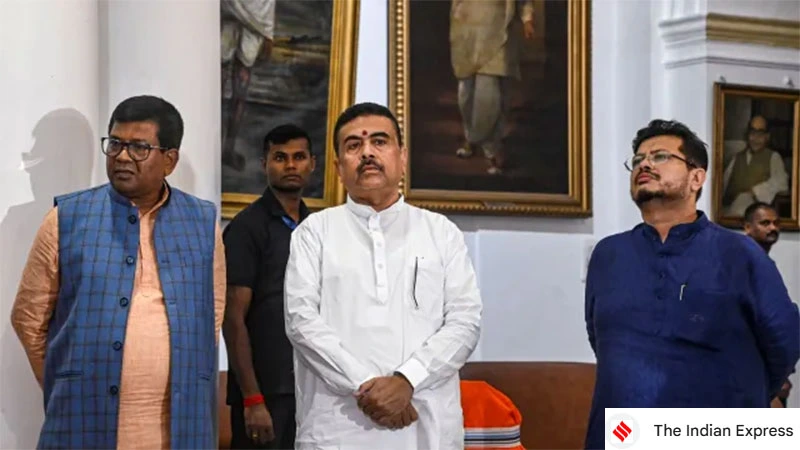
West Bengal Governance: A Legacy of Failure?
A few days ago, I wrote an article in Bengali titled Bangalir Atmahanoner Kahini (The Story of Bengali Self-Destruction).
While writing about West Bengal Governance, I kept returning to an uncomfortable thought: a society that repeatedly makes the same political mistakes cannot escape responsibility for the governments it elects. We get the government we deserve.
Bengal’s political history gives this saying a meaning that is difficult to ignore. Yet responsibility does not rest with voters alone. Political parties, public institutions and those who exercise power must also answer for their failures.
I grew up hearing that Bengalis were lazy. People elsewhere in India, and even abroad, often saw us as more interested in intellectual debates, art and culture than in practical matters. Still, we have always taken pride in our political awareness and intellectual tradition. Vidyasagar, Rammohan Roy, Bankim Chandra and Rabindranath Tagore remain sources of pride. But could Subhas Chandra Bose or Surya Sen have imagined that Bengal would gradually sink into such political stagnation?
Look at Kerala, Karnataka and Haryana. Governments change, political equations shift, and voters get opportunities to judge those in power. Bengal, meanwhile, has repeatedly struggled to hold successive governments accountable beyond election day. Why? Perhaps our intellectual pride has made us too comfortable with our own political judgements.
We can debate politics for hours, but are we equally determined to demand results from those who govern us?
West Bengal Governance Since 1947: A Troubled Beginning
For India, 1947 brought independence and the promise of freedom. For Bengalis, it also brought the heartbreak of the Partition of Bengal. The movement against the Partition of Bengal in 1905 seemed almost meaningless by 1947. We had failed to preserve the spirit of Nazrul’s message that Hindus and Muslims were two flowers on the same stem. A few strokes of Radcliffe’s pen divided families, friends and communities.
The division was brutal. Two friends who had shared evening tea only days earlier could suddenly find themselves living in different countries, separated by an international border. East Bengal became East Pakistan, and in 1971 Bangladesh emerged as an independent country. But the human cost of Partition did not end with Independence.
Immigration in West Bengal
The historical study published by Cambridge University Press examines the experiences and political struggles of Bengali refugees in the years that followed.
Thousands of distressed Hindus fled to West Bengal. Sealdah and Howrah stations, along with various points along the border, became places of desperation. People arrived needing shelter, food, employment and rehabilitation. Was the government at the Centre as concerned about Bengal’s plight as it was about Punjab? This question deserves serious examination, not a convenient dismissal.
Jawaharlal Nehru was Prime Minister, and Bidhan Chandra Roy was Chief Minister of West Bengal. Both belonged to the Congress, offering what we might now call a double-engine arrangement.
Still, the refugee crisis continued to grow. The state struggled to provide adequate housing, food and basic facilities for those arriving across the border. The burden was enormous, and its consequences shaped Bengal for decades.
Bidhan Chandra Roy was a remarkable figure in the development of modern Bengal. His contribution to places such as Kalyani, Salt Lake and Durgapur remains significant.
But did the state show the same foresight in addressing the refugee crisis? How effectively did its leadership persuade the Centre to share the burden of rehabilitation with other states? I have my doubts. The pressure on Bengal was immense, but that makes it all the more important to ask whether its leaders did enough to secure a fair share of national resources and support.
Ranajit Roy’s The Agony of West Bengal, listed in the linked Google Books record as published by Ananda Bazar Patrika in 1971, offers another point of reference for examining Bengal’s predicament. Its concerns provide a useful starting point for discussing the relationship between the state and the Centre, industrial development and Bengal’s economic difficulties.
Within two decades of Independence, the romantic promise of freedom had given way to food shortages, public unrest and police firing during food movements. Farmers and ordinary people took to the streets, while the Congress government faced growing anger. Accusations of Congress elitism were hardly new. The party was often seen as closer to landlords and wealthy interests than to poor farmers struggling to survive.
The problems of Bengal’s governance did not begin with the Left, nor did they end with the Congress. Partition, refugee rehabilitation, food insecurity and economic pressures demanded long-term planning. Instead, successive governments increasingly turned public grievances into weapons in their political battles. Bengal’s political history is not simply a story of bad governments replacing one another. It is also a story of problems left unresolved while parties concentrated on winning the next battle for power.
Illegal Immigration and Political Convenience
Few issues expose the shifting positions of Bengal’s political parties as clearly as illegal immigration. A position that appears firm in opposition can become considerably more complicated once a party enters government. The controversy over electoral rolls brings this contradiction into sharp focus.
In 2005, Mamata Banerjee protested against alleged illegal immigration by throwing papers at the Deputy Speaker. Two decades later, in 2025, she challenged the deletion of names from electoral rolls during the Special Intensive Revision (SIR) in the Supreme Court. Her challenge, discussed in this Knowledge Mart article on Mamata Banerjee and the SIR controversy, brought the treatment of eligible voters into the political debate.
The political accusation is familiar. The Left was accused of benefiting electorally from the votes of illegal immigrants. Years later, the Trinamool Congress faced similar allegations. The question is not whether electoral rolls should be corrected. Of course they should. The question is whether political parties apply the same principles when the outcome might damage their own electoral prospects.
Where is the consistent policy? Where is the long-term solution that addresses illegal immigration, protects legitimate voters and prevents genuine citizens from being wrongly removed from electoral rolls?
These are related but distinct responsibilities. Treating them as nothing more than electoral weapons will solve none of them. Electoral calculations have repeatedly overshadowed the need for a consistent approach. Bengal deserves better than an endless exchange of accusations in which each party changes its emphasis according to political convenience. If a principle is right, it should remain right whether a party sits on the Opposition benches or occupies the treasury benches.
For a better clarity, you may have a look at: Bengal Electoral Roll Row: Shocking Truth!
The Left Front: Land Reforms, Industrial Decline and Party Rule
As the Congress faced growing discontent, the Left built its movement around class struggle and the rights of poor farmers and workers. Bengal witnessed the Naxalite movement and other far-Left struggles, along with violent confrontations involving workers and sections of the business community. During Siddhartha Shankar Ray’s tenure, allegations of extrajudicial killings of Naxalites emerged. The country was also under Emergency.
In 1977, Bengalis brought the Left Front to power under Jyoti Basu. Its early years brought important reforms. Operation Barga, launched in 1978, recorded sharecroppers and strengthened their protection against eviction.
Many marginal farmers gained greater security, and rural families received a measure of protection that had previously been denied to them. The Food and Agriculture Organization’s account of land rights in India discusses the programme and its role in strengthening the position of sharecroppers.
I also remember the devastating floods of 1978 and the Left government’s and the party’s energetic efforts to rescue people and provide relief. In those days, the government appeared to stand alongside ordinary people. The Left had genuine achievements, and those who deny them are no more convincing than those who refuse to acknowledge its failures.
But what happened to that relationship as the years passed?
Class Struggle to Political Arrogance
Party control, political intimidation and local-level hooliganism became serious problems. Party influence spread into everyday life, and ordinary people often found it difficult to challenge those who controlled local institutions.
The promise of working-class empowerment became increasingly entangled with the protection of party power. The party that had mobilised people against domination gradually became associated with a system in which its own local representatives could be difficult to challenge.
We also became accustomed to hearing that Bengal was being deprived by the Centre. This argument continued for decades. Central discrimination and disputes over the distribution of resources deserve serious debate, but could they explain every failure of the state government? Could they account for industrial decline, growing dependence on political connections and the fear ordinary citizens sometimes felt when dealing with local party leaders?
Jyoti Basu eventually moved towards industrialisation, but the shift came late. Somnath Chatterjee was also associated with efforts to attract investment, while overseas visits became part of Bengal’s industrial outreach. Still, announcements and investment missions could not, by themselves, restore the confidence that industry needed. Where was the industrial revival Bengal desperately needed?
Industrial decline in West Bengal became one of the defining problems of the Left era. Militant trade unionism, labour unrest, political interference and wider economic changes all contributed to a difficult environment for industry.
Factories shut down, jute mills struggled and industrial employment suffered. The causes were complex, but the political leadership could not escape responsibility for the climate it helped create.
The Left had a fundamental contradiction to resolve. Class struggle may have responded to the social and economic conditions of its time, but what happened to workers when factories closed? How could labour rights be protected if the industries providing employment could no longer survive? A movement that began by promising dignity to workers could not indefinitely ignore the consequences of industrial decline.
Singur and Nandigram: The Left’s Turning Point
By the time Buddhadeb Bhattacharjee made a serious attempt to promote industrialisation, the Left had already lost much of its earlier appeal. People who had once viewed the CPI(M) as a champion of the poor had grown tired of party dominance and political arrogance. The government wanted investment, but it had failed to rebuild the public trust needed to carry people along.
Then came Singur and Nandigram. The proposed Tata Nano factory at Singur became the centre of a bitter struggle over land acquisition. The proposed chemical hub at Nandigram triggered another major confrontation. The government’s industrial ambitions collided with farmers’ fears and resistance. Development was being discussed as though the people whose land and livelihoods were at stake could simply be expected to fall in line.
In October 2008, Tata Motors withdrew its Nano project from Singur and moved it to Sanand in Gujarat. The departure became a turning point in Bengal’s politics. Mamata Banerjee’s movement against land acquisition helped her challenge the Left’s hold on the state. The Indian Express report on Singur and the jobs debate revisits the abandoned project and the continuing concerns about employment in the area.
The consequences were enormous. Bengal lost the immediate prospect of the Nano factory, while the political fallout damaged the Left’s credibility. The government had been too slow to recognise the need for change. When it finally tried to move away from its old economic approach, it had already alienated many of the people whose support it needed.
Singur and Nandigram did not create every weakness of the Left government. They exposed how badly its relationship with the people had deteriorated. A government cannot preach development while treating the concerns of affected citizens as obstacles to be overcome by force or political pressure.
The Left Front’s long rule ended in 2011. A party that had once represented rural aspirations had, in the eyes of many people, become associated with political control and a stalled industrial future. Its land reforms remained significant, but past achievements could not give it permanent ownership of the electorate. Voters decided that the party’s failures mattered more than its historical contributions.
Mamata Banerjee’s Government: Change Without Reform?
In 2011, Mamata Banerjee came to power promising Poriborton, or change. After decades of Left rule, people expected a different political culture, greater accountability and a fresh direction for Bengal’s economy. They had not voted merely to change the colour of party flags. They wanted to see a change in the way government worked.
Instead, the new government repeatedly relied on accusations against the Centre and the previous regime. There were promises to open old files, expose wrongdoing and establish investigation committees. But these announcements often seemed more effective as political messaging than as a route to accountability. Even after fifteen years in power, the rhetoric of opening old files continued. Where were the conclusive results?
Bikash Ranjan Bhattacharyya once openly challenged Mamata Banerjee to open the files and prove him guilty, offering to treat her to a potful of rosogollas if she succeeded. The challenge captured the frustration surrounding a political culture in which allegations, investigations and public promises could outlast any clear resolution.
Bengal’s political theatre has had its share of memorable dialogue, but rosogollas cannot substitute for evidence, and public challenges cannot replace the completion of investigations.
Corruption allegations, extortion, local-level intimidation and party dominance increasingly became part of the public debate under the Trinamool Congress. The Left had its own record of political control and local strongmen. Under the Trinamool Congress, however, many familiar complaints appeared more vividly in a new political setting.
The problem was not simply that the new government failed to dismantle old habits. It often seemed to reproduce them under a different party symbol. The promise of change began to look less like a transformation of governance and more like a change of political masters. A party that had fought the Left in the name of ordinary people had to answer an uncomfortable question: why were so many complaints about the exercise of local political power beginning to sound familiar?
Read: West Bengal Industrial Growth: Demanding Reform.
The School Jobs Scandal: When Public Trust Collapsed
The crisis became particularly painful when the West Bengal school recruitment scandal reached the courts. Thousands of candidates who had worked hard for government jobs found themselves caught up in a recruitment process clouded by allegations of serious irregularities. The cancellation of appointments devastated families and raised fundamental questions about merit, fairness and the integrity of public institutions.
On April 3, 2025, the Supreme Court upheld the cancellation of 25,753 teaching and non-teaching appointments arising from the 2016 selection process. In August 2025, it rejected review petitions challenging that decision. Candidates who had expected a fair opportunity were left fighting for their futures, while public confidence in the recruitment system suffered a severe blow.
Read the India Today report on the Supreme Court’s decision for details of the legal developments.
For many people, the issue went far beyond the loss of jobs. It was about losing faith in a system that was supposed to reward ability and hard work. When young people begin to believe that political connections or money matter more than merit, the damage extends well beyond a single recruitment exercise. The result has been massive brain-drain.
The legal findings about the selection process and the consequences for individual candidates must be understood carefully. Candidates affected by the cancellation were not all necessarily guilty of wrongdoing. The larger failure was that the recruitment system had become so compromised that the court could not preserve the appointments through the process it examined. Those who had earned their positions honestly also suffered the consequences.
Images of protests and police action intensified public anger. The question was no longer limited to who had committed wrongdoing. It was also about how the system had reached this point, why safeguards had failed and whether those responsible would face meaningful consequences.
Youth unemployment, recruitment irregularities and administrative accountability became inseparable from the debate over governance.
A government that promises welfare cannot ignore young people who simply want a fair chance to secure employment. Nor can it expect the public to accept endless explanations when a recruitment process collapses and thousands of lives are thrown into uncertainty.
The BJP Government: A New Beginning or the Same Old Politics?
On 9 May 2026, West Bengal got its first BJP government, following years of frustration with the Trinamool Congress. Many people hoped that a change of government would also change the culture of administration. Early action in Halisahar and elsewhere raised expectations that long-standing local problems would finally receive attention. Discussions about industrial projects and the Adani hospital also attracted interest.
But changing the ruling party does not automatically change the political culture. The BJP faces the same test that confronted the Congress, the Left Front and the Trinamool Congress: can it govern without adopting the very habits it once condemned?
The politics of defections is one reason for concern. Mamata Banerjee’s rise was accompanied by political realignments and the movement of leaders between parties. The BJP, too, has attracted politicians from rival parties. When leaders switch sides and then gain positions or influence, the public is entitled to ask whether political principles matter more than the pursuit of power.
Shamik Bhattacharya has argued that the BJP will not become Trinamoolised. He has also said that vandalising colleges and bookstalls is not part of BJP culture. These are welcome assurances. But assurances are cheap; what happens on the ground is what matters. If the BJP wishes to distinguish itself from its predecessors, it must demonstrate that its political culture is genuinely different.
CPI(M) Bookstalls: A Test of Political Tolerance
The recent controversy over Left bookstalls during Durga Puja has raised serious questions about political tolerance. Reports described attacks on, or attempts to remove, Left bookstalls in several places, including Dhakuria and Jadavpur.
The Indian Express report on the bookstall controversy records the allegations and political responses. A report by Alt News also examines the disputes surrounding these stalls. Even the finance minister of the BJP government, Swapan Dasgupta condemned the same.
The allegations must be investigated fairly, and responsibility must be established through evidence. But the principle is not difficult to understand: no political party should use intimidation to prevent its opponents from selling books or expressing their views. If the BJP condemned similar behaviour under the Left and the Trinamool Congress, it cannot dismiss the same concerns when they arise under its own government.
The contrasting experiences of Shanta Dutta and the vice-principal of Surendranath Law College raise a broader question about political tolerance. Shanta Dutta faced obstacles during the Trinamool Congress government’s tenure, including opposition from Education Minister Bratya Basu. During the BJP regime, the vice-principal of Surendranath Law College was heckled.
The circumstances of these incidents differ. But both raise an uncomfortable question: why should a person’s ability to work, speak or carry out their responsibilities be affected by the political climate of the day?
Another controversy concerns the use of the word Sharadotsav instead of Durga Puja. Cultural language should not become a test of political loyalty. Nor should any political party decide that a rival ideology has no place in a public cultural space. Bengal’s cultural tradition is too rich to be reduced to a contest over who has the authority to approve every word, symbol or expression.
From Chanchal in Malda to Jadavpur in Kolkata, disputes over Left bookstalls have raised concerns about the space available for political expression. A bookstall is not a threat to anyone. It is a place where people can encounter ideas, including ideas they may strongly disagree with. If a political organisation cannot tolerate a few stalls selling Marxist literature, what exactly does it understand by democratic debate?
Videos and reports from Jadavpur showed the confrontation over the proposed removal of Left bookstalls. Watch the TV9 Bangla report on the Jadavpur incident for footage and details of the confrontation.
I have no desire to learn Bengali culture from someone who dismisses a bookstall as a “bookie stall” and suggests that its organisers should distribute saris or swords instead of selling books. Such remarks are not merely tasteless. They show contempt for reading, debate and the idea that people should be free to encounter opinions beyond their own political comfort zone.
My appeal to the new government is simple: people voted for you to improve West Bengal Governance, not to replace white with saffron at the Academy of Fine Arts or turn cultural institutions into arenas for settling political scores.
The BJP has an opportunity to show that Bengal can have a government that respects disagreement. Squandering that opportunity by repeating the habits of its predecessors would be an extraordinary waste of its mandate.
Read: West Bengal Political Landscape: Big Fights.
West Bengal Governance and the Failure of Political Memory
Bengal’s recurring problem is not a shortage of political movements, slogans or leaders who promise to rescue the state. It is our failure to insist that every government be judged by what it actually delivers.
The Congress lost public confidence after years of dissatisfaction. The Left Front began with land reforms and rural mobilisation but later became associated with party control, industrial decline and the crises of Singur and Nandigram. The Trinamool Congress promised change but faced serious allegations of corruption, political intimidation and recruitment irregularities. The BJP now has to prove that its promise of a different political culture means something in practice.
Each government inherited problems from its predecessor. Partition and the refugee crisis shaped Bengal’s early years, while food shortages and rural inequality fuelled public protest. The Left’s land reforms changed rural Bengal, but industrialisation remained unresolved. Singur and Nandigram damaged the Left’s credibility. The Trinamool Congress benefited from public anger against the Left but struggled to establish a reputation for clean and accountable administration.
None of this means that all governments were equally successful or equally culpable. Operation Barga brought tangible benefits to sharecroppers, and the development of modern Bengal owes much to earlier leaders. A fair assessment must acknowledge achievements as well as failures. But acknowledging past achievements does not grant any party permanent immunity from criticism.
The BJP now has its own opportunity and responsibility. It cannot claim a mandate for change and then excuse political intimidation, cultural intolerance or the continuation of patronage politics. Nor can any government solve Bengal’s problems merely by blaming the administration that came before it.
West Bengal Governance must be judged by practical outcomes.
- Can young people find work?
- Can industries operate without political interference?
- Is public recruitment fair?
- Do schools and hospitals function properly?
- Does the police force act impartially?
- Can ordinary citizens question those in power without fear?
These are not the concerns of any one political party. They are the basic responsibilities of government. Bengal cannot afford another generation of political promises followed by excuses.
West Bengal Governance: 10 Lessons from History
- Partition shaped Bengal’s future. The refugee crisis after 1947 placed enormous pressure on housing, food supplies, employment and public administration. The Centre and the state both deserve scrutiny for how that burden was handled.
- Political promises are not enough. Successive governments must deliver results rather than rely on slogans, historical grievances and attacks on their predecessors.
- Land reform brought real benefits. Operation Barga strengthened the position of sharecroppers, but rural reform alone could not secure Bengal’s long-term economic future.
- The Left Front’s long rule showed how party control and political intimidation can weaken public trust. Political power must come with public accountability.
- Industrial decline remains a major concern. Factory closures and the departure of the Tata Nano project from Singur exposed Bengal’s difficulties in building a stable investment climate.
- Mamata Banerjee’s rise in 2011 promised a new beginning, but corruption allegations and recruitment controversies raised serious questions about accountability and administrative fairness.
- The school recruitment scandal exposed the human cost of institutional failure. Young people deserve a fair chance at government jobs, based on merit rather than political connections.
- Political consistency matters. Parties must apply the same principles to immigration, electoral rolls and democratic rights, whether they are in opposition or in power.
- A change of government does not guarantee a change of political culture. The BJP must demonstrate that law and order, political tolerance and institutional independence apply equally to everyone.
- Bengal’s future depends on accountability. Every government must deliver better employment, industry, education, healthcare and public services while respecting criticism and political opposition.
What Must Change in West Bengal Governance?
First, Bengal needs a serious plan for industrial revival and employment generation. Investment cannot be attracted through slogans alone. Industries need stable policies, reliable infrastructure, predictable land rules and freedom from political interference. Workers need protection, but safeguarding their rights and keeping industries viable must not be treated as opposing goals. Bengal cannot build a prosperous future by forcing workers and employers to see each other as permanent enemies.
Second, corruption and recruitment irregularities must be addressed through transparent procedures and meaningful accountability. Government jobs should be awarded on merit. Public appointments must not become a source of political patronage, and court proceedings cannot substitute for a trustworthy recruitment system. When a selection process collapses, the government must answer for the institutional failures that made it possible.
Third, law and order must apply equally to supporters of the ruling party and the opposition. Bookstalls, colleges, cultural institutions and public spaces cannot be controlled by whoever happens to hold power. Political change means little if people continue to fear local strongmen or if the police appear reluctant to act against those with political connections.
Fourth, Bengal needs better education, healthcare and public services. Welfare schemes have their place, but they cannot replace quality schools, functioning hospitals, reliable local administration and opportunities for people to become economically independent. A government should be judged not only by the benefits it announces but also by the quality of the public institutions it leaves behind.
Finally, the state needs a political culture that accepts criticism. The government must answer to the public, the opposition must be free to organise, and the police and administration must not become instruments of party competition. These are not favours that a ruling party grants its opponents. They are essential conditions of democratic government.
West Bengal’s Political Future: Will History Repeat Itself?
The question in the title is not directed at one government alone. It concerns Bengal’s entire political journey since 1947. We have seen leaders who inspired hope, governments that introduced important reforms and movements that changed the direction of the state. We have also witnessed missed opportunities, industrial decline, political violence, corruption allegations and the repeated use of public grievances for electoral advantage.
Bidhan Chandra Roy helped shape modern Bengal, but the refugee crisis exposed the limits of the state’s capacity. The Left gave sharecroppers greater security through Operation Barga, but later struggled with industrial decline and the consequences of party dominance.
Mamata Banerjee ended the Left’s long rule but failed to silence serious questions about corruption, recruitment and political intimidation. The BJP now has to prove that it can do more than replace one party’s political network with another.
Suvendu Adhikari and Shamik Bhattacharya have witnessed the fall of the Left’s seemingly impregnable fortress. They have also seen the defeat of a political force that once appeared almost invincible. They should understand better than most that no government is permanent and no political organisation is beyond public anger. If they wish to avoid the fate of their predecessors, they must resist the temptation to confuse an electoral mandate with a licence to exercise unchecked power.
Lesson for Suvendu and Shamik
The Chorbagan pandal collapse and the stampede that reportedly claimed 19 lives have raised grave questions about public safety and the BJP government’s approach to governance. A tragedy of this scale demands more than expressions of regret. The public deserves a clear account of what went wrong, whether adequate safety measures were in place and who must answer for any failures. The incident has already cast a harsh light on the gap between promises of good governance and the responsibility to protect people’s lives.
But the danger goes beyond one tragedy. The more worrying trend is the politics of grabbing everything: seeking control over institutions, cultural spaces and public life while leaving little room for dissent or independent voices.
The Trinamool Congress sought to dominate in much the same way. If the BJP follows the same path, Bengal will have changed its rulers without changing the politics that has done so much damage to the state.
The same warning applies to the people of Bengal. We cannot hold one party accountable while giving another a free pass for the same behaviour. We cannot condemn political intimidation under the Left or the Trinamool Congress and then remain silent when allegations of similar conduct involve the BJP. Nor can we demand industrial revival while ignoring the conditions that businesses and workers need to prosper.
Bengal’s future depends on whether its people can look beyond party loyalty and demand results. We must ask difficult questions of every government, including the one we support. Otherwise, we will continue to replace one set of rulers with another while the deeper problems remain unresolved.
Perhaps the hardest truth is that West Bengal Governance cannot improve until Bengalis stop confusing political identity with the public interest. A government is not successful merely because it defeats its predecessor. It succeeds when people can live with dignity, find work, access good public services and express their views without fear.
We have watched governments fall after appearing invincible. We have seen parties rise on the promise of change and then discover that power is easier to win than to exercise responsibly. Bengal does not need another ruler who believes that defeating the previous government is the same as solving the state’s problems.
Learn from those failures. Do not repeat them. Do not treat political opponents as enemies, and do not mistake an electoral victory for permission to control every institution, cultural space or public conversation. The real measure of a government is not how completely it dominates Bengal’s political life, but how much better it makes the lives of ordinary Bengalis.
Will the present rulers learn from history, or repeat it? The answer will depend not only on those who occupy the seats of power, but also on whether the people of Bengal are finally prepared to hold them accountable.