Jail Bharo Andolan: Delhi Protest Crackdown
Oct 17, 2026 - By Ashutosh Roy PoliticsNational NewsNational Politics
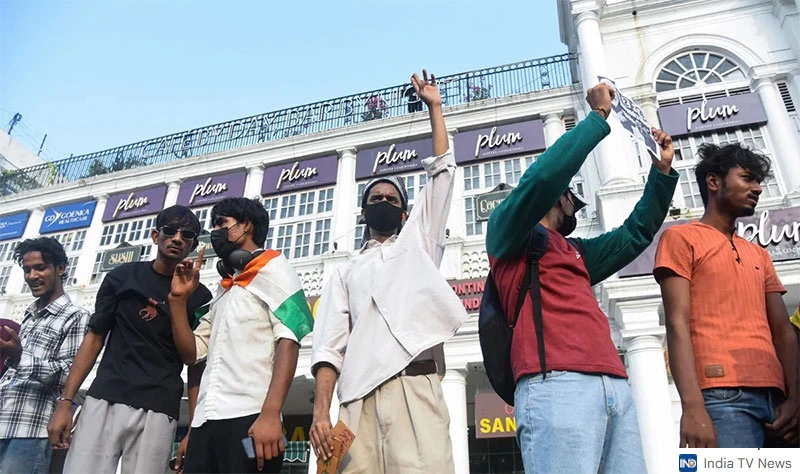
Jail Bharo Andolan: History and Delhi Protest
The words Jail Bharo Andolan bring back memories of India’s long history of protest, sacrifice and resistance. For some, they recall the freedom struggle. For others, they bring back Anna Hazare’s anti-corruption movement in 2011, when thousands of ordinary Indians took to the streets demanding action against corruption. Now, the slogan has returned to the political debate through the Cockroach Janta Party (CJP) campaign and the protests in Delhi.
But is every Jail Bharo Andolan the same? Is courting arrest just a way to grab headlines, or can it put real pressure on a government that refuses to listen? Much depends on the cause, the way the protest is organised, the public response and the action taken by the authorities.
The current CJP campaign brings these questions back into focus. Looking at Anna Hazare’s movement and the longer history of civil disobedience may help us understand what such protests can achieve—and why arrests sometimes deepen a dispute instead of settling it.
What Does Jail Bharo Andolan Mean?
In simple terms, a Jail Bharo Andolan is a movement in which people deliberately court arrest to press the government to address an issue. Rather than run from the police, protesters accept the risk of detention to show that the threat of imprisonment will not make them give up their demands.
The idea has deep roots in India’s freedom struggle. Mahatma Gandhi and other leaders used civil disobedience and non-cooperation to challenge British rule. Many knowingly faced arrest as part of their resistance. However, not every campaign involving mass arrests was formally known as a Jail Bharo Andolan.
After Independence, political parties, social movements and civil society groups continued to use this tactic to put pressure on governments. Some protests attracted public attention and forced officials to respond. Others faded away without producing much change. We must not forget that 1947 also means Partition 1947: A Wound That Never Heals for West Bengal.
The real test is what happens after the arrests. Does the government address the grievance, does public pressure lead to action, or does the protest end with little more than a few headlines?
Anna Hazare’s Anti-Corruption Movement in 2011
To understand why the Jail Bharo slogan became associated with Anna Hazare, we need to go back to 2011. Anger over corruption scandals had spread across India, while questions about the accountability of public officials were putting the political establishment under pressure.
Controversies surrounding telecommunications spectrum allocation and the Commonwealth Games had added to public frustration. Many people believed that influential individuals could escape accountability while ordinary citizens had little power to challenge the system.
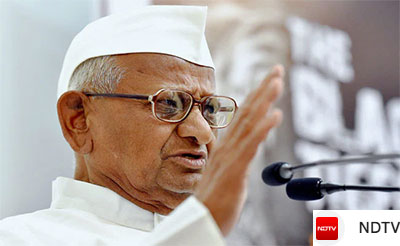
Anna Hazare, a social activist from Maharashtra inspired by Gandhi’s methods, became one of the most visible faces of this anger. His campaign called for a stronger, more independent anti-corruption institution that could investigate allegations against public officials, including those in powerful positions.
At the centre of the campaign was the proposed Jan Lokpal Bill. Hazare and his supporters argued that the government’s version did not go far enough and that the country needed a more effective way to investigate corruption.
On 5 April 2011, Hazare began a hunger strike at Jantar Mantar in Delhi. His fast attracted widespread media coverage and public support. The government eventually agreed to form a joint drafting committee with representatives from the government and civil society.
For a time, there was hope that the two sides could reach an agreement. But they disagreed over the proposed institution’s powers and scope. The April fast did not settle the dispute; instead, the differences became more visible, setting the stage for a much bigger confrontation in August.
Read the India Today chronology of Anna Hazare’s fight against corruption for a timeline of the events that brought his campaign into the national spotlight.
How Jail Bharo Andolan Entered Anna Hazare’s Campaign
Anna Hazare did not invent the Jail Bharo slogan. His campaign, however, brought it back into national political debate at a time when public anger over corruption was running high.
On 8 April 2011, after disagreements with the government over the proposed joint drafting committee, Hazare announced a nationwide Jail Bharo movement for 13 April. He urged supporters to follow the non-violent path associated with Mahatma Gandhi.
The announcement signalled that the campaign would not rely on hunger strikes and negotiations alone. Supporters were being asked to show their determination by willingly facing arrest if the government failed to respond to their demands.
The announcement was covered by The Indian Express.
The more dramatic confrontation came in August. On 16 August 2011, police detained Hazare before he could begin a planned indefinite hunger strike. His proposed protest had become a major point of conflict with the authorities.
The detention triggered demonstrations in Delhi and other parts of the country. Instead of remaining a dispute over permission for a hunger strike, the government’s handling of Hazare became a national talking point in its own right.
The government decided to release him, but Hazare initially refused to leave Tihar Jail without satisfactory arrangements for his protest. He eventually left the prison on 19 August and continued his fast at Ramlila Maidan, where large crowds gathered.
Read The Guardian’s contemporary report on Anna Hazare’s arrest for an account of the confrontation.
There is a lesson here for any government dealing with a public protest. An arrest may stop a demonstration at one place, but it can also bring the cause greater attention. When people believe a protester has been treated unfairly, the attempt to contain a movement may end up attracting more support for it.
Why Anna Hazare’s Movement Attracted So Many People
Anna’s campaign was about more than one proposed law. It gave people from different backgrounds a common platform to express their frustration with corruption and what they saw as a lack of accountability among public officials.
Students, professionals, retired people, activists and families joined demonstrations. Candlelight marches and public gatherings appeared in cities across the country. Social media helped spread messages, videos and calls to take part.
Hazare’s image as a Gandhian activist also mattered. At a time when many people distrusted established political parties, his hunger strike offered a clear focus for a debate that could otherwise have seemed distant and complicated.
The campaign had a specific demand: a stronger anti-corruption mechanism. The Jan Lokpal Bill became the symbol of that demand, giving supporters a common cause around which to organise.
Readers can watch CBS News’ report on India’s anti-corruption movement for contemporary footage and context from August 2011.
Still, mass support did not remove every difficult question. Could a street movement decide the exact wording of a law? How should the demands of civil society groups be balanced against Parliament’s responsibility to debate and pass legislation? And would a powerful new institution, on its own, be enough to eliminate corruption?
These were serious questions, even for people who supported Hazare’s campaign. A movement can bring an issue to the forefront, but turning public anger into workable legislation is a different challenge.
What Did Anna Hazare’s Anti-Corruption Movement Achieve?
Hazare’s movement pushed the demand for an effective anti-corruption institution to the centre of national politics. The government and Parliament had to give the Lokpal question serious attention, although the campaign did not produce an immediate settlement.
On 27 August 2011, Parliament adopted a sense-of-the-House position addressing three key demands raised by Hazare’s campaign. He ended his fast the following day.
The legislation came later. Parliament passed the Lokpal and Lokayuktas Bill in December 2013, and the President gave assent on 1 January 2014. The Lokpal and Lokayuktas Act, 2013, came into force on 16 January 2014.
The official announcement is available in this Press Information Bureau report on the Lokpal and Lokayuktas Bill.
The creation of the Lokpal was an important outcome of the wider debate over corruption. But passing a law is not the same as solving the problem. An institution can exist on paper without ensuring that every complaint is investigated effectively or that every public official is held accountable.
The movement’s legacy is therefore mixed. It brought public attention to political accountability, mobilised people who had rarely joined demonstrations and helped keep institutional reform on the national agenda. At the same time, it showed how difficult it can be to turn a wave of public enthusiasm into lasting change.
Getting people onto the streets is one challenge. Sustaining pressure, reaching workable agreements and ensuring that institutions deliver results are challenges of a different order.
From Anna Hazare to CJP: A Different Political Situation
The current CJP campaign in Delhi raises some of the same questions about protests, arrests and government authority, but the issue at its centre is different.
In October 2026, the Cockroach Janta Party and its supporters organised demonstrations demanding the resignation of Chief Election Commissioner Gyanesh Kumar. The campaign focused on allegations concerning the Special Intensive Revision (SIR) of electoral rolls and concerns about voter registration and deletions.
CEC Gyanesh Kumar: Students Rage & SC Fired
The Election Commission has defended its voter-verification exercise, while the BJP has rejected claims that the process was designed to benefit the ruling party.
Even so, the Delhi protests have raised a wider question: how should the authorities respond when political groups challenge an election-related process and seek to demonstrate publicly?
According to The Indian Express report on the Delhi protest, police detained protesters at multiple locations ahead of the planned demonstration at Jantar Mantar on 10 October 2026. The report also discussed restrictions imposed by the authorities and the dispute over permission for the protest.
The reported detentions included people associated with the campaign, among them Abhijeet Dipke and Ashutosh Ranka. The arrests became part of the wider political dispute over whether the authorities had responded proportionately to the planned demonstration. The circumstances of individual detentions should, of course, be assessed against reliable reporting.
Reuters also reported detentions involving people associated with the movement ahead of a planned rally. Read its coverage of the detentions ahead of the Delhi rally.
Almost all the opposition parties and several political commentators have criticised these arrests as unjustified. Actor Prakash Raj, in an interview with Rajdeep Sardesai, also raised an important question: when the Supreme Court was not stopping the protest, why was the government trying to end it by arresting the protesters?
Watch the Prakash Raj interview with Rajdeep Sardesai on India Today.
The question goes to the heart of the dispute. If a protest is peaceful and no court order prohibits it, the authorities should explain the legal and practical grounds for their action. Political inconvenience alone is not a sufficient explanation for restricting dissent. At the same time, the legality of a particular police action depends on the relevant orders, restrictions and circumstances.
Anna Hazare’s campaign sought an anti-corruption law and a stronger Lokpal framework. The CJP campaign, by contrast, centres on electoral-roll revision, voter registration and demands concerning the Election Commission. The causes and political settings are different, but both movements raise questions about how governments respond when citizens organise to challenge decisions they consider unjust.
The Delhi police excess has become vivid.
Jail Bharo Andolan: More Than a Political Photo Opportunity?
There is a familiar pattern in Indian politics: leaders announce a protest, the police detain them, supporters raise slogans, and the leaders are released a few hours later. Soon afterwards, the same faces may be back before television cameras, explaining why their protest was necessary.
That does not automatically make the protest meaningless. A short detention does not prove that a leader was merely performing for the cameras, just as a large crowd does not prove that every demand is justified. Courting arrest can show solidarity, draw attention to an issue and signal that protesters are prepared to face consequences for their stand.
But what happens after the cameras leave?
If everyone goes home and the underlying grievance is ignored, the campaign may end up as another brief political spectacle. If the protest brings wider public support, forces officials to explain their decisions or opens the door to meaningful negotiations, it may achieve something more substantial.
Anna Hazare’s 2011 movement illustrates this difference. His arrest drew attention, but the Lokpal legislation came through negotiations and Parliament’s legislative process. The arrest itself did not create the law.
The same question should be asked of CJP’s campaign. The number of people detained may show the scale of the confrontation, but it cannot tell us whether the movement has succeeded. That depends on the evidence behind its claims, the public response and whether the institutions concerned address the issues being raised.
Gandhi’s Legacy and the Right to Peaceful Protest
It is easy to draw a direct line from Gandhi’s freedom struggle to every modern Jail Bharo campaign. The use of non-violent resistance provides a genuine connection, but the historical differences matter too.
Gandhi’s campaigns challenged colonial authority and British laws. The Dandi March of 1930 challenged the British salt tax, while the Quit India Movement of 1942 demanded an end to British rule. Imprisonment became part of the wider freedom struggle, but these campaigns were not identical to one another or to every later movement that adopted the Jail Bharo slogan.
In independent India, peaceful protest takes place within a constitutional and legal framework. Citizens have rights, governments have responsibilities, and the police must act within the law. Authorities may impose lawful restrictions in particular circumstances, but public order should not become a blanket excuse for preventing peaceful dissent.
Protesters, too, must consider the people around them. Demonstrations can disrupt transport, business and public services, and those effects cannot simply be ignored. But inconvenience alone does not settle whether a protest should be allowed. The authorities must consider the right to peaceful assembly alongside legitimate public-order concerns.
A democratic society has to protect both. Neither the government nor the protesters can expect every disagreement to end simply because one side refuses to give ground.
Delhi’s Protest Deadlock Needs Dialogue
The dispute around CJP’s campaign raises a practical question: how long can a confrontation continue without a serious attempt at dialogue?
Delhi is not just the seat of the Union government. Millions of people live and work there, travel to schools and colleges, run businesses and depend on public transport. Prolonged restrictions and repeated demonstrations can cause real difficulties for residents who have little direct involvement in the political dispute.
But the inconvenience caused by a protest does not, by itself, answer whether its demands deserve attention. The authorities should explain their decisions, and protesters should put forward their claims through peaceful and lawful means.
If the dispute concerns voter lists, registration procedures and alleged irregularities, the priority should be to examine the evidence, explain the rules and provide an effective way to raise grievances. Political allegations should neither be accepted without scrutiny nor dismissed without examination.
Changing the protest site or making more arrests may manage a particular gathering. Neither, on its own, can settle a dispute over electoral fairness. That requires credible information, transparent procedures and a willingness to address legitimate concerns.
Anna Hazare’s movement offers a useful reminder here. It does not mean that a government must accept every demand made by protesters. It shows, however, that administrative action alone cannot always settle an issue that has become a matter of public trust. Negotiation and institutional action still have a role to play.
Jail Bharo Andolan: 10 Lessons
- Jail Bharo Andolan is a protest tactic in which people deliberately court arrest to press for political or social change.
- Anna Hazare’s 2011 anti-corruption campaign brought the slogan into national debate during the struggle over the proposed Jan Lokpal Bill.
- Hazare’s arrest on 16 August 2011 triggered demonstrations and drew further attention to the campaign.
- The Lokpal and Lokayuktas Act was passed in 2013 and came into force in January 2014, but the law did not automatically eliminate corruption.
- Gandhi’s civil disobedience campaigns helped shape India’s tradition of non-violent resistance, although not every such campaign was formally called a Jail Bharo Andolan.
- The current CJP campaign raises different questions about electoral-roll revision, voter registration and the Election Commission.
- Arrests can bring publicity, but the number of people detained does not determine whether a movement succeeds.
- Peaceful demonstrations must be considered alongside the rights of residents, commuters, businesses and other members of the public.
- Dialogue, transparency and institutional accountability can offer a more lasting way to address political disputes than repeated arrests and releases.
- The real test is whether a Jail Bharo movement brings meaningful attention to the grievance and leads to a response from those responsible for addressing it.
Knowledge Mart Conclusion: Can Arrests Resolve a Political Dispute?
From Gandhi’s civil disobedience campaigns to Anna Hazare’s anti-corruption movement and the current CJP campaign, India’s protest history shows that courting arrest can be a powerful form of political expression. But an arrest is not an achievement in itself. What matters is whether the protest brings attention to a grievance and whether that attention leads to a meaningful response.
Anna Hazare’s movement pushed corruption and the demand for an independent Lokpal into the national debate. It helped build pressure for legislative action, though the eventual law did not end corruption. The CJP campaign raises a different set of questions about electoral rolls, institutional accountability and the handling of demonstrations. Look at the determination of the youth in Delhi.
The two movements are not the same. But both raise an uncomfortable question for those in power: what is gained by detaining protesters if the issues behind the demonstrations remain unresolved?
A government does not have to accept every allegation or agree to every demand. Protesters, in turn, must be prepared to support their claims with evidence and act peacefully. But authorities should explain their decisions, respect lawful rights and leave room for dialogue.
The purpose of a Jail Bharo Andolan should be more than filling police vans or producing dramatic television footage. Its lasting value lies in whether peaceful resistance makes those in power listen, answer difficult questions and take responsibility for their decisions.
Read more political analysis on Knowledge Mart.