Delhi CJP Protest: A Fight Against Tyranny
Oct 11, 2026 - By Ashutosh Roy Current AffairsGovernanceNational PoliticsPolitics
Does Delhi CJP Protest Stand as a Fight Against Oppression?
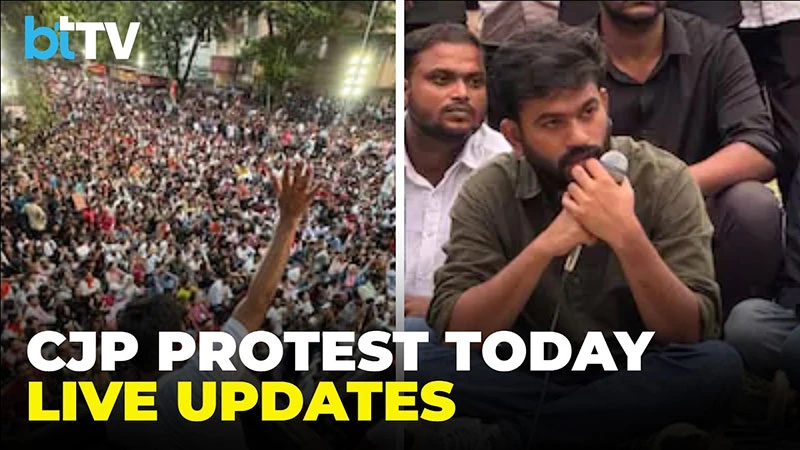
The Delhi CJP Protest on October 10, 2026, has left me asking a simple question: after more than twelve years in power, why did the Modi government respond to a political demonstration with such a heavy show of force? The Cockroach Janta Party (CJP) had called for a march to Jantar Mantar, demanding the resignation of Chief Election Commissioner Gyanesh Kumar. Instead of allowing the protest to proceed under reasonable security arrangements, the authorities imposed restrictions, erected barricades and detained demonstrators across Delhi.
What was the government so worried about? A gathering of young people? Slogans against the Election Commission? Or questions about the fairness of our elections?
A government that believes in its own strength should be able to face criticism. It can reject the protesters’ allegations, defend the Election Commission and explain its position to the public. But when stopping a demonstration appears to take priority over answering the questions behind it, the government only invites more suspicion.
For me, this is what makes the Delhi CJP Protest important. The issue is no longer confined to a demand for one official’s resignation. It concerns the right to protest, public confidence in constitutional institutions and the way the Modi government responds when citizens challenge its authority.
Why Did the CJP Protest Matter?
The immediate dispute centres on the Election Commission’s Special Intensive Revision (SIR) of electoral rolls. Critics have questioned the deletion of voters’ names, the handling of applications and the safeguards available to people who believe they have been wrongly excluded.
CJP and its supporters have demanded an independent examination of the electoral rolls and Gyanesh Kumar’s resignation.
But the Election Commission must also recognise that its word alone may not be enough to settle a controversy that affects public confidence in elections, though they have got rights to defend their decision, but in public and in a transparent way.
If the revision has been conducted properly, the Commission should explain how it checked the records, dealt with objections and helped eligible voters whose names were missing. Transparency would give people a reason to trust the process. Evasion, by contrast, would only deepen their doubts.
An election is not simply a contest between the BJP, the Congress, the Trinamool Congress and other political parties. It determines who represents the people. An eligible citizen whose name is missing from the electoral roll may lose the opportunity to cast a vote. That is not a minor administrative inconvenience; it can have serious democratic consequences. We must recall that West Bengal had gone to the election keeping 27 lakhs names pending for adjudication.
The authorities should therefore welcome a proper examination of genuine complaints rather than expect citizens to remain silent because their questions are politically uncomfortable.
The controversy over electoral rolls is not confined to this protest. Knowledge Mart has also examined the wider Bengal electoral roll controversies, including questions about voter deletions and the need for transparency in the revision process.
The Indian Express report on the Delhi crackdown describes the detention of protesters, activists and political figures at several locations, along with the dispute surrounding the proposed demonstration and the SIR process.
My position is clear: if the government and the Election Commission believe the protesters are wrong, they should answer the allegations. Stopping a march cannot settle a dispute about electoral integrity.
Why Was Delhi Turned Into a Fortress?
The security arrangements caused concern well beyond the protest site. Barricades appeared across important parts of the capital, access to several metro stations was restricted, and police stopped people from reaching the proposed venue. Ordinary commuters also faced disruption, although they had nothing to do with CJP or its demands.
The government and administration have a duty to maintain public order. No sensible person expects the police to ignore a genuine threat to public safety. But a political (rather apolitical) demonstration should not automatically be treated as a danger that justifies restrictions on an entire city.
Workers need to reach their offices. Students have classes, patients need medical care, and families have their own commitments. Their lives cannot simply be put on hold because a Delhi CJP Protest has been announced. The administration should have considered whether more limited arrangements could protect public safety without causing widespread inconvenience.
The controversy grew when the Supreme Court questioned blanket restrictions on metro and railway services ahead of the demonstration. The Hindustan Times report on the Supreme Court’s intervention records the court’s concerns about restrictions on public transport.
That raises a legitimate question about the administration’s judgement. Could the police not have secured sensitive locations, deployed sufficient personnel and dealt with specific unlawful conduct without imposing such extensive restrictions?
In my view, the response was unnecessarily heavy-handed. The scale of the security arrangements became a major part of the story, distracting attention from the original demand and raising fresh questions about the government’s attitude towards dissent.
Delhi is the national capital, but it is also a city where millions of people live and work. It should not have to function like a fortress every time citizens want to challenge those in power.
The Detentions: Preventing Trouble or Preventing Protest?
The reported detention of CJP organisers before they could reach the protest site is particularly troubling. According to reports, founders Abhijeet Dipke, Ashutosh Ranka and Saurav Das were detained after arriving at Delhi airport. Other activists and political figures were also detained at different locations.
Reports subsequently said that the leaders were released under conditions, while their legal team questioned the restrictions imposed on them. The grounds for these actions and the conditions attached to their release deserve scrutiny. Preventive powers must have a lawful basis; they should not become a convenient means of keeping political opponents away from a demonstration.
There is an obvious problem here. If the organisers were detained before reaching the proposed venue, they could not carry out their planned demonstration there.
The police may argue that preventive action was necessary to avoid disorder. That explanation should be assessed on its merits. The authorities must be able to show why they considered such action necessary and whether less restrictive measures could have achieved the same purpose.
Nobody is above the law, including peaceful protesters. If someone commits an offence, the police can take appropriate action. But criticism of the government, by itself, does not make someone a threat to public order.
A right that can be exercised only when those in power find it convenient is hardly a meaningful right. Citizens must be able to express opposition without automatically being treated as troublemakers.
That is the distinction the authorities need to respect: maintaining public order is their responsibility, but preventing peaceful dissent from being heard should not be their objective.
The Election Commission Must Answer Difficult Questions
The controversy surrounding Gyanesh Kumar goes beyond the demand for one official’s resignation. It concerns confidence in the Election Commission of India, a constitutional institution entrusted with conducting elections.
Legal authority is essential, but it cannot be the only basis of public trust. People must also believe that the Commission performs its duties fairly and independently. When doubts arise about electoral rolls, the institution should address them with clear explanations and evidence.
How are disputed deletions checked? What can an eligible voter do when their name is missing? Are objections resolved in time for people to exercise their voting rights? These are practical questions affecting citizens, not merely talking points for political parties.
I am also concerned by reports of disagreements within the Election Commission over decisions and procedures. Any such differences should be examined through the proper institutional process. The public deserves clarity about how important decisions are made and how differing views are handled.
At the same time, allegations of deliberate electoral manipulation must be supported by evidence. A documented error, an unanswered question and an unproven accusation are not the same thing. Distinguishing between them would strengthen the demand for accountability.
An independent audit, transparent explanations and effective remedies for affected voters would help restore confidence far more effectively than attempts to silence critics.
People may disagree over whether Gyanesh Kumar should resign. That is a political question. But protecting electoral integrity should not be a partisan issue. Voters who support the BJP have as much interest in accurate electoral rolls as those who support the opposition.
The demand for accountability has also taken a sharper form in Knowledge Mart’s coverage of the call for Gyanesh Kumar’s resignation. The central question is whether the Commission can address serious concerns about its functioning in a way that restores public confidence.
If the Commission is confident about its work, it should welcome a fair and independent examination. Such scrutiny should strengthen a credible institution, not weaken it.
Why Does the Modi Government Look So Uncertain?
The Modi government has built much of its political image around strength and decisiveness. During the past twelve years, it has taken major decisions such as the introduction of GST and the abrogation of Article 370 despite fierce opposition. Whether people agreed with those decisions or not, the government showed little hesitation in pushing them through. Why, then, does its handling of the Delhi CJP Protest appear so different?
There is something unusual about the contrast between the government’s earlier attitude and its response to this demonstration. The initial handling of the CJP issue appears to have underestimated its potential, while the subsequent restrictions and detentions suggest a level of caution that is difficult to ignore. The earlier controversy surrounding Dharmendra Pradhan also raises questions about whether the ruling establishment misjudged the political consequences of matters it initially treated lightly. In politics, negligence can prove costly, but an excessive response can be equally damaging.
Why this sudden hesitation from a government that once projected such certainty? I believe this question deserves serious attention. The Modi–Shah leadership may still command considerable political and administrative power, but the way it has handled this protest raises the possibility that the political situation is becoming less comfortable for it. The combination of initial underestimation and subsequent overactivity does not prove that the government is weakening, but it certainly invites questions about its political judgement.
The wider opposition movement cannot be ignored either. Rahul Gandhi and Priyanka Gandhi have been part of efforts to bring opposition voices together around questions of democratic institutions and electoral fairness. Now, from an unexpected quarter, CJP has raised its own questions about the Election Commission and Chief Election Commissioner Gyanesh Kumar. The government is therefore facing criticism from different directions, not just from the familiar opposition parties it has confronted for years.
CJP may not have the organisational strength of a major political party, but that is not the point. A movement can create a political problem if it raises an issue that people consider important. The government might have been prepared for another confrontation with the Congress or other established opponents. A challenge emerging from a less expected quarter, however, may have been harder to anticipate. Perhaps the Delhi CJP Protest was a question out of syllabus for the ruling establishment.
I am not suggesting that one protest proves the Modi–Shah leadership is losing its grip. That would be too sweeping a conclusion. But the difference between the government’s earlier confidence over decisions such as GST and Article 370 and its present response to CJP is striking. A government confident in its political position should be able to permit a lawful demonstration under reasonable security arrangements and answer the allegations directly.
Instead, the restrictions and detentions have helped turn the protest into a wider debate about civil liberties and the government’s attitude towards dissent. The authorities may have been able to disrupt the demonstration, but they have not thereby settled the questions that brought the protesters to Delhi.
This is not the first time the controversy surrounding the Chief Election Commissioner has prompted a wider political response. Knowledge Mart has also covered the protest against Gyanesh Kumar and the subsequent FIR controversy, which forms part of the larger debate over dissent and accountability.
In my view, the Delhi CJP Protest has exposed a political difficulty the government may not have anticipated. Whether this reflects a deeper weakening of the ruling establishment remains to be seen. What cannot be ignored is that the Modi government now faces questions it cannot answer simply by displaying its administrative strength. For a leadership that has long projected decisiveness, this is an uncomfortable position to be in.
The real test is not whether the government can stop a march. It is whether it can face criticism without allowing its response to become a bigger controversy than the protest itself.
India’s History Offers a Warning to Those in Power
India’s freedom struggle taught us that challenging authority is not necessarily an act of disorder. Mahatma Gandhi used mass mobilisation and non-violent protest to challenge British rule. Subhas Chandra Bose followed a different path, but his contribution to the freedom struggle remains an important part of our national history.
Independent India has its own warning about the dangers of unchecked state power. During the Emergency of 1975–77, civil liberties were curtailed, political opponents were detained and democratic institutions came under severe pressure. That period remains a reminder of why constitutional safeguards matter.
I am not suggesting that the circumstances surrounding the CJP protest are identical to those of the Emergency. The differences matter. But one lesson remains relevant: public order must not become a convenient justification for demanding unquestioning obedience.
A peaceful protest can be inconvenient for a government. It can challenge its account of events and force its leaders to answer questions they would rather avoid. That inconvenience is part of democratic politics.
Clearing a street or detaining an organiser does not prove that a protester’s concerns are false. Nor does it settle the question of whether the authorities acted proportionately.
An excessive response can even give a movement more publicity than it might otherwise have received. People who had never heard of CJP may now want to know what it demanded and why the authorities took such extensive measures.
The government may be able to stop a march on a particular day. It cannot assume that the questions behind it will disappear along with the crowd.
The UN’s Intervention: A Separate Question
Reports of mass detentions also drew concern from the UN human rights office, prompting India’s Ministry of External Affairs to reject the intervention as unwarranted.
I have reservations about the timing and selectivity of international human rights commentary. The world continues to face wars, humanitarian disasters and grave human rights violations. The suffering in Gaza, in particular, demands sustained international attention. It is reasonable to ask whether international institutions apply their principles consistently.
But that question must not be confused with the conduct of Indian authorities in Delhi. Even if an international intervention is selective or poorly timed, that does not establish that the authorities acted properly.
India is a sovereign country, and its democratic institutions must function under the Constitution. Yet sovereignty should not become an excuse to avoid legitimate scrutiny. If the restrictions were justified, the authorities should explain why they were necessary and proportionate.
The reverse is also true. International criticism does not automatically prove every allegation against the government. The facts must be examined on their own merits.
Defending India’s interests and protecting democratic freedoms are not opposing goals. India can stand firmly on its sovereignty while ensuring that its citizens retain the right to question those who govern them.
The Opposition Must Rise to the Challenge
The opposition has a responsibility to do more than condemn the government’s actions. Rahul Gandhi, Priyanka Gandhi and other opposition leaders have raised questions about democratic institutions and electoral fairness. Their statements can keep these issues alive, but statements alone will not resolve the dispute.
The opposition must seek answers, pursue appropriate legal remedies and support a credible examination of disputed voter-list revisions. It must also avoid presenting every allegation as an established fact. Anyone demanding accountability should be prepared to follow the evidence.
CJP faces the same test. Its demand will carry greater weight if it produces verifiable evidence, explains what remedies it seeks and keeps its demonstrations peaceful.
The government, however, carries a greater responsibility because it controls the administrative machinery and the police. That authority comes with an obligation to act proportionately and explain decisions that affect citizens’ rights.
Political demonstrations will not always be convenient. That is hardly a reason to suppress them. People take to the streets because they believe an issue is being ignored or that the usual channels have failed to produce an answer. If inconvenience alone becomes sufficient grounds for restricting a protest, the right to peaceful assembly loses its meaning.
Will the Delhi CJP Protest Change Anything?
The confrontation may have disrupted the demonstration, but it has not settled the questions that brought protesters to Delhi. The Election Commission still needs to address legitimate concerns about disputed voter deletions. The government must explain the scale of its security response, and the authorities must show that peaceful protest can take place without unnecessary restrictions.
The release of CJP leaders does not answer those questions. Nor does reopening metro stations automatically restore public confidence. The electoral-roll complaints and the police response are separate matters, and each deserves proper examination.
A Reuters report on the Delhi crackdown provides further context on the detentions, the restrictions imposed ahead of the demonstration and the dispute involving the Election Commission. The significance of these developments goes beyond the embarrassment they may cause the government. They raise a fundamental question about how a democracy responds when citizens challenge those in power.
I believe the Modi government made a political mistake by allowing the protest to become a confrontation of this scale. CJP may have come from an unexpected quarter, but the administration had other options. Reasonable security arrangements and a willingness to engage with the protesters could have prevented the dispute from becoming a wider controversy.
The Election Commission must protect public confidence in the electoral process. The opposition must turn its allegations into evidence and its demands into credible remedies. And the government must understand that public trust cannot be secured through force alone.
The Delhi CJP Protest has become a test of how India treats citizens who challenge those in power. If the protesters are wrong, the authorities should answer them with facts. If the electoral process is sound, transparency will help establish that. Neither requires the government to fear peaceful criticism.
India’s democracy does not become stronger simply because streets are cleared and critics are detained. It becomes stronger when citizens can ask difficult questions and those in power are willing to answer them.
That is why I regard the Delhi CJP Protest as a fight against oppression. Not because every claim made by its organisers must automatically be accepted, but because no government should treat peaceful dissent as an offence in itself.
A government confident in its legitimacy does not fear questions. It answers them.
What the Delhi CJP Crackdown Reveals
- The Delhi CJP Protest turned a demand for Gyanesh Kumar’s resignation into a wider debate about democratic freedoms and the government’s response to dissent.
- The dispute over the Special Intensive Revision (SIR) has raised questions about voter deletions, transparency and remedies for eligible voters.
- Extensive police deployment and restrictions on public transport have prompted concerns about whether the security response was proportionate.
- The detention of protest organisers has renewed debate over preventive policing and the right to peaceful political assembly.
- Public confidence in the Election Commission depends partly on clear answers about electoral-roll accuracy and the handling of complaints.
- In my view, the government’s response was a political miscalculation that raised questions about its willingness to face criticism.
- India’s experience of the Emergency reminds us why state power must remain subject to democratic safeguards.
- International criticism can be challenged, but the actions of Indian authorities must still be examined on their own merits.
- The opposition must produce evidence, seek accountability and distinguish proven irregularities from allegations that remain unresolved.
- The real test of the Delhi CJP Protest is whether the authorities address the concerns behind it rather than merely prevent people from gathering.