West Bengal Political Landscape: Big Fights
Oct 09, 2026 - By Ashutosh Roy Election AnalysisPoliticsWest Bengal Politics
West Bengal Political Landscape: Major Turns That Changed Bengal
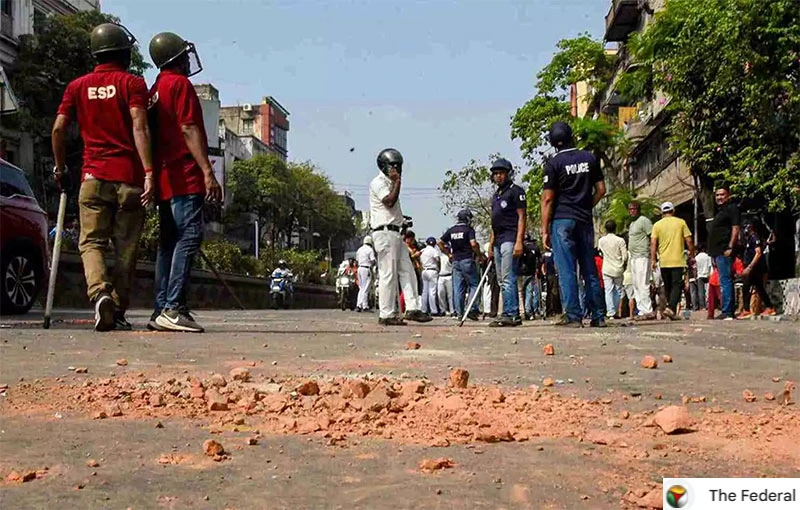
The West Bengal Political Landscape has rarely changed quietly. Bengal moved from Congress dominance to communist rule, from the Left Front to Mamata Banerjee’s Trinamool Congress, and now to a BJP government. None of those changes happened overnight. They were preceded by years of public anger, political conflict, organisational decline and, at several points, serious violence.
That is why Bengal’s political story cannot be understood simply by counting election results. Partition, food shortages, land struggles, class politics, Naxalbari, the Emergency, Operation Barga, industrialisation, Singur, Nandigram and the rise of welfare politics all played their part. So did something less visible but equally important: the ability of political parties to build organisations that reached into villages, neighbourhoods and even everyday disputes.
There is a pattern running through this long history. A party wins a historic mandate, builds an organisation that appears extremely difficult to challenge and gradually becomes deeply embedded in public life. For years, its dominance can look permanent. Then dissatisfaction begins to accumulate. Voters who once depended on that political machine start looking for another vehicle. Bengal has gone through that process more than once.
1947: Glorious Independence With the Pain of Partition
For Bengal, 1947 was not simply a moment of celebration. Independence arrived together with the trauma of the Partition of Bengal. Sir Cyril Radcliffe’s boundary divided families, communities and long-established economic connections almost overnight. People who had lived within the same cultural world suddenly found themselves separated by an international border.
The memory of the Great Calcutta Killings of 1946 was still fresh. Communal violence, displacement and uncertainty had already damaged the social fabric. For many Bengalis, freedom therefore did not feel like a clean break from suffering. The slogan “Azadi jhoota hai”, heard among sections of the Left, reflected the disappointment of people who believed independence had failed to deliver the social and economic transformation they had expected.
The problems created by Partition continued for years. Refugee rehabilitation, employment, food security and access to land became major political questions. The new state had to absorb a huge displaced population while building democratic institutions at the same time. Those early pressures helped create the conditions in which food, land and class would become central issues in Bengal politics.
Watch how the West Bengal Political Landscape changed in India Today.
Food, Land and the Growth of the Left
The roots of Bengal’s Left politics were already deep before the Communist parties came close to forming a government. Peasant movements had given the Left a political language that connected land with dignity and survival. The struggles of poor cultivators against landlords made class politics in Bengal a practical issue rather than merely an ideological argument.
The early post-independence years were not, however, defined by permanent political hostility. Chief Minister Bidhan Chandra Roy was a strong opponent of communism, but his relationship with Jyoti Basu showed that political disagreement did not necessarily have to become personal hatred. Basu could attack the government politically while maintaining a degree of personal respect for Roy.
That atmosphere changed when food became one of Bengal’s most contentious political issues. The 1959 Food Movement was a major turning point. Food shortages had already created widespread anger, and thousands of protesters marched towards Writers’ Building. The police responded with lathi charges, tear gas and firing. Contemporary accounts put the death toll at more than 80. Readers may compare this with the 21 July 1993 Kolkata firing, but the two movements had a fundamental difference. In 1959, the protesters were marching towards Writers’ Building over the food crisis and shortages. In 1993, the immediate demand was the Voter Identity Card, an issue that had little direct connection with the functioning of the state administration at Writers’ Building. That difference matters when we look at how political protests in Bengal have changed over time.
The significance of the movement went beyond the immediate shortage of rice. It gave the Left an opportunity to present itself as the voice of people facing hunger and administrative failure. When another major food agitation erupted in 1966, the political advantage for the opposition became even greater. Congress increasingly appeared unable to deal with the everyday problems that mattered most to poorer households.
This part of West Bengal political history is important because the Left’s appeal was never based on ideology alone. It connected its political message with food, land, wages and the basic question of how ordinary people could protect their livelihoods.
1967: Naxalbari Changed Bengal’s Political Language
Then came Naxalbari in 1967. What began as a peasant struggle in the Darjeeling foothills developed into a radical movement that challenged landlords as well as the parliamentary political system. Leaders including Charu Majumdar and Kanu Sanyal became closely associated with the movement and its call for armed revolution.
By the early 1970s, Naxalite politics had spread into Kolkata’s colleges, universities and streets. Targeted killings, police operations and counter-violence created an atmosphere in which political disagreement could become a matter of life and death. The period remains one of the most controversial chapters in Bengal’s modern history.
There is little value in romanticising that violence. The armed movement caused real suffering, while the state’s response was also extremely severe. But the movement had a clear ideological foundation centred on land, class and revolutionary change. That distinguishes Naxalite politics from later forms of political patronage, where influence was more often connected to contracts, jobs, licences or local economic control.
Naxalbari therefore changed more than the fortunes of one political movement. It changed the vocabulary of political conflict in Bengal. Violence became connected not merely with elections or clashes between rival groups, but with competing ideas about the state, property and society itself.
1967: Congress Finally Lost Its Political Monopoly
The same year brought another important change. Ajoy Mukherjee broke away from Congress and formed the Bangla Congress. In 1967, he led a United Front government with Jyoti Basu as Deputy Chief Minister. Basu’s entry into the cabinet was a clear sign that Congress could no longer assume that its position in Bengal was secure.
The government was unstable. Alliances shifted, administrations collapsed and President’s Rule became part of Bengal’s political experience. Yet the importance of the period should not be judged only by how long the government survived. It demonstrated that Congress could be defeated and that the political arithmetic of Bengal was beginning to change.
It also exposed a recurring problem: breaking the dominance of an established party is easier than building a stable alternative. The opposition had enough strength to challenge Congress but lacked the unity needed for lasting political stability.
1972: The Siddhartha Shankar Ray Years
Congress returned to power under Siddhartha Shankar Ray in 1972, but Bengal did not return to political calm. The government took an aggressive approach towards Naxalite and other left-wing activism. Allegations of extrajudicial killings and severe police repression became part of the political memory of the period, while incidents such as the Cossipore violence remained symbols of those turbulent years.
The Emergency declared by Indira Gandhi in 1975 made the situation still darker. Civil liberties were suspended, opposition leaders and workers were detained, and political dissent faced extraordinary restrictions. In Bengal, where anti-Congress sentiment was already strong, the Emergency provided another reason for people to look towards the opposition.
The irony was that repression intended to weaken political opponents helped create the conditions for a larger realignment. By 1977, Congress faced an opposition that was better organised and increasingly capable of presenting itself as a government in waiting.
1977: The Left Front Creates a New Bengal
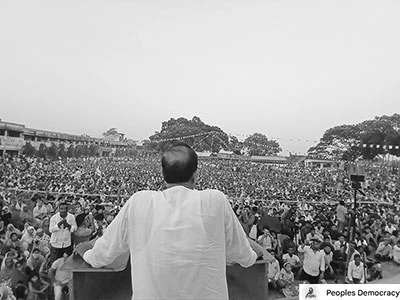
The 1977 election was one of the biggest turns in the West Bengal Political Landscape. The CPI(M)-led Left Front came to power with Jyoti Basu as Chief Minister, ending decades of Congress dominance. What followed was 34 years of uninterrupted Left Front rule, one of the longest periods of elected communist government anywhere in the world.
The Left did not win simply because Congress had become unpopular. It had built a formidable organisation, particularly in rural Bengal. Land reform, panchayat politics, trade unions, party cadres and village-level leaders created a network capable of reaching voters far beyond election time.
Operation Barga Changed Rural Politics
Operation Barga became one of the defining policies of the Left government. Sharecroppers were registered and given greater protection over the land they cultivated. Land reform gave the Left a powerful rural constituency, particularly among poorer cultivators.
The expansion of Panchayati Raj strengthened that relationship. Political power moved deeper into villages, while party workers became important intermediaries between citizens and the administration. Supporters viewed this as grassroots democracy. Critics argued that the line between the party and the government gradually became too difficult to distinguish.
That contradiction would later become important. The same local network that had made the Left exceptionally effective at reaching villagers also created resentment when people felt that access to government services, opportunities or local influence depended too heavily on political loyalty.
Our separate analysis of the decline of CPIM in West Bengal examines how this long period of dominance eventually began to weaken.
The Industrialisation Problem
The Left’s land reforms were politically important, but its industrial record became increasingly difficult to defend. Militant trade union politics, labour unrest and an unfriendly investment climate contributed to industrial decline. Factories closed or reduced operations, and younger Bengalis increasingly looked outside the state for employment.
Buddhadeb Bhattacharjee recognised the problem and attempted to change course by attracting new investment. But industrialisation brought the government into conflict with sections of the rural population whose land politics had helped establish the Left in the first place.
That contradiction became explosive when the government began pursuing major industrial projects through land acquisition.
Singur and Nandigram: The Left’s Political Breaking Point
The Singur and Nandigram movements transformed Bengal politics. The Left Front government wanted land for industrial development, but large sections of the rural population resisted the acquisition process. A debate about factories and investment quickly became a much wider argument about land, consent and the government’s treatment of its own supporters.
Singur became nationally famous because of the Tata Motors project. Nandigram became even more politically explosive because of the scale of resistance and violence surrounding the proposed acquisition. The Left government struggled to persuade people that industrialisation would improve their lives rather than take away their land.
The political irony was difficult to miss. A government whose credibility had been built partly on land reform was now facing one of its biggest crises because of land acquisition.
Contemporary reporting and later political analysis have repeatedly treated Singur and Nandigram as crucial moments in the Left Front’s decline. The Singur-Nandigram political battle eventually became much larger than the individual projects themselves.
For voters, the question had changed. Bengal certainly needed industry and employment, but could development be pursued without treating people resisting land acquisition as an obstacle?
2011: Mamata Banerjee’s Poriborton
Mamata Banerjee understood the opportunity created by Singur and Nandigram better than any other opposition leader. Her slogan of Ma, Mati, Manush turned resistance to land acquisition into a broader movement against 34 years of Left rule.
The Trinamool Congress became the vehicle for voters who wanted change but had repeatedly struggled against the Left’s powerful organisation. In the 2011 Assembly election, that accumulated anger finally produced a historic result. The Left Front was removed from office and Mamata Banerjee became Chief Minister.
The significance went beyond a change of government. Bengal had just demonstrated that even a party with an organisation built over decades could be defeated. The old assumption that the Left was almost impossible to remove disappeared overnight.
There was also an irony in Mamata’s victory. Her political rise was closely tied to resistance against the concentration of power associated with the Left. Over the next fifteen years, however, the TMC itself would build an extensive network at the block, panchayat and booth levels. Bengal was about to see another version of the same political cycle. Perhaps history will remember the TMC era of Bengal Politics as a symbol maladministration and mismanagement.
The TMC Era: From Political Movement to Political Establishment
The Trinamool Congress entered government as the party that had defeated an entrenched establishment. With time, however, it became the establishment itself. Its organisation spread from Kolkata into blocks, panchayats and villages, while local leaders increasingly became intermediaries between citizens and the administration.
That reach was a major electoral advantage, but it also generated criticism. Opposition parties accused local TMC leaders of syndicate politics, extortion, political interference and control over local economic opportunities. Such allegations cannot automatically be applied to every worker or leader, but they became part of the wider political narrative surrounding the government.
Long-term incumbency creates another problem. Once a party controls government for years, almost every local grievance can become its responsibility. A dispute involving a building permit, a school appointment, a contract, a local club or access to a government benefit can eventually become a complaint about the ruling party itself.
Welfare schemes provided the TMC with another important source of political support. Direct benefits strengthened its relationship with poorer households and women voters. But welfare could not settle every political question. Employment, industrial investment, education, public safety and institutional accountability remained important concerns.
The opposition increasingly built its campaign around allegations of corruption, political violence and administrative failure. Knowledge Mart has examined several aspects of this period, including the changing BJP-TMC-CPIM opposition battle in Bengal and the growing importance of the Mamata-Suvendu rivalry.
2026: The BJP Breaks Another Political Wall
The 2026 Assembly election produced the newest major change in the West Bengal Political Landscape. After fifteen years of Trinamool Congress rule, the BJP won a decisive victory and formed the first BJP government in Bengal’s modern political history.
The scale of the result mattered. The BJP finally won 208 (including Falta by-election) of West Bengal’s 294 Assembly seats, while the TMC was reduced to 80, compared with 215 in 2021. Mamata Banerjee also lost Bhabanipur to her former political colleague Suvendu Adhikari. The 2026 election result therefore represented far more than an ordinary transfer of power.
The BJP’s gains were geographically significant. It retained strength in North Bengal, expanded in South Bengal and made inroads into areas that had long been regarded as TMC strongholds. The Indian Express analysis pointed to anti-incumbency, Hindu vote consolidation and dissatisfaction with the ruling party’s political style among the factors behind the result. The regional breakdown of the BJP’s Bengal victory helps explain why the result was so broad.
The parallel with 2011 is striking. In 2011, voters ended a 34-year Left government. In 2026, they ended a 15-year TMC government. In both elections, the incumbent had developed an exceptionally strong political network, while the opposition succeeded in turning accumulated dissatisfaction into a larger demand for change.
The difference is equally important. Mamata’s 2011 movement was led by a regional party challenging the Left. The 2026 challenger was a national party that had spent years expanding its organisational presence in Bengal. The BJP finally converted that long preparation into government.
Suvendu Adhikari and the Nandigram Connection
The symbolism of 2026 became stronger because of Suvendu Adhikari. His political career is closely linked with Nandigram, the movement that helped destroy the Left’s political credibility. He later left the TMC and became one of the BJP’s most important Bengal leaders.
His victory over Mamata Banerjee in Nandigram in 2021 had already damaged the aura of political invincibility surrounding the TMC leader. In 2026, Suvendu defeated Mamata again in Bhabanipur while also winning Nandigram. The Mamata-Suvendu political battle therefore became part of a much larger story about the collapse of the previous TMC order.
Nandigram has retained its symbolic importance even after the Assembly election. Knowledge Mart’s coverage of the Nandigram Bypoll and the BJP’s Nandigram candidate strategy shows why the constituency continues to attract political attention.
What Bengal’s Political Journey Reveals
Looking at the decades together reveals something more complicated than a simple Congress-Left-TMC-BJP sequence. Every major change grew out of problems that the previous political order had failed to resolve.
Congress lost ground as food shortages, unrest and repression damaged its credibility. The Left built a remarkable rural network by combining ideology with land reform and local organisation, but later struggled with industrial decline, cadre dominance and the handling of Singur and Nandigram. Mamata Banerjee turned that dissatisfaction into Poriborton and kept the TMC in power through welfare programmes and an extensive grassroots network. Eventually, however, those same structures became targets for an opposition campaign focused on corruption, violence and political control.
The BJP’s rise followed a different route. It spent years expanding beyond its traditional pockets, particularly after its strong performance in the 2019 Lok Sabha election. By 2026, it had built enough of an organisation to turn anti-TMC sentiment into a legislative majority.
That history offers a straightforward warning to the new government. Electoral success can create enormous confidence, but confidence can become complacency. The BJP now has to deal with the problems that helped it defeat the TMC: jobs, industrial investment, education, healthcare, law and order, corruption and the relationship between political workers and the administration.
Over time, long political rule can create a form of political elitism, where leaders and party organisations become increasingly disconnected from the everyday concerns of voters. Once that distance grows, even a powerful organisation can become vulnerable.
The Acid Test Is Governance
The BJP has won the election. Now comes the harder part after the salient change in West Bengal Political Landscape.
An opposition party can blame the government in power for almost everything. A government cannot do that. It has to produce results. If Bengal wants investment, the administration must create an environment in which businesses can operate while local communities are not ignored. If young people want jobs, slogans about development will not be enough. If institutions are to regain public trust, political loyalty cannot become a substitute for professional administration.
The state’s regional differences will make the task more complicated. North Bengal, Junglemahal, the industrial districts, border areas and metropolitan Kolkata do not always vote for identical reasons. Regional politics, local leadership, demographic concerns and booth-level organisation will continue to matter even when a statewide political narrative appears dominant.
There is another lesson the BJP cannot afford to ignore. The Left Front once looked almost impossible to remove. The TMC later acquired a similar reputation. Both eventually lost power.
That does not mean history must repeat itself. It means the new government has a chance to break the pattern. Strong institutions, investment that creates genuine employment, better public services and political competition without excessive dependence on party networks would give Bengal something more valuable than another change of political colour.
Why Bengal’s Political History Still Matters
The West Bengal Political Landscape is ultimately more than a record of who occupied Writers’ Building or Nabanna. It is a record of how voters reacted when governments delivered, failed, overreached or stopped listening.
From Partition and the Food Movement to Naxalbari, from Operation Barga to Singur and Nandigram, and from Mamata Banerjee’s Poriborton to the BJP’s 2026 breakthrough, Bengal has repeatedly shown that political dominance can survive for decades, but it should never be mistaken for permanent ownership.
Congress fell after 1977 and never returned to power in Bengal. The Left Front lost office in 2011 and has been steadily pushed to the margins since then. The TMC has now suffered the same fate. The BJP should study that history carefully. Bengal is politically aware, politically argumentative and often unforgiving when voters feel that a government has stopped listening. Unlike in some states where one political force can dominate for generations, Bengal has already shown that voters are willing to make dramatic changes.
The BJP therefore has an opportunity that goes beyond simply replacing the TMC. It can either become another powerful political establishment or try to build a government that is judged more by institutions, jobs, investment and public services than by the strength of its party organisation.
Bengal does not belong permanently to any party. The voters have changed the political order before, and they can do it again.
What Changed Bengal Politics Over the Decades?
- Partition reshaped Bengal’s early politics through displacement, refugee rehabilitation and struggles over food, land and employment.
- The Food Movements of 1959 and 1966 strengthened the Left’s connection with ordinary voters and exposed weaknesses in Congress’s political machinery.
- Naxalbari in 1967 introduced a radical phase that changed the language and intensity of political conflict.
- The 1977 Left Front victory ended Congress dominance and began 34 years of uninterrupted Left rule, the first revolutionary change in West Bengal Political Landscape.
- Operation Barga and Panchayati Raj helped the Left build an exceptionally strong rural organisation.
- Over time, cadre dominance, trade-union militancy and industrial decline became major criticisms of the Left government.
- Singur and Nandigram turned land acquisition into the issue that helped break the Left’s political dominance.
- Mamata Banerjee’s 2011 victory ended 34 years of Left Front rule and created another major political realignment.
- Fifteen years of TMC government produced a powerful political establishment, combining welfare delivery with growing opposition criticism over corruption, violence and local political control.
- The 2026 BJP victory produced another historic transfer of power and reinforced the long-standing lesson that electoral dominance is never guaranteed forever.