Bengal Crisis: Why No One Can Ignore Now?
Jan 03, 2026 - By Ashutosh Roy Governance & AdminPoliticsSocial IssuesSocietyWest Bengal Politics
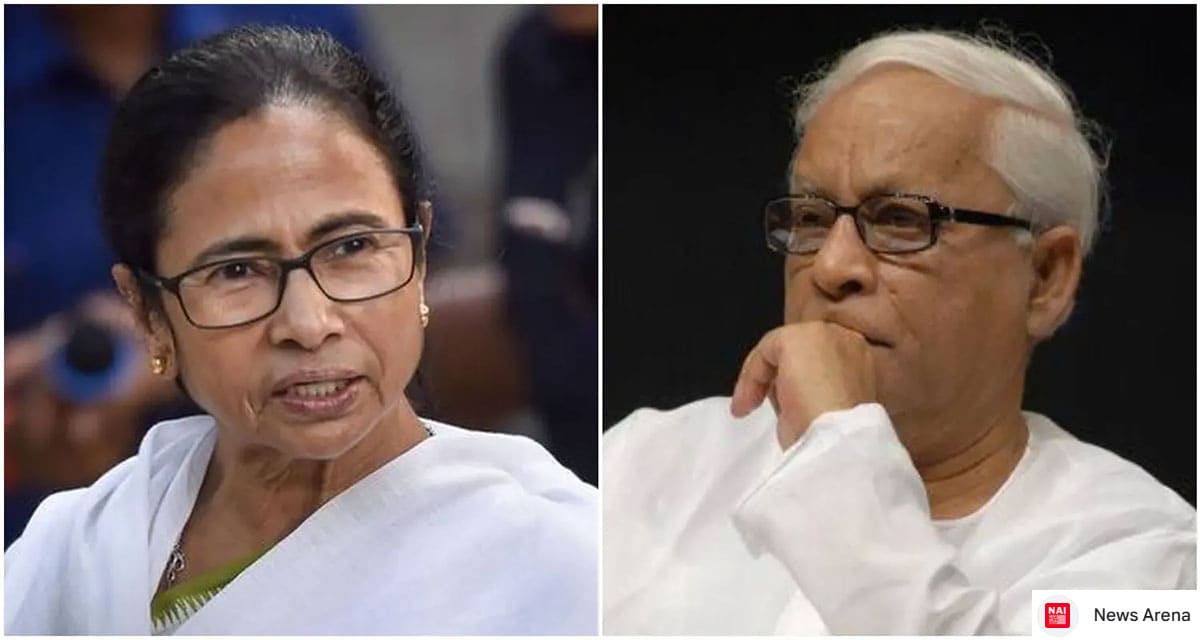
Bengal Crisis: Power, Polarization, and Control
The romance of January 1 is over. Now it is time to stand on the hard ground of reality and do some honest self-criticism. Once, Bengalis took immense pride in their identity. However, today that pride is clearly in decline. The Bengal Crisis has become vibrant today.
A journey from legendary past to Bengal Crisis at present
This is a land where the history of class struggle was written in golden letters. Yet, despite such a glorious past, rulers and the oppressed now speak in almost the same tone. As a result, Bengali dignity in thought and mindset has been deeply bruised. This is just in contradiction to Bengal Crisis.
For generations, open-mindedness, scientific thinking, and revolutionary ideas shaped Bengali society.

Image Courtesy: Daily Sun
Moreover, education, literature, art, and culture always kept Bengalis at the forefront. Therefore, Bengalis earned respect not only across India but also on the global stage.
Another major source of pride was the idea of the “Bengali gentleman.” Values, ethics, self-respect, and independent thinking once defined this identity. In fact, these qualities gave Bengalis the respected label of bhadralok. But where do we stand today?
Bengal’s Glorious Past and Intellectual Legacy
Let us take a quick look at Bengal’s past. The roots of revolutionary thinking in India began in West Bengal. Reformers like Raja Rammohan Roy and Ishwar Chandra Vidyasagar started powerful movements that changed society. Similarly, world-renowned filmmakers such as Satyajit Ray, Mrinal Sen, and Ritwik Ghatak rose from this very land.
This soil gave birth to literary giants like Rabindranath Tagore, Sukanta Bhattacharya, Jibanananda Das, and Shankha Ghosh. Moreover, this is the land that nurtured Netaji Subhas Chandra Bose and revolutionary martyr Khudiram Bose.
Great scientists like Satyendra Nath Bose, Jagadish Chandra Bose, and Meghnad Saha also grew up on this soil. Under Sir Ashutosh Mukherjee, Calcutta University earned global recognition and academic prestige. Who could think of Bengal Crisis in those days?
From Class Struggle to Political Control
Bengali history of class struggles perhaps reached its strongest expression during the fight against British imperialism. At times, revolutionaries like Binoy, Badal, and Dinesh led the oppressed Bengalis in armed resistance against colonial rulers.
At other times, Bengalis stood firmly against rigid Brahmanical orthodoxy. Later, the same bloodline of resistance appeared in the Naxalite movement, which represented the struggle of the oppressed citizens against an exploitative state. In every phase, Bengal remained a land of resistance, ideas, and courage.
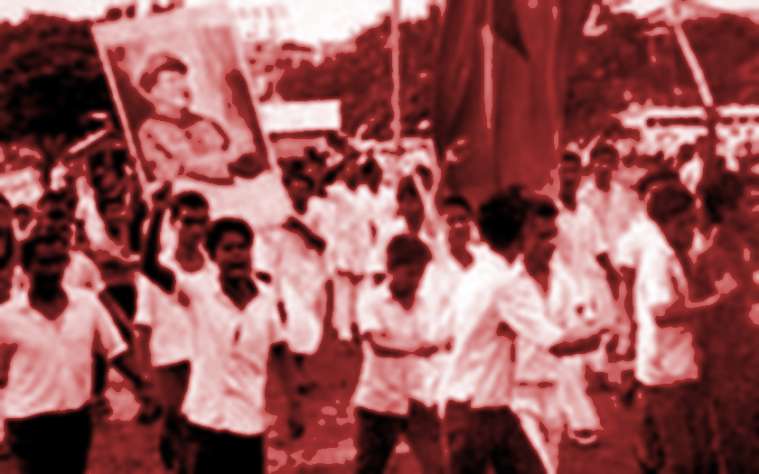
Image Courtesy: The Indian Express
The early land reform laws of the CPI(M) were a clear fight for the rights of working farmers and sharecroppers against powerful zamindars and Big landowners.
As a result, leaders like Binoy Chowdhury and Promode Dasgupta turned class struggle into political strength. Therefore, the CPI(M) ruled Bengal for decades.
However, the ugly side of class struggle also became visible. Because of militant trade unionism, one industry after another shut down and left Bengal. That is, at that time, the capitalist industrialists were the exploiters, and the poor workers were the exploited.
At the same time, the stepmotherly attitude of the central government also played a pivotal role in Bengal’s industrial decline.
Is class struggle obsolete today? Not at all. In India, where the bottom 50% of the population enjoys only 6% of the country’s wealth, the struggle between the exploited and the exploiters will continue.
Even now, Dipankar Bhattacharya is carrying that class struggle forward in Bihar. Perhaps the ways have been reformed.
Bengal Crisis: Mamata Banerjee in Singur
Even from that perspective, Mamata Banerjee’s Singur movement emerged as a protest against the forced acquisition of farmers’ land. In essence, it was another class struggle against state power.
However, after 2011, Singur gradually lost its importance. Perhaps that paved the way of today’s Bengal Crisis. The local people got neither the industry promised by Buddhadeb Bhattacharjee nor their cultivable land back.
How Welfare Schemes Shape Voting Behavior
The real problem begins when the oppressed start repeating the words of the oppressor like parrots. Today, a mother who receives money from the Lakshmir Bhandar scheme still calls this a government for the poor, even after bringing home ration rice mixed with stones.
Similarly, a young woman who gets some short-term relief from the Kanyashree scheme feels satisfied. However, she does not look back at her brother who has just lost his job. That job was lost due to institutional corruption, in which this very government is directly involved.
Yet, even then, she echoes the same line, this is a government for the poor. The Bengal crisis is not limited to the education sector alone.
On the contrary, cattle, sand, ration supplies, rice, and wheat, everything is surrounded by the stench of theft and corruption. As a result, corruption has become normalized, while the victims continue to defend the very system that exploits them. In the end, only empty hopes remained in their hands. But that is a different discussion altogether.
Bengal Crisis: Why Corruption Fails to Influence Elections
For some unknown reason, corruption and oppression fail to influence voting behavior. This is the real paradox. Take the Abhaya incident as an example. It triggered a statewide movement that spread beyond Bengal, across India, and even abroad. However, in the very next by-elections, the ruling party won by a huge margin.
Similarly, before the 2016 Assembly elections, the Saradha and Narada scams shook society and sparked massive outrage. Yet, despite that anger, the ruling party secured a landslide victory at the polls.
This clearly shows a deeper reality. No matter how much the rulers exploit them, many beneficiaries of social welfare schemes continue to vote for the same government. Moreover, there is a larger and more disturbing reflection. No incident leaves a lasting impact on public consciousness. This is extremely dangerous.
It points to a form of social numbness and moral paralysis—a society that has slowly lost its ability to resist.
Education System in Bengal crisis at Breaking Point
Educational institutions have turned into open political playgrounds, and alongside them, extortion operates freely. As a result, the backbone of education is breaking. When that happens, how can a nation ever rise with dignity? People have slowly forgotten the language of protest.

Image Courtesy: Kolkata24x7
Instead, fear keeps them silent, fear created by cases like Anubrata Mondal’s infamous drug episode or the constant threat of murder cases. When chaos in education reaches such an extreme level, incidents like the shocking South Calcutta Law College case become sadly predictable. We must not forget that Abhaya of RG Kar was not only a doctor but also a student.
Meanwhile, the reputation of Calcutta University continues to decline. Today, it is slipping downward in national rankings, reflecting the deeper collapse of Bengal’s academic ecosystem.
Religious Polarization and Divide-and-Rule Politics triggers Bengal Crisis
Along with this, religious polarization has intensified. At this point, the very nature of the struggle between the ruler and the oppressed changes. Now, one oppressed group turns violent against another oppressed group. Meanwhile, the ruling exploiters benefit from divide-and-rule politics.

Image Courtesy: Hindustan Times
However, Bengal never witnessed such religious violence after Independence. In fact, Buddhadeb Bhattacharjee once said that anyone trying to start communal riots here would be firmly crushed. But what do we see today? Even after reports of Hindu killings in Samsherganj, the police fail to act. Perhaps this is what is now being called “change” in Bengal.
The Collapse of the Bengali Intellectual Space
So, what is the way out of this crisis? The answer lies in the active involvement of responsible and educated citizens. Once upon a time, we saw intellectuals leading protests on the streets of Kolkata. Today, however, they appear to be in a hibernation. The clever rulers have silenced many of them with small favors and privileges.
In fact, anyone with an oppositional mindset now finds it almost impossible to get opportunities in Tollygunge. Even there, political strong-arm control dominates. Recently, the shameful experience during Messi’s Kolkata visit exposed this reality once again. Therefore, it is better not to rely on these intellectuals anymore.
Why Bengal Needs New Grassroots Leadership
Instead, new leadership must rise. Let sensible and rational people choose leaders from among themselves. Only then can we save the state from turning into another Sri Lanka, Bangladesh, or Nepal.
Latest Updates
- A cooking-gas shortage in West Bengal has affected households, temples and small businesses, highlighting everyday economic stress.
- Political leaders are using multiple crises — including welfare disputes and voter-roll controversies — to attack rivals ahead of elections.
- The Special Intensive Revision (SIR) voter issue has raised fears about electoral tensions before the 2026 polls.
- Simultaneously, new welfare and community development initiatives are being launched, showing how governance responses are shaping political narratives
[…]Bengal Crisis: Why No One Can Ignore Now? Bengal Crisis exposed: corruption, fear, religious polarization, and education collapse are reshaping Bengal’s future. Article shows a hard look at the truth.[…]
[…]Bengal Crisis: Why No One Can Ignore Now? Bengal Crisis exposed: corruption, fear, religious polarization, and education collapse are reshaping Bengal’s future. Article shows a hard look at the truth.[…]