Delhi Regime Change Row: Explosive Twist
Oct 19, 2026 - By Ashutosh Roy PoliticsNational NewsNational PoliticsWest Bengal Politics
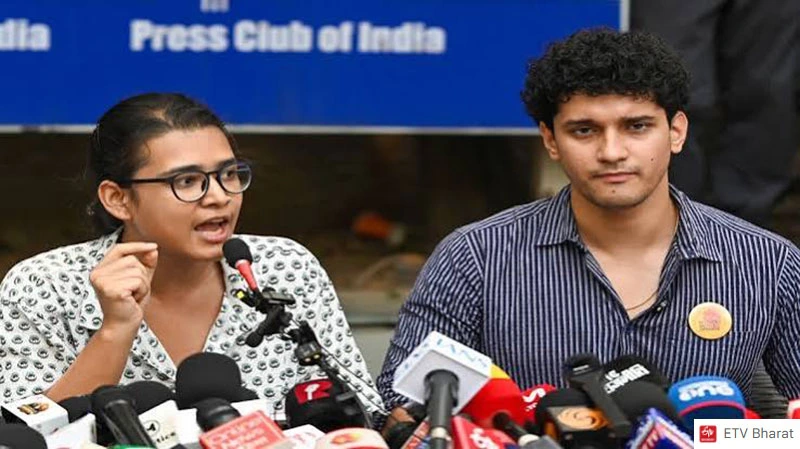
Delhi Regime Change Row: Political Storm
The words “regime change” have become a major talking point in Indian politics. Neha Bora may have one approach, while the Indian National Congress and other established opposition parties may prefer another. But the debate over Delhi Regime Change has now moved beyond the original protest and become a wider argument about democracy, political power and the future of the Modi government.
Congress leader Pawan Khera has openly defended the opposition’s demand for regime change, arguing that an elected government can be defeated through elections. In his response to the BJP’s criticism, he made it clear that the opposition wants to change the government through democratic means. Read the Economic Times report on Pawan Khera’s statement for the details.
It is worth remembering that the movement originally began with a demand for the resignation of Chief Election Commissioner Gyanesh Kumar. The immediate issues included alleged irregularities in electoral-roll revision and questions about the Election Commission.
The debate has since widened to include the opposition’s political objectives and the meaning of regime change in a parliamentary democracy.
Read Bengal Electoral Roll Row: Shocking Truth!
Is it wrong for the opposition to talk about changing the government? I do not think so. Treating such a demand as something extraordinary raises a more serious question about our understanding of democracy.
We must not forget that the Delhi Police Excess has drawn criticism and raised concerns among many Indian citizens.
Delhi Regime Change: Is the Bangladesh Template Necessary?
The BJP has raised concerns about an alleged attempt by the opposition to bring about a Bangladesh-style regime change. The controversy intensified after Neha Bora referred to Bangladesh’s youth movement and lawyer Prashant Bhushan spoke openly about regime change. The BJP has used these remarks to question the opposition’s intentions. Readers can follow the details in this India Today report on the Bangladesh-style regime-change controversy.
But I would like to ask a simple question: why should an established political party in India need a Bangladesh template to change a government?
India has a long history of governments losing power through elections. We do not need to look beyond our own political history to understand this. In 1977, after Indira Gandhi imposed the Emergency, voters rejected her government and brought Morarji Desai to power. It was a powerful reminder that even a government with enormous authority could not ignore the people’s verdict forever.
In 1989, Rajiv Gandhi’s Congress government faced public anger amid the Bofors scandal. Voters brought Vishwanath Pratap Singh to power. Once again, the ballot box became an instrument of political change. Then came 2014. Amid widespread concerns about corruption and the performance of the Congress-led government under Manmohan Singh, voters gave Narendra Modi and the BJP a historic mandate.
The irony is that while Rajiv Gandhi was linked to the Bofors scandal and Manmohan Singh to the coal scam, neither allegation has been upheld by India’s highest court.
The circumstances in these three cases were different, but they share one important lesson: Indian voters can change governments without copying any foreign model. I would therefore tell Neha Bora that we should not underestimate the strength of Indian democracy. The country has already witnessed major changes of government, and there is no reason to assume that a future change must follow the Bangladesh model.
To understand how the government has tried to suppress the movement, read Why Jantar Mantar Protest Rules Changed.
Changing a Government Is Not the Same as Overthrowing Democracy
An opposition party exists to challenge the government, expose its failures and offer an alternative. If it believes the ruling party has failed, why should it not campaign to defeat that party in the next election? The opposition’s demand for regime change through elections is a legitimate political objective.
Watch interview of Pawan Khera with Rajdeep Sardesai.
The BJP is free to challenge these arguments, defend its policies and seek another mandate from the people. That is how democracy should work. Calling for regime change is not, by itself, an anti-democratic act. The important question is how that change is pursued. A peaceful electoral process is fundamentally different from an unconstitutional seizure of power, and we should not confuse the two.
The distinction is not difficult to understand. The opposition must respect the Constitution, just as the government must accept the right of its political opponents to challenge it.
Dr. Kunal Sarkar and Subhomoy Moitra, political analyst and statistician, have an interesting conversation in Bengali on recent political developments. They discuss Rahul Gandhi’s decision to go it alone, leaving mass Congress leaders behind, the BJP’s retaliation, and Neha Bora’s remarks, given her association with CPI(ML). Watch the video to hear their views on these political developments.
Delhi Regime Change and the Right to Protest
There is another aspect of this debate that deserves attention. Rammanohar Lohia’s words remain relevant today:
The quotation captures an important truth. Parliament cannot be the only place where people express their concerns. Public protests, demonstrations and peaceful movements are also part of a healthy democracy. We should listen to different opinions, even when we disagree with them, because open debate does not weaken democracy; it strengthens it.
The July CJP protest was driven largely by anger over examination-related irregularities and corruption. The movement also reflected the frustration of young people worried about their future. The demand for accountability later extended to the Election Commission and Gyanesh Kumar.
The Indian Express report on the CJP protest explains how the movement over examination-related concerns developed and how the dispute over police action reached the courts. More recently, another report on the Delhi protest and police action covered the detentions and the demand for Gyanesh Kumar’s resignation.
Questions about the impartiality of the Election Commission are not new. Such concerns have surfaced at different times in India’s political history. People should be free to raise them, and the authorities should answer legitimate questions with evidence and transparency.
That does not mean every allegation against the Commission is automatically correct, nor should every protest be treated as proof of wrongdoing. But criticism should not be dismissed simply because it comes from the opposition. The real test is whether institutions can command public confidence, especially when their decisions affect the fairness of elections.
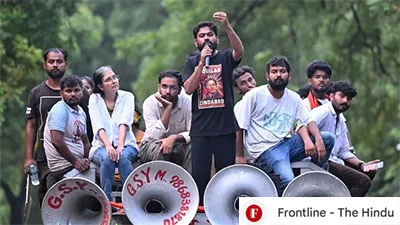
Examine whether Delhi CJP Protest is turning to Jail Bharo Andolan.
Unemployment: A Major Reason Behind Anti-Incumbency
Let us move beyond the immediate controversy. If the growing demand for Delhi Regime Change is being driven by twelve years of anti-incumbency, what lies behind that public frustration? In my view, unemployment is one of the most important factors.
India’s economic performance is often discussed through GDP figures, stock-market movements and official growth projections. Several experts have raised questions about how the economy should be assessed and whether headline figures tell the whole story.
Ordinary people, however, judge the economy through their daily experience. Are jobs available? Can young people find work that matches their qualifications? Are small businesses expanding? Can families manage the rising cost of essential goods?
These are not abstract questions. They affect people’s lives every day. The stock market has its ups and downs, and a market decline alone cannot prove that the economy is failing. Similarly, concerns about GDP figures need to be examined through reliable data. Still, the public’s worries about prices, jobs and industrial activity cannot simply be brushed aside.
A recent Reuters report on India’s youth protests and growing discontent also discusses the wider concerns about jobs, education and the government’s record. These concerns deserve attention beyond the immediate political confrontation.
Economic growth must create opportunities for ordinary people. If young graduates continue to struggle for employment while industrial activity appears sluggish, the government must explain what it intends to do about it. Growth figures mean little to a young person who has spent years studying but still cannot find suitable work.
People Wanted Jobs, Not Just Promises
Let us also correct a common misunderstanding about the promise associated with money held abroad. During a November 2013 rally in Kanker, Modi spoke of bringing back black money stashed abroad. He suggested that the recovered wealth could benefit every poor Indian by around ₹15–20 lakh. But the larger point remains that people expected the government to deliver on its promises.
More importantly, nobody should have to depend on a one-time payment to secure a better future. People want jobs, stable incomes and a chance to improve their lives through their own efforts.
The government should therefore present a clear and practical plan for employment generation. How many jobs will be created? Which industries will expand? What support will be provided to small businesses? How will young people move from education to employment?
These are reasonable questions for citizens to ask of any elected government. They are not demands made only by political opponents.
The CJP protests in July were primarily driven by examination-related corruption and demands for accountability. Yet unemployment and the lack of opportunities were also major concerns for many young participants. The anger was not only about one examination or one minister; it reflected a wider fear about the future. A government that wants to retain public support must take this frustration seriously rather than dismiss it as political agitation.
Delhi Regime Change and India’s Foreign Policy
While criticising the government, we should also be careful not to oversimplify international affairs. India’s relationship with the United States is a good example. Finding a complete alternative to the American economic and strategic partnership in a short time is not easy. The United States remains a major economic power, and abruptly cutting business ties would hardly be a sensible policy.
At the same time, accepting excessively high American tariffs without question is not a satisfactory answer either. India must protect its economic interests and negotiate from a position of strength. The challenge is to maintain important relationships without becoming overly dependent on any one country.
India’s engagement with China and Russia is also part of this wider discussion. It is reasonable to explore alternative partnerships and seek a more balanced international position. Whether such cooperation can develop into a durable alternative power bloc is a complicated question, and I would not claim to have all the answers. It is good to watch that Narendra Modi and the Foreign ministry have been constantly exploring newer arenas in foreign policy.
Foreign policy requires experience, careful negotiation and an understanding of global interests. We should give an elected government the space to handle these matters while continuing to question its decisions where necessary. Trust in the government should not mean unquestioning support. Equally, political opposition should not require us to reject every decision simply because the ruling party made it.
Perhaps the most important question at this moment is: Is the CEC Row Putting Indian Democracy Under Threat? This becomes more relevant because when the country is facing a big international crisis due to bi-lateral relationship or Iran War, other pillars of the democracy must function with the highest capacity.
The BJP’s Political Defections: What Happened to Its Difference?
There is another issue that I find difficult to ignore. The BJP has repeatedly sought to strengthen its numbers by bringing elected representatives from other parties into its own camp. This has happened through different political arrangements, negotiations and defections. In my view, this practice deserves criticism, particularly when political convenience appears to take priority over the mandate voters gave to a candidate under a particular party’s banner.
But the larger question of political ethics remains.
The BJP needs additional support to secure the numbers required for its Delimitation Bill. But does the need for a legislative majority justify every political manoeuvre? What happened to the party’s original slogan, “A Party with a Difference”?
That slogan created an expectation that the BJP would follow a different political culture. Supporters were encouraged to believe that it would stand apart from the practices they criticised in other parties. If the pursuit of power eventually leads every party to adopt similar methods, what exactly is the difference?
We can surely raise the question now: Is BJP Popularity Declining?
Does Power Change Every Political Party?
There is an old saying: “Whoever goes to Lanka becomes Ravana”. The expression is often used to suggest that people can become corrupted by power. It may be too harsh to apply it to every politician, but the warning is worth remembering.
A party should be judged not only by what it says before coming to power but also by what it does after gaining power. Its principles matter most when following them becomes inconvenient. The BJP must answer these questions just as the Congress, the TMC and every other political party must answer for its own actions. No party should receive a free pass simply because it claims to represent a different ideology.
Political ethics cannot depend on who benefits from a particular decision. If a practice is wrong when one party uses it, it should not suddenly become acceptable when another party does the same thing.
Let’s understand it better how the BJP is encouraging the Party Hoppers for their convenience.
Delhi Regime Change: 10 Points to Remember
- The opposition’s demand for regime change through elections is a normal part of parliamentary democracy. The real question is whether the proposed change follows constitutional and democratic methods.
- India’s own political history provides enough examples of peaceful changes of government. The elections of 1977, 1989 and 2014 showed that voters can remove a ruling party without copying any foreign model.
- Talking about a change of government does not automatically mean following a Bangladesh-style template. Political arguments should be judged on their substance rather than dismissed through labels.
- Rammanohar Lohia’s words remind us that peaceful public protest has an important place in democracy. Parliament must remain accountable to public opinion, and citizens must have the freedom to raise their concerns.
- Questions about the Election Commission’s impartiality deserve serious consideration, but allegations should also be examined carefully. Transparency and public confidence are essential for institutions responsible for conducting elections.
- Unemployment and the shortage of suitable job opportunities remain major concerns, particularly among young people. The government needs a clear employment plan that explains how industries, businesses and new investment will create meaningful work.
- People expect more than political promises or a one-time payment of ₹15,000. They want stable incomes, affordable essentials and opportunities to build a better future through their own efforts.
- India must protect its economic interests while maintaining important international relationships. Its dealings with the United States, China and Russia require careful diplomacy rather than sudden decisions.
- The BJP’s efforts to increase its numbers through political defections raise questions about its promise to be “A Party with a Difference”. Political convenience should not become an excuse to abandon principles.
- Every party must be judged by its record in government, not merely by its slogans or ideology. In the end, the voters have the final say on whether a government deserves another term.
Delhi Regime Change: Let the Voters Decide
Ultimately, the debate over Delhi Regime Change should bring us back to the basic principles of democracy. Neha Bora may favour one method of political mobilisation, while the Congress and other established opposition parties may choose another. Their strategies can be debated and criticised, but the demand to change an elected government through elections should not automatically be equated with an attempt to overthrow democracy.
India has changed governments before, and the elections of 1977, 1989 and 2014 remind us that voters can deliver a powerful verdict when they believe a government has failed to meet their expectations. The same principle applies today. If the government has performed well, it should defend its record before the people; if it has failed on employment, prices or institutional credibility, voters have every right to demand better.
Read West Bengal Political Landscape: Big Fights to understand how we brought about landmark political changes for regime change through democratic means.
The opposition, too, must offer more than slogans. It needs credible policies, public trust and a practical alternative. For me, the real question is not whether regime change is desirable at any cost, but whether the government is willing to listen to criticism, correct its mistakes and remain accountable to the people.
In a democracy, no government owns the country. Governments hold office because voters give them that opportunity, and voters retain the right to take it away. That is the strength of Indian democracy. We do not need a foreign template to exercise it.