The Truth About Mamata's Shocking Silence
May 29, 2026 - By Ashutosh Roy Current AffairsElection AnalysisGovernancePoliticsRegional UpdatesWest Bengal Politics
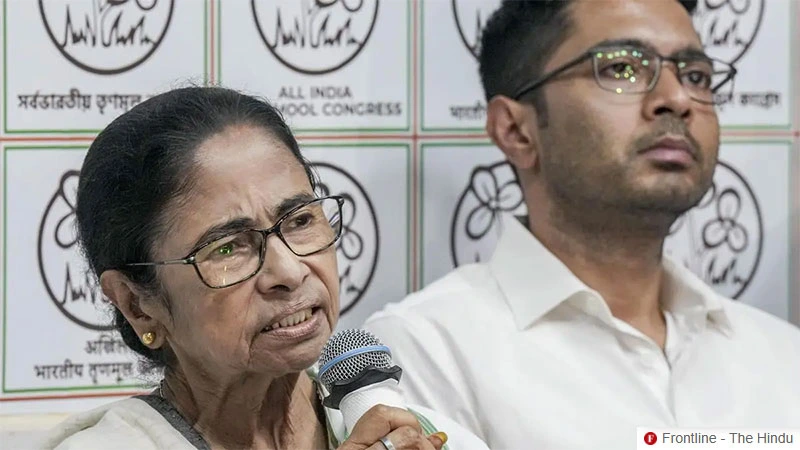
What is the Truth About Mamata’s Shocking Silence?
West Bengal is facing a massive political question right now regarding Mamata’s Shocking Silence. What is behind the Chief Minister’s sudden, eerie quiet? Some people believe this is just the calm before a massive storm, while others think she is finally facing the consequences of her own actions.
Above all, this looks like the unavoidable end of dramatic, theatrical politics. Today, when we can look at this situation through two very distinct lenses:
- Deep Strategy: She might be secretly planning her next big political move behind closed doors.
- The Karma Effect: She could be trapped inside her own walls, listening to a haunting, traditional Bengali warning: “Sin does not even spare your father” (meaning, misdeeds will always catch up to you).
Why is the Chief Minister Hiding After the Election Loss?
Following her party’s recent election defeat, the Chief Minister locked herself away. However, She claimed, “I did not lose, I was forced to lose“. Since that statement, she has completely vanished from public view.
In fact, she only made one brief appearance at the High Court. During that visit, lawyers openly targeted her with aggressive “thief, thief” slogans. This intense public humiliation seems to have shaken her confidence deeply.
As a result, we are witnessing the former Chief Minister’s communications blackout take over, as she even refuses to hold press conferences from the safety of her own home.
Key Events of Mamata Banerjee in Post-Poll 2026
| Phase | Key Event/ Behaviour |
|---|---|
| Immediately after result | Denial of defeat, Refused to resign, alleged rigging |
| Constitutional Phase | Assembly dissolved – forced to exit from office |
| Press interaction phase | Aggressive, confrontational |
| Strategic shift | Refused media interaction |
| New communication model | Facebook Live only |
| Political Narrative | Election stolen |
| Political Strategy | Legal challenge + moral victory claim |
| Current stance | Opposition + controlled messaging |
| Current Situation | Facing internal dissent + scrutiny |
What Happens When a Leader Abandons Her Party Workers?
This sudden disappearance is creating a massive crisis across West Bengal. While the leader stays hidden, her grassroot workers are facing severe consequences.
Here is how the situation is rapidly falling apart:
- Workers Left Defenseless: Party workers face violent attacks and are being forced out of their homes with no protection from the top.
- Mass Resignations: A wave of resignations has hit the party, with numerous local councilors and leaders quitting their posts.
- Total Boycott: Even when she calls for urgent party meetings, many key members flatly refuse to attend.
Consequently, the power dynamics have completely shifted. On May 4th, her residence was the crowded, bustling epicenter of political power.
On the contrary, today, that very same house sits completely empty and silent, resembling a deserted haunted house.
Watch this video to know the analysis of expelled veteran leaders and former minister, Partha Chattarjee in ND TV.
Is Sudden Silence of Mamata Banerjee Breaking Bengal’s Political Tradition?
West Bengal has a long history of intense political transitions. In the past, whenever post-poll violence forced opposition workers out of their homes, their leaders always rushed to their side.
For instance, we previously saw BJP’s Dilip Ghosh deliver fiery speeches on the ground to back his workers. Similarly, when the Left Front lost power, Communist leaders still made an effort to visit their targeted party members.
In fact, Mamata Banerjee herself built her entire career on this exact street-fighter energy:
- Unstoppable Presence: Back in 2001 and 2006, she would visit affected areas at midnight or dawn.
- Media Magnet: Even though the media followed her everywhere, she consistently showed up for her people.
- Fierce Advocate: Whenever a political murder or clash occurred, she traveled tirelessly to support the victims.
Because of this raw courage, the people of Bengal handed her the Chief Minister’s seat in 2011. Back then, she didn’t need expensive PR banners calling her a “symbol of honesty“.
Indeed, she was a genuine opposition leader who ruled the hearts of her workers.
Core Comparison: Behaviour After Defeat
| Dimension | Mamata Banerjee (2026) | Dilip Ghosh (Post-defeat phases) | Biman Bose (2011) |
|---|---|---|---|
| Acceptance of result | Rejected result, alleged rigging | Did not reject formally, but used aggressive rhetoric | Accepted mandate clearly |
| Tone after defeat | Confrontational, defensive | Aggressive, attacking opponent | Calm, introspective also |
| Media approach | Refused media, shifted to Facebook Live | Frequent press interactions | Formal press conferences |
| Narrative | Election stolen, moral victory | Opponent misrule / ideological attack | We failed, hence need correction |
| Institutional trust | Questioned EC, EVM, process | Criticism of opponent, not full system denial | Accepted democratic verdict |
| Party response | Internal purge tone, dissent crackdown | Cadre mobilisation, aggressive politics | Organisational introspection |
| Opposition role | Emotional + direct messaging | Street-level agitation style | Structured parliamentary opposition |
How Did Corporate Politics Silence Bengal’s Loudest Voice?
In those early days, Mamata planned every strategy herself and ran the Trinamool Congress (TMC) on her own terms. There was no corporate political agency like I-PAC running the show. The party was so grassroots that candidates even managed their own election expenses.
Today, things look completely different. Mamata’s entire identity has always been her powerful, loud voice. Even if critics called her style theatrical, it paid massive political dividends.
Therefore, the former Chief Minister’s communications blackout right now feels completely unnatural. It simply does not match the fearless leader Bengal once knew.
Why is the TMC Leadership Staying Silent After Getting 40% Vote?
We must look at the hard numbers from the recent election. Even after a difficult loss, the Trinamool Congress (TMC) still secured over 40% of the vote share and won 80 MLA seats.
To put this into perspective, when the Left Front fell from power back in 2011, they dropped drastically down to just 62 seats. Yet, Left front leaders like Biman Bose still held open press conferences to address the public.
In sharp contrast, we are currently witnessing sudden silence of Mamata Banerjee. The Chief Minister, who is usually famous for holding frequent press meets, has not held a single press conference.
Furthermore, this tense political atmosphere has triggered unprecedented media reactions, causing high-profile media exits like the recent resignations of prominent journalists Anindya Jana and Biswarup Majumder .
This raises a critical historical question: Did any prominent media figures feel forced to resign like this after the historic 2011 Left Front collapse?
Are Grassroot Leaders Losing Faith in the Hidden VVIP Ministers?
The current absence of the top leadership is leaving elected representatives completely stranded. Those 80 newly elected MLAs carry a massive responsibility toward the voters who elected them.
However, because the top leadership remains hidden, a deep sense of uncertainty is gripping the party ranks. This internal frustration is boiling over at the local governance level:
- Stepping Down from Power: Prominent KMC councillors Arup Chakraborty and Sushanta Ghosh have officially resigned from their administrative posts. Chakraborty quit the municipal accounts committee, while Ghosh resigned as Borough XII chairperson.
- Accountability to Voters: Both leaders explicitly stated on camera that they are keeping their councillor posts solely out of a deep sense of duty to their voters.
- The Missing Convoy Ministers: They openly slammed high-profile TMC ministers who used to move around in massive police convoys but have now completely vanished while grassroots workers face post-poll violence.
Following their leader’s exact footsteps, these powerful ministers have either fled their areas or hidden completely behind the curtains. Ultimately, the top leadership cannot simply avoid responsibility by punishing a small handful of people or labeling them as political chameleons.
Key Takeaways of TMC Leaders after debacle in 2026 Bengal Elections
| Category | Numbers (Approx / Reported) | Brief Description |
|---|---|---|
| MLAs | 6 openly dissent 9 absent in key meeting Multiple missing in protests | Some MLAs attended rival meetings, indicating defection signals. Absenteeism in party programs suggests silent rebellion and fence-sitting. |
| Municipal Councillors | 100+ resigned Across multiple municipalities | Mass resignations mark the most visible rebellion. Governance disruption and organisational weakening at grassroots level. |
| Chairmen / Civic Heads | 10-20 affected | Instability due to councillor exits. Some removals or resignations under administrative and political pressure. |
| MPs / Senior Leaders | 1 MP joined rival meeting 1 spokesperson resigned Additional dissent signals | High-visibility symbolic dissent at top level. Indicates erosion of leadership cohesion. |
| Party Officials | 30-50 estimated churn | District-level dissatisfaction and inactivity. Internal blame and weakening organisational control. |
| Grassroots Cadre | Widespread (no fixed number) | Reports of inactivity and shifting loyalty. Weakening booth-level structure and local networks. |
Where is the Recovered Cash Coming From in West Bengal?
The state administration is currently facing massive public scrutiny. Recently, television channels broadcasted shocking footage of a major police raid in North 24 Parganas.
West Bengal Police successfully recovered over 2.2 crore rupees in cash hidden directly inside a muddy paddy field. Strikingly, this hidden money belonged to the Baduria Municipality Chairman.
This incident raises serious administrative questions. You must remember that the Chief Minister does not just run the state. She also holds the critical portfolio of the State Home Minister, directly controlling the police department.
Why Did the Leadership Allow Systemic Corruption to Grow?
The scale of financial corruption in West Bengal has spread across almost every single government department. Citizens are openly questioning Mamata’s Shocking Silence as major central agency investigations expose systematic scams:
- The Education Scam: Multi-crore cash-for-jobs scams in the school service commission (SSC) .
- The Ration Distribution Scam: Large-scale diversion of public food grains meant for the poor .
- Natural Resource Theft: Rampant illegal sand mining and cross-border cattle smuggling networks.
How can the public believe that the top leadership was completely unaware of these massive operations?
This brings a critical question to the forefront: Why were you so completely silent when these illegal activities were happening right under your nose?
Did Campaign Speeches Hint at Post-Poll Violence?
The aggressive tone of the election campaign has left voters deeply worried. During the rallies, both the Chief Minister and her nephew, TMC National General Secretary Abhishek Banerjee, delivered highly combative speeches.
Looking back at those aggressive campaign statements, a terrifying picture emerges. If the party had somehow managed to return to power in this election, the state might have witnessed an absolute bloodbath.
People vividly remember the horrific aftermath of the 2021 Assembly elections. Back then, post-poll clashes resulted in widespread violence, arson, and multiple political casualties across the districts. The current silence feels just as dangerous to the common citizen.
Why Did 15 Years of Threats Fail to Imprison Opposition Leaders?
You must remember your initial days in power. Back then, you frequently carried massive stacks of files to public rallies. You repeatedly promised the electorate that you would expose the alleged corruption of the Left Front regime.
However, your actions did not match your words. Throughout your 15-year tenure, not a single prominent Left Front leader was ever sent to jail based on those files.
Today, a massive political shift is unfolding across West Bengal.
In sharp contrast to your approach, the newly formed government under Chief Minister Suvendu Adhikari is opening files directly inside administrative offices, rather than waving them at political rallies.
As a result, the state police department is rapidly recovering its independent operational power.
Is a Brain Trust Restructuring West Bengal’s Governance?
The sudden, swift action across state departments indicates a massive change in administrative planning. Many political observers credit this new efficiency to the Chief Minister’s freshly appointed Chief Advisor, retired IAS officer Dr. Subrata Gupta.
This professional approach marks a sharp departure from your previous governance style:
- Dozens of Advisors Gone: Your administration relied on a massive circle of special political advisors.
- Action Over Speeches: The new administration is showing the state what effective, result-oriented governance actually looks like in a very short span of time.
Is It Time to Write the Final Political Obituary of the TMC?
The visual identity of your 15-year rule is disappearing almost overnight. Following the orders of the new administration, the iconic Biswa Bangla logo has been completely removed from government college websites and public structures like the Salt Lake Stadium . The official state emblem has now been reverted to feature only the traditional Ashoka Pillar.
This rapid structural collapse raises deeply troubling questions for your party’s future:
- Vanishing Supporters: Will there even be enough active workers left to hold up the Trinamool Congress (TMC) flag in the districts?
- Fading Presence: Will anyone continue to put up copies of the party’s mouthpiece, Jago Bangla, at local street crossings?
In Conclusion, sudden silence of Mamata Banerjee in the face of this complete administrative overhaul is creating a massive wave of speculation. It leaves the public wondering if we are witnessing the final chapter of your party’s political history.
10 Key Takeaways:
- Sudden Vanishing: The Chief Minister completely isolated herself in her home right after the election defeat. This prolonged absence sparked intense speculation across the state.
- The Shocking Silence: This abrupt disappearance triggered the former Chief Minister’s communications blackout during a major political transition. Consequently, both critics and supporters are demanding answers.
- Courtroom Humiliation: She made only one brief public appearance at the High Court. During this visit, protesting lawyers openly targeted her with aggressive slogans.
- Grassroot Desertion: Local party workers are currently facing severe post-poll violence across the districts. Unfortunately, the top leadership has offered them no protection or guidance.
- Massive Resignations: Prominent local leaders are now actively stepping down from their municipal administrative posts. They are citing a deep sense of accountability to their voters.
- Systemic Corruption: Central agencies and state police continue to unearth multi-crore corruption scandals. For example, law enforcement recently recovered 2.2 crore rupees from a hidden paddy field.
- Failed Past Promises: The previous administration spent 15 years threatening to jail opposition leaders using secret files. However, those public threats never resulted in a single conviction.
- Administrative Overhaul: The new government under Chief Minister Suvendu Adhikari is taking swift legal action. As a result, the state police are rapidly regaining their independent operational powers.
- Erasing the Brand: Authorities are systematically removing the iconic Biswa Bangla logo from government websites and public buildings. They are replacing it with the traditional Ashoka Pillar emblem.
- A Final Obituary: The rapid collapse of the party infrastructure suggests a massive structural shift. Therefore, political analysts wonder if the Trinamool Congress can survive this crisis.
People Also Ask: (PAA)
Why is Mamata Banerjee staying silent after the 2026 election defeat?
Many political analysts believe the former Chief Minister’s communications blackout is a strategic retreat rather than a permanent retirement. Historically, she operates best from a position of direct grassroots opposition. Consequently, she might be using this isolation period to internally restructure the Trinamool Congress (TMC). Other experts argue that the sheer scale of the 2026 electoral defeat has deeply shaken the top leadership, forcing a complete halt in public communications.
What triggered the mass resignations within the Trinamool Congress?
The massive wave of resignations stems directly from a growing gap between top leaders and ground workers. While local party workers face the brunt of post-poll violence, the senior VVIP ministers have largely hidden from public view. Local leaders are stepping down from administrative posts to openly show their frustration. For example, prominent Kolkata municipal figures explicitly stated on camera that their first loyalty belongs to their voters, not a hidden leadership.
How is the new Suvendu Adhikari government changing West Bengal’s administration?
The newly formed government under Chief Minister Suvendu Adhikari has instantly shifted focus from political campaigning to direct administrative action. Instead of threatening opposition figures at public rallies, the administration is opening official files directly inside government offices. Backed by strategic planning from new administrative advisors, the state police are rapidly recovering their independent operational powers to clamp down on institutional corruption.
What happened to the Biswa Bangla branding in government institutions?
Following recent administrative directives, state authorities have started systematically removing the iconic Biswa Bangla logo from public infrastructure and government college websites. The new administration is actively replacing the corporate-style branding with the traditional Ashoka Pillar emblem. This rapid visual overhaul marks a symbolic end to the previous regime’s decade-long cultural and political identity across West Bengal.
Can the TMC recover from this political crisis?
The party still holds a massive 40% vote share and 80 assembly seats, which gives them a powerful legislative presence. However, their structural survival depends entirely on breaking the current leadership paralysis. If the top command continues to maintain this eerie silence while grassroots networks collapse, local leaders might continue to jump ship, making a future political comeback incredibly difficult.