Oppositions in Official Meet: A New Era?
May 28, 2026 - By Ashutosh Roy Current AffairsElection AnalysisGovernancePoliticsRegional UpdatesWest Bengal Politics
Is Bengal Democracy Finally Changing for the Better?
Can we call this a new sunrise after a long, dark night? This recent development regarding the Oppositions in Official Meet suggests the dark side of Bengal’s democracy is finally clearing up. Therefore, we might be moving toward a healthier political system.
While only time will tell the truth, the beginning is highly fascinating.
Who Joined the Historic Administrative Meeting?
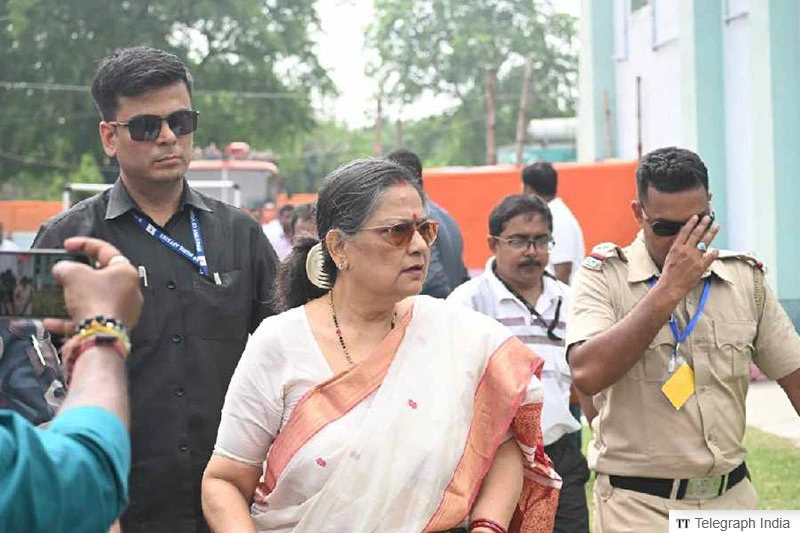
During the Kalyani administrative meeting on May 26, Suvendu Adhikari invited the opposition leaders. Surprisingly, they actually attended.
Here are the key details of the meeting:
- The Attendees: Six MLAs and even one MP joined the discussion.
- High Enthusiasm: The opposition leaders did not just attend; they showed great excitement.
- Public Statements: Ritabrata and Sandipan Saha openly expressed their enthusiasm in front of the media cameras.
Consequently, this unexpected political move raises one massive question: Does the lady of Kalighat know about this development?
Mamata Banerjee vs Suvendu Adhikari – Administrative Meeting Style
| Dimension | Mamata Banerjee | Suvendu Adhikari |
|---|---|---|
| Overall Approach | Highly hands-on, centralised control | Institutional, system-driven governance |
| Meeting Format | Large district-level public meetings; often live/televised | Secretariat-based (Nabanna) closed-door reviews |
| Public vs Private | Frequently public scrutiny of officers | Mostly private/internal accountability |
| Treatment of IAS/IPS | Direct questioning; sometimes public reprimand | Avoids public scolding; ensures dignity of officers |
| Tone & Behaviour | Sharp, emotional, confrontational at times | Calm, formal, restrained |
| Language Used | Informal (“tumi”) in many meetings | Formal (“aapni”), protocol-driven |
| Handling of Mistakes | Public criticism + administrative actions (transfers etc.) | Accountability with due process; no public humiliation |
| Use of Public Platform | Political messaging + governance tool | Focus on administrative outcomes; minimal political theatre |
| Bureaucratic Culture | Perception of fear + responsiveness | Professional autonomy + accountability |
| Focus in Meetings | Welfare delivery, corruption, grassroots execution | Transparency, fiscal discipline, rule-based governance |
| Interaction Style | Direct, personal, sometimes intimidating | Structured, institutional, less personalised |
| Control Mechanism | Leader-driven monitoring | System-driven monitoring |
| Centre-State Dynamics | Often confrontational approach | More cooperative and aligned approach |
Key Takeaway
| Mamata Banerjee | Suvendu Adhikari |
|---|---|
| Direct control through public accountability | Institutional control through system accountability |
Why Does Political Inclusion Feel So Strange in Bengal?
In states like Kerala, Gujarat, and Karnataka, opposition leaders actively take part in government work. Thus, it is a completely normal practice there. However, this concept feels highly unusual in Bengal.
Why is this happening? The main reason is that we never saw this inclusion during Mamata Banerjee’s 15-year rule.
How Did Administrative Meetings Change in the Past?
Instead of official work, previous administrative meetings looked like ruling party promotion events. The government spent millions of public funds on grand lightings and massive cutouts of the leader.
During that era, the meetings followed a specific pattern:
- Political Attacks: The government used the stage to attack the Prime Minister and the BJP government while top IAS and IPS officers sat on the platform.
- Scheme Distribution: The leaders used the exact same official stage to distribute Swasthya Sathi cards.
- Bureaucratic Insults: Senior officers faced public insults and harsh scolding right in front of their junior staff.
- Barring the Opposition: The system completely banned opposition leaders. Elected MLAs and MPs could not participate in local development work.
Which Bengal Chief Ministers Invited Opposition MLAs to Administrative Meetings?
| Chief Minister | Period | Invited Opposition MLAs? | Evidence / Notes | Verdict |
|---|---|---|---|---|
| Left Front CMs (e.g. Jyoti Basu, Buddhadeb Bhattacharjee) | 1977–2011 | Yes | Practice of involving opposition legislators in administrative processes existed during Left rule | Followed |
| Mamata Banerjee | 2011–2026 | No | Opposition MLAs (Left, Congress, BJP) were not invited to administrative meetings during her tenure | Discontinued |
| Suvendu Adhikari | 2026–Present | Yes | Invited opposition MLAs; stated governance should involve all elected representatives | Revived |
Was There a Shadow Ban on Opposition Funds?
Many opposition MLAs and MPs complained that they could not even spend their official development funds. Allegedly, District Magistrates received unwritten orders to block their work. Even during the COVID-19 pandemic, the TMC cadres and Administration did not allow opposition leaders to distribute relief.
The main goal was simple: keep the spotlight strictly on Mamata Banerjee and away from everyone else. In fact, every minister had to start their speech by praising her “inspiration”.
How is the New Administration Changing the System?
However, Bengal voters have now clearly proven through their ballots that they are tired of this forced inspiration. Today, leaders do not have to repeat those phrases anymore.
By inviting the neglected opposition MLAs to this official gathering, Chief Minister Suvendu Adhikari has successfully marked a brand new chapter for the Opposition MLAs and MP in the Administrative Meet.
Did Trinamool MLAs Finally Breathe a Sigh of Relief?
During the discussion, even the Trinamool (TMC) MLAs looked deeply relieved. For the first time in years, they actually had a platform to speak.
Previously, administrative meetings were strictly a one-woman show. Former Chief Minister Mamata Banerjee was always the sole speaker. The other attendees behaved like the puppet ministers from the famous movie Hirak Rajar Deshe, merely nodding and saying, “Yes, absolutely“.
No one dared to oppose her view because she never tolerated any dissent.
She failed to understand the basic rule of democracy: official meetings require a dialogue, not a monologue.
Why is the Top Leadership Increasingly Isolated?
Consequently, this rigid attitude has isolated her. Today, only her nephew Abhishek Banerjee and loyalist Subrata Bakshi stand firmly by her side.
While millions still watch her Facebook Live streams, the public reaction has shifted dramatically:
- Online Ridicule: Social media platforms are currently flooded with mockery and memes about her speeches.
- Lack of Democratic Values: Observers note that respecting the Oppositions in the Administrative Meet or valuing differing opinions is simply not in her political DNA.
- The Monarch Mindset: Instead of acting like a democratic Chief Minister, she often behaved like the absolute monarch of a fictional “Republic of Bengal”.
Listen closely to the local Trinamool Congress (TMC) councilors and seasoned ground-level leaders. Their words clearly reveal a deep, simmering anger against the party’s top leadership.
One can watch the full breakdown of their candid reactions in the video below:
Reactions of Arup Chakraborty and Sushanta Ghosh
How Did One-Sided Politics Hurt the People of Bengal?
Throughout her tenure, the narrative rarely changed. The speeches focused heavily on central government deprivation and past atrocities of the Left Front era.
Interestingly, even as Chief Minister, she could never shed her old persona as an opposition protest leader.
As a direct result of this political ego, the citizens of Bengal lost out on massive benefits from central government welfare schemes.
Above all, open minority appeasement and rampant corruption became the norm, while the leadership turned a blind eye like the mythological blind king Dhritarashtra.
Why Have the “Symbol of Honesty” Banners Vanished?
Because of these persistent issues, the once-famous “Symbol of Honesty” banners have completely disappeared from the streets. Today, whenever she or several TMC MLAs step out in public, they routinely face humiliating “thief, thief” (Chor, Chor) slogans from angry citizens.
While states like Kerala and Tamil Nadu have also seen regular shifts in government, no political leaders there have ever faced such intense public humiliation.
(Note: You can watch the video link to see the extreme extent of minority appeasement during that era.)
Can a Double-Engine Government Truly Rebuild West Bengal?
Now, a new government and a new era have arrived in West Bengal. The Bengali people are looking forward with great hope and expectations. Some experts believe Kolkata will soon transform into a major tech hub like Hyderabad. Others finally see real, sustainable industrial growth on the horizon.
In reality, the previous leader heavily damaged Bengal’s growth just to focus on personal branding and vote-bank politics. No one knows the true depth of this damage better than she does.
Why Are Citizens Optimistic About the New Era?
Fortunately, after many decades, Bengal has finally elected a government whose party also rules at the Center. This “double-engine” connection gives citizens a massive reason to stay hopeful.
Chief Minister Suvendu Adhikari has made an incredibly strong start to his tenure. Most notably, he completely changed the old, self-promoting “Didi Ke Bolo” (Tell Didi) campaign into a highly institutional program called “Apnar Sorkar Ke Bolun” (Tell Your Government).
This brilliant structural shift brings forward the following key changes:
- Institutions Over Individuals: The focus has completely shifted from promoting a single person to respecting the official government institution.
- A Dramatic Political Shift: By dropping the “I, me, and myself” attitude, the administration is ensuring that Bengal finally feels the presence of a real, supportive government.
- Time for Real Progress: While we must give this new administration some time to deliver results, the citizens remain deeply optimistic about the future.
Therefore, this fresh approach sets a positive tone for inclusion, opening doors for constructive dialogue with inviting the Oppositions in the Administrative Meet.
What Lies Ahead for West Bengal?
Ultimately, the political landscape of West Bengal is undergoing a massive transformation.
The shift from individual branding to institutional governance brings fresh optimism to the citizens. Therefore, regular dialogue with the Oppositions in Official Meet will play a vital role in this new journey.
By prioritizing real industrial growth and democratic values over divisive politics, the current administration has a golden opportunity to rebuild the state.
Bengal has entered a promising new chapter, and the audience is watching closely to see these promises turn into reality.
10 Crucial Takeaways from Bengal’s Political Shift
- A New Sunrise: West Bengal is finally moving away from a dark political era toward a healthier, more transparent democracy.
- Breaking the Ice: Chief Minister Suvendu Adhikari successfully hosted a historic administrative meeting in Kalyani by actively inviting opposition leaders.
- High Opposition Turnout: Surprisingly, six MLAs and one MP broke previous political barriers to join this official government discussion.
- Positive Energy: Instead of staying quiet, attendees like Ritabrata and Sandipan Saha openly shared their great enthusiasm with the media.
- Ending the Monologue: Consequently, the new administration has replaced the old “one-woman show” mindset with an open, democratic dialogue.
- Ditching Personal Branding: The leadership brilliantly transformed the self-promoting “Didi Ke Bolo” campaign into an institutional “Apnar Sorkar Ke Bolun” platform.
- Focusing on Institutions: Therefore, the state is prioritizing official government systems over the glorification of a single political leader.
- Central Government Alignment: For the first time in decades, Bengal shares the same ruling party as the Center, raising hopes for rapid development.
- Rejecting Past Misrule: Voters explicitly used their ballots to reject years of forced inspiration, minority appeasement, and rampant corruption.
- Valuing the Oppositions in Official Meet: Ultimately, including diverse voices in official meetings sets a positive, long-awaited tone for the state’s industrial and social growth.
People Also Ask (PAA)
What is the “Oppositions in Official Meet” Trend in Bengal Politics?
The participation of opposition lawmakers in official government reviews is rapidly changing the state’s political climate. For decades, traditional administrative meetings completely sidelined rival parties. Today, the new administration ensures democratic inclusivity by inviting all elected representatives, irrespective of their political backgrounds.
Did TMC Leaders Attend Suvendu Adhikari’s Kalyani Meeting?
The core reason is that the current administration treats government programs as institutional, not partisan. Senior leaders like MP Kakoli Ghosh Dastidar openly stated that the administration belongs to everyone. Consequently, their presence aims to prioritize grassroots development over political rivalries.
Does the “Apnar Sorkar Ke Bolun” Platform Work?
This newly launched platform transitions public grievance cell tracking from a centralized individual brand to an institutional system. Citizens can directly voice their community issues to government departments. Therefore, it completely eliminates personal political promotion from official public welfare helplines.
What Changes Are Happening to Bengal Welfare Schemes?
The government is restructuring multiple state-run projects into central alignment models. For example, the administration is transforming the Swasthya Sathi card system into the national Ayushman Bhara framework. Similarly, the Lakshmir Bhandar scheme is transitioning into the revamped Annapurna Yojana.
[…]Oppositions in Official Meet: A New Era? In a dramatic shift from Mamata’s regime, CM Suvendu calls oppositions in official meet. Explore how this historic move marks a new era in Bengal politics.[…]
[…]Oppositions in Official Meet: A New Era? In a dramatic shift from Mamata’s regime, CM Suvendu calls oppositions in official meet. Explore how this historic move marks a new era in Bengal politics.[…]
[…]Oppositions in Official Meet: A New Era? In a dramatic shift from Mamata’s regime, CM Suvendu calls oppositions in official meet. Explore how this historic move marks a new era in Bengal politics.[…]