Bengal's Pro-TMC Intellectuals Exposed!
Oct 20, 2026 - By Ashutosh Roy Culture & HeritagePoliticsRegional UpdatesWest Bengal Politics
Bengal’s Pro-TMC Intellectuals: Silent When It Matters?
Bengal’s Pro-TMC Intellectuals were once at the forefront of protests against the Left Front. Writers, actors, poets and theatre personalities joined demonstrations, faced television cameras and helped bring Singur and Nandigram into the centre of Bengal’s political debate. Their presence mattered. When familiar faces from the cultural world stood beside farmers and local residents, their grievances reached far beyond the affected areas.
That history makes the present situation worth examining. Mamata Banerjee is no longer in power, and the BJP now governs West Bengal, with Suvendu Adhikari serving as Chief Minister. Still, some cultural personalities who once played a visible role in the anti-Left movement are less prominent in today’s political debate. Their relative silence raises an uncomfortable question: does political loyalty sometimes come before public responsibility?
Of course, not every artist who stays away from a protest has abandoned their principles. People have their own reasons for stepping back from public life, and nobody is obliged to join every demonstration. But those who once used their influence to challenge the government cannot expect their present conduct to escape public scrutiny.
The issue is not whether these intellectuals should support the BJP or return to Mamata Banerjee’s side. The real question is whether they are willing to challenge those in power with the same conviction as before. Bengal has seen governments come and go. No party deserves immunity from criticism simply because it once stood on the right side of a political movement.
The Real Test of Bengal’s Intellectuals
- Singur and Nandigram changed Bengal’s political debate. Cultural figures helped bring the concerns of affected farmers and residents to a wider audience.
- The TMC’s victory in 2011 created a different test for those who had supported the anti-Left movement: would they question the new government with the same determination?
- Government appointments and awards do not automatically prove political dependence. The real test is whether recipients remain free to criticise those in power.
- Recruitment disputes, problems in education and corruption allegations during the TMC years deserved sustained scrutiny from independent voices in civil society.
- Aparna Sen and Kaushik Sen should be judged by their documented public positions, not by assumptions about their motives or their presence at particular protests.
- The BJP must face the same scrutiny as the TMC and the Left. An election victory does not give any government permission to avoid difficult questions.
- Intellectual independence means questioning political allies as well as opponents whenever their actions deserve criticism.
- Bengal needs an independent public platform that brings together artists, teachers, lawyers, students and citizens without serving a party’s political interests.
- Elected representatives who change political allegiance should explain their decisions to the voters who trusted them with their mandate.
- Public duty must come before political loyalty. Bengal needs people who stand with ordinary citizens, regardless of which party holds power.
What Happened to Bengal’s Culture of Protest?
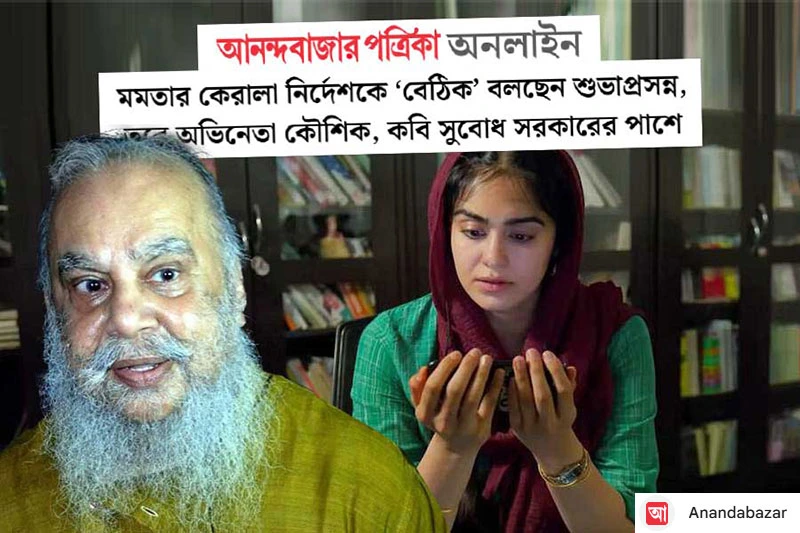
A recent report by Anandabazar Patrika has brought this question back into public discussion. It examines the position of several cultural personalities associated with Mamata Banerjee and her political circle, asking what has happened to their public presence since the change of government.
Read the Anandabazar Patrika report here.
The question deserves serious consideration. Some people who once took an active interest in politics may have grown tired of party affairs. Others may have changed their views or decided that public demonstrations are no longer the best way to express their opinions. That is their choice.
However, public figures who once helped shape political debate cannot expect people to forget that history whenever the government changes. Their earlier involvement gave their voices influence. It is fair to ask whether the principles behind those protests still guide their actions.
The concern is not silence alone. It is the apparent difference between the public activism of some personalities during the Left Front years and their presence in political debates during the TMC’s years in power and after its defeat.
If Bengal’s cultural community wants to retain public trust, it must be prepared to face such questions. That does not mean labelling every silent person a hypocrite. It means asking whether the habit of challenging authority has weakened whenever political power has changed hands.
Singur and Nandigram: When Intellectuals Took a Stand
To understand why this debate matters, we must return to the years before 2011. The Left Front had governed West Bengal for more than three decades. By the final years of its rule, anger over industrial policy, local political control and land acquisition had become a serious challenge to the government.
Singur and Nandigram changed Bengal’s political atmosphere. The proposed Tata Motors car factory in Singur brought the conflict between agricultural land and industrial development into sharp focus. In Nandigram, opposition to a proposed chemical hub led to a violent confrontation and widespread criticism of the government’s handling of the protests.
For people living in these areas, the dispute was about much more than party politics. Farmers feared losing their land and livelihoods. Families worried about their safety, while local residents questioned whether the government was listening to them. Resistance to specific policies soon became a wider debate about development, consent and the limits of state power.
Writers, actors and theatre personalities joined the protests, taking these concerns beyond the affected villages. Their participation made it harder for the government to dismiss the movement as nothing more than an opposition campaign. The presence of well-known cultural figures also brought greater attention to the experiences of ordinary people.
Sunil Gangopadhyay and Shankha Ghosh belonged to a literary tradition in which writers could influence public debate without holding political office. Shankha Ghosh, in particular, became associated with public expressions of concern over the violence and political developments surrounding Nandigram. Aparna Sen and Kaushik Sen also became prominent in the wider culture of protest and political discussion. We must not forget that Aparna Sen has spoken out against Mamata Banerjee over poll violence.
These personalities did not all hold identical views, and their later political positions should not be treated as though they were the same. Still, their involvement helped establish an important point: the protests were about more than a contest between the Left Front and its political opponents.
For further context, see The Indian Express report on intellectuals and political violence in Bengal.
The anti-Left movement left a lasting mark on Bengal’s political life. Many people came to expect writers, artists and other prominent citizens to speak up whenever a government crossed a line. That expectation was understandable. The question now is whether the same spirit of protest has survived the changes in political power since 2011.
After 2011: Did Protest Give Way to Political Access?
Mamata Banerjee’s victory in 2011 changed the position of those who had supported the movement against the Left Front. She was no longer the opposition leader challenging the government. She became Chief Minister, and the TMC took control of the state administration.
For cultural figures who had stood beside her during the anti-Left movement, this brought a different test. Challenging a government from the opposition benches is one thing. Questioning a government led by a political leader one has helped bring to power is quite another.
During the TMC years, some cultural personalities became closely associated with the new political establishment. Certain artists received official positions, awards or responsibilities in cultural institutions. Others appeared at government-linked events or publicly expressed support for the Chief Minister.
Shubhaprasanna is among the personalities discussed in the recent Anandabazar Patrika report. His association with Mamata Banerjee’s political and cultural circle makes him relevant to the debate over the relationship between public recognition and political access.
An appointment or award, however, does not prove political dependence. Governments can benefit from the knowledge and experience of artists, and accepting an official role does not automatically mean giving up one’s independence. The real test comes when the government makes a decision that deserves criticism.
- Will someone who receives official recognition still speak out?
- Can a person close to the establishment point out its failures without worrying about the political consequences?
These are fair questions for anyone whose public reputation rests partly on challenging authority.
Political access becomes a problem when it comes at the cost of independent criticism. Bengal does not need artists who oppose every government. It needs artists who can speak honestly about the failures of any government, including one they once supported.
And what about the farmers whose struggles helped bring this political change about? Put party politics aside for a moment and look at their fate. The picture is deeply troubling. They had ultimately lost both farming and industry. That is the harsh reality Bengal’s pro-TMC intellectuals must be willing to confront. Political change brought one party to power and removed another, but it did not necessarily deliver the economic future ordinary people had hoped for.
The TMC Years: Where Was the Sustained Public Pressure?
The Trinamool Congress government faced serious controversies during its years in office. Allegations of corruption, recruitment disputes, concerns over political violence and problems in the education system all raised questions about governance. Ordinary citizens, with little influence over the political establishment, often bore the consequences.
The recruitment controversies deserve particular attention. For thousands of young people, a government job represents years of study, family sacrifice and the hope of a more secure future. When recruitment processes become entangled in investigations and legal disputes, the damage goes far beyond political embarrassment. Candidates and their families are left waiting for answers, while public confidence in institutions suffers.
These issues called for sustained scrutiny from every part of civil society. Cultural figures who had once brought the struggles of Singur and Nandigram to public attention could also have used their influence to keep the concerns of students and job seekers in the spotlight.
Some personalities did criticise the TMC government, and their contributions should not be overlooked. Nor is it fair to claim that everyone associated with Mamata Banerjee defended every government decision. The record is more complicated than a simple division between supporters and critics.
Even so, an important question remains. Did Bengal witness the same level of united cultural mobilisation over the failures of the TMC government as it did during the movement against the Left Front?
The answer should be based on public statements, documented actions and the issues that received attention. This must not become a blanket accusation against everyone who supported Mamata Banerjee. At the same time, the history of Singur and Nandigram cannot serve as a permanent shield against criticism.
An intellectual’s credibility does not rest on helping to remove one government. It rests on the willingness to question the next one, especially when its decisions hurt the very people whose cause once inspired public protest.
Aparna Sen and Kaushik Sen: A Question of Consistency
Aparna Sen and Kaushik Sen often feature in discussions about Bengal’s cultural resistance to the Left Front. Both have participated in public debate on political and social issues. Their views and actions, however, should be examined separately rather than treated as a single political story.
The issue is not whether either of them supports the BJP or the TMC. Nor should anyone assume that an artist has abandoned their principles simply because they did not attend a particular demonstration. What matters is what they have said publicly and whether their arguments stand up to scrutiny.
Aparna Sen has expressed political views on several occasions, while Kaushik Sen has also spoken publicly on social and political matters. Their actual statements and actions matter more than speculation about their private motives.
There is nothing wrong with an artist opposing the BJP over communal politics, civil liberties or any policy they believe threatens democratic values. But the same concern for public accountability should apply when the TMC, the Left or another party is responsible for a failure.
Likewise, someone who opposed the Left Front should not feel obliged to defend Mamata Banerjee simply because her party defeated the Left. Political alliances change, particularly in today’s Indian political landscape, and people are free to revise their views. What should remain unchanged is the standard they apply when judging those in power.
Kaushik Sen’s criticism of the BJP, for example, should be judged on the merits of his arguments. The same applies to his views on the TMC. Disagreeing with an artist’s political position is perfectly reasonable. Questioning that person’s integrity, however, requires more than assumptions about party preference. Why should the questions arise at all?
Fearlessness means little if it is reserved only for governments one already dislikes. Bengal’s intellectuals should be judged by their public words and actions, not by political labels. The same standard must apply to everyone, regardless of past associations.
Why Does the BJP’s Rise Matter to This Debate?
The BJP now governs West Bengal and must answer for its decisions on jobs, education, public services, law and order, public spending and the treatment of political opponents. Winning an election gives a party the authority to govern, not the freedom to avoid criticism.
That makes the current debate about Bengal’s intellectuals all the more relevant. If cultural personalities believe the BJP’s policies threaten democratic rights or Bengal’s social fabric, they should say so openly. They must be free to challenge the government without political pressure or intimidation.
But criticism of the BJP cannot erase the TMC’s record. Allegations of corruption, recruitment controversies and concerns over political violence do not disappear simply because Mamata Banerjee is no longer Chief Minister. A change of government does not settle every question left behind by the previous administration.
Bengal should not have to choose between two groups of political defenders. It needs people who can acknowledge a good decision by one government and condemn a bad one by another without treating either position as an act of betrayal.
The same principle applies to elected representatives who change political sides after an election. Voters deserve an explanation when a leader abandons the party under whose banner they were elected, particularly if the move brings them closer to those in power.
Intellectuals have a different responsibility. They are not elected representatives and are free to change their political views. But public influence carries its own obligations. When people build their reputation on independence and resistance to injustice, their later conduct will naturally be judged against that record.
Neither the BJP nor the TMC should mistake the silence of a few prominent personalities for public approval. Bengal’s voters have their own opinions. They are not obliged to follow the political preferences of writers, actors or other celebrities.
Kaushik Sen has criticised the BJP and appears to regard it as more harmful than the TMC. He is entitled to that opinion, just as people are entitled to question his reasoning. But his position raises a wider political question: after 15 years of what critics describe as near-anarchy under the TMC, how can Bengal find a credible alternative if the BJP is also considered unacceptable?
Simply rejecting one party after another will not solve the state’s problems. Bengal needs a serious debate about governance, accountability and the choices available to its people.
Does Bengal Need a New Intellectual Movement?
Bengal does not need another gathering of celebrities assembled for a photograph or a political speech. What it needs is a stronger tradition of independent public debate, one that does not depend on which party happens to be in power.
Writers, teachers, lawyers, doctors, artists, students and ordinary citizens should be able to come together over issues affecting the state without signing up for a party’s agenda. They may disagree about economic policy, ideology or Bengal’s future. That is normal in a democracy. What matters is whether they can stand together when basic rights and public accountability are at stake.
Any such platform must remain independent of the TMC, the BJP, the Left and the Congress. Otherwise, it could become just another political forum that raises its voice when opponents are in trouble but looks the other way when its preferred party faces criticism.
Consider a citizens’ group that follows recruitment cases until job seekers receive clear answers. Imagine artists questioning the state government when public services fail, even if they once supported the ruling party. The same group should defend the right of opposition supporters to organise peaceful demonstrations.
That would be far more useful than a collection of celebrity endorsements. Its credibility would depend on the issues it takes up, the evidence it presents and its willingness to question those who hold power.
Bengal has seen cultural personalities come together over public concerns before. In June 2019, The Indian Express reported that prominent cultural figures in Kolkata planned a convention to raise concerns about post-poll violence. The report also recalled the earlier mobilisation around Singur and Nandigram.
There is a lesson here, but it is not that intellectuals must repeat the same political movement every few years. Their role is to draw attention to genuine public concerns, even when doing so is inconvenient for people they know or political causes they once supported.
An independent movement would not need to agree on every issue. It would need a shared commitment to fairness, civil liberties and accountability. Without that commitment, even a gathering of respected public figures could become little more than another extension of party politics.
Who Will Stand With Bengal’s Ordinary People?
The fate of a few celebrity intellectuals is not the biggest issue here. The real concern is what happens to ordinary people when public institutions fail. They are often the ones who suffer most, yet they have the least influence over political decisions.
Think of a young person who has spent years preparing for a government job, a family waiting for justice, a worker worried about losing a livelihood or a citizen afraid to speak against a powerful local leader. These people need more than occasional expressions of sympathy. They need public figures who will keep raising their concerns long after the television cameras have moved on.
Intellectuals can play a valuable role. A respected writer can question an official explanation. A teacher can examine whether a policy is working. An artist can bring public attention to suffering that political speeches ignore. Their influence can help people who would otherwise struggle to make themselves heard.
But that influence is worth little if it is used selectively. When public figures speak about injustice only when it embarrasses a political opponent, people begin to question their motives. Once their credibility suffers, even a valid criticism may fail to get the attention it deserves.
Bengal’s cultural history is a source of pride, but it does not give anyone permanent moral authority. Standing against the Left Front years ago does not automatically settle questions about a person’s later political conduct.
The opposite is also true. Accepting an official position or working with a government does not automatically disqualify an artist from public debate. The real test is whether that person remains willing to speak out when the government makes a mistake.
This is not an unreasonable demand. Anyone who chooses to use public influence must accept that people will judge how that influence is used. A genuine commitment to ordinary citizens cannot depend on which political party stands to benefit from the criticism.
Knowledge Mart Final Thoughts: Public Duty Must Come First
Bengal’s Pro-TMC Intellectuals are not obliged to support Mamata Banerjee, oppose the BJP or return to the streets simply to recreate the politics of Singur and Nandigram. They have every right to change their views, step away from public life or disagree with one another.
But the public has every right to ask questions. Those who once played a visible role in political protests cannot expect their earlier activism to place their present conduct beyond scrutiny. If their principles remain unchanged, their public positions should offer some indication of that consistency.
The anti-Left movement showed how writers, artists and other prominent citizens could bring the concerns of ordinary people into the political mainstream. But the real value of that history lies not merely in the political change it helped bring about, but in the principles that inspired it. Those principles should matter just as much when a different party governs the state.
The TMC must answer for its record. The BJP must answer for its decisions in office. The Left and the Congress must face criticism wherever their actions deserve it. No party should receive special treatment simply because it once stood on the right side of a particular protest.
Elected representatives who change political allegiance also owe voters an explanation. When someone abandons the party under whose banner they were elected, people are entitled to ask why. Public office should not become a convenient way to remain close to power while ignoring the mandate given by voters.
Bengal needs neither TMC-sponsored intellectuals nor BJP-friendly intellectuals. It needs people who can think independently, speak honestly and question those in authority without first checking their political identity.
That is the real test. The people of Bengal do not need intellectuals who merely repeat the arguments of their preferred political camp. They need voices that remain independent when criticism becomes uncomfortable and speaking out carries a personal or professional cost.