Can Mamata Stop TMC Rebels Now?
Jun 03, 2026 - By Ashutosh Roy Current AffairsElection AnalysisPoliticsRegional UpdatesWest Bengal Politics
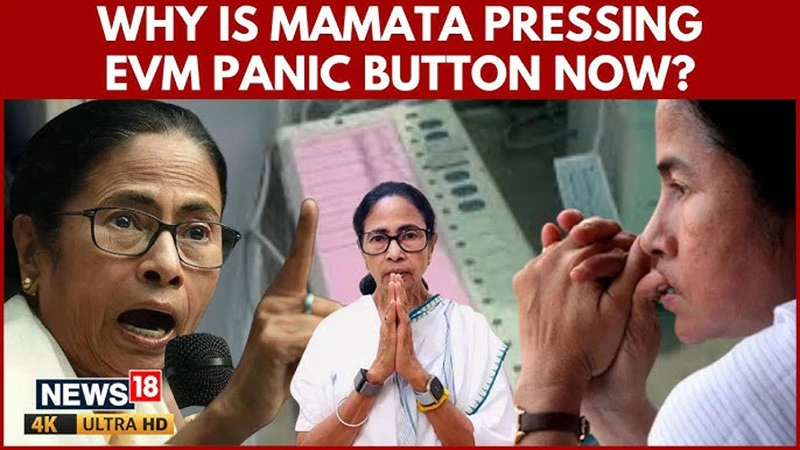
How Can Mamata Stop TMC Rebels?
A big question has now arisen across West Bengal. Can Mamata stop TMC rebels finally? Or is the ruling party staring at an irreversible, permanent collapse?
The 2026 West Bengal Assembly elections ended with a historic mandate. Following this defeat, a massive political crisis has gripped the inside of the Trinamool Congress (TMC). However, The crushing loss of the ruling regime has completely transformed the state’s political structure.
In fact, the TMC internal revolt has spread out aggressively. Immediately, dissent flows rapidly from top-tier leaders down to the local grassroots. So, this sudden collapse has completely stunned political observers across India.
The party is now facing its toughest survival battle since its formation in 1998. Senior members are openly revolting against the top brass. Municipal boards are collapsing overnight. Crucially, Mamata Banerjee now lacks state power to enforce discipline, making this an unprecedented structural disaster.
While traveling in an Ola Cab, the driver was narrating the corruption level in his village in Sundarbans.
West Bengal has witnessed two major “change” in last 15 years. However, the key difference of 2011 and 2026 election is that we didn’t find people are after the leaders with “Chor, Chor” slogan.
Key Differences: Post-Poll Situation (2011 vs 2026)
| Aspect | 2011 Post-Poll Situation | 2026 Post-Poll Situation |
|---|---|---|
| Political Context | Historic regime change: End of 34-year Left Front rule; TMC comes to power | Reverse power shift: BJP forms government after defeating long-standing TMC |
| Nature of Transition | Relatively smooth administrative transition despite political tension | Highly confrontational transition with administrative uncertainty and political resistance following Mamata’s reluctance in resignation |
| Scale of Violence | Comparatively limited and localized incidents reported | Multiple incidents including killings, arson, vandalism; large number of FIRs and arrests |
| Type of Violence | Sporadic clashes between cadres; not nationally escalated | Targeted attacks, office vandalism, political killings, retaliatory violence |
| Security Deployment | No extraordinary central force deployment reported post-results | Massive deployment of CAPF and heightened security presence |
| Administrative Control | Strong consolidation by incoming TMC government | Transitional instability with reports of administrative and constitutional tension |
| Role of Election Commission | Standard monitoring role | Active intervention with strict directives and real-time monitoring |
| Law Enforcement Action | Limited retrospective probes highlighted | Aggressive crackdown with reopening of past cases and widespread arrests |
| Political Reactions | Celebration of regime change; limited institutional conflict | Sharp political polarization, legal challenges, and resistance narratives of debacle |
| Internal Party Dynamics | TMC unified under Mamata Banerjee post victory | TMC faces internal rebellion, defections, and leadership challenges |
| Media & National Attention | Focus on historic Left defeat | Intense national and global attention on violence and instability |
| Historical Significance | End of world’s longest-serving elected communist government | One of the most dramatic power reversals in Bengal politics |
| Preparedness for Violence | No major pre-emptive planning highlighted | Extensive pre-planning with control rooms, surveillance, and force deployment |
| Continuity of Violence Trend | Beginning of TMC era; violence not yet systemically highlighted | Continuation of long cycle of political violence despite heavy security |
Why Is the 2026 TMC Internal Revolt Exploding From Within?
We have noticed a major shift in the party dynamics. TMC leaders at various levels have started singing in completely different tones. They are no longer hiding their anger against the inner circle.
Surprisingly, today morning I heard a strong local TMC leader said clearly that he has left TMC in a Pan shop.
When veteran leaders step down, it causes a chain reaction. When they publicly attack the top leadership, it shows only the tip of a massive iceberg. The ongoing revolt is no longer confined to low-level workers. It has successfully penetrated the absolute core of the party’s parliamentary strength.
Which Top Brass Leaders Are Leading the Rebellion?
The public rebellion of four-time Lok Sabha MP Dr. Kakoli Ghosh Dastidar highlights the crisis. Three-time Rajya Sabha MP Sukhendu Sekhar Roy has also joined this open defiance. Their actions prove how severe the internal cracks have become.
The party recently removed Kakoli Ghosh Dastidar from her high-profile post as Chief Whip in the Lok Sabha. They replaced her with Kalyan Banerjee. She responded immediately with a highly loaded social media post noting her four decades of unblemished loyalty.
Subsequently, she resigned from all official organizational positions. In her resignation, she cited deep concerns over internal corruption, undemocratic influences, and systemic misconduct.
Similarly, Sukhendu Sekhar Roy has turned into a harsh internal critic. He went as far as pointing out the unearned opulence of party workers. He openly questioned the massive, unexplained wealth of leaders even at the local Panchayat level.
Why Are Key Media Spokespersons Resigning?
The internal crisis worsened rapidly over the last few weeks. Key media faces like Arup Chakraborty and Susanta Ghosh resigned from their official party posts. Meanwhile, youth leader Riju Dutta faced an official suspension.
For years, these spokespersons defended the party tirelessly. Even, they stood up for the top brass in almost indefensible positions across major television channels. Now, they are walking away.
Susanta Ghosh’s exit is particularly revealing for voters. He recently survived a dangerous assassination attempt by a sharp-shooter right in front of his home. However, he faced zero cooperation from the party or the TMC-ruled state administration during the crisis.
The local police arrested some people, but the primary accused was quickly released on bail. This shocking lack of support forced Susanta to hire personal lawyers to fight his own case. The party completely abandoned him.
Furthermore, Arup Chakraborty has made stunning public disclosures. He stated that genuine grassroots workers could never reach the top brass anymore. He alleged they were systematically blocked by a tight corporate circle surrounding Mamata Banerjee and Abhishek Banerjee.
Jawahar Sarkar, the former TMC Rajya Sabha MP and a renowned bureaucrat directly blames Abhishek Banerjee for this poll debacle of TMC.
The rapid resignation of TMC spokespersons raises a critical question.
Specifically, will ABP Ananda and other TV channels manage to continue their prime-time political debates?
Can Anyone Ignore the RG Kar Case Impact on Bengal Elections 2026?
The answer is an absolute no. The tragic RG Kar Medical College incident completely altered Bengal politics. The subsequent institutional cover-up allegations deeply alienated the conscious middle-class and civil society of Bengal.
This deep public anger reflected directly in the dismal performance of the party at the polls. The ruling party lost its core urban and semi-urban vote banks. The structural damage was immediate.
Rajdeep Sardeshai, the famous Journalists analyzes the Disaster as a result of Return of Migrating Voters, Hindu Consolidation and also SIR.
Why Did Dr. Santanu Sen Turn Against His Own Party?
Dr. Santanu Sen is a prominent medical face of the party. He started opposing the top leadership right from the peak of the RG Kar protests. His dissent was deeply personal.
Dr. Sen, his wife, and his daughters all studied medicine at RG Kar. Furthermore, he began his entire political journey there as the Student Union General Secretary.
He could not control his emotions over the horrific incident and the subsequent police high-handedness.
Watch the video How Santanu Sen broke out in front of famous political journalist, Sumon Chattopadhyay. He talked of “Institutional Corruption”, which also echoes the Judge’s Remarks in the Supreme Court.
Therefore, he broke ranks with the top brass. It is now certain that the RG Kar case impact on Bengal election operations destroyed the party’s clean image. The public simply refused to forgive the administrative failures.
The mass voting pattern against the party was evident long before election day. As political observers and opposition leaders noted, the ground shifted early.
The massive public turnout during the “Reclaim the Night” programs on August 14 indicated that the citizens had completely rejected the ruling regime.
| Leader Name | Current Status / Action Taken | Primary Reason for Dissent |
|---|---|---|
| Dr. Kakoli Ghosh Dastidar | Resigned from all party posts | Corruption, corporate culture, and misconduct |
| Sukhendu Sekhar Roy | Active internal dissident | Panchayat corruption and institutional failures |
| Dr. Santanu Sen | Sidelined / Openly critical | RG Kar case handling and police high-handedness |
| Manoj Tiwary | Quit party completely | Cash-for-tickets scam (Alleged Rs. 5 Crore demand) |
| Arup Chakraborty | Resigned from organizational posts | Complete disconnect between top brass and workers |
Did the High-Handedness of I-PAC Trigger the Internal Collapse?
Public anger exploded heavily after the election defeat. However, the internal TMC revolt actually started a long time ago. The core reason behind this silent anger was the extreme high-handedness of the political consultancy firm, I-PAC.
Why Is Corporate Control Alienating Grassroots Workers?
Veteran MPs and district heavyweights have directly blamed I-PAC. Leaders like Krishnendu Narayan Choudhury of Malda spoke out fiercely. They claimed I-PAC treated traditional party workers like secondary corporate entities.
District leaders were forced to operate under strict dictations. Young corporate coordinators ran the ground operations. These coordinators had zero understanding of Bengal’s rural socio-political fabric, leading to massive internal friction.
“If the democratic structure within the party is overshadowed by an undemocratic, murky influence, it cannot bring any good to the legacy of the party,” Kakoli Ghosh Dastidar wrote in her explosive resignation letter.
What Are the Cash-for-Tickets Corruption Allegations?
The anger against this corporate style of functioning exploded dramatically. Former India cricketer and outgoing Minister of State for Sports, Manoj Tiwary, dropped a massive corruption bomb. The video details of his explosive claims can be watched directly on YouTube.
The party denied him an election ticket from Howrah’s Shibpur constituency. Following this, Tiwary openly declared that his TMC chapter was completely over. He did not hold back his frustration.
He alleged that he was denied a ticket because he flatly refused to pay a staggering Rs. 5 crore. He further claimed that around 70 to 72 candidates effectively bought their tickets through this corporate-vetted system.
This corrupt practice completely bypassed local merit, leading directly to the I-PAC role in TMC defeat.
Will Trinamool Congress Mass Resignations Empty the Municipalities?
We must look closely at the ongoing West Bengal political crisis 2026. The party is receiving its worst blows at the local civic level. Losing an election naturally causes some minor dissent to surface.
However, the Bengal political landscape has never witnessed municipal boards collapsing in synchronization like this. It is an absolute administrative panic. Over 120 elected councillors have resigned in large groups.
Many have completely stopped attending their offices across North 24 Parganas, Hooghly, and South Bengal. Hence, this mass abandonment has crippled local public services for ordinary citizens.
As an example, I met my friend yesterday, staying in North Barrackpore Municipal area. He was complaining that even the municipal garbage cleaner has stopped coming.
Which Major Municipal Boards Collapsed in May 2026?
The scale of the civic collapse is completely unprecedented also. Recent data from the districts highlights the following breakdowns:
- Bhatpara Municipality: 30 out of 35 elected councillors resigned together, including Municipal Chairperson Reba Raha.
- Garulia Municipality: 18 councillors walked out, leaving the civic board without a functional quorum.
- Halisahar Municipality: 16 out of 23 sitting councillors stepped down from their roles.
- North Barrackpore Municipality: 15 elected representatives submitted mass resignations.
- Kanchrapara Municipality: 14 councillors officially quit their administrative positions.
- Contai Municipality: 14 councillors resigned in the home turf of Chief Minister Suvendu Adhikari.
- Diamond Harbour Municipality: 8 out of 16 councillors resigned, shaking the home constituency of Abhishek Banerjee.
Was There Any Vigilance or Internal Audit in the Past Regime?
The sheer volume of wealth accumulated by lower-level leaders explains the public anger. Voters turned away aggressively because corruption became highly visible. Local leaders flaunted their unexplained wealth openly.
Sukhendu Sekhar Roy’s open criticism regarding the unearned opulence of Panchayat-level leaders reveals a total lack of internal vigilance.
There were no administrative checks during their fifteen years in power. Local leaders turned into absolute rulers, operating with zero accountability.
They operated under the false belief that state protection would last forever. Now, that protection has vanished completely. Thus, the grassroots workers feel exposed and vulnerable.
Instead of facing the crisis openly, the top leaders have largely stayed behind closed doors. Both Mamata Banerjee and Abhishek Banerjee have failed to protect or energize their panic-stricken grassroots workers. On the contrary, they are staying inside their rooms.
Recently, Mamata Banerjee called for emergency organizational review meetings to address the rebellion. Shockingly, a highly significant number of elected MLAs, MPs, and local leaders simply chose to remain absent. They ignored the party high command completely.
Mamata in Press
Mamata has finally broken her silence. She met the press after the Sonarpur incident involving Abhishek Banerjee. Furthermore, she visited Belle Vue Clinic and allegedly pressured the administration to admit him. Mamata also accused the government of blocking his treatment.
However, facts show a different story. Following the mob attack, Abhishek visited the victim’s house, spoke with their parents, and held a brief press conference. Consequently, questions are arising about whether this is just political theatrics or if he is genuinely sick.
What Is the Ultimate Verdict: Can Mamata Stop TMC Rebels Now?
The political stakes have never been more critical for the Banerjee family. Mamata Banerjee’s historic defeat to Suvendu Adhikari completely shattered her aura of invincibility. It severely damaged her personal popularity among rural and urban voters alike.
Yogendra Yadav, the renowned Political Analyst, explains the defeat as an unexpected swing.
At the national level, major political parties have started distancing themselves from the leadership. Rather, they now view the organization as a symbol of structural corruption, nepotism, and unchecked extortion. Hence, the political isolation is nearly complete.
At this moment, Mamata Banerjee’s primary focus appears centered on protecting her nephew. She wants to shield Abhishek Banerjee from growing internal blame and central agency probes.
However, this defensive strategy is backfiring heavily.
It is rapidly alienating the remaining loyalists who want accountability. Can Mamata stop TMC rebels now? Moreover, with state power gone, the traditional tools of political intimidation and administrative control are no longer available to her.
She cannot use the police or state machinery to suppress internal dissent anymore. If the leadership continues to shield a select inner circle while ignoring the legitimate anger of grassroots workers, she cannot succeed.
The ongoing mass exodus will rapidly turn into a final, permanent collapse of the Trinamool Congress.
10 Key Takeaways:
- Historic Defeat Triggers Chaos: The crushing loss in the 2026 Assembly elections shattered the party’s foundation. Consequently, an unprecedented internal revolt erupted across all tiers of the organization.
- Loss of Administrative Power: Mamata Banerjee no longer controls the state machinery or local police. Therefore, she lacks the structural tools to force internal party discipline.
- Top Brass Abandons Posts: Four-time MP Dr. Kakoli Ghosh Dastidar resigned from all official positions. She also publicly cited deep concerns over systemic corruption and undemocratic influences.
- Open Defiance From Veterans: Similarly, three-time Rajya Sabha MP Sukhendu Sekhar Roy turned into an active critic. He openly questioned the massive, unexplained wealth of local Panchayat leaders.
- Media Spokespersons Walk Away: Prominent TV faces like Arup Chakraborty and Susanta Ghosh also resigned. They claimed that an elite inner circle completely blocked access to the top leadership.
- The RG Kar Backlash: In addition, the handling of the RG Kar Medical College incident heavily alienated civil society. As a result, prominent leaders like Dr. Santanu Sen broke ranks with the high command.
- Grassroots Reject Corporate Control: Furthermore, district heavyweights directly blamed the consultancy firm I-PAC for the disaster. They argued that corporate interference heavily insulted traditional party workers.
- Explosive Ticket Scams Uncovered: Former sports minister Manoj Tiwary dropped a massive corruption bombshell. He alleged that candidates had to pay a staggering Rs. 5 crore to secure election tickets.
- Municipal Boards Collapse Overnight: Moreover, Trinamool Congress mass resignations hit the civic bodies hard. Over 100 elected councillors walked out, causing major municipal boards like Bhatpara and Halisahar to collapse completely.
- Family Protection Backfires Heavily: Finally, Mamata Banerjee focused primarily on shielding her nephew, Abhishek Banerjee, from central probes. However, this defensive strategy is rapidly driving away the remaining party loyalists.
People Also Ask (PAA)
Why are senior leaders leaving the Trinamool Congress now?
The crushing defeat in the 2026 Assembly elections completely broke the party’s internal confidence. Consequently, veteran leaders are now stepping down to protest widespread grassroots corruption, high-handed corporate management, and the controversial handling of the RG Kar case.
Can Mamata stop TMC rebel leaders from destroying the party?
Currently, the task remains extremely difficult because Mamata Banerjee no longer commands state administrative power. Furthermore, her current strategy focuses heavily on protecting her nephew, Abhishek Banerjee, which heavily alienates remaining traditional loyalists.
What role did I-PAC play in the 2026 TMC election defeat?
District heavyweights openly blame I-PAC for treating traditional ground workers like secondary corporate entities. In addition, explosive allegations from former minister Manoj Tiwary suggest that candidates had to pay massive cash sums to secure election tickets through this corporate system.
Why are Bengal municipal boards collapsing suddenly?
Trinamool Congress mass resignations have directly paralyzed local civic bodies. Because over 100 elected councillors walked out together in key districts like North 24 Parganas and Hooghly, major municipal boards instantly lost their legal working quorum.