Peace Bond Violation: Ashutosh, Saurav Free
Oct 23, 2026 - By Ashutosh Roy Current AffairsNational NewsNational PoliticsPolitics
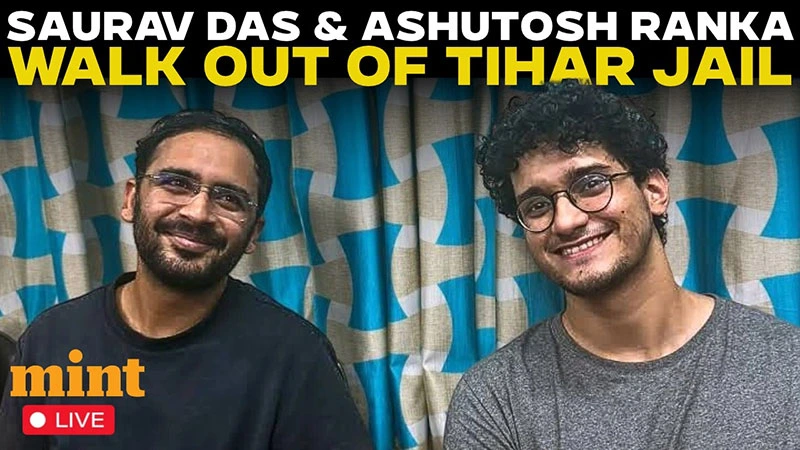
Peace Bond Violation: Ashutosh, Saurav Out
The high-profile arrest and weeklong detention of Cockroach Janta Party (CJP) co-convenors Ashutosh Ranka and Saurav Das pushed Delhi’s legal and political circles into a heated debate over preventive detention, citizen rights, and executive authority. Broadcast coverage tracking their eventual release can be watched on CJP Leaders Release on India Today.
The legal standoff finally came to an end when a Special Executive Magistrate (SEM) court ordered the release of both youth activists from Tihar Jail. Their seven-day stint in judicial custody stemmed from allegations by Delhi Police that they intentionally violated a signed peace agreement by marching to Jantar Mantar during a national demonstration against electoral roll revisions.
Below is a comprehensive breakdown of how the peace bond breach happened, the specific BNSS legal provisions invoked by law enforcement, and the legal steps that ultimately secured their freedom.
10 Explosive Takeaways: Unpacking the Peace Bond Violation and Tihar Jail Release
- Seven-day judicial detention ends in Tihar Jail: CJP co-convenors Ashutosh Ranka and Saurav Das were finally released by the Special Executive Magistrate (SEM) court after spending a week in preventive custody.
- The initial release was secured under Section 126 of BNSS, which legally requires individuals to sign a personal peace bond promising not to disturb public order or commit breaches of peace.
- De-notification of Jantar Mantar as a protest site: Delhi Police officially declared Jantar Mantar off-limits just 24 hours prior to the rally, relocating all permitted political demonstrations to designated alternative grounds.
- Activists scaled perimeter barricades to wave the national flag, an act that Delhi Police classified as an explicit breach of their signed peace bonds rather than a standard protest.
- Special Executive Magistrate court ordered immediate remand: Due to the alleged violation of Section 126 BNSS, the magistrate revoked their initial release terms and remanded both CJP leaders to Tihar Jail.
- A major legal controversy erupted over whether non-violent civil disobedience can be legally categorized as a breach of public tranquility under preventive laws.
- High Court suggested seeking revision remedies: The Delhi High Court allowed the duo to withdraw their urgent custody challenge, directing them to await the magistrate’s decision before seeking higher judicial intervention.
- Freedom granted through fresh court undertakings: The path to release was cleared only when Ranka and Das submitted a signed written undertaking promising not to call for protests at Jantar Mantar while it remains de-notified.
- An unconditional verbal apology was offered to the magistrate by their defense counsel to resolve friction regarding media statements made during their transport to court.
- Preventive detention differs fundamentally from criminal conviction: Navigating Chapter IX of the BNSS proves that signing or breaching administrative peace bonds does not amount to a criminal record, allowing freedom upon fulfilling court-mandated sureties.
Background: The Conflict at Jantar Mantar
To understand the confrontation, one must trace the political buildup across New Delhi in mid-October 2026. The Cockroach Janta Party had been organizing demonstrations demanding the resignation of Chief Election Commissioner Gyanesh Kumar, alleging voter deletions and procedural issues surrounding the Special Intensive Revision (SIR) of electoral rolls. Read: CEC Gyanesh Kumar: Students Rage & SC Fired.
As mobilization grew across opposition groups and student movements, CJP announced a march toward central Delhi under the banner “Jantar Mantar 2.0″ and “Lehra Do Tiranga”. The objective was to assemble in central Delhi to present public demands directly to the Election Commission.
The Peace Bond Execution
Days prior to the main rally, police intervened early. Ashutosh Ranka and Saurav Das were intercepted by officers at Indira Gandhi International Airport on October 10. To prevent immediate detention ahead of the rally, both leaders were produced before an Executive Magistrate and executed conditional undertakings under Section 126 of the Bharatiya Nagarik Suraksha Sanhita (BNSS).
Section 126 BNSS—which replaced Section 107 of the former Code of Criminal Procedure (CrPC)—empowers an Executive Magistrate to require citizens to execute personal bonds and offer sureties promising to “keep the peace and maintain good behavior”. By executing those documents, Ranka and Das entered into an administrative undertaking with the state to avoid actions deemed a threat to public order.
De-Notification of the Protest Site
Barely 24 hours before CJP’s scheduled gathering, Delhi Police issued administrative directions under Section 163 BNSS, officially de-notifying Jantar Mantar as an approved assembly point. Authorities directed all organizers to move demonstrations to designated alternative grounds at Ramlila Maidan, Burari, or CBD Ground.
While law enforcement cited public safety and traffic management as grounds for the venue restrictions, CJP organizers argued that shifting political demonstrations away from central Delhi severely weakened the public visibility of peaceful protest.
How the Peace Bond Violation Occurred
The situation escalated on October 13 when Ashutosh Ranka, Saurav Das, and CJP marchers decided to proceed toward Jantar Mantar despite the venue de-notification.
- October 11, 2026: Activists execute Section 126 BNSS peace bonds.
- October 12, 2026: Delhi Police officially de-notifies Jantar Mantar protest venue.
- October 13, 2026: CJP leaders march to Jantar Mantar and scale security barricades.
- October 14, 2026: Executive Magistrate orders 5-day judicial remand in Tihar Jail. Media analysis of their detention can be viewed via Sushant Sinha’s video report.
1. Scaling Barricades and Assembling
On the morning of October 13, CJP marchers arrived at Jantar Mantar to find the square blocked by police deployment and perimeter barricades. Rather than dispersing, Ranka and Das scaled the iron gates, entered the restricted square, unfurled the national tricolor, and raised slogans against the Election Commission.
2. Police Ruling on Bond Breach
Police personnel immediately detained both leaders. Rather than proceeding solely under standard provisions for unauthorized assembly or criminal trespass, law enforcement invoked the peace bond violation executed under Section 126 BNSS.
Before Special Executive Magistrate Ritu Raj, police prosecutors contended that assembling at a de-notified venue and breaching security barriers constituted a direct violation of their signed promise to keep the peace, establishing grounds for revoking their liberty under preventive law.
3. Remand to Tihar Jail
On October 14, 2026, the Special Executive Magistrate agreed with police that the leaders’ conduct presented a risk of further public disturbance. The magistrate canceled their initial bond terms and remanded both activists to five days of judicial custody in Tihar Jail, later extending custody by two days on October 19 upon police application.
The Legal Controversy: Is Protesting a Breach of Peace?
The judicial remand sparked discussion among constitutional experts over the application of preventive security provisions during political demonstrations.
Executive Interpretation: State prosecutors maintained that preventive undertakings are binding administrative contracts. In their view, knowingly defying venue prohibitions and crossing police lines breaks those conditions, justifying detention under Chapter IX of the BNSS to preserve public tranquility.
Rights Advocates Interpretation: Defense attorneys argued that Section 126 BNSS was enacted to curb violence, riots, or serious criminal offenses—not non-violent civil disobedience. They emphasized that using administrative peace bonds to restrict political gatherings creates tension with fundamental rights guaranteed under Article 19(1)(b) of the Constitution.
How Ashutosh Ranka and Saurav Das Were Released
After seven days in Tihar Jail, the legal proceedings concluded following defense submissions and fresh undertakings before the Magistrate Court. Further commentary on the outcome can be watched on Sushant Sinha’s coverage.
Step 1: High Court Petition Withdrawal
While in custody, the activists filed a habeas corpus petition before the Delhi High Court challenging their remand. During proceedings on October 21, Justice Subramonium Prasad noted that statutory remedies under the BNSS remained available before the Magistrate Court. Following court observations, defense counsel Abhik Chimni withdrew the petition to pursue relief before the SEM court.
Step 2: Defense Submissions and Apology
During the SEM hearing at Mandir Marg, prosecutors raised concerns regarding public comments made during transport to court. Defense advocates Abhik Chimni and Pranjal Abrol offered an unconditional verbal apology to resolve procedural friction, assuring the court that their clients maintained respect for judicial proceedings while arguing that continued preventive detention served no further purpose.
Step 3: Submission of Fresh Undertakings
To secure release, Ranka and Das executed fresh written undertakings containing specific commitments:
- Promising not to issue calls for protests at Jantar Mantar while the site remains officially de-notified.
- Reaffirming their commitment to maintain public peace and adhere to constitutional channels.
- Furnishing personal bonds and surety bonds of ₹50,000 each to cover the ongoing inquiry period.
Step 4: Formal Release Order
Concluding that the fresh undertakings and sureties addressed concerns regarding public order, Special Executive Magistrate Ritu Raj rejected requests for additional custody and issued release warrants on October 21, allowing Ashutosh Ranka and Saurav Das to walk free from Tihar Jail.
Key Takeaways from the Case
The proceedings involving Ashutosh Ranka and Saurav Das illustrate how preventive provisions under the BNSS operate during public protests.
First, executing a peace bond under Section 126 BNSS constitutes an administrative measure rather than a criminal conviction. However, an alleged breach grants executive magistrates statutory authority to order preventive custody.
Second, the case underscores the administrative impact of venue de-notifications. For public organizers, navigating preventive law requires assessing how venue restrictions interact with active peace undertakings.
Ultimately, the release demonstrates that preventive detention matters before executive magistrates can be resolved through formal court undertakings, personal bonds, and compliance with statutory procedures under Indian law.