Opposition Unity: The Battle to Defeat Modi
Nov 02, 2026 - By Ashutosh Roy PoliticsElection AnalysisNational PoliticsWest Bengal Politics
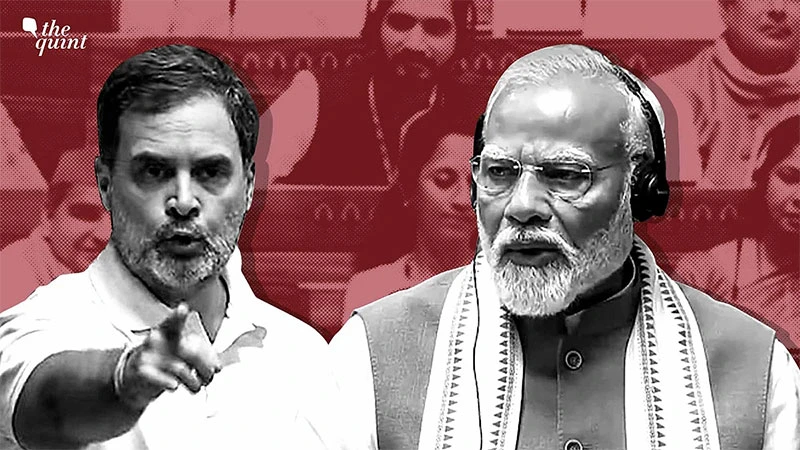
Opposition Unity: Can Modi Be Really Beaten?
Can India’s opposition parties defeat Narendra Modi? Can Congress, regional parties and new political movements turn public anger into an electoral victory? Or are they too divided, ambitious and weak on the ground to challenge the BJP-led government?
LoP Rahul Gandhi may lead INDIA Bloc Protest against CEC Gyanesh Kumar Over SIR revision, but can the opposition unity under his leadership can defeat Modi?
There are enough issues for the opposition to raise. Unemployment, rising prices, corruption allegations and concerns about democratic institutions can all become important election issues. The BJP also suffered a setback in the 2024 Lok Sabha election, when it won 240 seats, down from 303 in 2019. It lost its single-party majority, although the NDA remained in power.
That result showed that Modi could be challenged. But it did not prove that the opposition was ready to replace his government.
My argument is simple: it is too optimistic to expect the opposition to defeat Modi at this stage.
The problem goes much deeper than a lack of unity at the national level. Regional rivalries, personal ambitions, electoral setbacks, weak grass-root level organisation and the absence of an agreed national leader stand in the way.
The real question is not whether the opposition can criticise Modi. It is whether the parties can build a credible alternative that voters trust and that their leaders are willing to support together.
Why Opposition Unity Exists More on Paper Than on the Ground
The formation of the INDIA bloc in 2023 raised hopes that opposition parties could set aside their differences to challenge the BJP. Congress, the Trinamool Congress (TMC), the Samajwadi Party, the Aam Aadmi Party (AAP), the DMK and several other parties came together with a common purpose.
But an alliance formed to defeat one opponent is not necessarily a united political force.
What happens when two alliance partners compete for the same voters? Who decides which party should contest a seat? Who settles disputes over leadership? And what happens when a regional leader believes that joining hands with Congress will weaken their own position?
These are not minor questions. They go to the heart of Opposition Unity.
The INDIA bloc’s record shows the difficulty. Mamata Banerjee chose to contest the 2024 Lok Sabha election in West Bengal without a seat-sharing agreement with Congress. Congress and AAP failed to reach an understanding in Delhi and Haryana, even though they were partners at the national level. In Kerala, Congress and the Left compete against each other.
The problem has continued beyond the 2024 election. The bloc has struggled to develop a regular decision-making system that can manage differences between its members.
Read this report on the INDIA bloc’s coordination problems.
The flexibility of the alliance helped parties cooperate in some states in 2024. But the same flexibility made it difficult to settle disputes and develop a common political direction.
Opposition unity cannot depend on occasional meetings and common criticism of Modi. It needs a working arrangement that survives election results, regional rivalries and disagreements over power.
Personal Ambitions Can Weaken a Common Cause
Politics is a contest for power. There is nothing unusual about leaders wanting to become prime minister or chief minister. The trouble begins when personal ambition becomes more important than the collective objective.
- Who should lead the opposition?
- Should Congress, as the principal national opposition party, have the first claim?
- Should regional leaders demand equal status because they are stronger in their own states?
- What happens if two or three leaders refuse to accept one another?
Rahul Gandhi is Congress’s most prominent national leader, but that does not mean every regional party accepts his leadership. Mamata Banerjee has sought a larger role in national opposition politics. Akhilesh Yadav has his own political base in Uttar Pradesh. Arvind Kejriwal built AAP partly as an alternative to both Congress and BJP. The DMK has its own priorities in Tamil Nadu.
Perhaps Mamata Banerjee had been over enthusiastic by looking at India Today survey 4 years back. Alas! her own party has faced humiliated debacle after 2026 Bengal Election.
Why should all these leaders accept one leader without a clear agreement on their roles and the future direction of the alliance?
This is where ego clashes among ambitious leaders can destroy a promising political arrangement. A party may refuse to surrender a constituency even when an ally has a better chance of defeating the BJP. A leader may fear that giving another party more seats will strengthen a future rival.
The result is that the opposition spends valuable time negotiating with itself while the ruling party continues to organise, campaign and expand.
If opposition leaders genuinely want to challenge Modi, they must answer a difficult question: are they prepared to make personal sacrifices for a common political objective?
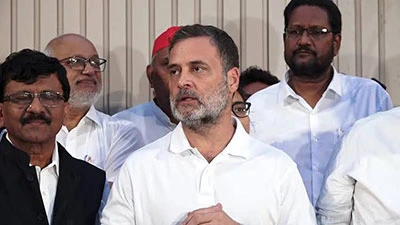
Recent Election Setbacks and Party Splits Have Weakened the Opposition
The opposition’s problem is not limited to disagreements around a conference table. Its electoral position has also suffered.
The 2024 Lok Sabha election was a warning to the BJP, but it was not a decisive victory for the opposition. The BJP fell from 303 seats in 2019 to 240 in 2024. Congress improved its tally from 52 to 99 seats, while the Samajwadi Party won 37 seats.
These results showed that opposition parties could make gains when they cooperated, selected effective candidates and consolidated votes. Uttar Pradesh has been the classical example of opposition unity in 2024. Still, the NDA remained in power.
The subsequent elections brought further setbacks. AAP lost Delhi in 2025. In West Bengal, the 2026 Assembly election ended TMC’s 15-year rule. The BJP won 208 seats, while TMC was reduced to 80, according to the reported results.
The defeat was followed by an internal split within TMC. The conflict between Mamata Banerjee’s faction and the group led by Ritabrata Banerjee became another problem for a party that had been one of the most important regional forces opposing Modi.
See the West Bengal Assembly election results and the report on the TMC split at Knowledge Mart.
Party splits do not merely reduce seat numbers. They create confusion among voters, weaken local networks and force leaders to spend time fighting former colleagues.
The same broader problem has affected other opposition parties. Shiv Sena and the Nationalist Congress Party suffered major divisions in Maharashtra. AAP has faced political setbacks, while regional parties have struggled to maintain their influence in several states.
A fragmented opposition is easier to defeat than a united one. The BJP benefits whenever rival parties divide votes, lose organisational strength or fight one another instead of challenging the ruling party.
Where Is the Opposition’s Prime Ministerial Face?
An election is not fought only on policies and party symbols. Voters also consider leadership, credibility and the ability to govern.
Modi has spent years building a recognisable national image. His supporters see him as decisive and politically strong. His critics accuse his government of failures on jobs, prices, social harmony and institutional independence. Whatever their assessment, voters know who leads the BJP-led government.
Can the opposition offer an equally clear alternative?
Rahul Gandhi is the Leader of the Opposition in the Lok Sabha, but his position does not automatically command the support of every regional party. Some leaders want to lead the alliance themselves; others are unwilling to accept Congress’s claim to a central role.
A collective leadership model may be possible, but it needs rules. Who will make decisions? Who will negotiate with allies? Who will speak for the alliance during a national crisis? And who will become prime minister if the alliance wins?
Avoiding these questions may postpone conflict, but it does not solve the problem.
The experience of 1989 offers a warning. V. P. Singh led a National Front government that relied on outside support from both the BJP and the Left. These forces did not share a common ideology. The BJP withdrew support after Singh’s government arrested L. K. Advani during the Ram Rath Yatra, and Singh lost the confidence vote in November 1990.
The episode demonstrated the danger of a coalition held together mainly by the desire to remove a common opponent. The partners could agree on bringing down Congress, but their political differences eventually became impossible to manage.
The lesson is not that coalitions cannot work. It is that a coalition needs more than a common enemy. It needs an agreed political direction and a way to manage conflicts when partners disagree.
If opposition leaders cannot agree on leadership and governing principles before an election, why should voters assume they will govern together smoothly afterwards?
Congress Has a Serious Ground-Level Organisation Problem
Congress remains the principal national party capable of challenging the BJP across several states. But being the principal opposition party does not mean that it is equally strong everywhere.
In some states, Congress has a functioning organisation and strong regional leadership. In others, it depends heavily on individual candidates, temporary alliances or the decline of a rival party. In several places, its local networks are too weak to compete consistently with the BJP’s electoral machinery.
An election campaign cannot be built entirely around speeches by Rahul Gandhi or criticism of Modi. It needs workers who visit neighbourhoods, listen to voters, identify local concerns, maintain contact between elections and explain what the party proposes to do.
The BJP has invested heavily in booth-level organisation, communication and election management. Congress must rebuild its own machinery if it wants to compete on equal terms.
The problem becomes more complicated when Congress tries to lead regional parties that are stronger than it in their own states. In West Bengal, Congress has struggled to challenge TMC and the Left on its own. In Uttar Pradesh, the Samajwadi Party has a stronger regional base. In Tamil Nadu, Congress has long relied on alliances to remain electorally relevant.
This creates a contradiction. Congress needs regional partners to improve its national prospects, but those same partners may fear that a stronger Congress will eventually compete against them for power.
An alliance cannot permanently compensate for a weak party organisation. If Congress wants to lead a national opposition, it must prove that it can build and sustain a strong presence on the ground.
This requires more than appointing new office-bearers or holding press conferences. It requires local leadership, disciplined workers, credible candidates and a lasting connection with voters.
Public Anger Does Not Automatically Become Votes
Unemployment, rising prices of essential commodities, corruption allegations and concerns about institutions can create anger against a government. But anger is not an election strategy.
A voter who is unhappy with the government must still decide which alternative deserves their vote. If opposition parties offer different candidates, conflicting promises and competing leaders, that voter may remain undecided, abstain or choose the party they consider the safest option.
The opposition must therefore do more than list the government’s failures. It must explain how it would create jobs, control living costs, address corruption and improve public services.
It must also persuade voters that its promises are realistic and that its leaders can work together after the election.
The 2024 Lok Sabha result is a useful example. The BJP’s fall from 303 seats to 240 showed that its electoral strength could decline. Still, the party remained the largest force in Parliament, and the NDA formed the government. The opposition made gains, but it did not turn the BJP’s reduced tally into a change of government.
The distinction matters. Anti-incumbency can create an opportunity; only a credible alternative can turn it into power.
This is why the opposition should not assume that public dissatisfaction will automatically bring Modi down. Voters may be unhappy with parts of the government’s record and still remain unconvinced by the opposition.
Can a Movement Like CJP Change the Political Equation?
The Cockroach Janta Party (CJP), led by Abhijeet Dipke, has added a different dimension to political debate. The movement has drawn attention through youth anger over examination controversies, unemployment and questions of accountability.
Such movements can play an important role. They can raise issues that established parties neglect, mobilise young people and force governments to respond. They can also put pressure on opposition parties to take public concerns more seriously.
But a protest movement is not automatically an electoral alternative. Mobilising people around one issue is different from selecting candidates across hundreds of constituencies, building local organisations, creating a policy programme and preparing to govern.
Congress’s outreach to Dipke illustrates the interest established parties have in engaging with new movements. It also raises a larger question: can the energy of a protest movement be turned into a durable political force?
For a report on that outreach, see The Indian Express report on Congress’s outreach to CJP.
CJP may help widen the debate and put pressure on established parties. But its ability to influence political discussion should not be confused with the ability to defeat the BJP in a national election.
The real test is whether such movements can sustain their energy, remain credible and turn public demands into lasting political participation.
What the Opposition Can Learn from 1977
The 1977 general election is often cited as proof that a powerful leader can be defeated when opposition forces unite. After the Emergency, Indira Gandhi and Congress faced widespread anger. Several opposition groups came together under the Janata banner and won 298 of the 542 seats.
The election demonstrated that a united opposition can defeat even a powerful incumbent when public anger, leadership and political organisation come together.
But the story did not end with victory. The Janata government was weakened by internal rivalries and leadership disputes. Morarji Desai resigned in 1979 after the coalition fractured, and the government fell before completing its term.
The lesson for today’s opposition is twofold. First, unity can change an election. Second, unity built only around the desire to remove a leader may not survive the challenge of governing.
The opposition cannot simply copy the 1977 formula. The political landscape is different, the BJP has a nationwide organisation, and regional parties have their own powerful interests. A credible alternative must be built around more than opposition to Modi.
Bengal in 2011: A Lesson in Leadership and Organisation
West Bengal’s political history provides another useful comparison. In 2011, Mamata Banerjee ended 34 years of Left Front rule. Her victory was not simply the result of public anger against the Left. She had built a recognisable political identity, maintained a statewide organisation and become the face of a movement against the incumbent government.
Different forces opposed the Left Front, but Mamata emerged as the central political figure capable of turning discontent into electoral power. The campaign had a clear target, a recognisable leader and a route to government.
The contrast with today’s national opposition is striking. The opposition to Modi has many leaders, but no universally accepted face. It has numerous complaints, but no single programme that all its major parties are prepared to defend together. It has regional strength in some states, but no consistent mechanism for sharing seats and managing rivalries.
For a broader discussion of Bengal’s political transformation, read Knowledge Mart’s article on West Bengal’s political landscape and its article on the problems within the INDIA alliance.
Bengal’s experience does not prove that only one leader can defeat a national government. It shows, however, that public anger must find an organised political expression. Without leadership, a clear target and a credible path to power, dissatisfaction may remain scattered.
What Must Change Before Modi Can Be Defeated?
The opposition still has time to correct its weaknesses. But it must recognise the scale of the task instead of assuming that the BJP’s mistakes will do the work for it.
First, the parties must establish a practical system for seat-sharing. They should identify constituencies where cooperation can defeat the BJP and avoid unnecessary contests against one another.
Second, they must agree on a leadership arrangement before the election. This need not mean declaring one prime ministerial candidate immediately, but voters and allies must know how major decisions will be made and how disputes will be settled.
Third, Congress must rebuild its ground-level organisation. National speeches and social media campaigns cannot replace active local workers, credible state leaders and a durable connection with voters.
Fourth, the opposition needs a common programme that goes beyond criticising Modi. It should set out clear proposals on jobs, prices, education, healthcare, corruption and the functioning of democratic institutions.
Fifth, the parties must show that they can govern together. The collapse of earlier coalitions has left voters with a legitimate question: will these leaders stay together once they get power?
Finally, opposition parties must stop treating every election as a contest between their own ambitions. If one party is stronger in a state, others must be willing to recognise that reality. If Congress wants to lead nationally, it must also accept that leadership brings responsibility, not an automatic right to control every alliance.
The BJP can be defeated only when its opponents become more than a collection of parties that happen to dislike the same government.
Ten Factors Shaping the Battle for Opposition Unity
- Opposition Unity is essential if rival parties want to turn public dissatisfaction into a serious challenge to Modi.
- The INDIA bloc must move beyond election-time agreements and build a working system to settle disputes and coordinate campaigns.
- Congress leadership remains central to a national challenge, but the party must earn the confidence of its regional allies.
- Personal ambition and ego clashes among opposition leaders can weaken even the strongest electoral understanding.
- Regional parties have their own voter bases and political interests, making seat-sharing and common leadership difficult.
- Recent electoral defeats and internal divisions have exposed the weakness of the opposition in several states.
- Without an accepted national leader, the opposition struggles to present a credible alternative to Modi.
- Congress needs stronger ground-level organisation, active local workers and dependable state leadership to compete effectively.
- Public anger over unemployment, prices and corruption allegations will not automatically produce an anti-incumbency wave unless voters see a convincing alternative.
- Defeating Modi requires more than a common opponent. Opposition parties must agree on leadership, policies, seat-sharing and how they would govern together.
Knowledge Mart Final Thoughts: Is Modi Really Vulnerable at This Stage?
It is too optimistic to think that the opposition can defeat Modi at this stage. That does not mean Modi is invincible or that the BJP cannot lose future elections. It means that the opposition has not yet demonstrated the unity, leadership and organisational strength needed to replace the BJP-led government at the Centre.
Five weaknesses stand out.
1. Fragmented opposition: Opposition parties remain divided by state-level rivalries, competing interests and disagreements over alliances. Their unity is often tactical rather than durable.
2. Ego clashes and excessive ambition: Several leaders want a leading national role, but no common mechanism exists to resolve their competing claims. Personal ambition can take priority over the wider objective.
3. Electoral setbacks and party splits: Recent defeats and internal divisions have weakened important opposition forces. The loss of organisational strength makes future contests harder, not easier.
4. No universally accepted opposition face: Rahul Gandhi is Congress’s most prominent national leader, but not every regional party accepts his leadership. Other leaders have their own ambitions, leaving the alliance without a clear, agreed national face.
5. Congress’s weak ground-level organisation: Congress remains central to any broad national challenge, yet its organisational strength varies sharply across states. It cannot rely on regional allies indefinitely without rebuilding its own base.
The opposition may raise important issues and expose genuine failures of the government. Movements such as CJP may help bring neglected concerns into public debate. But neither public anger nor political protest automatically becomes an electoral majority.
The BJP has its own weaknesses, and the 2024 result proved that its seat tally can fall. But defeating a government requires more than reducing its majority. It requires a credible alternative that voters trust and that opposition parties are prepared to support together.
The real battle is not just to defeat Modi. It is to build an opposition capable of winning, governing and staying united.
Until that happens, expecting the opposition to defeat him at this stage is more an expression of hope than a realistic political assessment.