West Bengal 2026: Massive ED Raids Now!
Apr 19, 2026 - By Ashutosh Roy Current AffairsElection AnalysisGovernancePoliticsRegional UpdatesWest Bengal Politics
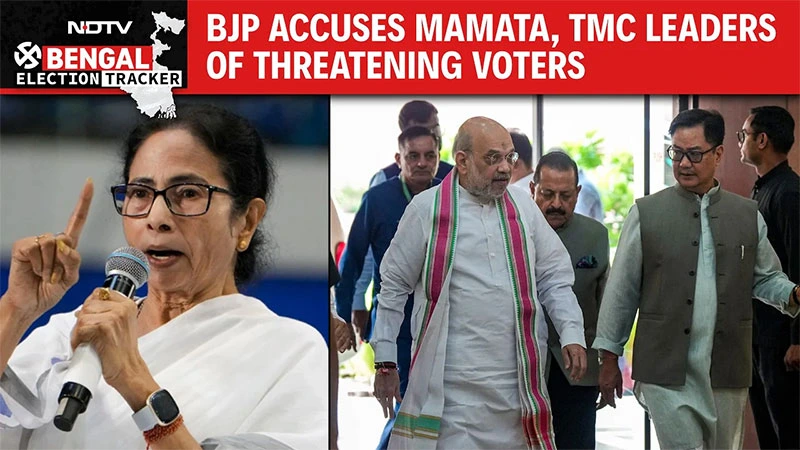
Why is West Bengal 2026 Seeing a Surge in Federal Raids?
The upcoming West Bengal 2026 elections are driving a wave of intense legal activity. Frequent raids by the Enforcement Directorate (ED) and Income Tax (IT) department suggest that the election season has officially begun. While these actions occur before every major vote, this year feels different.
The current raids appear highly organized and strategic also. Moreover, Observers believe the main goal is to pressure the nerve center of the TMC by targeting its top strategists and financial backbone.
How is the ED Targeting the TMC Strategy Center?
A series of recent events shows that central agencies are focusing on I-PAC, the primary election consultant for the TMC. Hence, this strategy aims to disrupt the planning behind the West Bengal 2026 campaign.
- January 8: The ED raided the Kolkata office of I-PAC and the home of director Pratik Jain. The Chief Minister personally intervened, and the legal battle has now reached the Supreme Court.
- April 13: Authorities in Delhi arrested Vinesh Chandel, another I-PAC director, for alleged money laundering.
- The Deep System: Critics often describe I-PAC as the deep system that manages the party, the state government, and the administration.
How Does the Coal Scam Affect West Bengal 2026?
The long-running coal theft investigation has taken a sharp turn as the West Bengal 2026 polls approach. Additionally, new evidence and massive asset seizures are keeping the pressure on the ruling party.
What are the Latest Actions in the Coal Case?
On April 15, the ED took significant steps to freeze the financial resources of the suspects involved in the Lala syndicate.
- Massive Seizures: The ED attached assets worth 159 crore rupees; bringing the total seized value in this case to over 482 crore rupees.
- The Lala Pad: Investigators uncovered a fake invoice system used to bribe officials and transport illegal coal across the state.
- Focus on Leaders: The ED and IT departments are now summoning and raiding bold TMC leaders to investigate their links to these financial networks.
Which Key Leaders Face Questioning?
Several high-profile candidates and leaders are currently under the scanner of central agencies:
- Debasish Kumar: The sitting MLA and candidate for Rashbehari faced multiple IT and ED raids at his home and election office this week.
- Sujit Bose: The agency has issued summons to the family members of this influential Bidhannagar leader.
- Strategic Impact: By targeting these leaders, the agencies are creating significant hurdles for the ground-level mobilization of TMC for Bengal Elections 2026.
- Kumar Saha: Authorities also targeted the Kalighat residence of this influential leader. People know him as a heavyweight figure and a close associate of the top leadership of Trinamool Congress.
- Miraj Shah: Officials searched the Elgin Road home of this businessman. He is a prominent figure in the Bhawanipur Gujarati Education Society. He also served as the official proposer for the nomination of the Chief Minister Mamata Banerjee.
Rumors are circulating that these specific individuals form the primary financial supply line for the party. By focusing on them, central agencies may be attempting to squeeze the resources needed for the West Bengal 2026 campaign.
How is the Security Situation Changing for West Bengal 2026?
The current raids for West Bengal 2026 are happening under very different conditions than in the past. Currently, central forces are deployed throughout the state, and the Election Commission has taken full control of the administration. Consequently, the agencies are operating with much greater freedom.
Why are Federal Agencies More Effective This Time?
In previous years, central officers faced significant physical and administrative hurdles. However, the current setup for West Bengal 2026 has removed these obstacles.
- No More Physical Attacks: Previously, in Sandeshkhali, a mob attacked ED officers when they tried to arrest Sheikh Shahjahan. Today, the presence of central forces ensures such violence does not occur.
- No Police Interference: In the past, the state government used local police to stop CBI officers or even detain them. Because the Election Commission now controls the police, this is no longer happening.
- Lack of Administrative Blockades: We no longer see the Chief Minister sitting on a dharna to physically block federal investigations.
What is the Impact of the Control of Election Commission?
The shift in power from the state government to the Election Commission is a defining feature of West Bengal 2026. This change has neutralized the tactics previously used to protect the nerve center of the ruling party.
How Does This Compare to Previous Election Cycles?
While raids are common before elections, the lack of resistance from the state machinery is the biggest difference this year.
- Safe Operations: Federal officers can now reach their targets; including the homes and offices of influential leaders, without fear of being beaten back.
- Direct Authority: Since the administration reports to the Commission; local officials cannot use their power to shield party leaders from legal scrutiny.
- Continuous Pressure: The agencies are maintaining a steady pace of raids because the usual street power of the local administration has been sidelined.
Therefore, the environment for West Bengal 2026 allows central agencies to follow their strategic plan without the administrative friction seen in previous years.
Why is There Growing Debate Over Federal Investigations?
While agencies like the CBI, ED, and NIA are active in numerous cases across the state, many questions remain. Critics point out that despite the high number of raids for Bengal Elections 2026, very few investigations reach a final conclusion.
Thus, the lack of final chargesheets in many high-profile cases has raised doubts about the ultimate goal of these operations. Consequently, many view these actions as a way to create political pressure rather than to secure legal convictions.
Are Central Agencies Being Used for Political Gains?
The timing of these raids, occurring just before the West Bengal 2026 polls, has led to serious allegations of misuse. Political opponents argue that the central government uses these agencies as tools to weaken the opposition.
- Court Observations: Various courts have repeatedly questioned the conduct of central agencies, sometimes labeling their actions as threatening or intimidatory proceedings.
- National Precedents: High-profile leaders like Hemant Soren and Arvind Kejriwal, along with almost the entire Delhi cabinet, were jailed before major elections.
- Lack of Convictions: There is little public information regarding how many of these arrested leaders have actually been convicted of a crime.
The Election Cycle Pattern: Agencies often become hyper-active right before a vote but remain quiet for the following five years.
What is the Counter-Argument Regarding Corruption?
The BJP and supporters of the investigations offer a different perspective. They argue that the legal process follows its own timeline, independent of the West Bengal 2026 election schedule.
Were Major Arrests Linked to Election Dates?
To counter the claim of election-only raids, proponents point to the arrests of several top-tier Trinamool Congress leaders. They highlight that these major actions took place when no elections were imminent.
- Partha Chatterjee: The former Education Minister was arrested in July 2022 during a non-election period.
- Anubrata Mondal: The influential Birbhum leader was taken into custody in August 2022.
- Jyotipriya Mallick: The arrest of the former Food Minister also occurred well outside the immediate campaign window for West Bengal 2026.
Therefore, the debate remains split: one side sees a calculated political attack on the nerve center of Trinamool Congress, while the other sees a continuous fight against corruption that spans several years.
How do you think these ongoing investigations will influence the decision of an average voter in the upcoming phases?
Is the Misuse of Power Happening at Both the State and Central Levels?
The discussion surrounding West Bengal 2026 highlights a complex reality: allegations of misuse of power are directed at both the central and state governments. While central agencies face criticism for their timing, the state government also faces accusations of using administrative power to suppress the opposition.
Is the State Government Also Misusing Its Power?
Critics of the state administration argue that the political environment for West Bengal 2026 is heavily controlled. They point to several patterns that suggest the state uses its machinery to hinder opposition parties.
- Court-Ordered Rallies: Almost every major opposition meeting or rally in West Bengal now requires a direct order from the High Court. The state government frequently denies permission for these events.
- Legal Pressure on Opposition: Opposition leaders often face a mountain of cases filed by state agencies. This legal burden makes it difficult for them to campaign freely.
Does Political Alignment Protect Leaders from Investigation?
A notable trend in Indian politics is the shifting of legal pressure based on a leaders of the current party. This observation has led many to believe that investigations depend more on political loyalty than on actual evidence as we head toward West Bengal 2026 elections.
What are the Examples of Selective Investigations?
Observers often point to specific leaders whose legal troubles seemed to change based on their political affiliation.
- Himanta Biswa Sarma: When he was in the Congress party, he faced intense attacks from central agencies. However, since joining the BJP, those investigations are no longer active.
- Manas Bhunia: In the past, as a prominent Congress leader, he faced serious allegations, including murder charges. Today, as a leader within the ruling Trinamool Congress, he remains secure.
How Does This Impact the Narrative of West Bengal 2026?
These examples create a sense of public skepticism. Many voters feel that both sides use investigative shields to protect their own and investigative swords to attack their rivals.
- The Washing Machine Allegation: Opponents use this term to describe how leaders allegedly become clean after switching parties.
- State Protection: Critics argue that joining the ruling party in Bengal provides a local shield against state-level police cases.
Therefore, the debate for West Bengal 2026 is not just about whether the raids are justified, but whether the law is applied equally to everyone.
Why are Voters Skeptical of the Current Raids?
People view the intense pincer movement by the ED and IT departments with deep suspicion. Regardless of the actual goals, the public is unsure about the true nature of these actions. The targets might be actual criminals, or the entire operation could simply be a gallery show for the public.
However, these current raids carry a specific scent: they appear to be a deliberate attempt to strike at the West Bengal 2026 nerve center of the Trinamool Congress.
Do the Raids Provide Free Publicity for Candidates?
One clear result of these investigations is the massive media attention they create. While the agencies aim to put pressure on the party, the targeted candidates are gaining significant cheap publicity through constant news coverage.
- Media Spotlight: Candidates are staying in the news cycle for hours, reaching audiences across the state.
- Voter Attention: This constant visibility helps these leaders stay relevant in the eyes of the public during the campaign.
Is Bengal Election 2026 is Truly Unprecedented?
The current political environment is unlike anything seen before. The combination of targeted strikes on the core of the party and the resulting media frenzy makes West Bengal elections 2026 an extraordinary event.
What Makes This Election Unique?
The strategy behind the raids and the way candidates are utilizing the situation have created a historic scenario.
- Strategic Hits: The focus remains on disrupting the organizational nerve center of the ruling party.
- The Final Narrative: Between the agency actions and the media gains of the candidates, the state is witnessing a completely new style of electoral battle.
Truly, the West Bengal 2026 election is unprecedented.
10 Key Takeaways :
- Agencies target the nerve center: The ED and IT departments focus their raids on the core strategic and financial organizers of Trinamool Congress.
- I-PAC faces intense scrutiny: Authorities arrested Director Vinesh Chandel and raided Pratik Jain, targeting the primary election consultant of the party, IPAC.
- Timing raises public suspicion: The surge in federal activity just days before the first phase of voting creates doubts about the true intent of the raids.
- Candidates gain free publicity: Massive media coverage provides targeted leaders with constant visibility and a platform to reach voters for free.
- Election Commission maintains control: The direct oversight of the ECI on the state administration prevents local interference with federal investigations.
- Central forces ensure safety: The heavy presence of central troops stops the physical obstruction of agency officials that occurred in previous years.
- Coal scam investigation intensifies: The ED recently seized assets worth 159 crore rupees, keeping the Lala syndicate and high-level corruption in the headlines.
- High-profile leaders face summons: Agencies are actively questioning influential figures like Debasish Kumar and Sujit Bose to uncover financial links.
- Both sides face misuse allegations: Critics accuse the center of using agencies for politics, while the state faces claims of using police to harass opposition.
- West Bengal Elections 2026 remains unprecedented: The combination of strict administrative control and aggressive raids makes this election 2026 cycle historic.
People Also Ask (FAQs)
Why are agencies like the ED and IT raiding I-PAC?
The Enforcement Directorate (ED) and Income Tax (IT) department are investigating I-PAC, the primary election consultancy of TMC, as part of a money-laundering probe. Agencies are focusing on alleged financial irregularities and hawala networks. Since I-PAC is considered the strategic brain of the party, these raids are seen as a move to disrupt their election planning.
How is the 2026 election security different from previous years?
For West Bengal 2026, the Election Commission of India (ECI) has implemented a massive security umbrella.
- Force Deployment: Over 2.4 lakh central forces (CAPF) are stationed across the state.
- Neutralizing Resistance: Unlike the Sandeshkhali or CBI incidents of the past, central forces now provide direct protection to federal officers, preventing local mobs or state police from interfering with raids.
- Administrative Control: The ECI has reshuffled hundreds of state police officers and removed top bureaucrats to ensure neutrality.
What are the key dates for the West Bengal 2026 polls?
The election for the 294-member assembly is scheduled to take place in two primary phases:
- Phase 1: April 23, 2026
- Phase 2: April 29, 2026
- Counting Day: May 4, 2026
What is the SIR voter list revision controversy?
Many voters are asking about the Special Intensive Revision (SIR) of the voter list. A new ECI software reportedly flagged millions of voters as suspicious due to logical discrepancies (like age gaps or digitisation errors). This led to protests and legal interventions, most notably in Malda, where the NIA was called in after election officials were briefly held hostage by a mob.
Are these raids affecting the candidates ability to campaign?
Yes, candidates like Debasish Kumar have reported that marathon 15-hour raids at their homes and election offices have prevented them from meeting voters. However, observers also note that the intense media coverage provides these candidates with free publicity, often helping them project a victim narrative to rally their supporters.
Why is the Lala coal scam appearing in the news again?
The coal theft case involving Lala (Anup Majee) remains a central focus. On April 15, the ED seized assets worth 159 crore rupees linked to this case. Investigators are using this long-standing probe to track the supply lines of funds that they believe are being used for the West Bengal 2026 election campaign.
[…]West Bengal 2026: Massive ED Raids Now! Massive ED raids hit the West Bengal 2026 political nerve center. As Phase 1 nears on April 23, we analyze the impact of central agency action on poll strategy.[…]