Shock Surge: Ultimate Left Revival?
May 31, 2026 - By Ashutosh Roy Current AffairsElection AnalysisPoliticsRegional UpdatesWest Bengal Politics
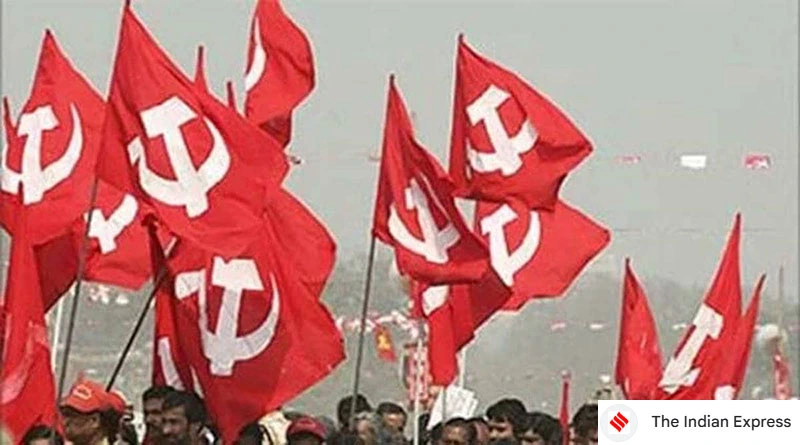
Is Ultimate Left Revival Possible?
Is Ultimate Left Revival coming up in reality? The political phrase “Aage Ram, Pore Bam Shift“ (First Ram, then the Left) has shaped West Bengal’s political narrative for nearly a decade. Though for years, this slogan symbolized the decline of Left politics in the state.
The rapid rise of the BJP, often referred to as the ‘Ram wave’, pushed the Left Front to the margins. Thus, many believed the Left had reached a point of no return.
However, recent developments, especially the Falta by-election results, have reopened the debate around a possible Ultimate Revival of CPM-Led Left Front.
The CPM has got a young enthusiastic fresh brigade, which is perhaps the strongest in Indian Politics. Hence, the responsibility lies with the senior members to drive them in the right direction.
Moreover, the left has to decide, whether the realpolitik approach is preferred or sticking to the ironclad ideology is important.
But is this a real comeback or just a temporary fluctuation in voting patterns? Let’s break it down.
Falta by-election results: A Statistical Surprise or Political Signal?
The Falta by-election results created a fresh buzz in Bengal politics. While the ruling force maintained its dominance, the real story lies elsewhere. It is worth mentioning that Pratikur Rahaman was an active CPM leader in that area.
The CPI(M) emerged as the second-largest party, surpassing both Congress and TMC. Hence, this sudden shift has raised eyebrows across political circles.
For official numbers, refer to the Election Commission of India.
Vote Surge: A Dramatic Turnaround
- Previous tally: 2,315 votes
- Current tally: 40,000+ votes
- Result: Clear second position
This jump is significant. It indicates a shift in voter sentiment, even if limited in scale.
Anandabazar Patrika, explains accordingly how minority votes moved away from TMC, benefiting the Left.
Breaking the Cycle of Decline
The Falta by-election results is not an isolated case. The Left also broke its dry spell of electoral zeros in Domkal in 2026 Bengal Elections. Together, these developments suggest that the political landscape may be shifting the West Bengal election politics.
After the results, CPI(M) candidate Sambhunath Kurmi confidently stated that “TMC’s game is over“. Is it to be said verbally? Rather, it’s written on the wall. While the claim may be bold, it reflects renewed energy within the party.
When Corruptions and money laundering have recached such an euphonical level, why shouldn’t Left Front West Bengal should accelerate their momentum?
Why Is a New Opposition Space Emerging?
Political space rarely remains empty. When one opposition weakens, another force rises to fill the gap.
A Look Back at 2016
- Left-Congress alliance: 76 seats but weak street presence
- BJP: Only 3 seats but strong grassroots activism
- Outcome: BJP became the main opposition voice
In fact, such a week street presence created a void in the political landscape of West Bengal. As a result, BJP came out to fill up the void space in West Bengal election politics. Finally, BJP had emerged as the key opposition.
Today, a similar vacuum appears to be forming again. So, if the Aage Ram Pore Bam shift rhetoric happens in reality, Left Front West Bengal will certainly be the gainer.
Ground-Level Visibility Matters
Recent protests, including crackdowns on hawkers, have highlighted a key trend. Left cadres have been more visible on the streets compared to other opposition groups.
Meanwhile, detailed coverage from The Hindu shows how political competition is intensifying at multiple levels.
Institutional Power vs Ideological Politics
- BJP benefits from central support and strong financial backing
- On the other hand, the Left relies on ideology and grassroots mobilization
This contrast defines the current political battle.
Leadership Reality Check: What the Left Admits
Despite the positive signals, Left leaders remain cautious. Young leader Dipsita Dhar has openly acknowledged a key issue. Left Front West Bengal can certainly revive.
Media attention does not translate into votes.
Core Challenges
- Repeated electoral defeats since 2011
- Moreover, weak voter conversion with a gradual decline curve
- Limited organizational reach despite Bangla Bachao Yatra
However, she also points out an opportunity. When governance credibility declines, space opens for alternatives in West Bengal election politics.
CPI(M) Vote Share in West Bengal (2011–2026)
| Election Year | Election Type | CPI(M) Vote Share (%) | Key Insight |
|---|---|---|---|
| 2011 | Assembly | 30% | Strong base, but lost power after 34 years |
| 2014 | Lok Sabha | 23% | Decline begins after regime change |
| 2016 | Assembly | 19-20% | Alliance with Congress slows fall |
| 2019 | Lok Sabha | 7% | Massive collapse; BJP surge |
| 2021 | Assembly | 5% | Historic low; no seats won |
| 2024 | Lok Sabha | 6-7% | Slight stabilization, but still weak |
| 2026 | Assembly* | 5% +(est.) | Marginal recovery; signs of regrouping |
Is the Left Reinventing Itself?
State Secretary Mohammad Salim offers a structural explanation. He believes past political narratives blurred ideological boundaries. Some ultra-left and some others pretended to play the roles of pro-left during Singur and Nandigram movements.
The Communication Gap
The Left continues to use strong ideological language. However, it often fails to explain its policies in simple, practical terms. On the Contrary, the Left are raising the basic issues like Poverty, Minimum Wages, Corruptions, Education, Primary Health etc. Such rhetoric attracts the mass.
Rebuilding the Base
- Reviving old networks
- Mobilizing experienced workers
- Reconnecting with lost voters
This process is slow and difficult, especially after a decade of decline.
Economic Reality: A Changing World
Global and local realities have changed significantly. Traditional communist models no longer dominate.
Global Trends
- China and Vietnam follow hybrid economic systems
- Private investment is widely accepted
- Focus has shifted to welfare-driven governance
Indian Context
- Singur highlighted limits of rigid ideology
- Kerala’s Left works with private corporations
Communist Countries That Moved Away from Classical Marxist Economics
| Country | Transition Start Year | Key Leader / Trigger | Nature of Shift | Current Economic System |
|---|---|---|---|---|
| China | 1978 | Deng Xiaoping | Introduced markets, SEZs, private sector | State-led market economy |
| Vietnam | 1986 | Communist Party leadership | Shift to market-oriented reforms | Socialist-oriented market economy |
| Laos | 1986 | Lao People’s Revolutionary Party | Decentralization, private sector allowed | Mixed economy |
| Cuba | 1993 (major), 2011 (expanded) | Post-Soviet crisis | Limited private business, tourism | State-dominated hybrid |
| North Korea | 2002 (limited) | Government policy adjustments | Small-scale market tolerance | Mostly planned economy |
| Soviet Union (Russia after 1991) | 1985–1991 | Mikhail Gorbachev | Transition to capitalism after breakup | Market economy |
These shifts challenge the traditional Left framework.
Declining Traditional Support Base
Structural Changes in Society
- Decline in industrial workforce
- Weakening of trade unions
- Reduced agrarian struggles
The Gig Economy Challenge
Organizing gig workers is far more complex than mobilizing factory labor. This creates a major hurdle for any Ultimate Revival of CPM-Led Left Front.
Can the Left Counter BJP’s Strategy?
Securing second place is a positive step. However, defeating BJP requires a completely different strategy.
Key Obstacles
- Strong identity-based narratives
- Perception of Marxism as outdated
- Lack of clear economic messaging
While leaders argue that workers’ rights remain relevant, critics demand clearer explanations.
What Is the Left’s Economic Vision?
Unity appears to be the immediate focus. More details are available on the CPI(ML) Liberation platform.
Strategic Priorities
- Building alliances
- Encouraging protests
- Strengthening grassroots movements
These steps aim to rebuild political relevance.
Left vs Welfare Politics: Blurred Lines
The difference between Left and other parties is becoming less clear.
Comparison
- Left: Structural economic reforms
- Others: Direct welfare benefits
This overlap creates confusion among voters.
The Big Question
Why should voters choose the Left over welfare-driven alternatives? Indirectly, it fuels the political narrative of Aage Ram Pore Bam shift.
Expert Insight
Dwaipayan Bhattacharyya highlights a crucial point.
- Street protests are not enough
- A clear economic model is essential
- Secular identity alone cannot win elections
Falta Repoll Results Overview
| Candidate | Party | Votes | Vote Share (%) |
|---|---|---|---|
| Debangshu Panda | BJP | 149,666 | 71.20% |
| Sambhu Nath Kurmi | CPI(M) | 40,645 | 19.34% |
| Abdur Razzak Molla | Congress | 10,084 | 4.80% |
| Jahangir Khan | TMC | 7,783 | 3.70% |
Final Verdict: Is Left Front West Bengal is Reviving?
The Falta repoll suggests movement, not transformation.
- Somehow, The Left has regained visibility
- Organizational rebuilding has begun
- However, the vote gap remains large
In conclusion, the idea of Revival of Left Front West Bengal remains uncertain. The momentum is visible, but the journey is long.
Unless the Left rebuilds its core voter base and presents a clear economic alternative, a full-scale comeback will remain a challenge.
The engine has started again. Now, the road ahead will determine whether it leads to revival or remains a temporary spark.
10 Key Takeaways
- The Falta repoll shows a clear shift in opposition dynamics.
- The CPI(M) significantly increased its vote share.
- Moreover, the jump from 2,300 to 40,000+ votes signals renewed traction.
- However, the BJP still dominates with a massive vote margin.
- Meanwhile, TMC’s vote decline indicates a possible voter shift.
- In contrast, the Left regained visibility through street-level activism.
- Furthermore, a political vacuum is emerging within the opposition space.
- At the same time, the Left still struggles with clear economic messaging.
- Consequently, rebuilding grassroots networks remains a major challenge.
- Finally, the idea of an “Ultimate Revival of CPM-Led Left Front” remains uncertain but evolving.
People Also Ask (PAA)
Is the Left really making a comeback in West Bengal?
The Left shows early signs of recovery in select constituencies. However, it still lacks statewide strength. Therefore, the comeback remains partial, not complete.
Why did CPI(M) gain votes in the Falta by-election?
Primarily, voter shifts helped the CPI(M). Moreover, minority votes moved away from TMC. As a result, the Left secured a strong second position.
Can CPI(M) defeat BJP in West Bengal?
Currently, CPI(M) does not match BJP’s electoral strength. Additionally, BJP holds a large vote base. Thus, the Left must rebuild before challenging BJP seriously.
What is the biggest challenge for the Left today?
Importantly, the Left struggles with voter connection. At the same time, it lacks a clear economic message. Hence, rebuilding trust remains its biggest challenge.
How has the vote share of CPI(M) changed over time?
Initially, CPI(M) had strong support in 2011. Then, its vote share declined sharply by 2021. Now, it shows slow but steady recovery.
What does Revival of Left Front West Bengal actually mean?
Simply put, it refers to a full political comeback of the Left. However, current trends show only early momentum. Therefore, a complete revival is still uncertain.