Mired CPM 2026: Last Chance of Revival?
May 03, 2026 - By Ashutosh Roy Current AffairsElection AnalysisPoliticsRegional UpdatesWest Bengal Politics
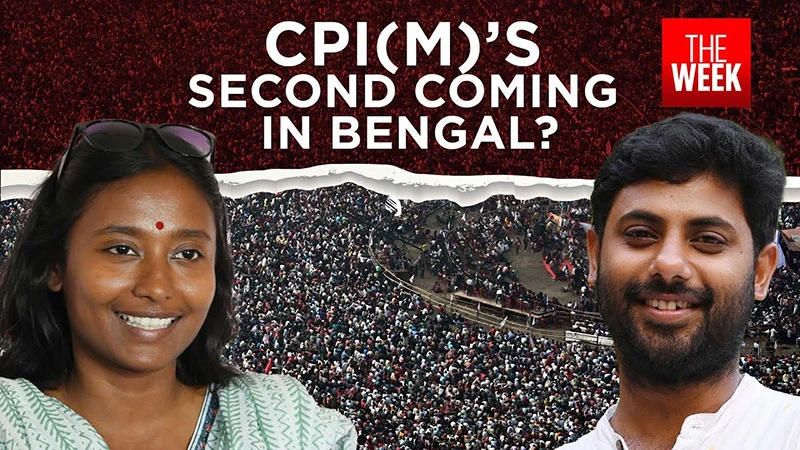
Can the Mired CPM 2026 Campaign Find a Ray of Hope?
The political atmosphere in West Bengal is shifting. Despite the challenging circumstances, current exit poll trends suggest that the Mired CPM 2026 situation might finally see a glimmer of hope.
But Bengal Elections 2026 may stand as a chance of the revival of CPM.
While projections indicate the party may only secure 2-3 seats in the Assembly, their struggle is becoming more focused and defined. Moreover, we should not forget the overwhelming response in Bangla Bachao Yatra.
Why is the Left’s battle becoming a single-point struggle?
- RSS Opposition: However, the RSS has openly declared itself as anti-Left, which clarifies the ideological battlefield for the CPM.
- Survival of TMC: Many believe that if the Trinamool Congress (TMC) ever loses power, their very existence will be at stake. So, Bengal Elections 2026 may mark the beginning of their end.
- Ideological Growth: Historically, the Left has always moved forward through consistent ideological battles rather than temporary alliances.
CPM/ Left Front in West Bengal Assembly Elections (2001–2021)
| Election Year | Vote Share (%) | Seats Won | Key Context |
|---|---|---|---|
| 2001 | 49.0% | 199 | Just After the Inception of Buddhadeb Bhattacharjee as CM after the Jyoti Basu legacy |
| 2006 | 50.2% | 235 | Historic landslide under Buddhadeb Bhattacharjee |
| 2011 | 41.0% | 62 | Defeat by Mamata Banerjee; end of 34-year rule |
| 2016 | 25.6-26.0% | 32 | Alliance with Indian National Congress |
| 2021 | 5.7% | 0 | Complete electoral collapse; no representation |
Is the New Generation the Key to a 2026 Revival?
Even in this hostile environment, a fresh wave of energy is emerging within the party.
Moreover, A group of honest, educated, and energetic young men and women has stepped forward from the new generation.
Consequently, it is not wrong to expect a positive turnaround driven by their dedication. Why not to treat Bengal Elections 2026 in isolation?
What fuels this new hope for the Left?
- Honest Leadership: The new faces represent a clean and transparent style of politics that appeals to modern voters.
- Youthful Energy: Despite the mired state of the party’s current strength, these young leaders are working tirelessly at the grassroots level.
- Resilience: Emerging from such a difficult situation proves their commitment to the party’s core values.
- End of Political Polarization: These young dynamic leaders are secular and fight against any sort of polarization.
Is it Fair to Expect a Change in the 2026 Results?
Looking at the Mired CPM 2026 data, some might be skeptical about a comeback. However, politics is often about the long-term revival of spirit rather than just immediate numbers.
Because this new generation has chosen to fight for their beliefs during a crisis, their journey holds significant meaning.
Key takeaways from the current trend:
- Clearer Targets: With the RSS being the primary ideological opponent, the Left’s path is now more straightforward.
- Focus on Integrity: The emphasis on educated and honest candidates sets them apart in the current political climate.
- Foundation for the Future: Even with limited seats, this election could serve as the foundation for a much larger movement.
- The Real Start of an Ideological Battle: If BJP comes into the power, it will become a clear ideological battle, which is an easier turf for the communist parties.
Is fighting two enemies at once a mistake?
The CPM has faced a recurring dilemma since 2016: treating both the TMC and BJP as equal enemies. While theories of a TMC-BJP setting exist, they haven’t yielded electoral results.
This dual-enemy strategy is an old habit, reminiscent of when the party viewed both Congress and the BJP as equal threats.
Consequently, the 2016 alliance between Congress and the Left in Bengal was a move that likely made former leader, Saifuddin Chowdhury, smile from beyond.
What Does History Say About Two-Front Wars?
History proves that when a group fights two powerful opponents simultaneously, a two-front war, they face extreme logistical and strategic pressure. Pushing resources too thin often leads to inevitable defeat.
Historical examples of political collapse:
- Nazi Germany: Their defeat in World War II was largely due to the inability to concentrate forces on a single front.
- The British Liberal Party: In the 1920s, they collapsed while fighting the Conservatives on the right and the rising Labour Party on the left.
- The Indian National Congress: Facing challenges from both the Left and the Right (Jan Sangh) eventually led to the desperate imposition of the Emergency in 1975.
- The BSP in Uttar Pradesh: Caught in a pincer movement between the BJP and the SP, the party has faced a near-total decline over the last decade. Famous Political Journalist Shekhar Gupta Explains this debacle.
How Does the Current Bengal Administration Compare to the Past?
It is true that voters haven’t forgotten the legacy of dominance from the 34-year Left rule.
However, after 15 years of TMC, many ask: are we actually better off?
Today, corruption at the highest levels of government and extreme appeasement policies have left the public frustrated.
Perhaps, such a frustrated society is the best breeding ground for the Communist Parties. They can really develop fresh, pro-people movements.
Why is the current situation different?
- Lack of Vision: While the Left had flaws, the TMC’s primary agenda was simply remove the CPM. Beyond staying in power, there is a noticeable lack of long-term policy.
- Infrastructure Stagnation: Under former CM Buddhadeb Bhattacharjee, there was a focus on industry. Today, even basic traffic management for Metro projects requires court intervention.
- Policy Blocks: Many central projects are restricted from entering Bengal, hindering regional development.
Perhaps the most pertinent question remains: Will Bengal Elections 2026 bring about a change?
Why is the New Generation a Blessing for the Mired CPM 2026?
The most undeniable factor is the new generation of activists leading the charge. Unlike those who join a ruling party for personal gain, these young people joined the Left while it was in the opposition.
They know that supporting the CPM means facing the wrath of the current administration.
The strength of the youth movement:
- Dedication: They are working in a highly polarized environment where speaking up is a massive challenge.
- Selflessness: They have joined not for power, but out of conviction.
- A New Foundation: Even if the seat count remains low, this group represents a fresh start.
Revival of Communist Parties Around the Globe
After the fall, Some of Communist Parties have made great comebacks. However, some later re-emerged in new forms and some changed their policies across the word.
| Party / Movement | Phase of Decline | Revival Period | Method of Revival and Current Status |
|---|---|---|---|
| Communist Party of the Russian Federation | After the Collapse of the Soviet Union (early 1990s) | Mid-late 1990s | Electoral politics, nostalgia, anti-elite positioning Major opposition party, not in power |
| Communist Party of China | Economic stagnation before 1980 | 1980s onward | Market-oriented reforms under Deng Xiaoping Dominant ruling party |
| Communist Party of Vietnam | Economic crisis in the 1980s | Late 1980s | Doi Moi (market socialism reforms) Stable ruling party |
| Communist Party of Nepal (Unified Marxist-Leninist) | Marginal before 1990 | 2000s-2010s | Democratic participation, coalition politics Periodically in government |
| Coalition of the Radical Left in Greece | Fringe before 2010 | 2010-2015 | Anti-austerity movement during financial crisis Led government (2015-2019) |
| Communist Party of India (Marxist) in India | Decline after 2011 (West Bengal), 2018 (Tripura) | Ongoing | Alliances, grassroots and student mobilization Limited to regional strongholds (e.g., Kerala) |
| Italian Communist Party | Dissolved in 1991 | 1990s-2000s | Rebranding into social democratic parties No direct revival |
| Podemos in Spain | Weak far-left before 2010 | From 2014 | Youth-driven, anti-inequality politics Part of coalition government |
| Left movements influenced by Hugo Chavez (Latin America) | Weak before 2000 | 2000s | Populism, welfare policies, resource nationalism Mixed outcomes across countries |
Final Insight:
For the Mired CPM 2026 campaign, a low seat count isn’t the end. Instead, the rise of this dedicated youth front is a blessing in disguise, a real opportunity to stand up and rebuild from the roots.
10 Key Takeaways:
- Signs of Hope: Despite low seat projections, current exit polls suggest a slight ray of hope for the Left.
- Minimal Seats: Projections indicate the party may only secure 2-3 seats in the 2026 Assembly.
- Focused Battle: The struggle is now more defined as the RSS has openly declared its anti-Left stance.
- TMC’s Survival: Without power, the TMC faces a potential existential crisis, unlike the ideologically driven Left.
- The Two-Front Trap: History shows that fighting two powerful enemies (TMC and BJP) simultaneously often leads to exhaustion and defeat.
- Global Precedents: Historical collapses, like the British Liberal Party and Germany’s two-front war, warn against over-extending resources.
- Corruption vs. Legacy: While people remember the Left’s past dominance, current corruption and appeasement under the TMC have created deep public resentment.
- Governance Paralysis: The lack of industrial vision and blocking of central projects contrast sharply with the previous era’s focus on development.
- Pure Dedication: The new generation of Left activists joined during the party’s lowest point, seeking ideology rather than power or gain.
- Blessing in Disguise: Regardless of the seat count, this honest and educated youth front provides the CPM a rare opportunity to rebuild.
People Also Ask (PAA)
Can the Left Front make a comeback in the 2026 West Bengal elections?
While exit polls suggest a modest seat count (around 2-3 seats), there is a visible resurgence in the Left’s grassroots activity. Many voters are looking at the CPM as a principled alternative to the high-decibel TMC-BJP conflict, especially with a new generation of untainted leaders taking the helm.
Who are the prominent young faces of the CPM in 2026?
The party has pivoted toward a Youth First strategy. Leaders who emerged from student movements-focused on issues like employment, education, and healthcare-are now the primary faces of the campaign. Their dedication is seen as a blessing for a party previously labeled as aging.
How does the RSS stance affect the Left’s strategy in Bengal?
With the RSS openly declaring its opposition to Leftist ideology, the political battlefield has become more polarized but also more one-dimensional. This clarity allows the Left to consolidate its core ideological voters who are strictly against the right-wing surge.
Is there an anti-incumbency wave against the TMC in 2026?
After 15 years in power, the TMC faces significant challenges regarding corruption allegations and governance issues. While their social welfare schemes remain popular, a section of the frustrated and angry middle class is increasingly comparing the current administration’s ethics to the previous Left era.
Why is the CPM fighting both the BJP and TMC simultaneously?
The CPM maintains that both the BJP (communalism) and TMC (corruption/autocracy) are two sides of the same coin. While this dual-front strategy is historically difficult to sustain, the party believes that compromising on ideology for the sake of an alliance would lead to its ultimate survival crisis.
What are the key issues for the 2026 Bengal elections?
- Employment: The lack of industrial growth and migration of youth.
- Corruption: High-level government scams and administrative transparency.
- Ideology: The battle between secular-democratic values and religious polarization.
- Infrastructure: Delays in central projects and local civic governance.