CEC Row: Is Indian Democracy Under Attack?
Oct 14, 2026 - By Ashutosh Roy Current AffairsElection AnalysisNational NewsNational PoliticsPolitics
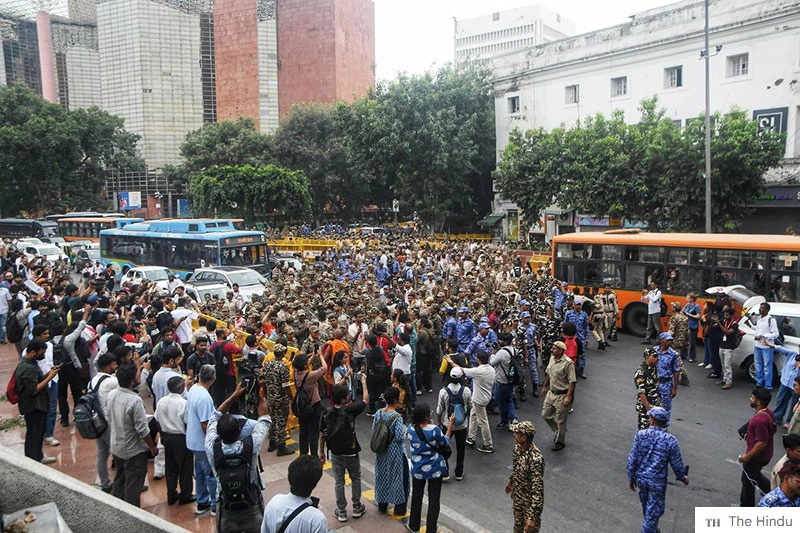
Is Indian Democracy Under Attack for the CEC Row?
Is the CEC Row putting Indian democracy at genuine risk, or is this just more high-stakes political drama? Indian democracy has weathered far tougher storms than any single person or political tussle.
The political atmosphere in New Delhi and state capitals across the nation has reached a fever pitch following shocking investigative revelations surrounding the Election Commission of India (ECI). At the center of this storm sits Chief Election Commissioner (CEC) Gyanesh Kumar, whose controversial administrative handling of voter roll software and the Special Intensive Revision (SIR) process has triggered widespread protests, joint opposition marches, and fierce constitutional debates.
Critics and opposition parties have rushed to claim that these developments prove that democracy is under attack. But is Indian democracy really so fragile that the unilateral actions or administrative oversights of a single official can bring down its core foundations?
To answer this question, we must look beyond the immediate political noise. We need to examine the mechanics of the ongoing CEC row, scrutinize the integrity of media reporting, analyze the behavior of political parties, and understand the deep-rooted strength of India’s judicial and democratic institutions.
10 Key Takeaways
- The ongoing CEC controversy stems from administrative friction and alleged unilateral decisions by Chief Election Commissioner Gyanesh Kumar regarding voter roll software and SIR procedures.
- Indian democracy possesses deep-rooted structural resilience, proving it is far too strong to be destabilized by the actions or oversights of any single official.
- The investigative report by The Indian Express revealed that two sitting Election Commissioners recorded 14 written objections over a ten-month period regarding internal ECI operations.
- Claims of a “media conspiracy” crumble when considering the Express Group’s established access and proximity to top political leadership, pointing instead to internal institutional leaks.
- Special Intensive Revision (SIR) procedures created significant political friction across states like West Bengal, Bihar, and Delhi due to large-scale voter list deletions.
- Opposition parties, including regional leaders, face legitimate questions regarding ground-level pressure on BLOs and District Magistrates during local voter roll revisions.
- The CEC controversy has provided a unified political platform for the INDIA alliance, cementing Rahul Gandhi’s position as an active Leader of the Opposition.
- Landmark Supreme Court verdicts—such as Kesavananda Bharati and Puttaswamy—demonstrate that the higher judiciary serves as an ultimate constitutional check on executive overreach.
- Institutional independence often fluctuates depending on leadership, contrasting current administrative friction with the historical reforms instituted by T.N. Seshan in 1990.
- A healthy democratic framework is ultimately sustained by public vigilance, investigative reporting, and judicial accountability, ensuring that institutional integrity will endure.
The Indian Express Investigation: Media Conspiracy or Political Leaks?
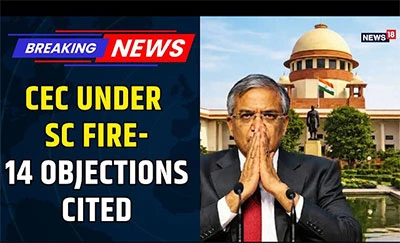
The current crisis broke into the public domain following a series of detailed investigative reports written by senior journalist Ritika Chopra for The Indian Express. The report revealed that two sitting Election Commissioners—Sukhbir Singh Sandhu and Vivek Joshi—had formally recorded written objections at least 14 times over a ten-month period. Their concerns focused on major decisions regarding the ECINet software, centralized control over voter databases, unauthorized modifications to Form 6 (used for registering new voters), and sweeping voter roll deletions during the Special Intensive Revision (SIR).
Detailed analysis of these internal administrative frictions was further explored in The Indian Express’s Video Investigation on ECI Irregularities, showing how internal dissent surfaced within Nirvachan Sadan.
Predictably, commentators supportive of the ruling dispensation attempted to dismiss these findings as a coordinated “media conspiracy” designed to undermine government credibility. However, a closer look at the Indian Express Group makes this theory crumble.
The Express Legacy vs. Modern Realities
Undoubtedly, The Indian Express holds a legendary place in Indian journalism. Under its founder Ramnath Goenka, the newspaper famously resisted state censorship and fought courageously for press freedom during the 1975 Emergency.
Fast forward to today, the media landscape and ownership dynamics have evolved:
- Public Proximity: Express Group executives Viveck Goenka and Anant Goenka routinely share public stages and host high-profile events featuring top Bharatiya Janata Party (BJP) leaders, including Prime Minister Narendra Modi, Home Minister Amit Shah, and Union Minister Nitin Gadkari.
- Institutional Access: The investigative report did not rely on speculative gossip; it quoted internal administrative notes, internal emails, and communications sent directly to the Cabinet Secretary’s office.
It is completely childish to argue that a major media house with such established access would invent a narrative out of thin air simply to bring down the government. The leaked notes originated from inside the highest corridors of power—either within the Cabinet Secretariat or from within Nirvachan Sadan itself.
The critical question is not whether the media conspired, but why these internal documents were leaked. Does this point to internal political friction within the ruling party’s broader ecosystem, or did senior bureaucrats reach a breaking point regarding institutional overreach?
What Sparked the CEC Row?
To understand why this issue has escalated into a national crisis, one must break down the specific administrative decisions taken by Chief Election Commissioner Gyanesh Kumar.
Under Section 18 of the Chief Election Commissioner and Other Election Commissioners Act, 2023, decisions within the three-member election panel are meant to be reached unanimously or through a majority vote after thorough internal consultation. However, reports indicate that critical administrative functions were increasingly centralized in the CEC’s office, bypassing standard collegial oversight. Even the IT department and Seema Khanna previously enjoyed unquestionable freedom.
1. Unauthorized Changes to Form 6
Form 6 is the legal portal through which any adult citizen applies to register as a voter. The investigation revealed that a new, mandatory question was inserted into the online ECINet portal without full commission approval. The prompt required applicants to specify whether their name—or that of their parents or grandparents—appeared in older electoral rolls. Commissioner Sandhu explicitly categorized this unilateral addition as “unauthorized and illegal”, warning that it created an unconstitutional barrier for genuine young voters seeking registration.
2. Digital Centralization and System Oversight
Historically, local Electoral Registration Officers (EROs) at the district level held primary statutory responsibility over local voter rolls. Under recent IT restructuring, direct control was diverted toward a centralized digital architecture in New Delhi. Both sitting commissioners raised serious alarms over data security, audit trails, and the removal of multi-layered administrative verification.
3. The Special Intensive Revision (SIR) Controversy
The Special Intensive Revision (SIR) exercise triggered intense political friction in key states like West Bengal, Bihar, and Delhi. Nationwide, tens of millions of names were struck off draft rolls under the ASD (Absent, Shifted, Dead) categories.
Opposition parties alleged that these deletions selectively targeted specific demographic pockets, effectively performing a silent voter suppression drive (“votebandi”) ahead of state elections.
Regional Politics: The Bengal Case and Opposition Hypocrisy
While opposition parties have united to chant that democracy is under attack, a clear-eyed political analysis reveals that no party comes to this debate with entirely clean hands.
Consider the state of West Bengal, led by Chief Minister Mamata Banerjee. The Trinamool Congress (TMC) leadership forcefully challenged the SIR process in court, demanding that elections be conducted strictly using older voter lists. When investigative reports in The Indian Express Briefing on Electoral Control exposed that over 1.6 million names were being questioned in Bengal, the TMC cited it as proof of Central bias.
However, serious administrative questions remain unaddressed on the ground:
- Ground-Level Pressure: How can regional leaders escape scrutiny regarding local administrative machinery, where allegations of threatening Booth Level Officers (BLOs) and exerting pressure on District Magistrates (DMs) to manipulate voter rolls are widespread?
- Silence on Initial Deletions: When 5.8 million names were initially placed in the ASDD exclusion category, why didn’t TMC-appointed booth level agents file formal objections at the local level during the designated verification window? Doesn’t that silence indicate the acceptability of the ASDD category exclusion?
- Post-Election Disarray: The sudden outrage over electoral rolls often serves as a convenient political shield for regional parties facing internal corruption scandals, organizational fatigue, and high-profile defection waves among their inner circles.
Political outrage over the CEC row is genuine in its legal substance, but regional leaders frequently leverage the crisis to cover up their own administrative and electoral shortcomings.
We have tried to narrate whether ECI vs Opposition rows have attempted to Attack our Democracy.
The Opposition Strategy: Has Rahul Gandhi Matured as LOP?
The CEC row has undoubtedly provided much-needed political oxygen to the INDIA opposition alliance. It has brought disparate political voices onto a shared national platform.
For Congress leader Rahul Gandhi, who spent the last two years raising allegations of “electoral theft” and voter roll manipulation, this institutional rift represents a political validation. As captured in Rahul Gandhi’s Full Press Conference Video on ECI Vote Theft Allegations, the opposition has leveled direct charges against the ECI’s leadership.
- Shift in Political Perception: The narrative pushed by his opponents—framing him as an unserious politician—has lost ground. By anchoring his campaign on structured data presentations, press briefings, and legal challenges, he has stepped firmly into his role as a legitimate Leader of the Opposition.
- Sustained Campaigning: Unlike previous political episodes where opposition campaigns fizzled out after a few news cycles, senior leaders like Abhishek Manu Singhvi have indicated that street-level mobilization will continue alongside judicial petitions.
- Judicial Skepticism: Senior legal figures like Kapil Sibal may express temporary frustration over judicial timelines, but taking constitutional battles to the Supreme Court remains the correct democratic approach.
Nalin Kohli has come up with the same political rhetoric that Rahul Gandhi talks of Vote Chori only when Congress loses election. We know political mudslinging will go on. We have also examined whether the Opposition can look for an electoral boycott. I really do believe that such controversies have strengthened our democracy instead of making it weak.
Institutional Resilience: Lessons from Supreme Court Landmarks
When evaluating whether democracy is under attack, we must examine the ultimate safeguard of the Indian republic: the Supreme Court of India.
Throughout India’s constitutional history, individual institutions have experienced moments of weakness, political capture, or internal erosion. Yet, time and again, the higher judiciary has stepped in to re-establish checks and balances.
| Landmark SC Verdict | Constitutional Principle | Relevance to Current Crisis |
|---|---|---|
| Kesavananda Bharati v. State of Kerala (1973) | Established the Basic Structure Doctrine. | Prevents any ruling majority from altering core democratic values. |
| Minerva Mills v. Union of India (1980) | Affirmed judicial review over parliamentary amendments. | Ensures executive actions remain strictly accountable to the courts. |
| S.R. Bommai v. Union of India (1994) | Restricted arbitrary imposition of President’s Rule. | Protected state-level federalism from executive overreach. |
| Anoop Baranwal v. Union of India (2023) | Mandated multi-member panel for ECI appointments. | Sought to safeguard the independence of election commissioners. |
| ADR v. Union of India (2024) | Struck down the Electoral Bonds Scheme. | Reaffirmed voters’ Right to Information regarding political finance. |
The Power of Judicial Self-Correction
Critics often point to low points in judicial history—such as the infamous ADM Jabalpur v. Shivkant Shukla (1976) ruling during the Emergency—to argue that courts can fail during political crises.
However, history also proves that the Supreme Court possesses extraordinary self-correcting capabilities. In the landmark Justice K.S. Puttaswamy (2017) ruling, a 9-judge bench explicitly nullified the ADM Jabalpur decision, declaring that the fundamental Right to Life and Liberty can never be suspended by administrative decree.
Similarly, in hearing petitions surrounding the current CEC row, the Supreme Court issued direct notices to the Election Commission regarding unauthorized modifications to Form 6, enforcing transparency and requiring additional procedural safeguards. Further context on institutional procedures can also be reviewed on AP News Coverage of ECI Opposition Rallies.
Knowledge Mart Conclusion: Why Indian Democracy Will Endure
The strength of an institution is naturally influenced by the individuals who lead it at any given moment. While Gyanesh Kumar’s tenure as Chief Election Commissioner has been marred by accusations of unilateral decision-making and administrative friction, India’s electoral system has weathered severe administrative crises in the past.
When T.N. Seshan took over as Chief Election Commissioner in 1990, the poll panel was widely viewed as a submissive bureaucratic department. Through sheer force of will, administrative rigor, and strict enforcement of the Model Code of Conduct, Seshan transformed the Election Commission into a feared, independent constitutional titan.
The ongoing CEC row is a troubling chapter that demands complete transparency, public audits of electoral roll software, and strict adherence to collegial decision-making within Nirvachan Sadan. We must agree that the Delhi CJP Protest has added a new dimension in CEC Row.
However, claiming that democracy is under attack beyond repair ignores the deep resilience of the Indian republic.
Our democracy does not rest on the shoulders of one Chief Election Commissioner, one ruling party, or one political era. It is sustained by an active press that uncovers uncomfortable truths, an opposition that takes to the streets, a judiciary that enforces constitutional limits, and over 900 million citizens who value their right to vote above all else.
Indian democracy survived the Emergency, survived constitutional crises, and will undoubtedly survive the CEC row.
[…]CEC Row: Is Indian Democracy Under Attack? As the CEC row deepens over institutional bias claims, read our analysis on electoral integrity and the core challenges facing Indian democracy.[…]