Bengal Electoral Roll Row: Shocking Truth!
Oct 07, 2026 - By Ashutosh Roy PoliticsElection AnalysisGovernanceNational PoliticsWest Bengal Politics
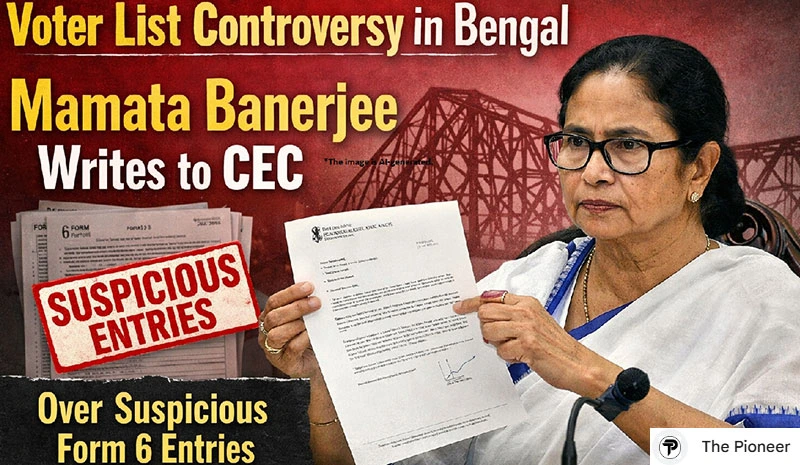
What Is the Bengal Electoral Roll Controversy?
The Bengal Electoral Roll controversy centres on the Special Intensive Revision (SIR) of West Bengal’s voter list, which turned into a prolonged political and legal battle involving the Election Commission, the state government, political parties and the courts. The dispute began before SIR officially started and continued through voter deletions, “logical discrepancy” notices, adjudication of disputed names, protests and the vandalism of a BDO office. Even after the election and the publication of the final roll, fresh questions over appeals and Election Commission decisions have brought the matter back into the spotlight.
Bengal Electoral Roll: A Controversy That Simply Refuses to End
What has a beginning but no end? The controversy over the Bengal Electoral Roll and the Special Intensive Revision, better known as SIR, increasingly looks like one such story. It started before the exercise officially began in West Bengal, and somehow every attempt to close the chapter has produced another argument.
The SIR exercise has been causing political and administrative trouble in Bengal for almost a year. The process was also carried out in other states and Union Territories, including BJP-ruled Uttar Pradesh and Gujarat and opposition-ruled Kerala and Tamil Nadu. Yet Bengal’s experience became a national political story in a way that those exercises did not. The Indian Express reported that around 60.06 lakh electors were placed under adjudication, while judicial officers ultimately ordered the deletion of 27.16 lakh names and inclusion of 32.9 lakh.
Why did Bengal become such a big national headline? Does it show that Bengalis are unusually conscious of their electoral rights, or does it show how deeply politics has entered the administration? Political experts can argue about that. For people dealing with the process directly, however, there was little theory involved. There were notices, documents, queues and the worry that something might go wrong with a person’s right to vote.
The wider political context was already changing too. Knowledge Mart had earlier examined the Bengal SIR and final voter-list battle, including the political resistance that developed around the exercise.
Mamata Banerjee Opposed SIR Before It Even Began
Before the Special Intensive Revision of the Bengal Electoral Roll began, then Chief Minister Mamata Banerjee launched a fierce attack on the exercise and declared that she would not allow SIR in Bengal. Once the process actually started, however, the dispute moved from speeches to the officials and voters who had to deal with it on the ground.
Booth Level Officers found themselves under enormous pressure. There were allegations of pressure and threats from political quarters, while the Chief Minister continued to attack the exercise from public platforms. At the same time, the Election Commission kept issuing instructions and orders. The BLOs were caught between competing political demands and their responsibility to follow the Commission’s directions.
The opposition could not appoint agents at every booth either. Wherever opposition agents were present, they too became part of an increasingly tense atmosphere. As a result, almost every administrative step connected with the voter list acquired a political meaning.
The Farakka BDO Office Incident
The tension eventually spilled into a government office. On January 14, 2026, the Farakka BDO office in Murshidabad, which was being used as an SIR hearing centre, was vandalised during protests over the revision process. Reports said a group of Trinamool Congress supporters allegedly led by Farakka MLA Manirul Islam entered the office, where furniture and official documents were reportedly damaged and an election official was injured. The Indian Express reported that the Election Commission subsequently ordered an FIR against the MLA.
Manirul Islam denied leading the vandalism and said people were protesting what they considered harassment during SIR. That denial should be kept on record. At the same time, the ECI’s decision to seek an FIR showed that it considered the incident serious.
The location made the Farakka episode particularly disturbing. This was a government office being used for electoral work, not a political party office. The following day, another BDO office in Goalpokher-II in North Dinajpur was attacked and set on fire amid protests connected with SIR hearings, according to The Telegraph.
These incidents did not settle the argument over SIR. They made the atmosphere around the voter-list exercise even more difficult.
58 Lakh Names Removed, But the Numbers Became Another Battle
The Election Commission then tried to bring some transparency into the process by putting proposed deletion lists up at polling booths. Around 58 lakh names were initially removed under the ASDD category—Absent, Shifted, Dead and Duplicate. BJP leaders in Bengal argued that more than one crore names should have been removed, turning the difference into another political battle.
The Indian Express’s report on the Bengal SIR figures provides useful background on the scale of the exercise and the categories under which names were initially removed.
The numbers were huge, but numbers alone do not tell the whole story. Behind every disputed entry was a voter who either had to explain why the name should remain or live with the possibility of being left out.
Bengal Got a New Phrase: “Logical Discrepancy”
Then came another chapter in the SIR story: “logical discrepancies”. How exactly a discrepancy becomes logical is something I am still trying to understand. But the phrase quickly became part of Bengal’s political vocabulary as notices began reaching voters and the Election Commission sought clarification over information submitted during the revision.
This was also when the BLO Adhikar Manch emerged. I experienced the process myself. I stood in a queue for roughly an hour, drenched in sweat, simply to submit all my information again. That experience made the issue much more personal. Political leaders could argue about SIR on television, but for an ordinary voter it could mean losing hours just to establish once again that the name on the electoral roll actually belonged to you.
Some individual cases made the concerns harder to dismiss. The Indian Express reported the case of former Calcutta High Court judge Sahidullah Munshi, whose name was deleted from the electoral roll. Whatever one’s political position on SIR, cases involving people with established identities naturally raise questions about the verification system.
Former CEC OP Rawat and Ex-Election Commissioner Ashok Lavasa in an interview with Preeti Chowdhuri in India Today have also raised Bengal Electoral Role as an unanswered question.
Gyanesh Kumar Took on the Bengal Administration
During Mamata Banerjee’s long tenure, her critics often accused the state administration of rarely resisting the political leadership. The SIR process produced a very different confrontation. Gyanesh Kumar even issued strict notices to the districts Magistrates of West Bengal.
Chief Election Commissioner Gyanesh Kumar took a stern approach towards district officials, and transfers followed. The Chief Secretary and Home Secretary were also replaced. Whatever one’s political opinion of Gyanesh Kumar, the Election Commission was clearly determined to retain control over the electoral revision process.
Gyanesh Kumar and his team also visited West Bengal as the confrontation intensified. TV9 Bangla’s coverage of the Election Commission team’s Bengal visit captured some of the tension surrounding the exercise.
The dispute over Gyanesh Kumar did not end with the Bengal voter list. It later became part of a much wider debate over the functioning of the Election Commission itself. Knowledge Mart has examined that separate issue in “Arrest Gyanesh Kumar? EC Power War Explodes!”, which looks at the reported differences among the Election Commissioners.
Mamata and Abhishek Took the Fight to Delhi
Once it became clear that SIR could not simply be stopped in Bengal, the Trinamool Congress moved the fight to a wider political and legal arena. Abhishek Banerjee brought people whose names were missing from the electoral roll onto the political stage. Mamata Banerjee and Abhishek, along with supporters, travelled to Delhi by Rajdhani Express and stayed at Banga Bhawan.
There were also allegations that strict instructions had been given at Banga Bhawan, including restrictions on speaking to outsiders.
From meetings with the Election Commission to the Supreme Court, Mamata pursued every available political and legal route. The black lawyers’ gowns worn during the legal battle became part of the political imagery surrounding the dispute. By then, SIR was no longer just an administrative exercise. It had become a major confrontation involving the state government, the ruling party, the Election Commission and the courts.
The Supreme Court Had to Step Into the Bengal Electoral Roll Fight
When the confrontation reached its peak, the Supreme Court directed judicial officers to assist in determining the eligibility of voters whose names had been flagged during SIR. The numbers alone show how unusual the situation had become. Judicial officers were suddenly dealing with millions of cases connected with the voter list.
The Indian Express reported that judicial officers dealt with more than 60 lakh cases, ordering the deletion of 27.16 lakh names while directing the inclusion of 32.9 lakh. Thousands of people therefore had to navigate a huge adjudication process simply to establish their right to remain on the electoral roll.
There were also disturbing reports of attacks involving people working on the voter-list process. Viral videos showed a mother crying and screaming in distress. Meanwhile, prominent lawyers including Kapil Sibal appeared in Delhi in cases connected with the state government and the Trinamool Congress.
27 Lakh Names Were Sent for Adjudication, Then the Election Happened
Around 27 lakh names were eventually sent for adjudication. The timing became crucial because the Assembly election was approaching. A large number of cases were still moving through adjudication and appeal when the electoral process went ahead.
The Indian Express later reported on the status of the deleted names and the tribunal process.
That entire episode became part of a much larger election story. By then, the fight over the voter list had become impossible to separate from the battle between Mamata Banerjee and the BJP. Knowledge Mart had also followed that broader contest in its analysis of the Battle for Bengal 2026.
The Election Changed Bengal’s Political Map
Then came the political earthquake. Mamata Banerjee lost her seat and the Trinamool Congress suffered a crushing defeat. Bengal witnessed the formation of a BJP government, while the Trinamool Congress subsequently fractured.
The political verdict was much bigger than the SIR controversy. A large section of voters wanted a change of government and used the election to express their anger against what they saw as Mamata Banerjee’s authoritarian style of governance and years of corruption and misrule.
Blaming the entire election result on the electoral roll would also be far too simplistic. Even if, purely for argument’s sake, the Trinamool Congress could have won 100 seats instead of 80 had every disputed voter remained on the roll, that would not erase the broader political message sent by Bengal’s electorate.
The result also needs to be viewed against the direct political battle between Mamata and Suvendu Adhikari. Knowledge Mart’s Suvendu vs Mamata governance analysis looks at the contrasting political narratives that developed around the two leaders.
The Indian Express Report Has Started the Bengal Electoral Roll Debate Again
Just when the controversy appeared to be settling down, another report from The Indian Express reopened the issue. The report raised questions about appeals concerning voters whose names had been retained after judicial review, bringing the focus back to the internal functioning of the Election Commission.
The report sets out the competing positions inside the Election Commission and the legal background to the appeals. The controversy is therefore no longer only about Mamata Banerjee, the Trinamool Congress or the BJP. It also raises questions about how decisions affecting the Bengal Electoral Roll were made and communicated.
How Much Was the Bengal Electoral Roll Actually Corrected?
And this is where the real uncertainty remains. We do not know, in simple terms, how much the Bengal Electoral Roll was actually corrected through this enormous exercise. We also do not know how many illegal immigrants were ultimately identified and removed as a direct result of SIR. There have been huge numbers, competing political claims and multiple rounds of judicial scrutiny, but what voters ultimately need is a clear account of what the final roll contains and why.
Even the tribunal figures deserve attention. The Indian Express reported that 75,443 of 82,782 appeals disposed of by SIR appellate tribunals resulted in names being restored to the electoral roll. That is a striking figure. It deserves an explanation based on the records, not another round of partisan shouting.
After such a long and complicated exercise, voters deserve to know exactly what happened to the names that were questioned, deleted or restored. That is a reasonable expectation in any election.
Can Mamata Banerjee Ever Return to Power?
Whether Mamata Banerjee can return to power is impossible to predict. Politics can change quickly, and no defeat is necessarily permanent. But the anger created by what many people in Bengal saw as years of misgovernance, political intimidation and corruption is not going to disappear overnight.
The Trinamool Congress will have to deal with that political memory just as seriously as it deals with its legal battles. The party’s post-election problems are now much wider than SIR, particularly after the internal split and the fight over the party’s identity and symbol.
Knowledge Mart has separately covered that development in “TMC Twin Flower Locked: Mamata’s Big Shock”, which examines how the party’s internal conflict developed after the election.
The Bengal Electoral Roll Still Needs One Simple Thing
The political arguments will continue. The legal battles may continue too. The Election Commission may face more questions, and political parties will continue to disagree about how SIR was conducted.
But the basic demand should not be complicated. Every eligible voter should have a place on the Bengal Electoral Roll, every doubtful entry should be properly examined, and the final list should be something that voters can trust.
That was supposed to be the purpose of SIR. Instead, Bengal is still arguing about the voter list.
Key Takeaways from the Bengal Electoral Roll Controversy
- The controversy over the Bengal Electoral Roll began even before the SIR process officially started in West Bengal and continues to raise political and administrative questions.
- Unlike the relatively quieter SIR exercises in several other states, Bengal’s revision became a major political battle involving the state government, political parties, the Election Commission and the courts.
- The pressure faced by Booth Level Officers showed how difficult electoral work became when political interests and administrative duties collided.
- The alleged vandalism at the Farakka BDO office, involving accusations against TMC MLA Manirul Islam, showed how the SIR confrontation could spill over into government offices handling electoral work.
- Around 58 lakh names were initially removed under the ASDD categories, while BJP leaders argued that the number of questionable entries was much higher.
- The phrase “logical discrepancies” became another source of confusion as voters received notices and were asked to provide information again during the verification process.
- The Supreme Court’s intervention brought judicial officers into the enormous task of examining disputed names, with millions of voters’ cases eventually going through adjudication.
- The defeat of Mamata Banerjee and the Trinamool Congress showed that the Bengal election was driven by a wider public verdict and cannot simply be explained through the SIR controversy.
- Fresh reports about appeals involving names retained after judicial review have reopened questions about the Election Commission’s decision-making and the final status of the Bengal Electoral Roll.
- Whatever the political arguments, the final requirement remains straightforward: Bengal needs an electoral roll that is clean, accurate, transparent and trusted by every eligible voter.