Suvendu Report Card: Focused or Diverted?
Aug 20, 2026 - By Ashutosh Roy Current AffairsGovernancePoliticsRegional UpdatesSocial IssuesWest Bengal Politics
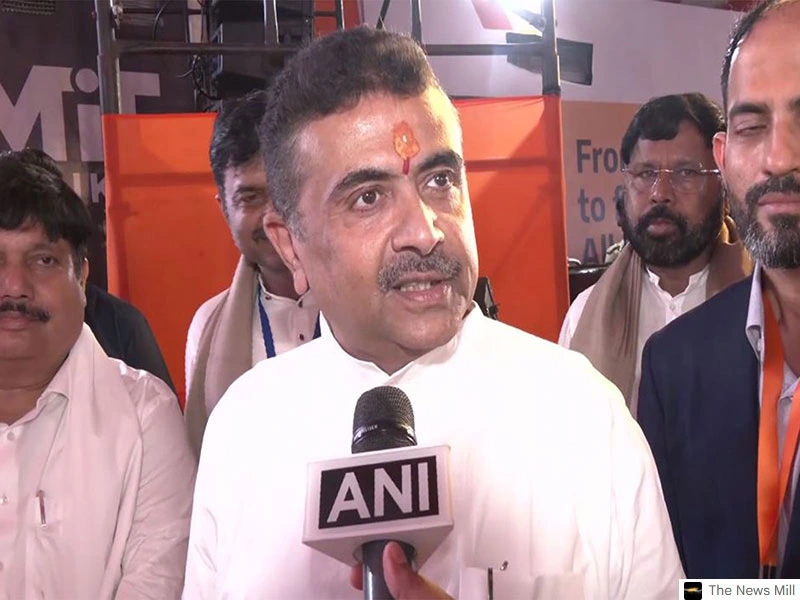
Suvendu Report Card Analysis
The Suvendu Report Card has become the hottest talking point across Bengal’s political landscape, stirring intense debates from street corners to digital forums.
A high-stakes political drama is unfolding across West Bengal. Power shifted hands. Sirens blare outside Nabanna gates. Officers rush through grand halls with armfuls of heavy files as Suvendu Adhikari steps into the CM chair.
Is he building a new Bengal? Or is he trapped in an endless political war?
The crowd wants answers. People are watching every move with razor-sharp eyes.
Watch the industrial revolution in Purulia by Suvendu Adhikari.
How can Knowledge Mart Political Coverage keep that aside?
Judging the Initial Phase: A Fair Analysis?
Evaluating a brand-new administration after just its first 100 days isn’t entirely justified. Real governance takes time. Policy seeds need months to sprout into tangible relief.
But, public expectations are soaring. During a massive public rally in Purulia, the Chief Minister made a bold public declaration. He expressed complete confidence in his administration’s trajectory.
“I will face a public exam after one year on May 9, 2027”, he proclaimed confidently. He boldly claimed he would score 9 out of 10 for his performance. If he fails that benchmark, he promised to accept his shortcomings openly.
We respect that confidence. At Knowledge Mart, we will certainly hold him to that promise and re-evaluate the Suvendu Report Card after a full year passes.
We must take a note that it is not only the industrialization, the Chief Minister Suvendu Adhikari also inaugurates JICA water supply project in Manbazar, Purulia. It’s an welcome step for development and healthcare. Watch the video of Times Now Khobor.
Why the Opposition Lens Matters Right Now
The first year of any newly elected government functions like a honeymoon period. Sweeping promises sound fresh. The public grants extra leniency.
But we must admit, blind celebration helps no one. To truly evaluate the administration, we must step up. We must put on the hat of a tough, unyielding opposition. It’s really pathetic that the oppositions in West Bengal Politics seem to be completely defocused.
Why? Because governance demands fierce scrutiny from day one. If citizens do not question early errors, bad habits turn into permanent state policies.
West Bengal Political Analysis will certainly send him the right signal as media is supposed to place the mirror right in front of the ruler.
The Ministry Cabinet Delay: An Early Stumbling Block
The honeymoon had its first bitter moment early on.
An unnecessary, frustrating delay in the formation of the full Council of Ministers annoyed citizens across the state. For weeks, key governance seats remained vacant.
Why did it take so long to release a complete list of ministers?
Think about the operational reality. If you do not assign a dedicated minister to a critical state department, how can that department function smoothly? Files pile up. Policy decisions freeze. Bureaucrats sit idle, waiting for political direction.
When looking at the Suvendu Adhikari Report Card, we must account for complex internal political obligations. He has to manage commands from his party leadership in Delhi. He has to balance expectations from organizational mentors like the RSS.
Whatsoever the need might be, he must remember one fundamental truth: he is ultimately answerable to the people of Bengal and they will only do the Suvendu Performance Analysis.
The public deserves clarity. They deserve complete transparency on why crucial administrative appointments were stalled for so long.
Such unnecessary delays have created churning inside West Bengal Political Analysis.
Collective Responsibility vs. Selective Law Enforcement
There is a refreshing change in leadership style that deserves honest credit.
We have finally stopped witnessing the ego-centric era of “I” over “We” that dominated the previous Mamata Banerjee regime. The new Chief Minister has carefully cultivated the concept of collective cabinet responsibility. That is a solid structural improvement.
He also unchained the state police force, giving them direct backing.
When local miscreants attacked police personnel in distant districts, the Chief Minister didn’t send a simple press statement. He personally visited the sites. He delivered stern, unwavering warnings directly to the violent instigators. That certainly rejuvenates the police forces. That immediate, hands-on presence set an exemplary standard for administrative backing.
This shift alone redefines the entire Suvendu Performance Analysis narrative. Rather it has made an end of a highly undesirable culture.
We must acknowledge that Suvendu Adhikari has revived the culture of inviting the opposition to government meetings. This stands in stark contrast to the previous Mamata Banerjee regime.
The Uncomfortable Law and Order Questions
While the front-line police get praise, a darker question looms over the Suvendu Report Card.
Why do state law enforcement agencies and the CID go completely silent when high-profile political names pop up?
Why is there zero action when names like Arup Biswas, Anubrata Mondal, Javed Khan, or Firhad Hakim come into public discussion? Won’t it affect Suvendu performance Analysis?
Ground reports indicate that local extortion networks are quietly resuming operations under new flags.
To its credit, the governing party took internal organizational action against over 400 party cadres and local leaders for misconduct. That internal cleanup is commendable.
However, where are the actual police arrests? Where is the strict administrative action?
Extortion is not just an internal party issue – it is an administrative crime. Party suspensions do not replace actual prison sentences under the Indian Penal Code.
What action will Suvendu or Samik take regarding the chilling CCTV footage that has emerged of Vivek Tripathi’s atrocities at Gupta Brothers, Kolkata’s traditional sweet shop? The police filed a case under such sections that he even managed to get anticipatory bail from the court.
Although Sayantan Basu, while sitting on ABP Ananda on the 18th, denied that Vivek is a BJP worker, it will be troublesome if the administration does not take strict action against this intimidation and assault.
Just one or two such incidents are enough to pour cold water on any efforts toward industrialization. In other words, if police action or inaction continues based on political affiliation just like in the previous regime, that would be dangerous.
Political Analyst, Biswanath Chakraborty has clearly shown his utter frustration on this issue and leveled the current BJP Government as Trinamool 2.0.
Can the Suvendu Report Card honestly claim that strict, impartial law and order has been restored to West Bengal? Not yet.
Industrialization: Big Promises vs. Structural Missing Links
When it comes to economic development, the new administration’s active push is a welcome sight.
The state initiated several promising ground-level projects:
- Opening new Amul dairy production facilities in Howrah.
- Setting up fresh steel plants like Amit Metaliks in Purulia.
- Pushing regional industrial groundwork in long-neglected districts.
These initiatives prove an undeniable effort to kickstart economic engines. But beneath the surface, serious policy gaps remain.
Where is the Official Industry Policy?
Why hasn’t the government released a clear, comprehensive state Industrial Policy?
Where is the transparent, foolproof land acquisition framework?
Investors do not bring thousands of crores based on verbal assurances at political rallies. They need rock-solid legal frameworks. Without a transparent land plan or clear industrial guidelines, major corporate players will hesitate.
The Chief Minister openly declared a unique economic philosophy: state support and incentives will depend strictly on an industry’s employment generation capacity, rather than its pure capital investment.
On paper, this sounds great for a densely populated state needing immediate jobs. But consider the major drawback. Can every industry create adequate jobs?
The Tech Gap: AI and Semiconductors
What happens to modern, high-tech sectors like Artificial Intelligence (AI), data centers, and semiconductor manufacturing?
These cutting-edge industries do not employ tens of thousands of manual laborers. They are capital-intensive, automated, and highly specialized.
Still, they generate massive state revenue! They attract top global tech ecosystems, boost local infrastructure, and build long-term economic authority with the help of ancillary industries.
By ignoring capital-intensive tech sectors in favor of pure labor volume, Bengal risks missing the ongoing national tech revolution. The Suvendu Report Card remains dangerously incomplete until these economic contradictions are resolved.
5 Key Differences in Bengal Industrialization
- Direct land purchase
- Single-window clearance
- Infrastructure
- Investor outreach
- Central-state coordination
Adhikari has personally met industrial leaders including L&T’s chairman and representatives of major corporate groups to attract investment. In addition, The government has moved to fast-track 12 central projects worth more than Rs. 55,000 crore that had remained stuck because of land, statutory and administrative hurdles
Healthcare Expansion: Bold Wins and Missed Implementation
On the social welfare front, healthcare reform showed promising intent.
The setup of a massive 2000-bed healthcare facility – with 1000 beds reserved exclusively for underprivileged families – is a major win for public health.
West Bengal Political Analysis reveals in Suvendu Report Card that he has made a strong start in healthcare. Bengal has joined Ayushman Bharat. Health spending has also increased. But the real test lies ahead. Can these steps improve hospitals? Can they bring more doctors, cheaper treatment and shorter waiting times for ordinary Bengalis?
Nevertheless, the rollout of major flagship welfare programs reveals rushed execution and administrative missteps.
The Rollout Rush: Ayushman Bharat & Annapurna Bhandar
Was the implementation of Ayushman Bharat and Annapurna Bhandar executed in an unnecessary hurry?
Look at the election manifesto commitments:
- Every existing beneficiary of Laxmir Bhandar was promised automatic transfer into the higher-paying Annapurna Bhandar scheme.
- Every existing Swasthya Sathi cardholder was promised seamless, automatic enrollment into the national Ayushman Bharat health insurance network.
Unfortunately, right after launching these schemes, the government suddenly realized that millions of eligible citizens were left out due to technical glitches and missing records. They had to launch secondary patch-up schemes like the Mukhyomontri Swasthya Bima Yojona to cover the gaps.
Are senior bureaucrats misguiding the Chief Minister with half-baked implementation plans?
This was a golden opportunity. By doubling the monthly financial assistance under Annapurna Bhandar and giving citizens nationwide hospital coverage under Ayushman Bharat, the administration could have created a massive political roar.
Instead, poor ground-level coordination turned a historic victory into a confusing administrative headache. Did the administration miss a massive public relations win due to bureaucratic carelessness?
Focus or Diversion? The TMC Split and Delhi Politics
This brings us to the ultimate question surrounding the Suvendu Report Card: Is the Chief Minister truly focused on state governance, or is he dangerously diverted by partisan politics?
It is clear to any neutral observer that Suvendu Adhikari is working hard. He is putting in long hours, traveling across rural districts, and trying to drive development.
Knowledge Mart Political Analysts feel, he appears constantly dragged into high-stakes political maneuvering aimed at destabilizing and breaking the opposition Trinamool Congress (TMC).
Political strategy has its place. But when political engineering takes priority over governance, the state pays the price.
Consider a recent high-profile political meeting held at Union Minister Dharmendra Pradhan’s residence in Delhi. Top leaders gathered alongside TMC rebel factions. The primary objective was engineering a split to shift defecting MLAs into the NCPI, thereby boosting the NDA’s numerical support in Parliament.
Why was the sitting Chief Minister of West Bengal spending critical days deep in those backroom political negotiations in Delhi?
When the head of state has to personally manage party rebellions, count defection numbers, and engineer political splits in the capital, where does that leave state administration?
Bengal faces massive challenges:
- Mounting public debt.
- Youth migration due to lack of white-collar jobs.
- Rushed welfare implementation.
- Unresolved police accountability issues.
Every hour spent organizing opposition defections is an hour stolen from solving West Bengal’s ground realities. The question of administrative focus isn’t just a political critique, it is a genuine concern felt by ordinary citizens.
Knowledge Mart Final Thoughts
At Knowledge Mart, our analytical commitment remains strictly with the public, not with political spin.
When evaluating the Suvendu Report Card, we see a leader standing at a critical crossroads. On one side lies the hard, tedious path of genuine state development. On the other lies the tempting, fast-paced game of political dominance through a TMC split.
If Chief Minister Suvendu Adhikari spends his energy building industrial policies, fixing healthcare rollouts, and enforcing equal law and order, Bengal will flourish. But if his primary focus remains anchored in orchestrating opposition collapses and playing political chess in Delhi, his administration will fail the very people who voted for change.
The clock is ticking toward May 9, 2027. The public will be holding the grading pen. Whether he earns that promised 9 out of 10 depends entirely on one simple choice: Will he focus on developing Bengal, or will he remain diverted by political destruction?
As a post script, we must tell, Suvendu’s first three months show a government moving with speed and purpose. But the real transformation is still a work in progress. Ultimately, the proof will come from results on the ground.
10 Key Takeaways from the Suvendu Report Card
- Evaluating the First 100 Days: While judging a new government within 100 days is premature, public scrutiny is high; Suvendu Adhikari has promised a full report card by May 9, 2027, aiming for a 9 out of 10 rating.
- Adopting an Opposition Lens: The initial year is typically a honeymoon period, but constructive criticism and relentless accountability are crucial to prevent early policy failures. So, Suvendu Report Card after one year will indicate the true progress.
- Cabinet Formation Delays: Protracted delays in appointing key ministers disrupted departmental function, raising concerns over external pressures from Delhi leadership and the RSS.
- Shift to Collective Responsibility: Moving away from individual-centric governance, the administration has fostered cabinet responsibility and extended visible support to local police during crises.
- Unchecked Extortion & Selective Justice: Despite internal action against over 400 party cadres, public skepticism remains due to a lack of administrative action against key opposition figures and rising local extortion.
- Industrial Push Without Policy: New projects like Amul units and steel plants reflect effort, but the absence of a formal industrial policy and transparent land acquisition frameworks creates investor uncertainty.
- Neglect of High-Tech Sectors: Prioritizing jobs over capital investment risks sidelining high-revenue, modern technology sectors like AI, data centers, and semiconductors.
- Healthcare Expansion Milestones: Launching a 2,000-bed healthcare facility with 1,000 beds reserved for underprivileged families stands out in Suvendu Report Card as a strong welfare victory.
- Rushed Execution of Welfare Schemes: Rapid rollouts of Ayushman Bharat and Annapurna Bhandar left major coverage gaps, forcing patch-up policies like Mukhyomontri Swasthya Bima Yojona.
- Governance vs. TMC Split: Constant involvement in backroom political engineering and managing opposition defections in Delhi risks distracting the administration from Bengal’s pressing economic challenges.
[…]Suvendu Report Card: Focused or Diverted? Uncover the Suvendu Report Card: Is he truly focused on West Bengal’s future or completely diverted? Read the full performance analysis now![…]
[…]Suvendu Report Card: Focused or Diverted? Uncover the Suvendu Report Card: Is he truly focused on West Bengal’s future or completely diverted? Read the full performance analysis now![…]
[…]Suvendu Report Card: Focused or Diverted? Uncover the Suvendu Report Card: Is he truly focused on West Bengal’s future or completely diverted? Read the full performance analysis now![…]
[…]Suvendu Report Card: Focused or Diverted? Uncover the Suvendu Report Card: Is he truly focused on West Bengal’s future or completely diverted? Read the full performance analysis now![…]
[…]Suvendu Report Card: Focused or Diverted? Uncover the Suvendu Report Card: Is he truly focused on West Bengal’s future or completely diverted? Read the full performance analysis now![…]
[…]Suvendu Report Card: Focused or Diverted? Uncover the Suvendu Report Card: Is he truly focused on West Bengal’s future or completely diverted? Read the full performance analysis now![…]
[…]Suvendu Report Card: Focused or Diverted? Uncover the Suvendu Report Card: Is he truly focused on West Bengal’s future or completely diverted? Read the full performance analysis now![…]
[…]Suvendu Report Card: Focused or Diverted? Uncover the Suvendu Report Card: Is he truly focused on West Bengal’s future or completely diverted? Read the full performance analysis now![…]
[…]Suvendu Report Card: Focused or Diverted? Uncover the Suvendu Report Card: Is he truly focused on West Bengal’s future or completely diverted? Read the full performance analysis now![…]
[…]Suvendu Report Card: Focused or Diverted? Uncover the Suvendu Report Card: Is he truly focused on West Bengal’s future or completely diverted? Read the full performance analysis now![…]
[…]Suvendu Report Card: Focused or Diverted? Uncover the Suvendu Report Card: Is he truly focused on West Bengal’s future or completely diverted? Read the full performance analysis now![…]