Bengal Industry: The Urgent Roadmap
Jun 18, 2026 - By Ashutosh Roy Current AffairsEducation & TechGovernance & AdminPoliticsRegional UpdatesWest Bengal Politics
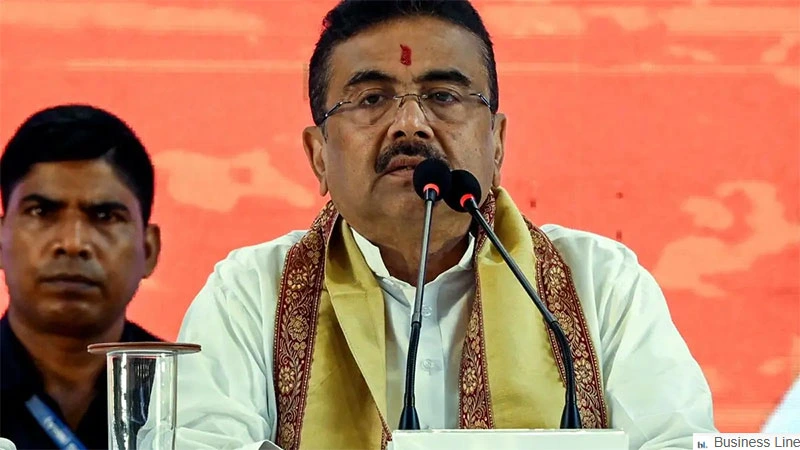
What is the Roadmap of Bengal Industry?
There has been a massive, noisy fanfare surrounding Bengal Industry. For decades, the dream of reviving heavy factories in West Bengal has been a major political talking point. Recently, the political landscape shifted dramatically.
The Chief Minister Suvendu Adhikari and top BJP leaders made a bold announcement. They committed to bringing the TATA Group back to the state.
This ambitious economic vision received a major policy push. The promise was officially written into the party’s central election manifesto, the Sankalp Patra. The party promises a double-engine government to fuel a complete economic turnaround.
With senior, highly experienced, and honest leaders like Tapas Roy projected to handle the critical Industry Minister portfolio, the state finally glimpses a beacon of hope.
- Suvendu Adhikari vows a massive industrial revival across the state.
- The Sankalp Patra targets structured infrastructure growth.
- Tapas Roy brings clean administration to a corrupt department.
- The double-engine government promises central investment alignment.
However, we cannot fly too high in the sky just yet. Transforming raw political rhetoric into smoking factory chimneys requires a deeply systematic plan. A clean, focused leadership offers a genuine departure from past failures.
Yet, the long road to restoring Bengal Industry requires deep, strategic calculation. We must anchor our expectations in hard economic reality rather than emotional slogans.
Why Did the Bengal Global Business Summit Fail?
For over a decade, the ruling Trinamool Congress (TMC) has beaten loud drums over industrialization. They used the high-profile Bengal Global Business Summit (BGBS) as their primary public relations tool.
Year after year, the state-sponsored machinery went into overdrive. They painted a glossy picture of an imminent industrial growth boom. Yet, a critical look at the ground reality reveals a vastly different story.
- Taxpayer money was wasted continuously on luxury event management.
- Corporate titans visited Kolkata merely to enjoy state hospitality.
- The summit yielded endless corporate appreciation notes for Mamata Banerjee.
- Actual investment on the ground remained practically zero.
What did these multi-crore summits actually yield for Bengal Industry? Let us look at the stark contrast between corporate optics and actual economic performance:
| BGBS Event Metrics | Ground Reality & Outcomes |
|---|---|
| High-Profile Attendees | Reliance Chairman Mukesh Ambani and global tycoons attended regularly. |
| Main Activities | Lavish networking sessions, luxury dinners, and mutual praise for leadership. |
| Fiscal Impact | Massive consumption of public funds on events and global branding. |
| Tangible Yields | Negligible heavy manufacturing investments or new factory floors. |
Ultimately, these grand spectacles yielded very little substance. The high-level sessions functioned primarily as mutual appreciation clubs. The events regularly concluded with lavish, expensive lunches and dinners.
While massive amounts of public funds were spent on hosting, the state failed to secure actual large-scale manufacturing units. The loud drums of the WBIDC produced zero echoes on the factory floor.
Bengal Global Business Summit (BGBS): Year-wise Announced vs Real Investment
| Year | Announced Investment (Rs. lakh crore) | Estimated Real Investment (Rs. lakh crore) | Conversion % | Source (Announced Figures) |
|---|---|---|---|---|
| 2015 | 2.4 | 0.4 | 17% | Govt releases (compiled in later summaries) |
| 2016 | 2.5 | 0.5 | 20% | Govt claims (aggregated historical data) |
| 2017 | 2.35 | 0.6 | 25% | Govt statements |
| 2018 | 2.19 | 0.5 | 23% | Govt statements |
| 2019 | 2.84 | 0.7 | 25% | Govt statements |
| 2020 | – | – | – | No summit (COVID) |
| 2021 | – | – | – | No full summit |
| 2022 | 3.42 | 0.8 | 23% | Govt announcements |
| 2023 | 3.76 | 0.9 | 24% | Govt announcements (referenced in 2025 reporting) (Investing.com India) |
| 2024 | – | – | – | No summit (gap year) (The Indian Express) |
| 2025 | 4.40 | 1.1 (est.) | 25% | Economic Times (BGBS 2025 proposals) / Indian Express summary |
| There is no official year-wise public dataset for “actual grounded investment”, so those figures remain estimated from policy analyses / RTIs / trend comparisons, while announced figures are sourced from news/government statements. | ||||
Did Mamata’s Foreign Tours Attract Real Capital?
The Chief Minister also undertook multiple expensive foreign tours to court global investors. The ruling party heavily promoted these international trips. They framed them as crucial diplomatic missions to rebuild Bengal Industry.
A prominent, almost comical moment occurred during these global efforts. Former Indian cricket captain Sourav Ganguly accompanied the official delegation. He suddenly announced a proposed Salboni steel plant project.
- Bengalis know Sourav Ganguly as a legendary cricketer and an iconic captain.
- Bengal never knew that he was a heavy industrial tycoon or a steel manufacturing expert.
- The announcement ridiculed his personal sporting persona in front of global media.
- The stunt exposed the deep policy desperation of Mamata Banerjee.
Instead of building real investor confidence, this move drew heavy criticism. The administration prioritized cheap celebrity optics over hard economic analysis.
This constant reliance on high-profile endorsements rather than concrete land reforms ultimately yielded zero progress for the manufacturing sector.
Mamata Banerjee Foreign Tours & Investment Outcomes
| Year | Country / Tour | Purpose | Reported Investment Outcome | Source |
|---|---|---|---|---|
| 2014 | Singapore | First foreign tour to attract FDI | No concrete figure disclosed; business forum & investor meetings held | (The Times of India) |
| 2015 | United Kingdom | Industrial outreach, MoU discussions | Expected MoUs; no quantified investment publicly reported | (The New Indian Express) |
| 2022 | Spain & UAE (reported visits/engagements) | Business outreach | No official consolidated investment data | (various news mentions; no quantified figure) |
| 2023 | Spain (Madrid & Barcelona) | Industrial & MSME outreach | MoUs discussed; no official investment figure disclosed publicly | (multiple media reports; no consolidated figure) |
| 2024 | Dubai / UAE engagements | Investor meetings | No official quantified outcome | (fragmented reports) |
| 2025 | UK (planned / outreach context) | Renewed investment push | No confirmed figures yet | – |
What Is the Reality of TATA’s Presence in Bengal?
When analyzing political promises to bring TATA back, we must face an ironic fact. The TATA Group never entirely left West Bengal.
Today, Tata Consultancy Services (TCS) maintains a massive footprint in the state. It operates as one of the largest corporate employers in Kolkata’s Salt Lake Sector V and New Town tech hubs. They provide stable livelihoods to tens of thousands of IT professionals.
Furthermore, various TATA Group entities successfully manage widespread retail operations and product distribution networks across the entire region.
The critical question surrounding Suvendu’s slogan centers specifically on Tata Motors. Is there a real, calculated business viability for the company to launch another car manufacturing hub in West Bengal today?
The global automotive landscape has changed drastically since the Singur movement. Buddhadeb Bhattacharya tried his best from the core of his heart, but failed due to destructive movement of indomitable Mamata Banerjee
Capital allocation now follows strict supply chain logistics and state policy frameworks.
| State Government | TATA Group Strategic Investment Focus |
|---|---|
| Tamil Nadu | Signed a Rs. 9,000 Crore mega vehicle manufacturing plant investment agreement. |
| Assam | Approved a massive Rs. 27,000 Crore cutting-edge semiconductor assembly and test facility. |
| West Bengal | Confined to software services (TCS tech hubs), retail channels, and standard aviation services. |
Major state governments attracted TATA’s primary capital expenditure by offering clear land banks, top-tier infrastructure, and stable regulatory environments.
The central government maintains a strong rapport with India’s top industrialists. However, private corporations always base their multi-crore investments on long-term business viability and the local Ease of Doing Business index.
Simple political slogans cannot override corporate balance sheets. West Bengal has lost its trust and confidence in Business World due to anarchy, syndicate system, extortion and land problems during Mamata Banerjee regime.
For a deeper look into how modern industrial projects are planned and executed on the ground, you can check out this comprehensive On-Site Tour of the Tata Semiconductor Facility to see the scale of infrastructure required for true economic transformation.
Tata Group Presence in West Bengal
| Sector | Company / Entity | Location | Nature of Presence | Scale / Details | Source |
|---|---|---|---|---|---|
| Heavy Industry (Metal / Pipes) | Tata Metaliks | Kharagpur | Pig iron & ductile iron pipe manufacturing | Major producer; continuous expansion in DI pipes | TOI report on Tata Metaliks expansion |
| Engineering / Construction Equipment | Tata Hitachi Construction Machinery | Kharagpur | Excavator manufacturing plant | Key manufacturing hub serving domestic & export markets | General industrial cluster references |
| Automotive (Circular Economy) | Tata Motors | Kalyani | Vehicle scrapping facility (RVSF) | Capacity 21,000 vehicles annually | TOI report on Tata Motors Kalyani unit |
| IT / Software Services | Tata Consultancy Services | Kolkata (Salt Lake, New Town) | Large IT campuses, AI & data labs | Major employer; expansion in Bengal Silicon Valley | ET report on TCS New Town land lease |
| Plantation / FMCG (Tea) | Tata Consumer Products | Dooars (North Bengal) | Tea plantations via subsidiary structure | Presence in tea estates across WB; part of large India plantation network | (Wikipedia) |
| Plantation Operations (Subsidiary) | Amalgamated Plantations Pvt Ltd | Dooars (Jalpaiguri region) | Operates tea estates & production | 4 estates in Dooars; part of 42 million kg annual tea production | (Amalgamated Plantations) |
| Agri Diversification / Tea Economy | Tata Tea | Dooars | Tea estates + diversification (tourism, agriculture) | 4 tea estates in WB; plans for tea tourism & alternate crops | (The Economic Times) |
Did the Kalighat Skywalk Equal Industrial Growth?
The strict limitations of symbolic corporate diplomacy are well illustrated by the state’s engagement with Reliance Industries. Mukesh Ambani maintained a highly visible, friendly posture with the TMC leadership. Yet, the resulting economic activity remained confined to a specific consumer service marketplace.
| Corporate Entity | West Bengal Business Footprint | Actual Economic Classification |
|---|---|---|
| Reliance Jio | Expanded extensive 5G network cables and telecom infrastructure across districts. | Consumer Market Exploitation |
| Reliance CSR | Funded and constructed the iconic promotional skywalk project at the Kalighat Temple. | Corporate Social Responsibility (CSR) |
| Heavy Industry | Zero major manufacturing plants, factories, or industrial production units. | Absent Capital Expenditure |
This corporate relationship translated beautifully into retail footprint and digital telecom network rollouts. It also yielded a pleasant skywalk for religious tourism. However, a friendly walk under a skywalk does not replace a factory floor.
The state’s economic policy effectively allowed big corporations to extract profit from a dense consumer market.
In between, the administration failed completely to secure the heavy, employment-generating manufacturing hubs required to rejuvenate Bengal Industry. It was a classic quid pro quo relationship that left the educated youth of Bengal completely jobless.
What Must a Real Industrial Roadmap Include?
The challenge of reviving Bengal Industry requires moving past political rhetoric and short-term electoral promises. To build lasting economic growth, policymakers must design and execute a comprehensive, multi-decade economic roadmap focused on practical, viable sectors.
If the TATA Group is to expand its footprint in the region, discussions should move away from past controversies and focus on modern, scalable sectors.
Rather than focusing or obsessing exclusively on automobile assembly, West Bengal possesses distinct geographic and agricultural advantages.
A double-engine government must leverage these through structured policy.
1. Breaking Private Utility Monopolies
- A critical step toward improving the state’s industrial climate is reforming the power sector.
- The state must introduce healthy competition into the electricity supply market.
- Breaking the current monopoly of the Calcutta Electric Supply Corporation (CESC) can lower power tariffs for commercial enterprises.
- Affordable, reliable electricity is a foundational requirement for any heavy or medium-scale manufacturing hub.
2. Building Agro-Based Industries and Cold Storages
- West Bengal is one of India’s largest producers of vegetables, rice, and potatoes.
- A massive percentage of this rich produce goes to waste due to inadequate post-harvest infrastructure.
- A systematic plan must prioritize a network of modern, solar-powered cold storages across South and North Bengal.
- The state must create dedicated agro-processing zones to help farmers process raw crops into high-value packaged goods.
3. Developing Food Processing Units in Singur
- The fertile lands of Singur, historically caught in political gridlock, are perfectly suited for a major food processing corridor.
- Setting up advanced preservation, packaging, and dairy processing facilities can create thousands of rural and semi-urban jobs.
- This strategy utilizes local agricultural output effectively without requiring complex heavy-metal zoning.
| Industrial Pillar | Core Strategic Action | Target Regional Impact |
|---|---|---|
| Power Reform | End private power monopolies and slash commercial electricity tariffs. | Lowers overhead costs for new manufacturing units. |
| Cold Chain Logistics | Build solar-powered storage hubs across agricultural districts. | Elimates crop waste and boosts rural farmer income. |
| Agro-Processing Corridor | Convert Singur into a dedicated food processing hub. | Generates massive local employment on historical land. |
Ultimately, rebuilding Bengal Industry is a long-term economic venture rather than a quick political fix. The people of West Bengal have shown a willingness to wait and cooperate. However, they must see genuine structural signals of real growth, transparent governance, and a complete departure from the cosmetic politics of the past.
For a detailed analysis of the political landscape and policy announcements, you can watch the coverage of the BJP election manifesto unveiling for West Bengal, which breaks down the foundational blueprint designed for economic and governance reforms in the region.
Knowledge Mart feels that a rock-solid long-term planning and its systematic implementation through pre-determined checkpoints can only revive the glory of Industrialization of Bengal.
10 Key Takeaways: Bengal Industry Roadmap
- The TATA Promise: The BJP leaders, including Chief Minister Suvendu Adhikari, have pledged to bring the TATA Group back to West Bengal, framing it as a central focus of their economic campaign.
- Manifesto Integration: This industrial promise is officially anchored in the party’s central election manifesto, the Sankalp Patra, establishing a formal framework for a double-engine government turnaround.
- Targeted Leadership: Senior and experienced leader Tapas Roy is projected to handle the critical Industry Minister portfolio, signaling an intent to offer clean and systematic administration to the department.
- The BGBS Failure: The high-profile Bengal Global Business Summit (BGBS) organized by the TMC is criticized for functioning as a mutual admiration club for Mamata Banerjee, wasting massive amounts of taxpayer money on lavish events with negligible heavy manufacturing return.
- Optics Over Economics: Past attempts to attract capital, such as including cricket icon Sourav Ganguly on foreign tours to announce a Salboni steel plant, are viewed as superficial celebrity optics rather than hard economic analysis and structured policy.
- TATA’s Existing Footprint: The TATA Group never fully left West Bengal; Tata Consultancy Services (TCS) remains one of the largest corporate IT employers in Kolkata’s Salt Lake Sector V and New Town hubs.
- The Automobile Hurdle: Launching a new Tata Motors car factory in Bengal requires rigorous business viability evaluations, as the global automotive layout has shifted entirely since the historic Singur movement.
- Competitive Disadvantage: Other states are aggressively sweeping heavy investments (e.g., TATA’s Rs. 9,000 Crore plant in Tamil Nadu and Rs. 27,000 Crore semiconductor facility in Assam) due to superior land banks and a higher Ease of Doing Business index.
- The Consumer vs. Producer Trap: The TMC government’s corporate relationships-such as with Mukesh Ambani and Reliance-successfully facilitated local consumer networks (5G Jio cables) and social projects (Kalighat Temple skywalk) but completely failed to yield heavy, job-creating manufacturing hubs.
- The 3-Pillar Blueprint: A genuine, long-term economic roadmap for Bengal Industry must prioritize breaking the private utility monopoly of CESC to lower commercial power tariffs, building state-wide solar-powered cold chains, and transforming Singur into a dedicated agro-processing corridor.
[…]Bengal Industry: The Urgent Roadmap Bengal Industry requires a systematic plan. Can BJP’s Sankalp Patra bring TATA back and execute Suvendu’s roadmap under Minister Tapash Roy? Read now.[…]
[…]Bengal Industry: The Urgent Roadmap Bengal Industry requires a systematic plan. Can BJP’s Sankalp Patra bring TATA back and execute Suvendu’s roadmap under Minister Tapash Roy? Read now.[…]