2018 CPM Couple Murder: SIT Chargesheet
Sep 18, 2026 - By Ashutosh Roy Current AffairsElection AnalysisGovernance & AdminPoliticsRegional UpdatesWest Bengal Politics
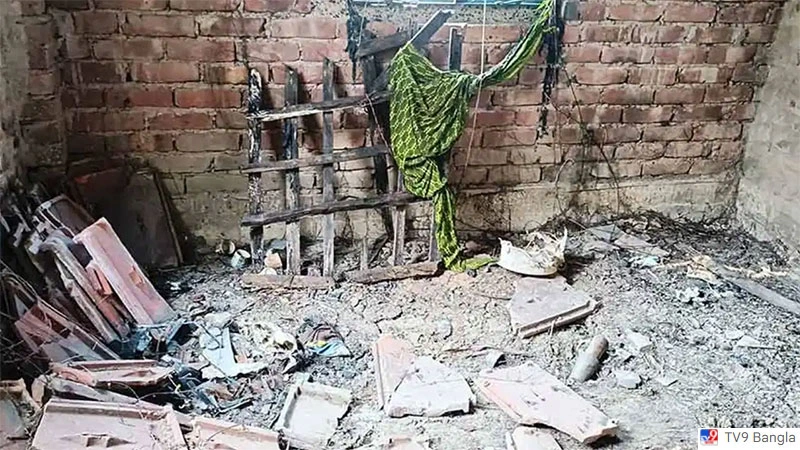
2018 Kakdwip CPM Couple Murder Case
Late on May 13, 2018, when election tension was running high across South 24 Parganas, a fire broke out in a house in Budhakhali village. Inside were Deba Prasad “Debu” Das and his wife, Usha Rani Das. Both were known locally as CPI(M) workers. By the next morning, the police had an explanation: the couple had died in an accidental fire caused by an electrical short circuit. For some time, that remained the official version of what had happened that night.
The family refused to accept it. They continued to question the circumstances of the deaths, and petitions followed. The investigation eventually came under the scrutiny of the Calcutta High Court, which found serious shortcomings in the original probe. The initial short-circuit theory eventually came under serious judicial scrutiny.
The latest Special Investigation Team filings, as described in the supplied reports, tell a very different story. Investigators allege that the house was deliberately set on fire and that the killings were linked to an attempt to gain control of the Budhakhali polling booth shortly before voting. If those allegations are proved in court, they would fundamentally change the understanding of the 2018 CPM Couple Murder case. What began as a reported electrical accident was later investigated as a possible political killing, and that change in the official narrative is now central to the case.
For a local account of the latest investigation, see Zee News 24 Ghanta’s Kakdwip CPM Couple Murder SIT Chargesheet, which reports on the 10 TMC workers named in the chargesheet.
Why Did Budhakhali’s Booth Matter So Much in 2018?
Elections are usually discussed through big leaders, rallies and vote percentages. On the ground, politics can be far more local. In some places, control over a single polling booth can matter enormously. Budhakhali was one such pocket.
During the 2013 Panchayat elections, Debu and Usha had helped keep the local Left organisation active. They were not senior leaders sitting in party offices. They were grassroots workers who knew local voters, worked with voter lists and remained involved in the area.
By 2018, the political atmosphere had become much more hostile. The ruling Trinamool Congress was seeking a sweeping result across South 24 Parganas, while the Left still had pockets of organisation on the ground. The case records and subsequent investigation raised the question of whether Budhakhali remained difficult for the ruling party because the couple continued their political activities. There had reportedly been threats in the weeks before the election. The later SIT investigation examined whether the violence against the couple was connected to an attempt to take control of the booth.
A Quick Look at the Timeline:
2013: CPI(M) retains control of the Budhakhali booth, with Debu and Usha playing an important role in the local organisation.
May 2018: On the night before the Panchayat election, a fire destroys the couple’s home. The local police initially treated the deaths as the result of an electrical fire.
2023–2026: The original investigation comes under judicial scrutiny. The Calcutta High Court orders a fresh investigation, and an IPS-led SIT takes up the case. Ten local political workers are eventually named in the chargesheet in connection with the alleged killings and booth-capturing conspiracy.
For context on how the incident was reported at the time, see NDTV’s original 2018 report. The question that has remained over the case is whether the fight for political control turned the Budhakhali booth into the setting for the deaths of Debu and Usha.
How Did the Short-Circuit Theory Fall Apart?
The deaths were horrifying enough, but questions also arose over the way the case was initially handled. The fire was treated as an electrical accident before the circumstances had been fully established through forensic examination. Villagers later pointed to the heavy rain that night and the disruption of electricity in the area. That raised an obvious question: how had an electrical short circuit caused the fire under those circumstances?
There were also allegations that the early police action focused on neighbours who had tried to put out the flames instead of properly pursuing the family’s allegations about what had happened.
The case took a turn when the Forensic Science Laboratory examined samples collected from the burnt house. The examination reportedly found no evidence supporting the short-circuit theory. Instead, investigators detected chemical residues associated with liquid accelerants. The SIT later alleged that fuel had been used around the house before it was set on fire, with Debu and Usha trapped inside.
The forensic report gave the fresh investigation something the first probe had failed to establish in the 2018 CPM Couple Murder. The difference between the two versions is stark. The first investigation treated the deaths as an electrical accident; the later probe examined deliberate arson and homicide. That unresolved gap is one of the central issues in the Kakdwip case.
For early reporting on the investigation, see the Times of India’s archive on the Kakdwip case.
Why Did the Calcutta High Court Order a Fresh Probe?
The family did not let the matter end with the original police explanation. After the local investigation failed to answer the questions surrounding the deaths, the case reached the Calcutta High Court. Justice Rajasekhar Mantha set aside the initial police report, with the court pointing to shortcomings in the investigation, including the failure to properly record witness statements under Section 164. A fresh investigation was then ordered through a Special Investigation Team.
The new team went back to the evidence. Cell tower records were examined, witnesses were questioned again, and physical and forensic material was reviewed. The SIT’s findings changed the picture that had emerged from the first police investigation.
| Original Police Account | SIT Final Chargesheet |
|---|---|
| Accidental electrical fire | Premeditated arson & homicide |
| No third-party involvement | Doors blocked; accelerants used |
| Brief probe into locals | 10 political workers named in chargesheet |
| Political motive ruled out | Alleged motive: booth capture |
The chargesheet therefore represents a major shift from the original account. A case that began as an alleged electrical accident was later investigated as a planned killing, with the SIT alleging that control of the polling booth was the motive. That does not establish guilt. It does, however, explain why the Kakdwip case has acquired significance beyond Budhakhali itself and why questions about the first investigation have remained politically sensitive.
Watch Aajkaal’s video report on the details revealed in the SIT’s court submission.
What Does the SIT Chargesheet Say?
The 2018 Kakdwip double murder case took another turn after the Special Investigation Team submitted its chargesheet. As described in the case material, the forensic findings did not support the early claim that an electrical fire caused the deaths. Investigators said liquid fuel had been used to burn the house while Debu and Usha Das were inside. The SIT has also linked the alleged crime to the struggle for control of the Budhakhali polling booth.
The investigation followed years of legal pressure. It came after the Calcutta High Court rejected the earlier probe and ordered a fresh investigation through an IPS-led team. Ten local political activists have been named in the final chargesheet in connection with the allegations.
That is a significant development, but a chargesheet is not a conviction. The allegations still have to be tested in court. The accused have the right to defend themselves, and the final determination of guilt or innocence will depend on the evidence placed before the judiciary.
Who Is Dipankar Das and Why Did He Study Law?
At the centre of the long legal battle was the couple’s son, Dipankar Das.
On the night of May 13, 2018, he was returning from a catering job he had taken to support his education when he saw smoke rising over his neighbourhood. By the time he reached his lane, his family home was already burning. Media Reports say that he saw some men moving away from the area and recognised some of the faces, although the flames were too intense for him to get close. His parents were still inside.
What followed was a long fight for answers. Dipankar eventually studied law, completed his degree and became a practising advocate. He remained involved in his parents’ case, followed the proceedings and prepared petitions as the legal battle continued. The case did not simply disappear after the original police explanation because he continued to pursue it.
Behind all the politics and legal paperwork was a son trying to find out what happened to his parents. His decision to keep pursuing the case helped ensure that the questions surrounding their deaths remained alive through years of uncertainty.
What Does the Kakdwip Case Mean for Political Accountability in Bengal?
Political violence has a long history in West Bengal. Elections have repeatedly been accompanied by clashes, intimidation and allegations of attacks by rival political groups. The Kakdwip case raises a harder question: what happens when the first investigation into a politically sensitive death itself becomes doubtful?
The Calcutta High Court’s intervention matters for precisely that reason. The court found shortcomings in the earlier probe and ordered a fresh investigation. The subsequent SIT inquiry produced allegations that were very different from the original police explanation. The subsequent administrative and investigative developments have also become part of the political debate over how the earlier government handled cases of alleged political violence.
But the chargesheet is still only one stage of the legal process. The evidence has to be tested in court, and the accused have to be given the opportunity to defend themselves. In politically charged cases, that distinction matters because an allegation can quickly become part of a wider political argument long before a court reaches its conclusion.
There is also a question about the investigation itself. When serious questions emerge about an old investigation, the system needs to be capable of returning to the evidence rather than treating the first police version as untouchable.
For the family, the issue is much more immediate. Dipankar’s decision to continue pursuing his parents’ case kept the matter alive for years. Whether the allegations in the chargesheet are eventually proved is for the court to decide, but the family’s persistence ensured that the deaths of Debu and Usha did not disappear into an old election file.
What Does the Kakdwip Case Mean for the New Government?
The reopening of the Kakdwip case also raises a broader question about the responsibility of a government when dealing with old cases of political violence. Suvendu Adhikari has also assured justice for Tamanna’s mother. There are other unresolved cases too, including questions surrounding Anis Khan’s death. His position on the RG Kar issue has also been viewed positively by his supporters.
But reopening a case is only the beginning. A chargesheet, however significant, cannot by itself deliver justice. The accused must face a proper trial, the evidence must withstand judicial examination, and witnesses must be able to participate without fear or political pressure. For the present government, the next stage will be how these cases are investigated and prosecuted.
The Kamduni case is another reminder of how long that process can take. A chargesheet was filed there too, but the legal proceedings continued for years, including changes involving the state prosecution. The two cases are different, but Kamduni also shows how long a criminal case can continue after a chargesheet is filed.
The responsibility of the present administration therefore does not stop at reopening old cases or filing chargesheets. What happens afterwards matters more. The investigation has to remain credible, evidence has to be protected, witnesses have to be heard and the case has to be allowed to reach its proper legal conclusion.
For Debu and Usha Das’s family, however, all of this remains deeply personal. Eight years after that night in Budhakhali, they are still waiting for the courts to determine what happened to the couple inside their burning home. That is the part of the 2018 CPM Couple Murder case that no political argument can erase.
10 Key Takeaways from the Kakdwip CPM Couple Murder Case
- The Murder of Deba Prasad (Debu) Das and Usha Rani Das on the night of May 13–14, 2018, were initially treated as an accidental fire. The SIT later alleged that the couple were killed in a deliberate arson attack.
- The timing remains central to the case. The deaths occurred just before the 2018 West Bengal Panchayat Elections, and the SIT has alleged that removing the couple was connected to an attempt to gain control of the Budhakhali polling booth.
- The original short-circuit explanation came under serious scrutiny after later forensic examination reportedly failed to support it. Investigators instead detected residues associated with liquid accelerants, leading the fresh probe towards deliberate arson.
- The first police investigation itself became a matter of judicial concern. The Calcutta High Court pointed to shortcomings in the earlier probe, including issues surrounding the recording of witness statements, before ordering a fresh investigation.
- The fresh probe was handed to a Special Investigation Team led by senior IPS officers. Investigators revisited witness accounts and examined forensic, digital and other material while trying to reconstruct what happened in Budhakhali that night.
- Ten local political activists have been named in the SIT chargesheet in connection with the alleged conspiracy and killings. Their inclusion in the chargesheet, however, does not by itself establish guilt.
- For the family, the case did not end with the original police explanation. Dipankar Das continued to pursue his parents’ case for years, keeping their deaths in the legal and public spotlight despite the uncertainty surrounding the investigation.
- Dipankar’s own journey became part of that legal battle. He studied law, completed his degree and became a practising advocate, allowing him to take a more direct role in pursuing the case involving his parents’ deaths.
- The SIT did not rely on a single piece of evidence. The SIT examined forensic material alongside call-detail records, cell-tower information and renewed witness statements while trying to reconstruct the events surrounding the fire.
- The chargesheet marks an important stage, but it does not settle the case. The allegations still have to withstand judicial scrutiny, and the final determination of guilt or innocence will depend on the evidence presented before the court and the defence put forward by the accused.