Nandigram Bypoll: Suvendu's Fierce Battle
Sep 13, 2026 - By Ashutosh Roy Current AffairsElection AnalysisPoliticsRegional UpdatesWest Bengal Politics
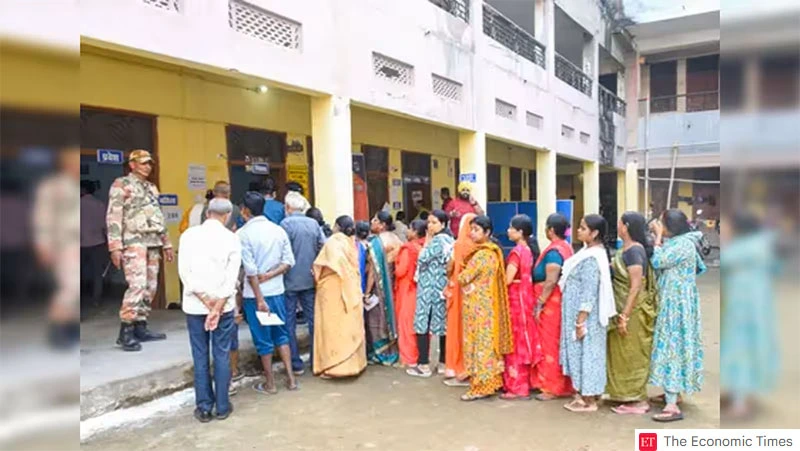
Nandigram Bypoll & Rejinagar Bypoll
West Bengal is heading towards an important political face-off as the Election Commission of India announced upcoming assembly bypolls for two politically sensitive seats: the Nandigram Bypoll in Purba Medinipur and the Rejinagar Bypoll in Murshidabad.
Bypolls often favour the party that controls the government. The administration is already in place, ministers can highlight development work, and the ruling party’s local organisation has an obvious advantage. Voters may also feel that staying with the government could help their constituency get more attention.
But these two seats are unlikely to follow a simple script. Nandigram carries a personal political history involving Suvendu Adhikari and Mamata Banerjee. Rejinagar brings the question of Muslim voting patterns, local leadership and opposition fragmentation into the picture. For the BJP government, these elections will also be an early opportunity to show whether the political change claimed after May 2026 is visible on the ground.
Why do ruling parties win by-elections in West Bengal?
There is a familiar pattern in West Bengal by-elections. Once an Assembly seat becomes vacant, the ruling party enters the contest with the advantage of an established government machinery. Welfare schemes, development projects and administrative decisions become campaign material. At the same time, the party organisation can mobilise its workers more aggressively around the constituency.
For many voters, there is also a practical calculation. They may believe that an MLA belonging to the party in power can get more work done for the area. That does not guarantee victory, but it can make the ruling party’s task easier.
West Bengal has seen this advantage before. During Mamata Banerjee’s 15-year rule, the Trinamool Congress frequently performed strongly in bypolls. In several cases, it used the strength of the government and its local organisation to recover ground after an electoral setback.
Take the case of Byron Biswas. He won the Sagardighi by-election on March 2, 2023, as a Congress candidate with the support of the Left. Barely three months later, on May 29, he joined the Trinamool Congress, saying that he wanted to be part of Mamata Banerjee’s development agenda. But Byron Biswas was not an isolated case. Since 2011, several leaders and elected representatives have moved from the Congress, BJP and Left parties to the Trinamool Congress, often citing development and the need to work with the government as the reason for their shift. Most of them, however, crossed over without resigning from their MLA posts. Now, the reverse trend has started.
We have faced the complete West Bengal Assembly Election 2026, now will be waiting for the West Bengal Bypolls 2026. Political Analyst, Biswanath Chakraborty has already speculated lead for BJP.
Will the Old Bypoll Formula Work Again?
The coming Nandigram Bypoll and Rejinagar bypolls are being held in a very different political atmosphere. The BJP is now in government, TMC is in opposition, and the opposition space itself is divided.
The old arithmetic is therefore no longer enough.
Neither the BJP nor the opposition can assume that the old bypoll formula will work automatically. Voters may have their own local priorities, while factional fights and candidate selection could matter more than party slogans. In Nandigram, law and order will be watched closely. In Rejinagar, the biggest question may be whether the old minority voting pattern survives another election.
These two seats could therefore tell us whether Bengal’s electoral habits are changing or merely adjusting to a new political reality.
Can Suvendu Guarantee a Free and fair election?
For Chief Minister Suvendu Adhikari, the Nandigram Bypoll is far more important than another Assembly contest. Nandigram is closely connected with his political rise and his battle with Mamata Banerjee. His influence in Purba Medinipur is well known. That is precisely why the administration will be under a sharper microscope here. Suvendu Adhikari as the Chief Minister, has taken special initiatives to reach some of the welfare schemes to the people of Nandigram.
The biggest question is brutally simple: Can Suvendu ensure that every voter in Nandigram can reach the polling booth without fear, pressure or political obstruction?
Booth jamming, intimidation, clashes and post-poll violence have damaged Bengal’s electoral reputation for years. Opposition parties have repeatedly alleged that local political muscle and administrative influence were used to affect elections. If Suvendu wants his government to be seen as different from the previous regime, Nandigram is one place where that claim has to be demonstrated, not merely announced. Can Suvendu rely on his popularity and social welfare schemes? Or will we find the repetitive chapter of Booth Jamming?
There will be little value in blaming local leaders after violence has already taken place. As Chief Minister, responsibility for the broader law-and-order situation ultimately rests with his government. The police must move before a situation gets out of control, rather than arriving only after a clash. They must also act without fear or favour. Any appearance of political protection can damage the credibility of the entire exercise.
That makes the Nandigram Bypoll a personal test for Suvendu. A peaceful election, strong turnout and limited complaints would give his government a strong political argument: Bengal’s voters can now enter a polling booth without fear. But if intimidation, booth capture or violence again becomes the main story, an uncomfortable question will follow – if Suvendu cannot guarantee a clean election in his own political backyard, how can his government claim to have changed Bengal’s political culture?
Watch coverage on how West Bengal by-election schedules set the stage for major political face-offs. Our key prayer will remain: Free and fair election.
Rejinagar and the Muslim Vote Paradigm
Nandigram will naturally attract more attention because of its political history. Rejinagar presents a different kind of challenge. The constituency is in Murshidabad, a district with a large Muslim population where the Congress, Left and Trinamool Congress have traditionally competed for minority support.
But old voting habits cannot be taken for granted anymore, mainly in the new political realm of West Bengal Bypolls 2026.
Humayun Kabir won the 2026 Bengal Assembly election from the area and has built a strong local political base. The emotional appeal surrounding the Babri Masjid issue has also helped shape political sentiment among sections of voters.
The Jangipur result has made the picture even more interesting. The BJP showed unexpected strength there and secured a significant share of minority and rural votes. That performance has challenged the assumption that Muslim vote bank in Bengal will automatically remain within one political camp.
Rejinagar will therefore raise a straightforward question: will Muslim voters continue to support the BJP, or tactically back it, as some voters appeared to do in Jangipur? Or was Jangipur an unusual result that will not be repeated across Murshidabad?
Could TMC and Congress Join Hands?
There is another issue that could influence the Rejinagar contest: whether the National Congress and the Trinamool Congress can reach some form of understanding before polling. The key objective is to keep the Muslim vote bank in tact.
The possibility cannot simply be brushed aside. After the 2026 election debacle, Mamata Banerjee met Sonia Gandhi and spoke about the need for opposition unity to stop the BJP’s rapid expansion in Bengal. Turning that political message into an actual constituency-level arrangement, however, is a completely different matter.
Congress has reasons to protect whatever remains of its traditional political space. TMC, meanwhile, has to worry about a divided anti-BJP vote. If both parties contest aggressively against each other, the BJP could benefit even without winning over the entire minority electorate.
Rejinagar may therefore reveal whether Mamata’s appeal for opposition unity was only political rhetoric or whether it can produce a practical electoral arrangement.
Cultural Rhetoric and Food Choice Controversies
The political atmosphere in Bengal has also been affected by recent cultural controversies. Statements by visiting religious figures suggesting that Bengali Hindus should avoid non-vegetarian food, including fish and mutton, during Durga Puja have triggered a sharp reaction across the state.
The controversy is sensitive because food is not an abstract political issue in Bengal. Fish, mutton and other non-vegetarian dishes are part of the traditional food culture of many Bengali Hindu families. Attempts to turn that personal or cultural choice into a test of religious purity can therefore create resentment far beyond the immediate political argument.
That matters in an election. A political party may try to use cultural identity to consolidate its supporters, but the same message can also alienate voters who feel that an outsider is telling them how to practise their traditions.
At the same time, Bengal’s political map is changing. Dissident Trinamool MPs in the form of NCPI looking towards the NDA are creating new combinations. In minority-dominated areas, voters will naturally watch these changes closely. They will want to know which political alliance can protect their interests and which leaders can actually deliver on the ground.
Several political leaders have already moved to distance themselves from any attempt to impose restrictions on Bengal’s traditional food habits during the festive season. The political damage, however, cannot always be measured by an immediate statement. Once a cultural controversy enters the campaign, it can influence conversations in street-corner tea shops, villages and local political meetings.
For Muslim voters in places like Rejinagar, the calculation may therefore involve much more than party symbols. Local leadership, cultural rhetoric, alliances and the fear of political polarisation can all enter the decision.
Political Realignments: The Rebel TMC, NCPI, and NDA Factor
The other major complication is the changing opposition map. The Trinamool Congress is no longer operating in the same political environment in which it ruled Bengal for 15 years. Rebel leaders and dissident groups are looking for new political homes, while smaller organisations such as the Nationalist Citizens Party of India (NCPI) are trying to create space for themselves using the portfolios of Rebel TMC MPs.
Some of these leaders are also building links with NDA leadership at the Centre. Such moves may look small on paper, but in a closely fought constituency even a modest shift in local organisation can affect the final result.
Three things will matter here:
- Fragmentation of Votes: Rebel factions can divide TMC’s traditional support and take away workers, local organisers and committed voters.
- Minority Re-evaluation: When local leaders move closer to the NDA or form separate political platforms, Muslim voters have to reconsider whether their traditional voting strategy still serves their interests.
- Local Leadership Influence: In Murshidabad, personal networks and community relationships can matter as much as the national party symbol. A strong local candidate can sometimes cut across the broader party narrative.
The real question is whether these changes will actually shift votes in Rejinagar. Political alliances announced in Kolkata or Delhi do not automatically translate into votes in a village. The local worker, candidate and community network still have to carry that message to the polling booth.
The Challenge for Mamata Banerjee: Strategy and Seat Dynamics
For former Chief Minister Mamata Banerjee and the Trinamool Congress, these bypolls come at an uncomfortable time. The party has to defend its remaining political base while dealing with organisational problems and internal divisions. Today, Mamata Banerjee is even fighting to retain her symbol.
More importantly, TMC cannot assume that its traditional rural and minority support will remain untouched. The BJP is now the governing party, rebel groups are trying to create their own space, and the Congress is still attempting to remain relevant in parts of Bengal, so as left.
Will Mamata Banerjee contest in Nandigram bypoll?
Mamata faces a difficult choice in Nandigram.
Option A is to fight personally. If she enters the contest, the bypoll immediately becomes a referendum on her political standing. Her presence would energise the TMC campaign and make the election far bigger than a normal Assembly bypoll. A victory would also give her a direct route back into the Assembly.
Option B is to stay away from the frontline. TMC could leave the campaign to district leaders, local organisers and senior party managers. That would reduce the personal risk to Mamata. If the party loses, the leadership could point to local organisation, candidate selection or factionalism.
But there is a price to this strategy too. A leader who has spent decades presenting herself as an uncompromising fighter cannot easily explain why she avoided a constituency carrying such personal significance.
A Victory Can Change the TMC Equation
The history of Nandigram makes the decision even more difficult. Mamata Banerjee lost from Nandigram in 2021 to Suvendu Adhikari and from Bhabanipur in 2026. She is now outside the Assembly.
A victory in Nandigram would therefore mean much more than winning a bypoll. It would bring her back into the House and could potentially allow her to take up the post of Leader of the Opposition.
Such a result could also strengthen the Kalighat camp at a time when TMC is dealing with an internal political battle. A convincing Mamata victory could make legislators associated with the Ritabrata camp think twice before taking a harder line against her.
Madan Mitra has added another twist by saying on air that if Mamata contests from Nandigram, his camp will not field a candidate against her. If that position survives until the election, Mamata could avoid one direct challenge from a rival TMC faction.
That would make victory easier to claim. It would also make defeat much more painful.
What If Mamata Loses Nandigram Again?
The worst possible outcome for Mamata would be a personal defeat in Nandigram even without Suvendu Adhikari contesting against her.
Such a result would immediately become a political argument about her relevance. It would suggest that even a constituency where she once fought one of the defining battles of her career is no longer willing to return her to the Assembly.
One election does not normally decide the fate of a veteran leader. But some defeats change the balance inside a political party. A loss in Nandigram could strengthen the rebel camp, discourage TMC workers and encourage more leaders to question whether Mamata can rebuild the party. The factions will breathe easier, the BJP will celebrate, the CPI(M) and Congress will enjoy the moment, while political analysts will rush to write Mamata Banerjee’s political epitaph.
For TMC, the battle therefore starts well before polling day. Candidate selection, factional management, minority vote consolidation and Mamata’s own decision to enter the contest could matter as much as the campaign speeches.
Undoubtedly, she can keep an excuse ready: Lack of Free and fair election.
Has Mamata Always Chosen the Safer Seat?
Mamata Banerjee has generally been careful about the constituencies from which she contests elections. Her political image is that of a leader who takes on powerful opponents, but her electoral choices also show a strong awareness of where the ground is safest.
When Mamata lost the Jadavpur Lok Sabha seat to Malini Bhattacharya in 1989, she shifted her electoral base to South Calcutta, then regarded as one of Congress’s safest areas. The move was politically understandable. A leader trying to build a larger political career needs a constituency where the organisation is strong and the chances of returning to Parliament are high.
When she lost in Jadavpur, she had come up with the same blame: It was not a Free and fair election.
The same calculation was visible after her defeat in Nandigram in 2021. Mamata moved back to Bhabanipur and asked sitting MLA Sovandeb Chattopadhyay to vacate the seat before contesting from her traditional stronghold.
There is nothing unusual about a politician choosing a favourable constituency. Leaders across parties do it. But in Mamata’s case, the contrast between her combative political image and her electoral choices is worth examining.
That is why Nandigram presents such a difficult choice now. If Mamata decides to contest the Nandigram Bypoll, she will be walking away from the comfort of a traditional safe seat and returning to the constituency where Suvendu Adhikari defeated her in 2021.
For a leader whose political career was built around the image of taking on powerful opponents, that decision could reveal how much electoral risk she is prepared to accept today.
The Ground report reveals that Mamata’s close companion, Abu Taher, has also claimed, BJP will win in Nandigram.
Three Tests for the Trinamool Congress
- Direct Involvement vs. Delegated Campaigning: Will Mamata lead the fight herself, or will TMC depend on district commanders and local organisers? Her decision will say a great deal about how the party views the Nandigram contest.
- Securing the Minority Vote: Rejinagar will be particularly important. TMC cannot simply assume that Muslim voters will remain loyal because they have done so in previous elections. Local candidates, rebel groups and changing alliances can all affect that vote.
- Reclaiming the Narrative in Nandigram: The Nandigram Bypoll will go beyond the question of who wins one Assembly seat. TMC will need to show that its organisation still has the strength to fight the BJP government on difficult political ground.
Read additional details on how bypoll dates for key Bengal assembly seats trigger political preparations across parties.
Comparing the Battlegrounds: Nandigram vs. Rejinagar
While both seats are voting in the same bypoll window, their political contexts, key issues and voter calculations are very different.
| Feature / Dynamic | Nandigram Bypoll | Rejinagar Bypoll |
|---|---|---|
| District | Purba Medinipur | Murshidabad |
| Primary Focus | Leadership, law and order & booth security | Minority consolidation & vote shifts |
| Key Personality Anchor | Suvendu Adhikari | Local leaders & rebel TMC factions |
| Core Electoral Challenge | Ensuring free voting without intimidation | Finding out whether Muslim votes split or remain firm |
| Broader Significance | Test of the BJP government’s credibility | Indicator of changing minority voting patterns |
What These Bypolls Will Really Show
The Nandigram and Rejinagar bypolls are not simply about filling two vacant Assembly seats. They will provide an early reading of how Bengal’s political landscape is settling after the major changes of 2026.
For Chief Minister Suvendu Adhikari and the BJP government, the immediate issue is governance. Can the administration maintain law and order? Can it give every candidate a level playing field? Can voters enter polling booths without fear, pressure or political interference?
Nandigram will be particularly important on this front. The government cannot claim credit for a peaceful election merely because violence is lower than in the past. The real standard should be whether voters feel free to make their own choice.
For the BJP, Rejinagar brings another challenge. The party will want to know whether its recent political outreach has begun to make an impression among Muslim voters. The Jangipur experience has already complicated the old assumption that minority voters will never consider the BJP.
For the opposition, the Nandigram Bypoll is an organisational battle. TMC has to demonstrate that it can still mobilise workers, manage factions and put up a serious challenge against a government led by Suvendu Adhikari.
For minority voters in Rejinagar, the choice could depend on local leadership as much as larger political slogans. Recent alliances, cultural controversies and the possibility of a divided opposition may all enter the calculation.
For Mamata Banerjee and the Trinamool Congress, the stakes are particularly high. The party must keep its organisation together while preventing rebel groups and rival parties from taking pieces of its traditional support base. A strong showing could give Mamata some breathing space. A poor result could deepen the questions already being asked inside the party.
The result will matter. But so will the way the election is conducted. If the BJP government under Suvendu Adhikari can deliver a peaceful and genuinely competitive election, it will have a strong answer to one of the biggest criticisms historically levelled against Bengal politics.
If it cannot, the political change in government will look less significant than the change in the party occupying Nabanna till 4th May, 2026.
10 Key Takeaways
- The Nandigram Bypoll will put the BJP government’s law-and-order record under close scrutiny.
- Chief Minister Suvendu Adhikari will have to demonstrate that voters can cast their ballots without fear or political pressure.
- The BJP will be watching closely to see whether its recent outreach has helped it gain ground among Muslim voters.
- Rejinagar Bypoll could provide an early indication of whether traditional minority voting patterns are changing.
- The BJP’s performance among Muslim and rural voters will be watched after the unexpected trends seen in Jangipur.
- For TMC, the Nandigram Bypoll will expose the strength of its organisation outside its traditional safe areas.
- Internal divisions and rebel groups could split the opposition vote and complicate both contests.
- Cultural controversies and changing alliances may influence how minority and rural voters assess the competing parties.
- For Mamata Banerjee and the Trinamool Congress, the bypolls could either provide political breathing space or deepen the party’s internal crisis.
- The results may reveal whether Bengal is still tied to its old political equations or is finally moving into a new political era.