Foreign Conspiracy Against India: The Truth
Oct 24, 2026 - By Ashutosh Roy PoliticsInternational BriefsNational NewsNational Politics
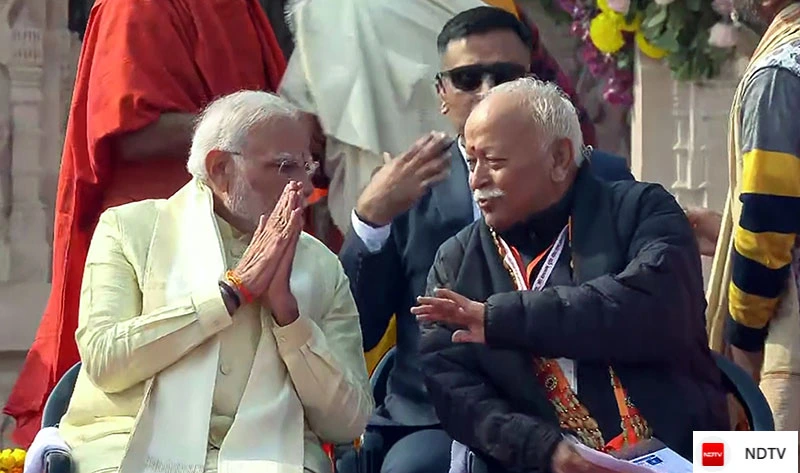
Is Foreign Conspiracy Against India A Real Threat?
When a government faces public anger, political unrest or questions about its performance, blaming foreign forces can be a convenient way out. It shifts attention from domestic problems to an outside enemy. Leaders across the world have used this argument, either to defend their position or to warn people against a real or alleged threat. So, Foreign conspiracy against India is not a new political weapon.
We have seen this pattern in countries led by Xi Jinping, Vladimir Putin, Sheikh Hasina and Bashar al-Assad. But Assad’s story deserves special attention. Despite blaming foreign powers and presenting his government as a defender of Syria against outside enemies, he lost power in December 2024 and fled the country. This does not mean foreign interference played no role in Syria’s conflict. It shows that blaming foreign enemies cannot guarantee a ruler’s survival when internal weaknesses and public opposition catch up with him.
India is no stranger to this argument. The question is not whether foreign powers interfere in other countries. They do. The real question is whether a particular allegation is supported by evidence.
This distinction becomes even more important when the warning comes from an influential figure like Mohan Bhagwat, the chief of the Rashtriya Swayamsevak Sangh (RSS).
Foreign Conspiracy Is Not a New Argument in India
In October 1972, Indira Gandhi spoke about the possible role of foreign intelligence in India’s internal troubles. A US government historical document records her remarks in Darjeeling on 26 October. She did not directly blame the CIA for every domestic problem, but warned that foreign intelligence activity could make an already difficult situation worse.
The original account is available in the US State Department’s historical archive: Indira Gandhi’s remarks on foreign intelligence in 1972.
There is an important distinction here. Indira Gandhi spoke about the possibility that foreign intelligence activity could aggravate an existing problem. That is a more limited claim than blaming an entire movement on a foreign conspiracy.
The distinction remains relevant today. Foreign interference in India is a legitimate subject for investigation. But it should not become a ready-made explanation for every protest, every criticism of the government or every sign of public dissatisfaction.
What Exactly Did Mohan Bhagwat Say?
On 20 October 2026, Mohan Bhagwat addressed the RSS’s annual Vijayadashami gathering in Nagpur. His speech referred to political unrest in France, Albania, Bangladesh and Nepal. He warned that foreign powers seeking to keep India weak could play a role in domestic developments.
The Indian Express report on Bhagwat’s speech and this NDTV video report provide accounts of his remarks.
The issue is not that Bhagwat has warned about foreign interference. Every country must remain alert to attempts by outside powers to influence its politics or weaken its institutions. The real issue is how it relates to the protests taking place in India.
Bhagwat is not just another political speaker. As the RSS chief, his words carry considerable weight, particularly because of the organisation’s close ideological relationship with the BJP.
Does Bhagwat have specific evidence of a foreign conspiracy against India, or is he offering a political warning based on events abroad? The public deserves a clear answer.
Why Compare India With Bangladesh and France?
Bhagwat referred to unrest in other countries while warning that similar attempts could be made in India. But events in different countries cannot simply be treated as copies of one another.
Bangladesh experienced a major political upheaval that ended Sheikh Hasina’s rule. France has faced its own protests and political tensions. Nepal and Albania have their own political histories and domestic causes of unrest. Each case must be understood on its own facts.
The fall of a government after mass protests does not, by itself, prove that foreign powers engineered its downfall. Public anger can arise from corruption, unemployment, political repression, economic hardship or a loss of trust in institutions. Foreign actors may try to exploit such conditions, but that is a separate claim requiring evidence.
Though not directly comparable, but readers can find a bit similar happenings in West Bengal Political Landscape: Big Fights.
If Bhagwat believes that similar forces are working in India, he should explain what he means. Is he talking about foreign funding, organised propaganda, covert political operations or diplomatic pressure? Are there identifiable organisations, financial links or other verifiable facts?
Without such clarity, the phrase global conspiracy against India remains a broad warning rather than a demonstrated conclusion.
Bashar al-Assad: Foreign Threats Could Not Save His Government
Syria offers another perspective. Bashar al-Assad presented his government as fighting terrorism and foreign-backed efforts to overthrow the state. Foreign powers played major roles in the Syrian conflict, and Russia and Iran provided crucial support that helped his government survive for years. Still, this support could not prevent his eventual fall.
In December 2024, a rapid rebel offensive led by Hay’at Tahrir al-Sham brought Assad’s rule to an end. He fled Syria on 8 December and went to Russia. The Carnegie Endowment’s analysis of Assad’s fall and Chatham House’s assessment of the collapse of his government discuss the military and regional factors behind the outcome.
Syria’s history is not the same as India’s. It involved a devastating civil war, armed rebel groups and extensive foreign military involvement. We should not ignore these differences. But one lesson remains relevant: a ruler cannot expect warnings about foreign enemies to answer every question about his own government.
A government may face genuine external threats and still suffer from internal weaknesses, public anger, poor decisions or a loss of support among those expected to defend it. Blaming outsiders does not automatically solve internal problems.
This is why Bhagwat’s warning deserves scrutiny rather than automatic acceptance or dismissal. If foreign forces are trying to destabilise India, the evidence should be examined and brought to broad day light. But the possibility of foreign interference should not push domestic grievances out of the discussion.
The Pulwama Attack and the 2019 Election
India’s own recent history offers another example of how a national-security crisis can change political debate. On 14 February 2019, a terrorist attack at Pulwama killed 40 CRPF personnel. India’s subsequent Balakot air strike brought national security to the centre of the general election campaign.
The Carnegie Endowment’s study, “How Pulwama Shaped 2019”, examined how the attack and the Balakot strike changed the national conversation. Its findings suggest that the crisis strengthened the BJP’s national-security narrative and helped Narendra Modi politically. The study also found that the electoral effect was more complicated in areas directly affected by the deaths and funeral processions.
The BJP won 303 seats in the 2019 Lok Sabha election. It would be too simplistic to say that Pulwama alone produced that victory. Modi’s popularity, the party’s organisation, welfare policies and several other factors also mattered. Still, the attack and the government’s response became important parts of the election campaign.
I am not suggesting that the Pulwama attack was staged or that the government created the crisis. There is no basis for making such a claim here. My point is different: a genuine national-security crisis can reshape public sentiment and influence how voters judge a government.
That is why the use of national-security language in politics deserves careful examination. When leaders warn about a foreign conspiracy against India, the public should be able to ask what the warning is based on. National unity matters, but it should not require citizens to stop asking questions.
The CJP Protests and the Election Commission
The immediate political background matters. The CJP and its supporters have been protesting against the Election Commission, particularly over the Special Intensive Revision (SIR) of electoral rolls and their demand for Chief Election Commissioner Gyanesh Kumar’s resignation. This has been vividly described in CEC Gyanesh Kumar: Students Rage & SC Fired.
The Aaj Tak report on the protests and criticism of the Election Commission provides further context to the political dispute.
People can disagree with the CJP’s methods and political demands. They can question its leadership, slogans or strategy. But a protest against the Election Commission does not automatically become anti-national activity, nor does it prove that protesters are acting at the direction of foreign powers.
The demand for Gyanesh Kumar’s resignation is also not the same as an unlawful attempt to remove him. A constitutional office-holder cannot be forced out merely because a political group demands it. The law provides a prescribed process for removal. At the same time, citizens have the right to question the Election Commission and seek accountability through democratic means. One can easily refer to Bengal Electoral Roll Row: Shocking Truth!.
If a protest crosses legal limits, the authorities can act under the law. If there is evidence of foreign interference, that should be investigated. But these are different questions and should not be mixed together.
What Did Yogendra Yadav Say?
Yogendra Yadav’s remarks are relevant to this debate. In the video shared here, he discusses the CJP protest and the political questions surrounding it: Watch Yogendra Yadav’s statement on YouTube.
His position should be considered on its own terms, rather than dismissed simply because he has entered a political debate. The broader question is whether the CJP protest’s demands were unconstitutional or whether they were demands made through political expression and public agitation.
One may agree or disagree with Yadav. That is not the point. His intervention raises a question that deserves a direct answer: Why should a protest against the Election Commission be treated as evidence of a foreign conspiracy without proof of a foreign link?
The government and the Election Commission are entitled to defend their actions. Protesters, in turn, are entitled to question them. Evidence, not political labels, should determine whether an allegation of unlawful or foreign-sponsored activity is justified.
In an interview with Karan Thapar, Neha Bora alleged that the police searched her bags and personal belongings and took her mobile phone without showing her a search warrant or arresting her. If her account is accurate, the circumstances and legal basis of these actions demand a clear explanation. No rhetoric about a “Foreign Conspiracy Against India” can, by itself, justify police action that violates the law.
Watch Neha Bora’s interview with Karan Thapar in The Wire.
Does Every Protest Against the Government Weaken India?
This is where the debate becomes troubling. A country cannot become stronger by treating every disagreement as a threat to national security. A democracy needs protests, criticism and public scrutiny. They may be inconvenient for those in power, but inconvenience is not proof of conspiracy. Rather, that’s how the democracy strengthens.
Of course, protests can be manipulated. Political groups may use public anger for their own advantage. Foreign organisations may try to influence public opinion. Online propaganda, covert funding and organised disinformation are genuine concerns for any country. These possibilities should not be ignored.
But the reverse is equally important: the possibility of foreign interference cannot be used to silence all criticism. If every protest is described as a foreign plot, people may begin to wonder whether the real aim is to avoid answering difficult questions.
The right approach is straightforward. Investigate credible evidence of foreign involvement, disclose what can responsibly be made public, and take action under the law. Do not ask people to accept a sweeping allegation simply because an influential person has made it.
Modi, Bhagwat and the Political Context
Narendra Modi’s political position and Bhagwat’s role are not identical, even though the BJP and RSS share an ideological relationship. When a prime minister speaks about a foreign threat, his words form part of the government’s political and national-security messaging.
When the RSS chief raises the same concern, people may reasonably ask whether he is offering independent information, expressing an ideological assessment or reinforcing a political narrative.
The Pulwama experience shows how a security crisis can shape the political conversation. Assad’s fall, on the other hand, shows that warnings about foreign enemies cannot, by themselves, keep a government in power. Neither example proves that Bhagwat’s warning is false or that foreign interference is taking place in India. Both remind us that claims about national security must be judged on evidence.
Is the BJP facing difficult political questions because of public discontent, protests or criticism of its handling of institutions? Is Bhagwat trying to caution the country against a genuine external threat? Or is he helping to defend the government from uncomfortable questions by placing the controversy within a larger story of foreign interference?
These are questions. I raise them because the public has a right to understand the basis of such a serious warning.
If there is credible evidence of a conspiracy, let it be presented and investigated. If there is no specific evidence, political leaders should be careful not to create an atmosphere in which legitimate dissent is viewed with suspicion.
Young People, Protest and Dialogue
Bhagwat’s earlier remarks to young people make this debate even more interesting. In August 2026, he addressed teenagers at an event organised by the International Movement to Unite Nations (I.I.M.U.N.) at the Nita Mukesh Ambani Cultural Centre. Reports said he encouraged dialogue and made the point that protesting does not automatically make young people anti-national.
See the New Indian Express report and the Indian Express report on his Gen Z outreach.
That was a welcome message. Young people do not become anti-national simply because they question those in power. Nor should they be expected to remain silent when they believe an institution is failing them.
The same principle should apply to the CJP protests. If the movement has made false claims, those claims should be challenged. If its leaders have broken the law, the law should take its course. But if young citizens are raising genuine questions about electoral rolls and the Election Commission, their concerns deserve a reasoned response.
Dialogue cannot mean that young people must listen while those in power speak. It must also mean that those in power are willing to listen.
Neha Bora, Political Symbolism and the Need for Evidence
Some actions by activists can invite criticism. For example, Neha Bora’s reported salute to the Bangladesh revolution may be seen by some people as politically provocative or as an endorsement of a particular political upheaval. Others may interpret it differently.
But even if one finds such symbolism objectionable, it does not establish that the person is part of a foreign conspiracy. A gesture, a slogan or an expression of political sympathy may be open to criticism, but it is not proof of foreign direction.
If there is evidence of foreign funding, coordination or covert activity, it should be examined. Without such evidence, the leap from political expression to a conspiracy allegation is unjustified.
The same standard must apply to everyone, regardless of political ideology. We should not demand proof from one political camp and accept allegations from another without question.
India’s Foreign Relations Are Not a Simple Conspiracy Story
India’s international position is complex. The country has longstanding strategic ties with Russia while also maintaining important economic, diplomatic and security relations with the United States. These relationships involve cooperation, disagreements and negotiations. They cannot be reduced to a simple story in which one foreign power is always a friend and another is always an enemy.
India and the United States have been negotiating major issues, while India and Russia continue to maintain a long-standing relationship. Any deal or diplomatic development should be judged by its actual terms and consequences, not by speculation about secret motives.
Foreign powers naturally pursue their own interests. They may seek influence through trade, diplomacy, technology, media or political engagement. India should remain alert to such efforts. But protecting India’s sovereignty requires careful analysis, not the assumption that every domestic political problem has been arranged from abroad.
A confident country should be able to distinguish between genuine threats and political disagreements. It should also be able to investigate allegations without turning them into slogans.
Dhruv Rathee might criticize India’s Foreign Policy and blamed S.Jaishankar and Modi, we dont belong to the same school of thoughts. But when Foreign Conspiracy Against India comes in fore, we have to take a serious note on it.
The Real Question: Where Is the Evidence?
I do not dismiss the possibility of a foreign conspiracy against India. History shows that foreign governments and intelligence agencies sometimes try to influence events in other countries. India must remain vigilant, and credible allegations should be investigated.
But vigilance must not become a substitute for proof. If foreign forces are attempting to exploit protests in India, what are the facts? Who is involved? What is the nature of the alleged operation? Is there evidence of funding, coordination or direct interference? Can the claim be independently examined?
These are reasonable questions, not anti-national questions.
The political upheavals in France, Bangladesh, Nepal and Syria may offer lessons about public anger, political change and instability. But they do not prove that the same process is being engineered in India. Similarities between events are a starting point for analysis, not evidence of a common mastermind.
India is a large and diverse democracy. Its people can be dissatisfied with a government, an institution or a political party without acting on behalf of a foreign power. If leaders want the public to take a warning seriously, they must explain the grounds for it.
My Question to Mohan Bhagwat
My question is simple. When Mohan Bhagwat warns that foreign powers are trying to weaken India or bring about regime change, is he speaking on the basis of specific evidence, or is he offering a political assessment of events in India and abroad?
If he has evidence, the country deserves clarity. If he is issuing a general warning, that should also be made clear. The two are not the same.
The BJP may be facing difficult political questions. The protests against the Election Commission may be inconvenient. Some activists may use provocative language, and political parties may try to exploit public anger. None of these possibilities, separately or together, proves a foreign conspiracy.
I also wonder whether the comparison with France and Bangladesh is meant to warn Indians about the dangers of political upheaval or to suggest that the protests in India are part of a larger effort to change the regime. If the latter is the claim, the evidence must be stronger than a comparison between events in different countries.
My humble question remains: Is this a political warning, or does Bhagwat have solid evidence of a foreign conspiracy against India? The public needs clarity. Without it, we are left with more questions than answers.
What This Debate Ultimately Demands
- Foreign interference is possible, but every allegation of a conspiracy against India must be supported by evidence.
- Indira Gandhi raised concerns about foreign intelligence in 1972, showing that the foreign conspiracy argument is not new in Indian politics.
- Mohan Bhagwat’s warning deserves serious consideration, but the public needs to know whether it is based on specific evidence or a general political assessment.
- Unrest in Bangladesh, France, Nepal and Albania cannot automatically be treated as proof of a similar conspiracy in India. Every country has its own political realities.
- Bashar al-Assad’s fall in December 2024 shows that blaming foreign enemies cannot, by itself, save a government from internal weaknesses and the loss of public support.
- The Pulwama attack and the Balakot air strike shaped the 2019 election campaign. However, national security was one factor among several behind the BJP’s victory.
- Protests against the Election Commission, including demands for Gyanesh Kumar’s resignation, do not automatically prove anti-national activity or foreign involvement. Political dissent is not evidence of conspiracy.
- As Bhagwat himself reportedly told young people, protesting does not automatically make them anti-national. Dialogue must allow citizens to question those in power, not merely listen to them.
- Provocative slogans, political gestures and sympathy for movements abroad may invite criticism, but they do not establish foreign direction without evidence of funding, coordination or covert activity.
- My central question remains: Does Bhagwat have solid evidence of a foreign conspiracy against India, or is he offering a political warning? The country deserves a clear answer, not just a sweeping allegation.