How Free Media Keeps Democracy Alive?
May 26, 2026 - By Ashutosh Roy Current AffairsGovernanceNational PoliticsPoliticsSocial IssuesWest Bengal Politics
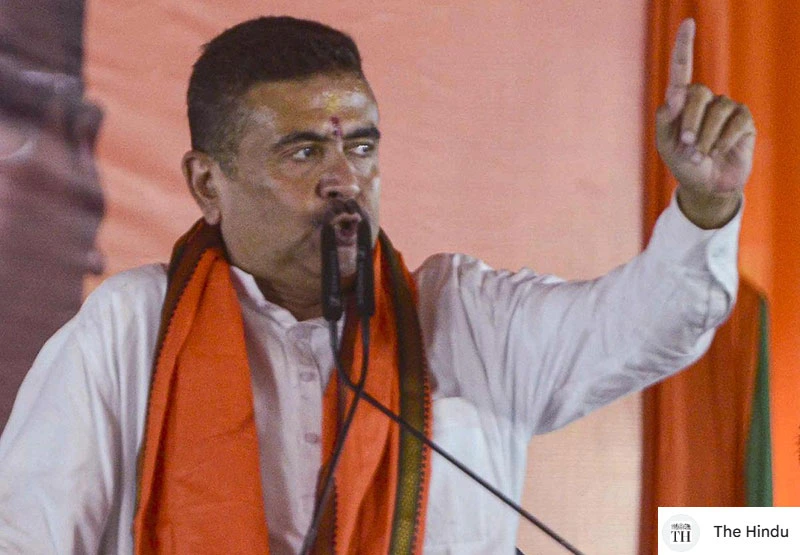
Does the Free Media Keep Make Democracy Transparent?
A healthy democracy does not just depend on regular elections. It relies heavily on a free media that acts as the fourth pillar of governance. Journalists raise the voice of the common people, bring public issues to light, and show a clear mirror to those in power.
However, when political leaders actively suppress awkward or uncomfortable questions, they threaten the very foundation of public accountability.
This detailed analysis examines the shifting relationship between political leaders and the press freedom across India, with a specific focus on national trends and the volatile political landscape of West Bengal.
Why Is Free Media Essential For Democracy?
A democratic government derives its power from the mandate of the people. Therefore, rulers must remain directly accountable to their voters. Since, a free media functions as a vital bridge between the administration and the citizens.
- Amplifying Public Voice: Journalists ask tough questions on behalf of the public, ensuring that grassroots problems reach legislative assemblies and parliament.
- Enforcing Accountability: In addition, regular media scrutiny prevents elected representatives from acting like unchecked rulers.
- Exposing Policy Failures: Moreover, Independent journalism reveals corruption, administrative delays, and broken campaign promises.
According to the 2026 World Press Freedom Index published by Reporters Without Borders (RSF), India ranks 157th out of 180 countries. This alarming rank highlights a growing structural crisis where powerful lobbies frequently try to strangulate independent media houses.
How Do West Bengal Leaders Handle Media Scrutiny?
The political history of West Bengal offers contrasting examples of how leaders deal with independent journalism. From open accessibility to even complete intolerance, the state has witnessed distinct administrative styles.
What Is Suvendu Adhikari’s Strategy with Journalists?
A striking difference in media management emerged during recent political developments in West Bengal. After the initial cabinet meeting of the new BJP political setup, the Chief Minister Suvendu Adhikari personally came forward to brief the media regarding crucial administrative decisions.
Subsequently, Adhikari delegated the formal responsibility of briefings to fellow ministers Agnimitra Paul and Dilip Ghosh. However, he explicitly stated that he remains fully ready to face direct, sharp questions from reporters.
Hence, this approach signals a calculated willingness to engage with public scrutiny rather than dodging the press.
Why Did Mamata Banerjee Restrict Media Access?
In sharp contrast, the administrative tenure of Trinamool Congress (TMC) supremo Mamata Banerjee faced intense criticism for restricting the press freedom. Observers note that her administration consistently favored a pliant section of media professionals while shutting out critical voices.
- Entry-Level Prohibitions: Journalists from critical media houses were routinely blocked from entering official press briefings and state secretariat events.
- Controlled Foreign Tours: During her official foreign trips, only a handpicked group of friendly journalists was permitted to travel as part of the media delegation.
Interestingly, changing corporate and political dynamics have severely impacted those preferred media circles. Prominent editors like Anindya Jana and Biswarup Majumdar traveled with her in foreign tours very often. However, the paradigm shifts later forced them to leave their top-ranking positions at major media houses.
How Does Anger Silence Awkward Questions?
Everybody knows Mamata Banerjee widely for reacting with intense, visible anger when confronted by adversarial or uncomfortable lines of questioning. On multiple occasions, she abruptly walked out of live television interviews.
She frequently accused audience members or journalists of being political operatives from opposing parties like the CPI(M) when they asked tough questions.
A highly publicized instance occurred during her early days as Chief Minister on a nationally televised talk show hosted by veteran journalist Sagarika Ghose. When Taniya Bharadwaj, a young student, asked a direct question about state governance, Banerjee reacted sharply.
First, she labeled the question biased. Then, she accused the student of being a CPI(M) plant. Finally, she walked out of the interactive session.
The political ironies of this media friction are summarized below:
| Media Figure | Original Role During Clash | Current Political Status |
|---|---|---|
| Sagarika Ghose | Independent TV Show Host / Journalist | Rajya Sabha Member of Parliament (MP) for TMC |
| Taniya Bharadwaj | Student Audience Member asking tough questions | Labeled as an adversarial political operative |
Furthermore, independent journalists and local digital content creators who refused to follow the state’s narrative faced administrative harassment.
The state police machinery repeatedly filed cases against independent YouTubers and reporters. As a result, they faced action for raising local grievances.
If the state administration had permitted unpopular media outlets to ask tough questions, would Mamata Banerjee have received early signals of widespread public dissatisfaction? Suppressing the press ultimately insulates leaders from ground realities until it is too late.
What Can We Learn From Bengal’s Past Chief Ministers?
The previous eras of Left Front governance in West Bengal present a different dynamic regarding media interaction, showing how past leaders handled ideological opponents.
Was Buddhadeb Bhattacharjee Open to Critical Press?
Unlike highly insulated modern politicians, former Chief Minister Buddhadeb Bhattacharjee maintained a remarkably accessible administrative style. He held regular, scheduled press interactions at the Writers’ Buildings (the former state secretariat).
Bhattacharjee frequently took direct questions even during the most volatile political crises of his tenure, including the violent land agitation conflicts in Singur and Nandigram.
Journalists from that era highlight that he did not shy away from confronting highly critical or uncomfortable questions from his direct political detractors.
How Did Jyoti Basu Treat Ideological Opponents?
India’s long-serving Chief Minister Jyoti Basu handled local press conferences with extreme brevity, often giving short replies in the corridors of power. However, his attitude transformed during international tours.
As reported by veteran journalist Suman Chattopadhyay, who accompanied Jyoti Basu on several foreign visits, the Marxist leader showed immense institutional decorum toward reporters representing papers like the Anandabazar Patrika, outlets that were openly critical of Left ideology.
Basu regularly enquired about the fooding, lodging, and work problems of these adversarial journalists, separating political disagreement from professional respect.
How Do National Leaders Handle Independent Journalism?
The tendency to shield the executive branch from open, unscripted media interactions is a visible trend across major national political parties in India.
Why Do Modi and Adityanath Prefer Controlled Narratives?
Prime Minister Narendra Modi has significantly altered the relationship between the PMO and the press. Since assuming office in 2014, he has not held a single open, unscripted solo press conference.
According to analytical reports by The Wire regarding the RSF Index, the current administration prefers granting exclusive interviews to highly selected journalists or content creators who keep the conversation favorable.
Senior journalist Rajdeep Sardesai often highlights this contrast. He notes how accessible Narendra Modi was to reporters.
Then, he recalls Modi’s early years as Chief Minister of Gujarat. Moreover, Modi engaged with both local and national media. Even during highly controversial periods, such as the aftermath of the 2002 Godhra incident, he remained available allowing free media access.
Similarly, Uttar Pradesh Chief Minister Yogi Adityanath avoids open, spontaneous Q&A forums. His administration relies primarily on pre-screened media interactions and official press releases to maintain tight control over the political narrative.
How Does the Opposition Handle Unfavorable Press?
Deflection and confrontation extend beyond ruling parties. Moreover, major opposition leaders also show friction when they face critical media.
- Arvind Kejriwal & AAP: When open press conferences happen, questions concerning internal party rifts, liquor policy controversies, or governance failures are routinely deflected. The Aam Aadmi Party has occasionally resorted to blacking out or boycotting specific television channels that maintain a highly critical stance hindering the free media culture.
- Rahul Gandhi & Congress: Rahul Gandhi physically places himself in front of the media far more frequently than many contemporary leaders through regular press meets. However, his interactions with journalists who ask unfavorable questions often turn highly combative. He frequently questions the motives, ownership, or political alignments of the reporter asking the question, making the interaction highly charged.
How Did Dr. Manmohan Singh Approach the Press?
Former Prime Minister Dr. Manmohan Singh maintained an administrative style deeply rooted in institutional decorum.
During his decade-long tenure (2004–2014), he remained highly accessible to national and international media houses.
He regularly held large-scale, unscripted press conferences where journalists asked sharp, unfavorable questions regarding multi-billion dollar corruption scandals and internal policy paralysis.
His quiet, non-combative defense became a hallmark of his public image, preserving the tradition of public accountability.
The Verdict: Why Leaders Must Face the Mirror
A comparison of national and regional leaders reveals a widespread decline in open press interactions across India:
| Political Leader | Media Interaction Style | Main Method of Narrative Control |
|---|---|---|
| Dr. Manmohan Singh | Highly Accessible | Structured, open press conferences |
| Narendra Modi | Highly Insulated | One-way broadcasts, selected interviews |
| Buddhadeb Bhattacharjee | Openly Accessible | Direct handling of crisis-period journalism |
| Mamata Banerjee | Highly Selective | Aggressive pushback, entry blocks, police action |
| Arvind Kejriwal | Selective Engagement | Media boycotts and deflecting controversy |
A free media is not a luxury; it is an absolute necessity for democratic survival. When powerful political lobbies try to strangulate the media through economic pressure, administrative harassment, or selective access, they weaken the voice of the citizens.
Elected leaders must remember that power is temporary and entirely dependent on the public’s trust. To keep democracy alive, rulers must respect the fourth pillar and remain willing to answer the hard questions.
Conclusion: Would an Open Media Have Saved the Mandate?
The ultimate political cost of locking out the press freedom became glaringly obvious during the 2026 West Bengal Assembly Elections. For years, the state administration remained cocooned inside a comfortable echo chamber of pliant reporters and carefully managed press interactions.
Unbiased journalists, local YouTubers, and independent media houses were systematically denied entry or targeted with administrative machinery whenever they raised uncomfortable questions regarding grassroots corruption, institutional failures, or public anger.
This calculated isolation carried a heavy price. Had the administration permitted independent, unpopular media outlets to ask tough questions without facing aggressive walkouts or police action, the leadership would have received clear, early warning signs of widespread public dissatisfaction.
Instead, by treating honest criticism as political conspiracy, the ruling party remained completely blind to the shifting ground realities of the electorate. The job of a free media is to point out such mistakes to the ruling dispensation.
The dramatic outcome of the 2026 Bengal elections, where the long-standing administration faced a major political ouster, serves as a timeless lesson for every democratic leader across the nation. Suppressing the fourth pillar does not erase public grievances; it merely conceals them until they explode at the ballot box.
Major Cases: Media / YouTubers / Speech-related Actions (West Bengal)
| Year | Person / Category | Platform / Role | Allegation / Trigger | Police / Govt Action |
|---|---|---|---|---|
| 2012 | Ambikesh Mahapatra (Professor) | Email / Cartoon sharing | Circulated satirical cartoon of Mamata Banerjee | Arrested under IPC & IT laws |
| 2019 | Sanmoy Banerjee (Congress leader & YouTuber) | YouTube (political commentary) | Cybercrime complaint over content critical of govt | Arrested, sent to police custody |
| 2022 | Roddur Roy (YouTuber) | Facebook Live / YouTube | Allegedly abusive remarks against CM | Arrested by Kolkata Police |
| 2022 | Tuhin Mondal (YouTuber) | YouTube | Allegedly “derogatory memes” on CM | Arrested; case filed; search for others |
| 2022 | Multiple YouTube channels | YouTube | Allegedly defamatory meme content | FIRs filed; several creators named |
| 2021 (post-poll context) | Social media users (multiple) | Facebook / Twitter | Allegedly inflammatory posts on violence | FIRs and arrests reported |
| 2024–2026 (ongoing trend) | Actors / public figures | Social media posts | Posts allegedly linked to incitement or unrest | Police questioning, FIRs |
The Final Verdict: A free media is not an adversary to good governance, it is its early warning system. When political leaders choose to strangulate press freedom to avoid awkward questions, they do not just weaken democracy; they seal their own political fate.
10 Key Takeaways:
- First and foremost, the press freedom acts as the vital fourth pillar of democracy by holding powerful leaders accountable to their voters.
- Consequently, India’s low rank of 157th in the 2026 World Press Freedom Index highlights a deep structural crisis across the nation.
- In West Bengal, Current Chief Minister Suvendu Adhikari recently demonstrated a clear willingness to face sharp, unscripted questions from reporters.
- Conversely, Mamata Banerjee consistently restricted access for critical journalists while favoring a tightly controlled circle of pliant media.
- Furthermore, Banerjee frequently walked out of live television interviews whenever she faced awkward or adversarial lines of questioning.
- In sharp contrast, former Chief Ministers Jyoti Basu and Buddhadeb Bhattacharjee maintained remarkable institutional decorum and accessibility with ideological opponents.
- On the national stage, Prime Minister Narendra Modi shifted away from unscripted press conferences toward highly controlled, pre-screened media interactions.
- Similarly, prominent opposition figures like Arvind Kejriwal and Rahul Gandhi often resort to media boycotts or highly combative responses.
- Meanwhile, the late Dr. Manmohan Singh preserved public accountability by regularly hosting open press conferences during major political crises.
- Above all, suppressing independent journalism blindsides rulers to actual ground realities, a mistake that directly shaped the 2026 West Bengal election results.
People Also Ask (PAA)
Why is a free media vital for democratic systems?
A free media acts as the public watchdog. Specifically, journalists expose corruption and protect citizen rights. Therefore, democracy fails without press freedom.
How do political leaders control the news narrative?
Leaders often restrict access to critical journalists. Additionally, they favor pliant media houses during official briefings. Consequently, this tactics creates an administrative echo chamber.
What happens when governments suppress tough questions?
Silencing the press blindsides rulers to grassroots problems. Eventually, hidden public dissatisfaction explodes at the ballot box.
Why did India rank low in the 2026 World Press Freedom Index?
Powerful political lobbies consistently target independent media outlets. Furthermore, police harassment and economic pressures choke free journalism. As a result, India ranks 157th out of 180 countries.
How did past Bengal Chief Ministers handle media scrutiny?
Buddhadeb Bhattacharjee and Jyoti Basu openly faced ideological opponents. In fact, they maintained strict institutional decorum during massive political crises.
[…]How Free Media Keeps Democracy Alive? Why is free media essential for a healthy nation? Discover how journalists hold political leaders accountable and protect democratic values. Read more.[…]
[…]How Free Media Keeps Democracy Alive? Why is free media essential for a healthy nation? Discover how journalists hold political leaders accountable and protect democratic values. Read more.[…]
[…]How Free Media Keeps Democracy Alive? Why is free media essential for a healthy nation? Discover how journalists hold political leaders accountable and protect democratic values. Read more.[…]
[…]How Free Media Keeps Democracy Alive? Why is free media essential for a healthy nation? Discover how journalists hold political leaders accountable and protect democratic values. Read more.[…]