Bengal Healthcare Crisis: Chorbagan Exposed
Oct 25, 2026 - By Ashutosh Roy HealthGovernancePoliticsPublic HealthRegional UpdatesWest Bengal Politics
Bengal Healthcare Crisis: Chorbagan Is a Wake-Up Call
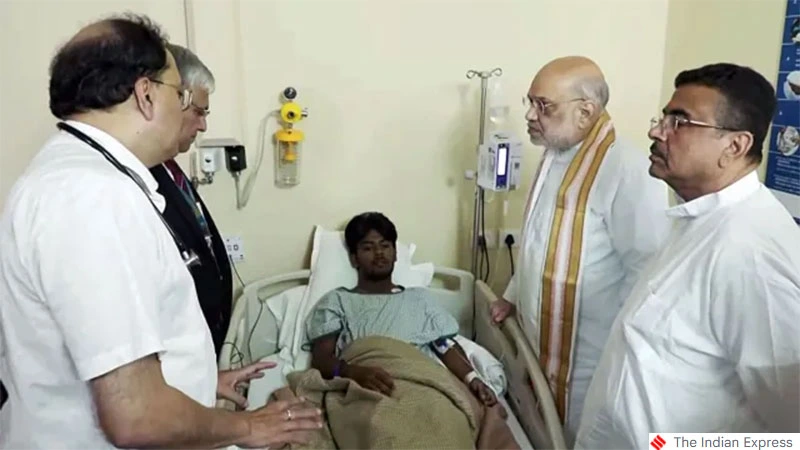
Why did some victims of the Chorbagan tragedy have to be shifted to a private hospital? Chief Minister Suvendu Adhikari reportedly explained that the decision was taken to ensure better treatment. If moving an injured person gives them a better chance of survival, there is no reason to object. In an emergency, saving lives must come first, regardless of whether treatment is provided in a government or private hospital.
But that does not settle the larger question. Why were the transfers necessary in the first place? Could the government hospitals involved not provide the treatment the victims needed? And why do ordinary people continue to worry about the quality of public healthcare, particularly when a medical emergency strikes during a major festival?
The Chorbagan stampede on 17 October 2026 reportedly claimed 19 lives and left 25 people injured. The injured were taken to hospitals, including Calcutta Medical College and Hospital and Apollo Hospital. The tragedy raised serious questions about crowd management and public safety. However, the fact that some victims were shifted to a private hospital has brought another long-standing concern into focus: the condition of public healthcare in West Bengal. (Read the report.)
The Chief Minister has acknowledged that improving government hospital infrastructure will take time. That is a fair point. Hospitals cannot be transformed overnight. But people have heard promises of better healthcare for years. They deserve to know what has gone wrong, who is responsible for the shortcomings and when they can expect meaningful improvements.
As an ordinary citizen of Bengal, I do not want to reduce this issue to a political argument between the government and junior doctors. I want an answer to a simple question: why can people still not feel confident that government hospitals will provide proper emergency care when they need it most?
Why Did Chorbagan Victims Have to Be Shifted?
The decision to transfer injured people from a government hospital to a private facility deserves a clear explanation. If the government hospital lacked essential equipment, specialist doctors, beds or other facilities, the transfers may have been medically necessary. Nobody should insist that a patient remain in a hospital that cannot provide the treatment needed to save their life. But doesn’t it expose the Bengal Healthcare Crisis?
However, the public deserves to know what made the transfers necessary. Was there a shortage of doctors? Were essential facilities unavailable? Could another government hospital have treated the victims? Were the decisions based on an assessment of each patient’s condition? Even the health minister has shown concern regarding shortage of manpower.
These are legitimate questions about emergency medical services, not merely political attacks. Reports and statements following the incident have raised concerns about the facilities available and the arrangements made for the injured. Such concerns need a proper examination.
The government should explain how public hospitals coordinate with private facilities during emergencies. If a hospital cannot provide the required treatment, there should be a clear referral system. Families must know where their relatives are being taken, why the transfer is necessary and who will bear the cost.
There is a difference between making a necessary decision in an emergency and allowing that emergency to expose weaknesses that should have been addressed earlier. Even if Suvendu Adhikari acted with the intention of securing better treatment for the victims, the administration still owes the public an explanation.
The real test is not whether the Chief Minister can arrange treatment after a crisis has occurred. It is whether the healthcare system can respond effectively without depending on last-minute intervention from the highest office.
Why Is Emergency Care a Concern During Durga Puja?
If private hospitals can arrange staff during the Puja holidays, why should government hospitals struggle to maintain effective emergency services? This question deserves serious consideration.
Durga Puja is one of Bengal’s most important festivals. Doctors, nurses and other hospital employees deserve holidays and time with their families. But hospitals cannot allow essential medical services to suffer because it is a festival. Heart attacks, strokes, road accidents and other emergencies do not wait for the holidays to end.
The answer is not to deny healthcare workers their leave. It is to plan their duties properly. Rotational shifts, emergency teams and on-call arrangements can help ensure that patients receive treatment throughout the year.
Following the Chorbagan tragedy, the state government discussed ending the extended holiday arrangement for government hospital staff from the next Puja season. That may be part of a wider staffing review, but changing the holiday schedule alone will not solve the problem. Hospitals need enough doctors, nurses, technicians, medicines and functioning equipment to provide proper care. We often hear about shortage of staff in government hospitals.
Emergency medical services must be planned in advance, not improvised after a tragedy. The government should ensure adequate staffing, publish clear duty arrangements and establish reliable procedures for transferring patients when a facility cannot handle their condition.
Even a duty roster can create a false sense of security if the services listed on paper are unavailable in practice. A doctor may be present, but what happens if essential tests cannot be performed or the necessary equipment is out of order? The real measure of a hospital is whether it can deliver timely treatment when a patient’s life is at risk.
My Own Experience of Government Healthcare During Puja
I am not raising these questions merely because of the Chorbagan incident. I have experienced the problem myself.
About ten to twelve years ago, my father fell ill on Ashtami during Durga Puja. We took him to a hospital in our area. Someone, probably the Resident Medical Officer, examined him and admitted him. We were then told that a doctor would arrive at 11 am and decide what treatment was needed.
An ECG had to be arranged by calling someone from outside. Blood tests were also conducted through an outside provider. Finally, at around 11:30 am, a doctor arrived. After examining my father, he said that the earlier assessment was incorrect and that my father could not be treated there. He advised us to take him to RG Kar Medical College or Medical College, Kolkata.
We decided to take him to a private hospital instead. Before we left, the doctor made us sign a lengthy consent form. I did not even read it properly. At that moment, I had only one concern: my father’s life had to be saved. But the doctor was very particular about his protocols!
Fortunately, he recovered and returned home after exactly four days.
This happened more than a decade ago, but I have never forgotten the experience. I live in a semi-urban town barely 25 kilometres from Kolkata. If getting proper treatment can be so difficult in a place close to the city, what must people in remote villages go through? Unfortunately, the tradition of Bengal healthcare crisis has been continuing even today.
Imagine a family facing a medical emergency in the middle of the night. Think of a place like Mekhliganj or Ratua. The nearest hospital may be far away, and transport may be difficult to arrange. Even after reaching the hospital, the family may discover that the necessary doctor or equipment is unavailable. Where can they turn then?
My experience is only one example. It does not prove that every government hospital operates in the same way. But it illustrates why people may lose confidence in public healthcare and turn to private facilities, even when doing so places a heavy burden on their finances.
A healthcare system cannot earn public trust through advertisements or announcements. We have been hearing about super facility hospitals for last 15 years. Trust comes from experience: a doctor who is available when needed, a test that can be performed without unnecessary delay and treatment that does not depend on a family’s ability to pay.
You may read: Bengal Healthcare System: The Bottom Line
Why Do People Spend Their Savings at Private Hospitals?
People do not always choose private hospitals because they can afford them or because every private hospital offers better treatment. Many turn to them because they fear that a government hospital may not provide the care they need in time.
When a family member is seriously ill, there is little time to compare costs. Relatives may borrow money, sell assets or use their savings because they believe a private hospital offers the best chance of recovery. For a middle-class family, a few days of treatment can become a financial crisis. For a poor family, the expense may simply be beyond reach.
Private hospitals have an important role in healthcare. They provide specialised services and can help when public hospitals are overcrowded or lack particular facilities. But a public healthcare system cannot be considered successful if people feel they have no choice but to seek expensive private treatment.
Consider the patients and families who travel from Bengal to Vellore and other places in southern India for medical care. Some travel for specialised treatment or on medical advice. Will it be unfair to assume that most of such journeys reflect a failure of local healthcare?
Still, the pattern deserves attention. Why do some patients feel they must look beyond Bengal for treatment? Which services are missing or inadequate closer to their homes? Could better district hospitals reduce the need for long and expensive journeys?
The issue is not whether private hospitals should exist. It is whether government hospitals can provide reliable, affordable treatment so that people are not forced to choose between their health and their financial security.
A strong public healthcare system would also help private hospitals by ensuring that routine and emergency cases can be handled appropriately across the system. The objective should not be to weaken private healthcare but to make quality treatment accessible to everyone.
Corruption, Mismanagement and the Health Department
Whenever we discuss government hospitals, corruption enters the conversation. But we must be careful. Every shortage is not proof of corruption. Poor planning, inadequate funding, staff shortages and weak administration can also lead to serious failures.
At the same time, allegations of corruption in healthcare cannot simply be brushed aside. Large sums of public money are spent on medicines, medical equipment, hospital buildings and maintenance. Procurement contracts must be transparent, and supplies must reach the hospitals for which they are intended.
Over the years, allegations have been raised about irregularities involving medicines and equipment, including claims concerning expired medicines and the diversion or misuse of supplies meant for public hospitals.
The principle is straightforward. If public money is spent on medical equipment, that equipment must reach the hospital, function properly and serve patients. If medicines are purchased, they must be safe and available when needed. If a contractor fails to deliver, the administration must act.
Healthcare corruption is particularly serious because its consequences may extend beyond financial loss. Poor procurement, neglected equipment or the misuse of public funds can weaken medical services and put patients at risk.
The government must do more than make speeches against corruption. It needs transparent procurement, independent audits, accurate stock records and action against officials or contractors when wrongdoing is established. Complaints should be investigated without political favour.
Governments often promise to clean up the administration after coming to power. The real test is whether they can identify failures, correct them and hold the responsible people accountable. If the new BJP government is serious about reform, it should welcome scrutiny rather than treat questions about its performance as an attack.
The recent inspection has made the appalling conditions of the kitchens of the Government hospitals public.
In another investigation, the blood black market has been exposed. These are not certainly examples of Good Governance.
Ayushman Bharat and Swasthya Sathi: Are We Missing the Point?
Political parties often fight over Ayushman Bharat and Swasthya Sathi as though the future of healthcare depends mainly on which scheme receives political support. Both are health coverage schemes, although their eligibility rules and funding arrangements differ.
Health coverage can help families meet treatment costs, make hospital care more accessible and reduce the financial burden on patients. But insurance alone cannot create a functioning hospital, recruit a specialist or repair a broken diagnostic machine.
Should we not ask whether public healthcare spending is being managed efficiently? Can the state develop a long-term plan to improve emergency wards, diagnostic facilities, medical equipment and staffing?
Instead of turning health schemes into political weapons, the government should focus on the treatment people actually receive. Are essential medicines available? Are doctors present when emergencies arise? Can patients get tests done without unnecessary delays? Do district hospitals have the facilities to handle serious cases?
These questions matter more than political arguments over the names of schemes. A health policy should be judged by whether it helps people obtain timely, affordable and effective treatment.
The government should also make it easier for patients to understand their entitlements and use available health coverage. Financial assistance matters, but it must be backed by hospitals capable of delivering the treatment for which that assistance is intended. I think clearly that Ayushman Bharat like health insurance scheme can never cover up the deficit of Bengal healthcare crisis.
Why Have Successive Governments Failed to Fix Healthcare?
During the Left Front government’s tenure, Health Minister Surya Kanta Mishra was a doctor by profession. The current Health Minister, Sharadwat Mukherjee, also has a medical background. Their professional qualifications are not the issue. The question is why the experience and knowledge of people in leadership have not been enough to resolve the problems facing public healthcare.
Running a health department requires more than medical knowledge. It demands administrative ability, sound financial planning and the willingness to confront entrenched interests. Hospitals must be managed properly, staff must be held accountable, and public money must be used where it is needed most.
For years, people have heard about shortages, delays and administrative problems in public healthcare. Governments change, ministers change and promises change. Still, ordinary people still worry about whether a government hospital will be able to treat them when they need it most.
The controversy surrounding RG Kar has also raised questions about responsibility and accountability within the health administration. Senior officials should be judged on their roles, decisions and records, not their political loyalties. Where credible allegations of failure exist, the government should explain what action has been taken.
One issue that deserves particular scrutiny is the continued tenure of Health Secretary Narayan Swaroop Nigam, who also held the post at the time of the RG Kar incident. Questions have been raised about the renovation work carried out at the hospital after the crime.
The Junior Doctors demanded the removal of some top bureaucrats including the State Health Secretary Narayan Swaroop (N.S.) Nigam. Mamata Banerjee accepted the removal of contemporary Police Commissioner Vineet Kumar Goyal, Deputy Commissioner (North): DC North Abhishek Gupta, The Director of Medical Education (DME) and Director of Health Services (DHS) were removed from their positions. But she thought Nigam to be inexpendable. Even the R.G. Kar victim’s mother, present BJP MLA, Ratna Debnath demanded his removal, but all in vein.
Chief Minister Suvendu Adhikari has said that the government would examine whether Nigam ordered the work and take action if responsibility is established. The issue should be resolved through an examination of official records and the relevant evidence, not through political claims alone. Reports on the proposed review of the Health Secretary’s role have kept the question of administrative accountability in public discussion.
If the government is willing to investigate the conduct of senior officials, it must also be willing to explain the findings and the action taken. Keeping an official in position during the investigation raises question.
This is where the Chief Minister’s priorities come into question. Suvendu Adhikari has been engaged in political battles, including the struggle over defections and the reshaping of political parties. Political realignments may matter to the ruling party, but they do not ensure that an emergency patient receives timely treatment.
Will he set aside the politics of defections long enough to give Bengal’s healthcare system the attention it needs? The state requires a Chief Minister who will demand results from the health department, examine failures and ensure that public hospitals work for the people. That would be a more meaningful test of leadership than the number of political opponents who change sides.
The point is not to accuse anyone without evidence. It is to insist that public officials answer legitimate questions. A government that expects people to trust its hospitals must also be willing to examine its own failures.
What Must Change in Bengal’s Public Healthcare?
The Chorbagan incident should lead to more than temporary announcements and political exchanges. It should prompt a serious review of emergency medical services across West Bengal.
First, the government should assess whether major government hospitals have enough doctors, nurses, technicians, beds and essential equipment to handle emergencies. Staffing gaps must be identified before they become a crisis, and the findings should guide decisions on recruitment and deployment.
Second, hospitals should have clear protocols for transferring patients. When a facility cannot provide the necessary treatment, doctors should be able to arrange a timely transfer to an appropriate hospital. The process should include medical documentation, ambulance coordination and clear communication with families. Where public facilities are available, the system should also consider whether another government hospital can provide the required care.
Third, the government should publish a practical plan to strengthen district hospitals and smaller public facilities. Not every hospital can provide every specialised treatment. However, each should have the capacity to stabilise emergency patients and refer them safely when more advanced care is needed.
Fourth, procurement and maintenance need greater accountability. Equipment should not remain unused because repairs are delayed, and medicines should not be unavailable because supplies have not been managed properly. Regular inspections should identify problems before they affect patient care.
Fifth, the government must improve the organisation of medical staff during festivals and other periods when demand may rise. Hospitals should have workable emergency duty arrangements, with enough trained personnel to respond to serious cases. Healthcare workers also need reasonable working conditions so that staffing plans remain sustainable.
Finally, the public should be able to judge progress through measurable results. The government should publish targets, explain how funds are being used and report whether emergency response, staffing and diagnostic services have improved. Complaints should have a clear channel, and patients should be able to find out how those complaints are addressed. It would be really better, if the health department publishes a report card every year.
These measures require money, planning and time. But the administration can begin by identifying the most urgent gaps and acting on them instead of waiting for another tragedy to expose the same weaknesses.
Key Lessons from the Chorbagan Tragedy
- Saving lives must come first: Transferring injured people to a private hospital may be justified when better treatment is available, but the medical reasons should be explained.
- The government must clarify why the Chorbagan victims had to be shifted and whether the gaps in public hospital facilities could have been addressed earlier.
- Emergency services cannot take a holiday. Proper duty arrangements, sufficient staff and functioning equipment are essential throughout the year.
- My experience with my father’s treatment during Puja illustrates why people worry about delayed care and unavailable facilities, even in areas close to Kolkata.
- People should not have to exhaust their savings simply because they have lost confidence in government healthcare.
- Corruption allegations require proper investigation. Transparent procurement and accountability are essential when public money and patients’ lives are at stake.
- Health coverage schemes have a role, but they cannot replace strong public hospitals with reliable doctors, medicines and diagnostic services.
- Successive governments must be judged by actual improvements in medical services, not by announcements or political promises.
- The government should publish a clear, funded and measurable plan to improve hospitals and report progress regularly.
- Healthcare must take priority over political games. Citizens need a system they can trust in an emergency, regardless of which party is in power.
Final Thoughts: Will Suvendu Adhikari Put Healthcare First?
The question is not simply why the Chorbagan victims had to be shifted to private hospitals. If the decision was medically necessary, the government should explain why. The bigger question is why public hospitals still struggle to provide the care that people expect from them. Why shouldn’t the government focus on Bengal healthcare crisis?
This should not become another political controversy that disappears after a few days. The government must examine the concerns raised by the junior doctors, explain the transfers and address the weaknesses that the incident has exposed. People deserve answers, not just assurances that things will improve with time.
Suvendu Adhikari has plenty of political battles to fight, including the continuing struggle over defections and control of political parties. But people do not judge a government only by how many opponents it defeats or how many legislators change sides. They judge it by whether their children can get treatment, whether an elderly parent can receive emergency care, whether essential medicines are available and whether a hospital can respond when every minute matters.
The Left Front ruled Bengal for decades. The Trinamool Congress replaced it, and the BJP now has the responsibility of governing the state. The faces in power have changed, but the public’s concerns about healthcare have not disappeared. A new government cannot blame every failure on its predecessors indefinitely. It must show what it intends to change and demonstrate that those changes are reaching patients.
I accept that improving hospital infrastructure will take time. But time cannot become an excuse for inaction. The government must set priorities, allocate funds, publish targets and hold officials accountable for results. It should investigate credible allegations fairly, strengthen emergency services and make district hospitals more dependable.
Will Suvendu Adhikari give healthcare the attention it deserves, rather than allowing political battles to dominate his government?
That is a question ordinary citizens should keep asking. The real measure of his administration will be whether people can enter a government hospital with confidence instead of fear.
A government hospital should not be the last option for someone who cannot afford private treatment. It should be a place where every citizen, rich or poor, can expect timely and competent medical care. Until that becomes a reality, the questions raised by the Chorbagan tragedy will remain unanswered.