BJP’s Ruthless Rise 2026: Is Democracy Dead?
Aug 02, 2026 - By Ashutosh Roy PoliticsNational PoliticsPolitical IdeologiesWest Bengal Politics
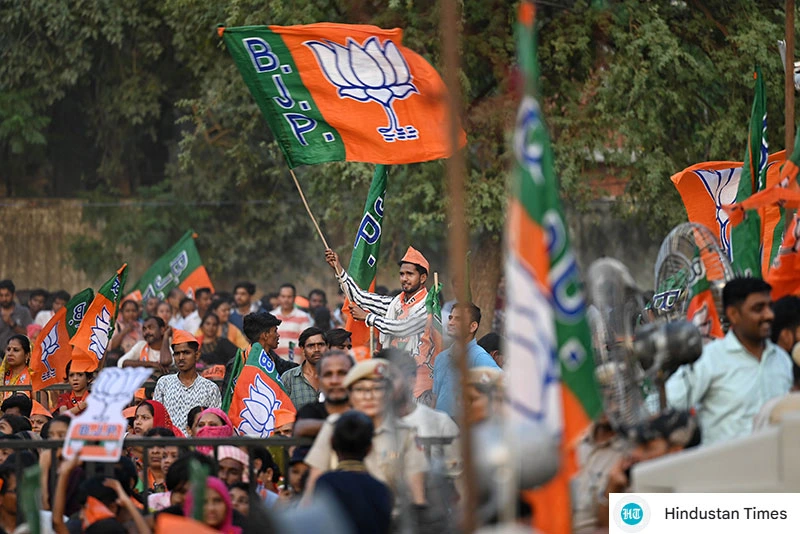
BJP’s Ruthless Rise: Democracy at Risk?
In a world driven by fierce competition, can we blame any group, individual, or political party for trying to rise to the top? No matter how unappealing it looks, the race for power is relentless. Today, the BJP’s Ruthless Rise shows a dominant strategy.
Critics argue they use every tactic, Sama, Dama, Danda, Bheda (persuasion, wealth, punishment, and division). However, one cannot ignore their stunning progress.
Is a Numerical Majority the Ultimate Truth?
Currently, the party holds power in around 20 states across India, either independently or through alliances. According to the latest 2026 elections in India data, their political footprint has completely reshaped the regional landscape.
In a democratic system, the numbers game is the ultimate decider. If numbers are the absolute truth, where does political morality stand? History often prioritizes victory over ethical dilemmas.
Does History Care About Morality?
Historical narratives frequently remember the glory of conquest far longer than the acts of betrayal or cruelty behind them.
| Historical Figure / Event | The Ethical Conflict | The Historical Outcome |
|---|---|---|
| Mir Jafar | Infamous for betraying Bengal. | His actions paved the way for 200 years of British rule in India. |
| Emperor Aurangzeb | Imprisoned his own father, Shah Jahan. | History focuses heavily on the sheer vastness of his administrative reign. |
Like a river that builds one bank while eroding the other, the foundations of almost all great empires lack ideal morality. BJP’s Ruthless Rise 2026 also proves the solvency of the key opponent National Congress party.
Is Power the Ultimate Law in Global Politics?
Look at international affairs. When Israel launched attacks on Iran alongside its ally, the United States, no global entity could stop them. American aggression is not a new phenomenon. As the world’s most affluent and powerful nation, its unpredictable foreign policy has repeatedly overwhelmed other nations.
Political analysts at Knowledge Mart observe that domestic critics who condemn the BJP’s Ruthless Rise often overlook past political history.
For instance, the Congress party used aggressive strategies in its prime. The alliance of Jawaharlal Nehru and Indira Gandhi dismissed the democratically elected E.M.S. Namboodiripad government in Kerala by imposing President’s Rule under Article 356.
For a deeper breakdown of these changing dynamics, you can review The Hindu’s state governance maps tracking the country’s shifting party control.
In short, history repeatedly proves a harsh reality: those who hold absolute authority define the rules of the game.
Key Notes on Democratic Ethics
- The Numbers Game: In modern governance, a numerical majority often silences ethical debates.
- Precedents of Aggression: Present-day political expansions echo tactical maneuvers utilized by previous ruling regimes.
- The Victory Bias: Historical records naturally focus on the final triumph rather than the methods used to achieve it.
To watch an extensive panel debate regarding how these regional victories affect the balance of power between the center and the states, check out the Times Now Newshour Debate on the 2026 Assembly Polls.
Why Does the Ruling Party Need numbers in Parliament?
The core political crisis of 2026 shifts straight to the floor of Parliament, where the ruling party faces a distinct roadblock.
They do not possess a commanding two-thirds majority in either the Lok Sabha or the Rajya Sabha. To pass crucial constitutional amendments and structural bills, the government must rapidly collect numbers.
In this strategic math, securing the backing of opposition lawmakers becomes an absolute priority. While critics view this numbers game as entirely unethical, it remains a stark reality of modern floor management.
The BJP’s Ruthless Rise moves precisely along these lines to secure its legislative goals.The strategic blueprint behind recent high-profile exits clarifies this agenda through targeted moves:
- Engineering Rajya Sabha Vacancies: Multiple Trinamool Congress (TMC) Rajya Sabha members resigned from their seats. These vacant positions allow the ruling alliance to re-elect targeted candidates on their own tickets, steadily chipping away at the deficit to secure that vital two-thirds benchmark.
- Consolidating Regional Backing: Gaining the support of Aam Aadmi Party (AAP) MPs and managing intricate alliance math with regional partners like Nitish Kumar serve the exact same purpose.
- The Dual Strategy in Bihar: While the primary goal in Bihar remains securing the Chief Minister’s seat for their own rank, the broader national goal is absolute legislative control.
At the end, the ruling machine displays a unique capacity to expand its own footprint while systematically absorbing or weakening its allies. This represents a level of aggressive consolidation that past coalitions, like the Congress, rarely executed on the ground.
BJP’s Ruthless Rise After 2024 (Lok Sabha & Rajya Sabha)
| Year | MP Name | House | Previous Party | State | Notes / Significance |
|---|---|---|---|---|---|
| 2026 | Raghav Chadha | Rajya Sabha | AAP | Punjab | Led major split; part of 7 MPs merging with BJP |
| 2026 | Sandeep Pathak | Uttar Pradesh | Key AAP strategist; joined BJP bloc | ||
| 2026 | Ashok Mittal | Punjab | Industrialist-politician; part of merger group | ||
| 2026 | Harbhajan Singh | Punjab | High-profile figure; joined BJP via group merger | ||
| 2026 | Swati Maliwal | Delhi | Prominent public figure; part of 2/3rd split | ||
| 2026 | Vikramjit Singh Sahney | Punjab | Business leader; joined BJP camp | ||
| 2026 | Rajinder Gupta | Punjab | Part of bloc merger increasing BJP tally | ||
| 2026 | Sukhendu Sekhar Roy | TMC | West Bengal | Re-elected as BJP MP after switching sides | |
| 2026 | Sushmita Dev | Assam / WB | Former Congress-TMC leader; joined BJP | ||
| 2026 | Prakash Chik Baraik | West Bengal | Shifted allegiance; elected as BJP candidate | ||
| 2024- 2026 | Various Lok Sabha MPs* | Lok Sabha | Regional parties | Multiple | Limited direct joining; mostly alliance support or indirect backing |
*Note: Large-scale direct Lok Sabha MP defections to BJP after 2024 are limited due to anti-defection laws; most shifts occurred in Rajya Sabha or through alliances.
Keynote: How BJP Increased MP Strength After 2024
- Major Rajya Sabha Boost: 7 AAP MPs merged with BJP, significantly increasing its Upper House tally.
- High-Profile Defections: Leaders from TMC also switched sides and were re-elected as BJP MPs.
- Bloc Mergers Strategy: Instead of individual defections, BJP benefited from group-level splits (2/3rd rule).
- Lok Sabha Reality: Direct MP switching was limited due to anti-defection law; BJP relied more on alliances.
- Legislative Advantage: Strength in Rajya Sabha improved BJP’s ability to pass key bills.
Keynotes on BJP’s Ruthless Rise
After 2024, BJP didn’t dramatically increase Lok Sabha seats, but it significantly strengthened its parliamentary power through Rajya Sabha gains, alliances, and political realignments.
Is the Opposition Free From Ethical Blame?
While analysts at Knowledge Mart heavily scrutinize the ruling party’s methods, a vital question arises: are regional opposition parties any different when they hold absolute power?
History shows that almost every major political entity has used identical tactics when positioned as a recipient of power.
| Political Event / Region | The Tactical Action Taken | The Governance Outcome |
|---|---|---|
| Sagardighi Constituency By-Poll | Inducted the sole Congress MLA, Bayron Biswas, shortly after his victory. | Completely wiped out the active opposition presence in the state assembly. |
| Jhalda Municipality Dispute | Utilized local administrative and police machinery during local body formation. | Secured direct control over the contested civic board. |
| Malda, Murshidabad & Nadia Expansion | Executed aggressive, systematic political ground campaigns to dismantle opposition bases. | Established complete political dominance over traditional regional strongholds. |
This reality underscores an old political proverb: whoever gains absolute authority ends up adopting the exact same ruthless methods to protect it.
Was BJP’s Ruthless Rise More Unethical Than Trinamool Congress?
| Year | Leader Name | Previous Party | Region/State | Significance |
|---|---|---|---|---|
| 2011- 2014 | Mukul Roy | Originally TMC > later rejoined | West Bengal | Key strategist; played major role in early expansion phase |
| 2014- 2016 | Manas Bhunia | Congress | West Bengal | Strengthened TMC in Congress strongholds |
| 2016- 2019 | Arjun Singh | CPI(M) > TMC > BJP > TMC | West Bengal | Influential leader in Barrackpore belt |
| 2019- 2021 | Dinesh Trivedi | Congress > TMC > BJP (exit) | West Bengal | Senior leader; later exit reflected internal churn |
| 2020- 2021 | Rajib Banerjee | TMC > BJP > TMC | West Bengal | Returned after 2021 elections; symbol of political reversals |
| 2021 | Babul Supriyo | BJP | West Bengal | High-profile defection; boosted TMC’s urban appeal |
| 2021- 2022 | Sushmita Dev | Congress | Assam | Marked TMC’s expansion beyond Bengal |
| 2022 | Kirti Azad | BJP > Congress | Delhi/Bihar | National face; strengthened TMC’s national ambitions |
| 2022- 2023 | Ashok Tanwar | Congress | Haryana | Attempt to expand footprint in North India |
| 2023- 2024 | Various Regional Leaders | Congress / BJP / Left | Goa, Tripura, Meghalaya | Part of TMC’s aggressive regional expansion strategy |
| 2024- 2026 | Local MLAs & Councillors | BJP / Congress / Left | West Bengal | Grassroots-level consolidation amid shifting political landscape |
Keynote: TMC’s Expansion Through Political Defections
- Congress Base Absorption: TMC significantly weakened Congress in Bengal by absorbing senior leaders.
- Strategic High-Profile Joins: Leaders like Babul Supriyo and Kirti Azad gave national visibility.
- Revolving Door Politics: Several leaders switched between BJP and TMC, reflecting fluid political loyalty.
- Beyond Bengal Push: TMC attempted expansion into Northeast and North India via defections.
- Grassroots Strengthening: Post-2024 period saw more local-level leaders joining to consolidate power.
Why Should Voters Question Democratic Morality?
The deepest ethical crisis does not lie with the parties, but with the elected representatives themselves. When members of parliament and legislative assemblies switch sides without hesitation, they owe a fundamental explanation to the voters who elected them.
This trend serves as a critical warning sign for the general public, who use their valuable votes to elect representatives who lack core political principles.
- The Principled Defection Model: True political weight is visible when a leader resigns from their post entirely, joins a new platform, and seeks a fresh mandate from the public. This clear approach validates real grassroots popularity.
- The Modern Defection Reality: The current political trend shows a completely different picture. Representatives often refuse to vacate their elected seats, yet openly align with rival factions to enjoy administrative privileges.
- Shifting the Target of Criticism: Instead of focusing criticism solely on the expanding ruling machine, public scrutiny must target these opportunistic representatives who undermine the sanctity of the democratic vote.
To analyze how these rapid floor-crossings and parliamentary numbers games alter national legislation, you can watch the in-depth analytical report on the Rajya Sabha Resignations and Parliamentary Splits, which highlights the structural impact of these shifting loyalties.
Finally, BJP’s Ruthless Rise may raise acrimonious debates among political analysts, but the true victims are only the voters of those respective constituencies only.
Why Fracturing the Opposition is Critical Despite a Solid Majority
The political ground reality in West Bengal has raised a major question for political analysts. The ruling party secured a dominant absolute majority in the state assembly.
With such comfortable numbers, why would the central leadership still actively back or accommodate an internal split within the opposition, such as the emergence of the rebel faction? The answer lies in long-term strategic control rather than immediate assembly survival.
The BJP’s Ruthless Rise operates on a national blueprint where maximizing numbers and establishing absolute control over legislative institutions take priority over state-level comfort.
Political strategists at Knowledge Mart emphasize three primary factors driving this ongoing consolidation:
- Total Legislative Control: Securing a simple majority to run a state government is one thing, but completely fracturing an opposition party’s legislative spine prevents any future unified resistance.
- The Rajya Sabha Numbers Game: Chipping away at an opposition party’s assembly strength directly impacts future Rajya Sabha vacancies, where every single vote is critical for passing major national bills.
- Pre-empting Regional Resurgence: By encouraging prominent figures to break away, the central leadership ensures that the main opposition party remains locked in internal crises rather than mounting an effective ground challenge.
The Controversy of Selective Clean Chits and Political Compromise
This aggressive style of politics often invites heavy criticism regarding ideological compromises and the use of central investigating agencies.
Observers point out a clear paradox: while extensive asset lists and corruption allegations are publicly leveled against rival leaders, those very investigations frequently slow down or disappear from public view once political realignments occur.
This phenomenon feeds directly into the public’s perception of a political “washing machine“, where entering the ruling system grants functional immunity from past scrutiny.
| Leader / Context | Public Allegations & Controversy | The Current Status / Outcome |
|---|---|---|
| Rebel Faction Leadership | Faces historical allegations regarding personal conduct and criminal charges. | Recognized as a powerful distinct legislative bloc, reshaping the assembly dynamic. |
| Targeted Opposition Ministers | Publicly accused of massive financial anomalies and unvouched assets. | Investigations face prolonged delays or public silence, showing a tactical shift. |
| Spotless Ideologues | Clean, unblemished political figures joining the rebel movement. | Used to provide moral legitimacy to a deeply controversial political shift. |
Even when senior state leaders publicly proclaim that the doors are firmly shut against corrupt elements from rival outfits, backdoor negotiations and tactical cross-overs continue to occur, revealing a stark contrast between official party rhetoric and ground reality.
As a result, BJP’s Ruthless Rise also encompasses a vital question about the ethical application of law and order irrespective of party colors.
Industrial Growth vs. Political Expansion: The Dilemma Before Leadership
This relentless focus on political engineering creates a significant operational challenge for frontline state leaders. On one hand, there is a strong public push to establish an era of robust industrialization, job creation, and the strict rule of law in West Bengal.
On the other hand, managing constant defections and stabilizing a highly fluid political ecosystem consumes immense administrative energy.
State leadership faces a critical choice between two conflicting priorities:
- Prioritizing Government and Development: Delivering on the promise of a revolutionary transformation in Bengal’s economy, curbing deep-rooted corruption, and reviving its rich cultural and industrial heritage.
- Prioritizing Party and Expansion: Continuing to fuel the political “washing machine” theory by inducting compromised elements simply to expand the party’s organizational footprint.
For a detailed breakdown of the recent structural changes in the state assembly following these splits, you can review the official updates on the West Bengal Legislative Assembly composition, which tracks the exact shifting strengths of every single legislative bloc.
Ethics vs. Numbers: What Matters More in Modern Governance?
When analyzing the structural shifts in Indian politics, a core question emerges: Does a healthy democracy require deep moral grounding, or is it purely a numbers game? To understand the landscape after the landmark 2026 elections, we must weigh the sharp arguments coming from both sides of the political spectrum.
The BJP’s Ruthless Rise is a mirror image of the exact tactical playbook used by the Trinamool Congress during their peak years in power.
Why Do Critics See an Existential Threat to Democratic Ethics?
Political analysts at Knowledge Mart note that a growing number of constitutional experts are alarmed by the mechanical nature of modern political expansions.
The core argument is simple: a stable democracy cannot survive merely on raw electoral statistics. When a single party executes an aggressive, unyielding strategy to centralize authority, the foundational principles of cooperative federalism face a severe crisis.
- The Tyranny of the Majority: When achieving a numerical advantage becomes a party’s sole focus, the traditional spirit of bipartisan consensus is completely abandoned. Critical national legislation passes through Parliament without detailed debate, effectively silencing regional and minority opposition voices.
- The Weakening of Institutional Balance: An aggressive push for political dominance places immense structural pressure on independent watchdogs, including the judiciary, investigative agencies, and the Election Commission, potentially compromising their neutral role.
- The Special Intensive Revision (SIR) Controversy: During high-stakes regional face-offs, most notably the 2026 elections in West Bengal, even foundational administrative processes face heavy scrutiny. Critics point out that under the Election Commission’s Special Intensive Revision (SIR) framework, nearly 27 lakh voters were marked ineligible. The fact that massive voter roll deletions occurred right before the polls, especially in fiercely contested border districts, raises serious questions regarding the absolute fairness of the final mandate.
Does a Massive Majority Represent the Purest Form of Public Consent?
Conversely, supporters of this structural shift argue that securing an absolute legislative majority is the most authentic expression of public will. From this perspective, the steady consolidation of power is not a threat to the system, but rather its ultimate democratic validation.
| Pro-Consolidation Argument | Operational Reality / Impact | Democratic Benefit |
|---|---|---|
| The Power of the Mandate | Reflects direct, widespread public endorsement across major demographics. | Validates massive landslide victories, like the historic 207-seat win in Bengal. |
| Decisive Policy Implementation | Eliminates the instability and backroom compromises of weak coalitions. | Provides a clean, stable runway for major economic and industrial reforms. |
| Grassroots Structural Expansion | Replaces old political networks with active, year-round local organizational machinery. | Offers a highly competitive alternative centered on welfare delivery. |
Supporters emphasize that historic numbers are not achieved overnight through simple political engineering.
Instead, they represent years of rigorous ground-level mobilization, systematic booth-management strategies, and a clear developmental alternative that resonates deeply with the electorate.
The Ultimate Conflict: Is Democracy a Process or a Framework?
This ongoing national debate exposes a fundamental disagreement about the true nature of governance.
- Is democracy merely a procedural checklist designed to count who wins the maximum number of assembly seats?
- Or is it an ethical, pluralistic framework explicitly built to protect institutional checks, balances, and dissenting opinions?
This critical question lies at the heart of our headline. Looking closely at current ground realities, readers must face an uncomfortable paradox: does the relentless pursuit of absolute legislative power ultimately dismantle the very democratic machinery that made that rise possible?
To follow the ongoing legal and civil discussions surrounding voter roll purges and tribal appeals, read the latest updates on the Supreme Court’s review of the SIR data case, which details how these administrative changes impact citizens’ rights beyond election day.
Knowledge Mart Final Thoughts: The Price of Absolute Power
The political trajectory of 2026 marks a defining chapter in Indian political history. The ongoing debate surrounding the BJP’s Ruthless Rise forces us to look beyond immediate electoral scorecards and confront the structural evolution of our democracy.
While the mechanics of floor management, strategic alliance engineering, and numbers games are as old as the republic itself, the scale and precision of modern political consolidation are completely unprecedented.
At Knowledge Mart, our analysis suggests that modern governance has reached a critical crossroads where two distinct interpretations of democracy are locked in a permanent struggle:
- The Procedural Reality: A perspective where a numerical majority acts as absolute democratic validation. In this view, winning a massive mandate, whether across 22 state legislative assemblies and union territories or via a historic absolute majority in state assemblies, grants a party the legitimate authority to execute its policies cleanly, without the paralyzing compromises of old-school coalition politics.
- The Constitutional Ideal: A framework that views democracy as a delicate ecosystem built on institutional checks, vibrant debate, and deep respect for dissenting regional voices. From this viewpoint, when numerical dominance systematically silences legislative debate or weakens regulatory oversight, the foundational spirit of cooperative federalism is compromised.
In brief, the true test of this relentless political expansion will not be found in the number of seats captured or the opposition factions dismantled.
The real measure lies in what follows the victory. For frontline leaders driving this expansion, the ultimate challenge is balancing political control with actual governance.
The public will eventually demand to see if this immense legislative power is channeled into a revolutionary transformation of economic growth, industrial revival, and the strict rule of law, or if it simply feeds an endless cycle of political engineering.
Power, as history repeatedly reminds us, is merely a tool.
Whether the current political realignments strengthen the nation’s fabric or fundamentally weaken its democratic guardrails depends entirely on whether leadership prioritizes short-term party dominance or long-term institutional integrity.
10 Key Takeaways: What You Need to Know
- The 2026 Numbers Game: In modern political warfare, securing a numerical majority frequently overrides traditional ethical debates on the assembly floor. So, BJP’s Ruthless Rise 2026 should not erupt any political row.
- The Search for a Two-Thirds Benchmark: The ruling party’s aggressive legislative maneuvering aims directly at passing major constitutional amendments in both houses of Parliament.
- The Parliamentary Strategy: High-profile resignations and rapid floor-crossings by regional lawmakers serve as a calculated tactic to bridge the deficit in the Rajya Sabha.
- The “Washing Machine” Phenomenon: Public skepticism grows as high-stakes financial and asset investigations frequently stall after prominent opposition leaders switch political camps.
- Opposition Operational Inconsistency: Regional parties frequently use identical aggressive tactics to dismantle rivals whenever they hold absolute authority at the state level.
- The SIR Voter Deletion Conflict: The removal of nearly 27 lakh voters under the Special Intensive Revision (SIR) framework continues to fuel intense debates regarding absolute electoral fairness.
- A Historic Mandate in Bengal: Securing an unprecedented absolute majority completely reshaped the regional legislative balance and shattered traditional party bastions.
- The Voter Accountability Crisis: Relentless political engineering shifts the focus of criticism toward opportunistic representatives who abandon their original public mandate.
- Development vs. Political Engineering: Frontline leaders face a critical choice between driving industrial growth and consuming administrative energy on party expansion though BJP’s Ruthless Rise is quiet visible.
- The Ultimate Democratic Paradox: The current political landscape forces a choice between viewing democracy as a procedural seat count or as a pluralistic framework of institutional checks.
[…]BJP’s Ruthless Rise 2026: Is Democracy Dead? Explore the impact of the BJP’s ruthless rise 2026 on Indian democracy. Is an absolute majority destroying political ethics, or is it just smart governance?[…]
[…]BJP’s Ruthless Rise 2026: Is Democracy Dead? Explore the impact of the BJP’s ruthless rise 2026 on Indian democracy. Is an absolute majority destroying political ethics, or is it just smart governance?[…]
[…]BJP’s Ruthless Rise 2026: Is Democracy Dead? Explore the impact of the BJP’s ruthless rise 2026 on Indian democracy. Is an absolute majority destroying political ethics, or is it just smart governance?[…]
[…]BJP’s Ruthless Rise 2026: Is Democracy Dead? Explore the impact of the BJP’s ruthless rise 2026 on Indian democracy. Is an absolute majority destroying political ethics, or is it just smart governance?[…]