Yusuf Pathan Land Allotment: BJP's Big Gift?
Oct 27, 2026 - By Ashutosh Roy PoliticsElection AnalysisNational NewsNational PoliticsRegional UpdatesWest Bengal Politics
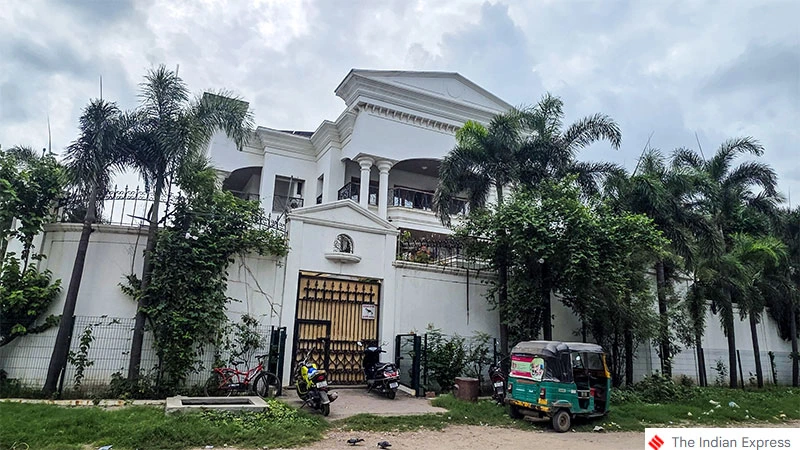
Yusuf Pathan Land Allotment: A Shocking Deal?
The Yusuf Pathan land allotment controversy raises a simple question: when public land is involved, should political connections and sporting fame matter more than a transparent, uniform policy?
The Gujarat government’s decision to allot a disputed plot in Vadodara to the former India cricketer has triggered questions about public property, preferential treatment and political timing.
On 23 October 2026, the BJP-controlled Standing Committee of the Vadodara Municipal Corporation (VMC) approved a proposal to allot Pathan a 978-square-metre plot beside his family’s bungalow.
Under the proposal, 500 square metres would be given to him as a gift, while the remaining 478 square metres would be transferred at 55 per cent of the assessed valuation. The plot’s estimated market value is around ₹20.5 crore.
There is an important qualification: the proposal still requires ratification by the VMC General Board. So, as of 26 October, the process is not complete. I will update this article if the General Board takes a decision.
The facts behind the case are serious enough. The political timing makes the story even more interesting.
From TMC Candidate to a Political Rebel
In the 2024 Lok Sabha election, Yusuf Pathan was fielded by the Trinamool Congress (TMC) in Baharampur, a constituency in West Bengal far from his home state of Gujarat. He was a celebrity candidate entering a contest against Congress veteran Adhir Ranjan Chowdhury, who had represented the seat five times. Pathan won in a three-cornered contest.
His campaign relied on his celebrity appeal as well as the TMC’s political machinery.
His visits to local religious and community settings also formed part of the campaign. Critics questioned whether a candidate parachuted into a constituency could understand its people and problems as well as a long-standing local representative. The result, however, gave Pathan a seat in Parliament.
Then came the West Bengal Assembly election of 2026. The BJP defeated the TMC and formed the government. In June, Pathan joined a group of rebel TMC MPs who broke away from Mamata Banerjee’s party and moved to the Nationalist Citizens Party of India (NCPI). The group subsequently aligned itself with the BJP-led NDA in Parliament. Read “TMC Rebel MPs NCPI Trap 2026: What’s Next?” for further details.
Now consider the sequence. The Gujarat government approved the land proposal in August, about two months after Pathan’s break with the TMC. The VMC Standing Committee cleared it in October. The proposal concerns land that Pathan had sought years earlier and over which the civic body had issued an encroachment notice in 2024.
Does this timing prove a political deal? No. Timing alone cannot establish a quid pro quo, and no publicly established evidence proves that the land decision was a reward for Pathan’s political move. But when a valuable public asset is being allotted on exceptional terms shortly after a politician changes political camp, questions are inevitable. Governments cannot expect citizens to stop noticing the calendar.
A Plot With a Long and Complicated History
This dispute did not begin in 2026. In 2012, Pathan sought a 99-year lease of the adjoining municipal plot, citing security concerns arising from his public profile as an international cricketer. The proposal was approved by the VMC’s Standing Committee and General Board at the time, but the Gujarat government rejected it in June 2014, citing the need for public auction or open bidding.
The civic body later alleged that Pathan had fenced and occupied the land despite the rejection. In June 2024, shortly after he won the Baharampur Lok Sabha seat, the VMC issued him a notice asking him to remove the alleged encroachment.
Pathan challenged the decision in court. In August 2025, the Gujarat High Court upheld the rejection of the proposed allotment. He subsequently appealed, but withdrew that appeal on 31 August 2026, after the state government’s approval had reached the VMC.
The legal history matters because this is not simply a story about an award-winning cricketer receiving recognition. It is a dispute over public land that was earlier refused, later became the subject of an encroachment notice, and is now being considered for allotment under a special government decision.
The Indian Express report on the government’s proposal traces the sequence. Its earlier report on the withdrawn appeal provides more detail about the legal dispute.
Public Land Is Not a Personal Gift Basket
The government has cited its discretionary powers and the policy concerning international sportspersons. But the legal basis has itself become a matter of debate. The Indian Express’s legal explainer on the allotment notes that the relevant land-disposal regulations do not expressly provide for gifting municipal land to an individual sportsperson in this manner.
The government has also stipulated that this exceptional decision must not be treated as a precedent. That is an interesting condition. If the decision is fair, lawful and based on a consistent principle, why is the government so anxious to say that others should not expect similar treatment?
Of course, no two land cases are necessarily identical. The government may argue that Pathan’s sporting achievements and circumstances justify special consideration. But public land belongs to the public, not to the government of the day. A decision involving an asset worth around ₹20.5 crore deserves a convincing explanation—not merely a statement that the case is exceptional.
There is another detail worth watching. Reports say the arrangement provides for the state Revenue Department to allot the VMC land equivalent in value to the portion transferred. The public should be able to examine how that compensation will work, what valuation will be used, and whether the municipal corporation will be financially protected. A promise of replacement land should be transparent and verifiable, not just reassuring language in a resolution.
But nothing keep the Horse-trading in politics obscured any further.
Why Only Yusuf Pathan?
Vadodara has produced many cricketers. Hardik Pandya is one prominent example. The city has also been associated with players such as Kiran More, Nayan Mongia, Atul Bedade and Anshuman Gaekwad. Pathan’s achievements are not in dispute, but he is not the only cricketer to have brought recognition to the city.
So the obvious question is: will other cricketers receive similar benefits? Will Hardik Pandya, or other players who have represented India, be able to seek a plot on comparable terms? What about women cricketers? A separate proposal has reportedly been raised for land to help India spinner Radha Yadav establish a cricket academy. That proposal is different in purpose from a residential plot, but it sharpens the wider question of how public land should be allocated to people associated with sport.
The government says the Pathan decision cannot be cited as a precedent. In other words, one cricketer may receive exceptional treatment, but others should not assume that they can ask for the same thing. That is a convenient position for the government. It is less convincing as a principle of equal treatment.
Pathan was part of India’s 2007 T20 World Cup-winning team and the 2011 ODI World Cup-winning team. Those achievements deserve recognition. But why has this recognition taken the form of a valuable residential land allotment in 2026? And why should public recognition be converted into a land benefit without a clear, publicly applicable policy?
Better late than never, one might say. But did all members of those World Cup-winning teams receive comparable gifts? If not, what distinguishes Pathan’s case? A government should be able to answer that without treating every question as an insult to a sporting hero.
Political Quid Pro Quo? The Rumour and the Reality
In politics, people rarely look at an event in isolation. They look at what happened before it, what followed it, and who benefited. Pathan’s departure from the TMC and his alignment with a new political formation linked to the NDA have inevitably invited speculation about whether political considerations played a role in the land decision.
Here, we should separate suspicion from proof. There is no established evidence that the land allotment was offered in exchange for Pathan’s political shift. The sequence of events raises a question; it does not, by itself, prove a secret bargain. Anyone claiming to know that a deal was struck should produce evidence.
Still, the political irony is hard to miss. Pathan entered Parliament on a TMC ticket, defeated Adhir Chowdhury, and later broke away from Mamata Banerjee after the TMC lost power in Bengal. His new political alignment brought him closer to the BJP-led NDA. Around the same period, a long-pending land claim in Gujarat received a fresh lease of life.
Pathan is from Gujarat, the home state of Narendra Modi and Amit Shah. He had reportedly sought this land for years. Perhaps the government simply decided that his sporting record justified a special concession. Perhaps the timing is no more than coincidence. Or perhaps political observers will continue to suspect that political value has its own price.
There is a Bengali saying: “যে দেবতা যে ফুলে তুষ্ট”—to please a particular deity, offer the flower that deity likes. In politics, the flower may not always be a literal flower. It may be loyalty, numbers in Parliament, or a timely change of camp. That is satire, not proof of a deal. The government can put the suspicion to rest more effectively by explaining the decision in full.
Explore Shameless TMC-NCPI Deal Exposed!
BJP’s Political Memory Is Selective
The BJP has often presented itself as a party that stands apart from the old style of political accommodation. Yet Indian politics has repeatedly shown that yesterday’s opponent can become today’s ally. Ajit Pawar in Maharashtra and Himanta Biswa Sarma in Assam are familiar examples of politicians who moved from opposition politics into the BJP-led political camp.
There is no permanent enemy in politics; there is only a changing calculation of advantage. Parties that denounce rivals one day may welcome them the next, provided the numbers and circumstances make it worthwhile.
That is why the Yusuf Pathan land allotment invites political commentary. The BJP defeated the TMC in West Bengal, but the post-election story did not end with the change of government. The TMC suffered a major electoral defeat, and a group of its MPs broke away. Pathan became part of that larger political story.
Some people have long alleged that the BJP and TMC had a political “setting” behind the scenes. Such allegations should not be presented as established fact without evidence. But when political alignments change and a valuable public asset is offered on exceptional terms, those old suspicions are likely to resurface. Governments should understand that public confidence depends not only on what they do, but also on whether they can explain why they did it.
What the Public Should Demand
The debate should not become a contest between people who like Pathan and people who dislike him. Nor should his achievements as a cricketer be used to shut down questions about public property. The real issues are transparency, equal treatment and accountability.
- Publish the full basis of the decision: Explain the legal provisions and policy criteria used to justify the allotment, including the proposed gift of 500 square metres.
- Clarify the financial implications: Make the valuation, the concessional price for the remaining land, and the replacement-land arrangement available for public scrutiny.
- Explain the exceptional treatment: State what criteria Pathan met and whether other international sportspersons can apply under the same policy.
- Address the alleged encroachment: Clarify how the earlier dispute and any liability for occupation of the plot will be handled. The allegations should be dealt with through due process, not ignored or presumed proven.
- Complete the civic process transparently: The Standing Committee has approved the proposal, but General Board ratification remains pending. The next decision should be recorded and explained openly.
These are not unreasonable demands. They are the minimum expected when a public body is deciding what to do with land that may be worth more than ₹20 crore.
Final Thoughts: Picture Abhi Baaki Hai
Critics are there to criticise. Rulers do not have to answer every taunt, every slogan or every political allegation. But they do have to answer reasonable questions about public assets. Calling a decision exceptional does not make questions about it disappear.
Yusuf Pathan may have earned admiration through his cricket. He may also have had legitimate reasons for seeking the plot beside his family home. Neither point settles the question of whether the proposed allotment is fair, legally sound and consistent with the public interest.
Nor does the timing prove that he received a political reward. But the government should recognise why people are asking. A plot once refused, later caught up in an alleged encroachment dispute, and now proposed for allotment shortly after a political realignment is bound to attract attention. The answer is transparency—not outrage at the people who ask questions.
The BJP has not only defeated the TMC in Bengal; the TMC’s post-election split has added another twist to the political drama. Whether this land controversy is merely an administrative decision or becomes a lasting political embarrassment will depend on what happens next—and on how convincingly the government explains itself.
For now, the proposal awaits the General Board’s decision. The political story is still unfolding. As they say in the movies, “Picture abhi baaki hai”.