UP Polls 2027: Congress's Bold 181-Seat Bid
Nov 16, 2026 - By Ashutosh Roy PoliticsCurrent AffairsElection AnalysisNational NewsNational Politics
Congress’s 181-Seat Demand in UP Polls 2027: A Reality Check
Congress seems to have discovered a rather interesting formula for political revival in Uttar Pradesh: win two Assembly seats in one election and demand 181 in the next! The grand old party, which has been struggling to regain its lost political ground in India’s most politically important state, apparently believes that its ambitions should be considerably larger than its electoral achievements.
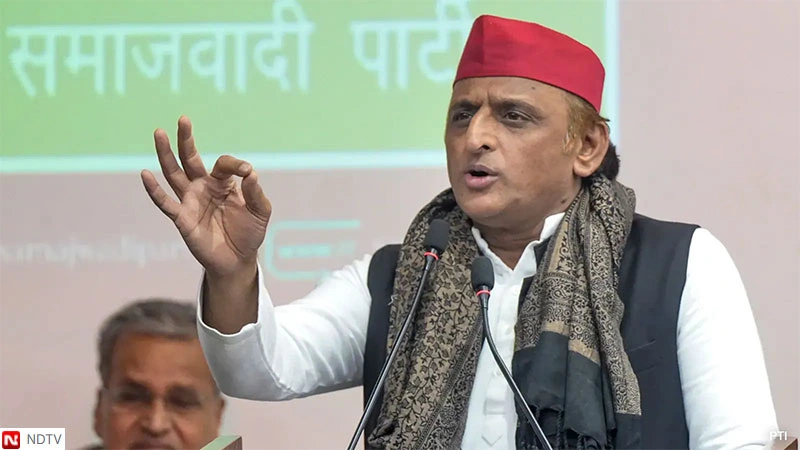
At the Hindustan Times Leadership Summit on November 14, 2026, Samajwadi Party president Akhilesh Yadav revealed that Congress had sought 181 seats out of the 403 constituencies in the upcoming UP Polls 2027. When asked whether Congress had demanded 180 seats, Akhilesh replied, “Add one to 180”.
That one additional seat may sound amusing, but the political arithmetic behind the demand is anything but funny. Congress wants to contest nearly 45 per cent of the constituencies in Uttar Pradesh, despite having won just two Assembly seats in 2022.
Perhaps Congress has mistaken its national political importance for its electoral strength in Uttar Pradesh. There is a difference between being the principal opposition party at the national level and being a major electoral force in every state. The grand old party appears increasingly reluctant to recognise that distinction.
Congress has every right to seek a respectable share in an alliance. But when the demand is 181 seats, the obvious question is unavoidable: what exactly is the party bringing to the table?
Congress’s Electoral Decline: From 28 Seats to Just 2
Before making such a grand demand, Congress should take a look at its own electoral report card in Uttar Pradesh. The figures from the last three Assembly elections expose the gap between its political ambitions and its actual strength.
- 2012 Assembly Elections: Congress won 28 seats with approximately 11.65 per cent of the total votes.
- 2017 Assembly Elections: Congress contested 114 seats in alliance with the Samajwadi Party but managed to win only seven, securing approximately 6.25 per cent of the votes.
- 2022 Assembly Elections: Congress contested 399 seats but won only two, with a humiliating vote share of approximately 2.33 per cent.
There is no complicated political mathematics here. The party’s seat tally fell from 28 to seven and then to two. Its vote share also declined consistently, from 11.65 per cent in 2012 to 6.25 per cent in 2017 and just 2.33 per cent in 2022.
In 2017, Congress had already entered an alliance with the Samajwadi Party. The much-publicised partnership, promoted through the slogan “UP Ko Yeh Saath Pasand Hai”, failed to deliver the expected result. Congress could not even win more than seven constituencies despite the alliance and joint campaigning.
In 2022, the party contested almost the entire state independently and suffered an even worse defeat.
Now comes the extraordinary part. The party that could not win more than two seats in 2022 reportedly wants 181 seats in 2027. Has its organisational structure suddenly transformed? Has it rebuilt its grassroots network across the state? Has it produced a new generation of influential leaders capable of challenging the BJP?
If the answer to these questions is not convincingly positive, the demand looks less like a reflection of electoral strength and more like an exercise in political wishful thinking.
The Election Commission of India’s statistical reports provide the official election data. The Indian Express analysis of Congress’s electoral trajectory in Uttar Pradesh also highlights the party’s declining vote share and shrinking Assembly presence.
Akhilesh Yadav: The Political Crutch Congress Needs in UP
There is another uncomfortable reality that Congress needs to acknowledge. In Uttar Pradesh, its electoral survival increasingly depends on the Samajwadi Party and its leader Akhilesh Yadav.
The 2024 Lok Sabha elections demonstrated this rather clearly. The Samajwadi Party won 37 of Uttar Pradesh’s 80 Lok Sabha seats, while Congress secured six. Together, the two parties delivered a significant setback to the BJP in the state.
But whose political machinery was primarily responsible for this turnaround? Whose organisation had the stronger grassroots presence? Whose social coalition and political strategy formed the backbone of the opposition’s performance?
It was largely Akhilesh Yadav and the Samajwadi Party.
Akhilesh’s PDA strategy, focusing on Pichhda, Dalit and Alpsankhyak communities, helped the SP consolidate support among sections of voters who had previously moved towards the BJP. Congress benefited from this wider alliance, but its six-seat victory cannot be presented as proof that it has independently regained its lost political ground in Uttar Pradesh.
Congress contested only 17 Lok Sabha constituencies in the state in 2024 and won six. Its performance was certainly an improvement, but the Samajwadi Party’s 37 seats made it the dominant partner in the alliance.
It is therefore difficult to understand the logic behind Congress demanding 181 Assembly seats. If Akhilesh’s political influence, organisational strength and electoral strategy are so important to the opposition’s prospects, why should he surrender nearly half the constituencies to a party with such a weak Assembly record?
Congress may argue that it needs more seats to rebuild itself. Fair enough. But an Assembly election is not a rehabilitation package for a declining political organisation. Every constituency matters, and every ticket should go to a candidate with a genuine chance of winning.
Akhilesh Yadav is not running a political charity organisation. He has his own party, his own electoral calculations and his own political future to protect.
Congress should remember that an alliance is a partnership, not an arrangement in which one party supplies the strength and the other claims the credit.
Congress’s Big-Brother Attitude Is Hurting INDIA Alliance
The problem is not confined to Uttar Pradesh. Congress’s attitude towards regional allies has repeatedly exposed the contradictions in its approach to opposition unity.
The INDIA alliance was formed with a common objective: to challenge the BJP’s political dominance. It brought together parties with different ideologies, regional interests and political histories. The arrangement was never going to be easy, but it required one basic understanding: Congress could not expect to dictate terms everywhere merely because it was the largest national opposition party.
Unfortunately, the party has often appeared unwilling to abandon its traditional big-brother mentality.
Consider West Bengal. Trinamool Congress has a far stronger electoral presence than Congress. But Congress has frequently struggled to arrive at a workable political understanding with Mamata Banerjee. In Uttar Pradesh, the situation is almost the reverse: Congress needs Akhilesh Yadav’s political strength, but its reported demand suggests that it still wants a disproportionately large share of the electoral space.
Regional parties have built their organisations through years of political struggle. They have their own leaders, voter bases and political identities. They cannot be expected to surrender their influence simply to satisfy Congress’s national ambitions.
There is a fundamental difference between leading an alliance and trying to dominate it. A genuine leader makes compromises, respects the strengths of partners and understands the political realities of individual states.
Congress cannot demand that regional parties stand behind Rahul Gandhi while simultaneously expecting those parties to accommodate its seat-sharing demands without question.
That is not coalition politics. That is political entitlement.
Gyanesh Kumar Issue: Will Congress Protect Rare Opposition Unity?
Interestingly, Congress has an opportunity to demonstrate a more mature approach to opposition politics at precisely this moment.
After months of political disagreements, rivalries and differences over electoral strategies, several opposition parties have finally come together over the controversy surrounding Chief Election Commissioner Gyanesh Kumar and the Special Intensive Revision (SIR) of electoral rolls.
The opposition’s September 30, 2026, meeting at the Constitution Club in New Delhi brought together leaders from several INDIA bloc parties. The discussions focused on the Election Commission, the allegations surrounding the SIR exercise, demands concerning Gyanesh Kumar and a coordinated political response.
Following the meeting, opposition leaders announced a joint march towards the Election Commission on October 6. They also discussed a broader nationwide programme, including a Save Democracy campaign.
What made this development politically significant was the participation of parties that have frequently been bitter rivals in their respective states.
In West Bengal, for instance, Trinamool Congress, Congress and the Left have had deeply conflicting political histories. Mamata Banerjee and the Left have spent years attacking each other. Congress and Trinamool have also fought electoral battles against one another. Still, the Gyanesh Kumar issue brought these parties onto a common platform.
Whether one agrees with every opposition allegation against the Election Commission is a separate question. The important political point is that opposition parties managed to identify a common institutional issue and coordinate their response.
Congress deserves recognition for helping coordinate this initiative. Mallikarjun Kharge and Rahul Gandhi have been visible in the opposition’s campaign. But political leadership also involves protecting the unity that has been achieved.
Why should this unity be jeopardised by an unreasonable seat-sharing negotiation in Uttar Pradesh?
If Congress genuinely believes that the INDIA alliance represents a national alternative to the BJP, it must behave accordingly. It cannot celebrate unity when it needs a common political platform and become inflexible when regional partners negotiate their electoral interests.
For a closer look at the electoral controversy, read Bengal SIR and Voter Deletion: The Truth.
For external coverage of the opposition’s joint action, see The Indian Express report on the INDIA bloc meeting and its joint protest programme.
Rahul Gandhi’s Leadership: A Question of Political Credibility
Congress also needs to ask itself a more fundamental question: does its claim to leadership within the opposition reflect its actual electoral strength across the country?
Rahul Gandhi has undoubtedly become a prominent national opposition voice. His campaigns, parliamentary interventions and political outreach have helped Congress regain some visibility after its disastrous electoral phase.
But visibility is not the same as organisational strength. A political leader’s speeches and public campaigns cannot replace a functioning party organisation at the booth level.
The 2024 Lok Sabha election gave Congress 99 seats nationally, a considerable improvement over its 2019 performance. Yet the party’s success in several states depended on alliances with powerful regional parties.
Uttar Pradesh was a particularly clear example. Congress won six seats, but the Samajwadi Party won 37. The combined result was important, but the contribution of the two partners was hardly equal.
Congress cannot simultaneously depend on regional leaders to deliver electoral victories and expect those leaders to accept its unquestioned authority.
It is time for the party to distinguish between its historical legacy, its national political position and its present electoral strength. They are not necessarily the same thing.
I have examined this larger question in Rahul Gandhi’s Opposition Leadership.
UP Polls 2027: Seat Sharing Should Follow Electoral Reality
The upcoming UP Polls 2027 will be a crucial test for both Congress and the Samajwadi Party. The BJP will attempt to retain power under Yogi Adityanath, while the opposition will look to build on its improved performance in the 2024 Lok Sabha elections.
For Congress, this is an opportunity to regain some political relevance in Uttar Pradesh. But it should not confuse that opportunity with an entitlement to 181 constituencies.
Seat sharing should be based on several practical considerations:
- Grassroots organisation: Which party has a functioning booth-level network in a constituency?
- Candidate credibility: Which party can field a candidate with genuine local acceptance?
- Previous electoral performance: What do the Assembly and Lok Sabha results reveal about the strength of each party?
- Social equations: Which candidate and alliance combination can attract a broader section of voters?
- Winnability: Which arrangement gives the opposition the best chance of defeating the BJP?
These are the questions that should determine the final seat-sharing formula.
According to the November 14 report in the Hindustan Times, Congress’s Uttar Pradesh in-charge Rajendra Pal Gautam said that discussions between the two parties would begin on November 17. He also indicated that the constituencies would be discussed individually and the final number would emerge through negotiations.
That is a sensible approach. However, the negotiations must be guided by electoral realities rather than political prestige.
If Congress has genuinely strong candidates in particular constituencies, it should certainly contest them. If it has rebuilt its organisation and can demonstrate its strength in more seats, it should make that case with evidence.
But demanding 181 seats when its Assembly tally stands at two is hardly a convincing opening argument.
Key Takeaways: Congress Must Look Beyond Its Ambitions
- 181 seats is an extraordinary demand: Congress is reportedly seeking nearly 45 per cent of Uttar Pradesh’s 403 Assembly constituencies.
- Its electoral record raises questions: Congress won 28 seats in 2012, seven in 2017 and just two in 2022. Its vote share also declined from 11.65 per cent to 2.33 per cent over the decade.
- Akhilesh Yadav remains crucial: The Samajwadi Party’s 37 Lok Sabha seats in 2024 compared with Congress’s six demonstrate the difference in their electoral strength in UP.
- Big-brother politics must end: Congress cannot expect regional allies to provide electoral strength while demanding disproportionate political space.
- Opposition unity must be protected: The rare coordination over Gyanesh Kumar and the Election Commission should not collapse over seat-sharing disputes.
- Winnability must determine seat sharing: Constituency-level strength, candidate credibility and organisational presence should matter more than political entitlement.
Conclusion: Congress Wants the Big-Brother Status, But Where Is the Electoral Strength?
Congress has every right to dream of becoming a major political force in Uttar Pradesh again. Nobody expects the party to remain satisfied with two Assembly seats or abandon its ambition to expand. But political ambition and political entitlement are two entirely different things.
The grand old party needs to rebuild its organisation, strengthen its state leadership and demonstrate that voters are willing to support it independently. It cannot expect Akhilesh Yadav to provide the political machinery, social coalition and electoral momentum while Congress claims the privileges of a dominant alliance partner.
More importantly, Congress must understand the responsibility that comes with being the principal national opposition party. At a time when opposition parties have finally found common ground over Gyanesh Kumar and the Election Commission, the last thing the INDIA alliance needs is another internal battle over political territory.
The BJP does not need to defeat a divided opposition if the opposition is willing to defeat itself.
Congress should decide what it wants: a genuinely united opposition capable of challenging the BJP, or an alliance in which every regional partner must first acknowledge Congress as the unquestionable big brother.
Perhaps the party should first explain how it plans to move from two Assembly seats to 181 before asking Akhilesh Yadav to make room for its ambitions.
Political leadership is earned through electoral performance, not demanded through seat-sharing negotiations. The UP Polls 2027 will test whether Congress has finally understood that difference.