CM Suvendu: Can He Really Triumph?
May 14, 2026 - By Ashutosh Roy Current AffairsElection AnalysisGovernancePoliticsRegional UpdatesWest Bengal Politics
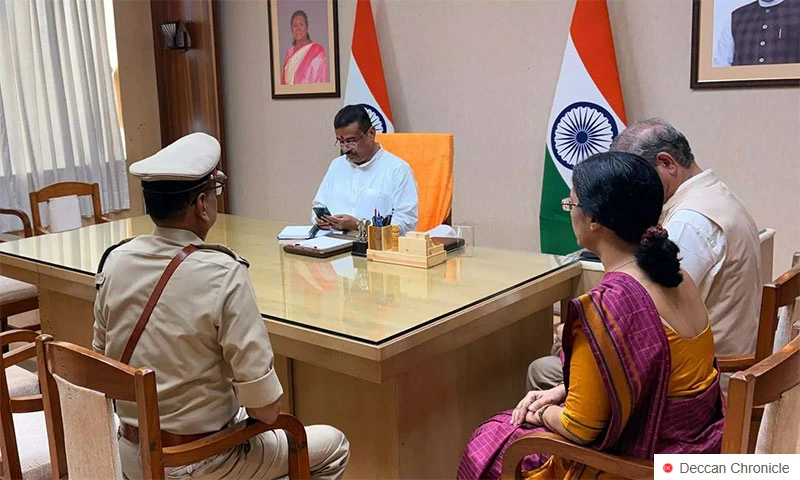
How is CM Suvendu Transforming Bengal After Mamata?
CM Suvendu Adhikari recently took charge of a struggling Bengal. Thus, voters across the state are asking one vital question: Can he truly surpass the influence of Mamata Banerjee? While he is currently leading the state, his challenge goes beyond local governance.
To understand his potential impact, consider these key points:
- The Look East Vision: Whether the new Chief Minister successfully establish Look East policy of Narendra Modi in the region?
- Strategic Importance: Furthermore, Bengal and Kolkata remain the top priorities for national growth.
- The Timing: It is still very early to judge a leader who has just stepped into the office of the Chief Minister.
Can He Fulfill National Expectations?
Many wonder if Suvendu as the Chief Minister can handle the immense pressure of reviving the state while aligning with central goals. However, experts suggest it is too soon to draw final conclusions about his leadership style or long-term success.
Judhajit Senmazumdar is highly optimistic and also expect the valuable inputs and participation from Non-Resident Bengalis in a podcast with the famous journalist, Sumon Chattopdhay
Chief Ministers of West Bengal
| Name | Years in Office | Party | Duration |
|---|---|---|---|
| Prafulla Chandra Ghosh | 1947-1948 | Indian National Congress | 1 year |
| Bidhan Chandra Roy | 1948-1962 | Indian National Congress | 14 years |
| Prafulla Chandra Sen | 1962-1967 | Indian National Congress | 5 years |
| Ajoy Mukherjee | 1967-1968, 1969-1970 | Bangla Congress | 2 years (total) |
| Siddhartha Shankar Ray | 1972-1977 | Indian National Congress | 5 years |
| Jyoti Basu | 1977-2000 | CPI(M) | 23 years |
| Buddhadeb Bhattacharjee | 2000-2011 | CPI(M) | 11 years |
| Mamata Banerjee | 2011-2026 (May 06) | Trinamool Congress (TMC) | 15 years |
| Suvendu Adhikari | 2026 (May 09) – | Bharatiya Janata Party (BJP) |
Why Did CM Suvendu Challenge Mamata in Bhabanipur?
To understand the current political landscape, we must look at the background of the 2026 elections. Initially, Suvendu was content contesting from his stronghold, Nandigram.
However, Amit Shah encouraged him to take a massive risk by entering the lion’s den to challenge Mamata Banerjee directly in Bhabanipur.
The strategy behind this move remains a topic of debate:
- Political Pressure: Was the goal simply to keep Mamata Banerjee occupied and under pressure only in her own constituency?
- Anti-Incumbency: Did the BJP have internal reports suggesting that anti-incumbency had weakened her popularity in Bhabanipur?
- The Opportunity: Did they see a rare chance to strike at the heart of her political home?
A Reality That Changed Bengal Politics
While the exact motives may never be fully revealed, the outcome is now a part of history. However, Suvendu achieved what many thought was impossible: he defeated an incumbent Chief Minister on her home turf. Nevertheless, today, it is a reality that he leads West Bengal as its Chief Minister.
Mamata Banerjee argued in the Calcutta High Court today regarding post-poll violence. However, people mocked her with thief, thief slogans when she stepped out of the court.
What a strange irony of democracy. Notably, she remained silent when numerous BJP workers died right after the 2021 elections.
Instead, we heard many threats from her and her nephew Abhishek Banerjee before this West Bengal Assembly Elections 2026.
Consequently, political analyst Biswanath Chakraborty views this as her desperate attempt to stay politically afloat.
Growth of Suvendu Adhikari in BJP
| Year/Period | Position / Portfolio | Key Activities / Role |
|---|---|---|
| Dec 2020 | Joined Bharatiya Janata Party (BJP) | Switched from TMC; emerged as a key BJP leader in West Bengal |
| 2021 | MLA, Nandigram | Defeated Mamata Banerjee in a high-profile election |
| 2021-2026 | Leader of Opposition, West Bengal Assembly | Led BJP in the Assembly; raised issues of corruption and law & order; led protests |
| 2021-2026 | BJP Campaign Strategist (West Bengal) | Managed election campaigns; strengthened grassroots organisation |
| 2021-2026 | Mass Mobilisation Leader | Organised rallies, political movements, and district-level outreach |
| 2026 | Leader, BJP Legislative Party | Elected as legislative leader of BJP; projected as Chief Ministerial face |
| 2026-Present | Chief Minister of West Bengal | Focus on anti-corruption, governance reforms, and law & order, Promoting development, infrastructure, and administrative reforms |
Is Suvendu Adhikari Following Political Playbook of Mamata?
Public attention is now fixed on the performance of the West Bengal Chief Minister, Suvendu Adhikari. Naturally, people are comparing him to his predecessor. While their political backgrounds differ, they share a striking similarity: both leaders strive for absolute dominance in their respective territories.
Historically, their paths show interesting patterns:
- Regional Strongholds: Mamata Banerjee has always focused on Kolkata-centric politics. In contrast, Suvendu Adhikari remains rooted in Medinipur, even when his previous roles required him to manage districts like Malda and Murshidabad.
- Political Boldness: His deep connection to his fortress gave him the confidence to challenge Mamata in 2021. Just moments after her announcement, he requested his party to let him face her in Nandigram, and he won.
- Power Dynamics: Critics suggest that just as Mamata once tried to limit the influence of Suvendu, he may have influenced the move from Medinipur to Bardhaman of Dilip Ghosh to clear his own path.
Can Aggressive Politics Win Over Bengal?
Both leaders understand that political culture of Bengal thrives on emotion and fierce opposition. Before 2011, Mamata Banerjee never missed a chance to corner the ruling government.
Similarly, since 2021, the LOP, Suvendu Adhikari, has been relentless, traveling from Cooch Behar to Kakdwip to challenge the status quo.
Today, political slogans have turned deeply personal. Whether it was the Khuni Buddha cries of the past or the Chor Mamata chants of recent years, the strategy remains the same: total opposition.
If this aggressive style is what the voters currently embrace, Suvendu is simply adapting to the times. In this environment, debating the elite culture of Bengal politics may take a backseat to achieving results.
Is The CM Building a More Inclusive Leadership Style?
The politics of Mamata Banerjee often centered around her personal image. In contrast, Suvendu Adhikati represents a national party and consistently emphasizes the word we.
This shift toward collective leadership is earning him significant praise as he moves away from individual-centric power.
History shows that leaders who rule through fear or isolation often face a dramatic downfall. For example:
- Nicolae Ceaușescu: He was forced to flee his own country by helicopter in Romania in 1989.
- Saddam Hussein: His capture by American forces led to widespread public celebration in Iraq in 2003.
- Muammar Gaddafi : After four decades of rule, the public rejoiced at his eventual fall in Libya in 2011.
Will Bengal Experience a New Era of Freedom?
Significant historical sites like Firdos Square in Iraq or Tahrir Square in Egypt symbolize the same thing: the hope for a fearless environment and the joy of liberation.
By prioritizing a collective we, Suvendu, Chief Minister of Bengal aims to signal a departure from the past, offering a vision of governance that focuses on freedom rather than intimidation.
Can CM Suvendu Balance Party Power and State Governance?
Democracy rarely rewards self-centered leadership. While film stars in Tamil Nadu, like Karunanidhi, Ramachandran, Jayalalithaa, or Vijay, can win elections on their personal names, West Bengal follows a different culture. Historically, Bengal votes for ideologies and collective leadership.
Consider these historical examples of the governance of Bengal:
- Political Tradition: Bidhan Roy represented the Congress, while Jyoti Basu and Buddhadeb Bhattacharya led as faces of the CPM.
- The Exception: Mamata Banerjee was the exception, though she initially relied on a coalition of various parties. Later, she distanced herself from those allies, leading many in the INDIA bloc to view her with suspicion today.
- A New Approach: BJP State President Samik Bhattacharya has stated clearly that this is the West Bengal Government, not just a BJP Government.
Will Suvendu Avoid the Mistakes of the Past?
The party has signaled that the organization and the government will function separately. While some fear this might eventually mirror the CPM era, where Alimuddin Street controlled the state headquarters, the current outlook remains hopeful.
The Bengal Chief Minister Suvendu has the opportunity to lead a government that serves the public rather than just a political circle. For now, the people of Bengal are holding onto this hope for a better future.
Can CM Suvendu Bring Neutrality Back to the Police?
While the previous government often used the administration for party work, Chief Minister, Suvendu is taking a different path. So far, he has advised the administration to work neutrally. In a move that was unthinkable under the previous regime, several BJP workers have already been arrested following allegations of post-poll violence.
The shift in governance is visible through these key changes:
- Strict Law Enforcement: Suvendu Adhikari as the Chief Minister, has issued a tough order making helmets mandatory for all bikers.
- Equal Treatment: Previously, police often ignored certain groups, such as those wearing skull caps, but the new administration insists on equal rules for everyone.
- Ending Leader Culture: Before, police would check the political connections of a person before filing a diary. Now, there is a push to restore transparency and public trust.
Can Strategy Outperform Emotion in Governance?
The political styles of the two leaders are vastly different. Mamata Banerjee relied on emotion, while the current Bengal Chief Minister, Suvendu, relies on strategy. Although Bengal respects a rebellious spirit, emotion alone cannot run a state effectively.
- The Trap of Drama: Dramatic situations can control people temporarily, but this often backfires in the long run.
- Police Morale: Low-ranking police officers were reportedly tired of being forced into shameless devotion to the previous rulers.
- The Result: The impact of this frustration was clear during the recent elections. We have now seen what happens when the police are allowed to act actively and independently.
Is Suvendu Changing the Political Tone in Bengal?
As the Leader of the Opposition, Suvendu was known for his sharp and constant criticism of the former Chief Minister. However, since taking office, he has shown a surprising level of political courtesy.
He recently instructed top police officials to ensure that security of Mamata Banerjee remains airtight, acknowledging her legacy as a three-time Chief Minister.
This shift has brought a sense of relief to the streets:
- End of Extortion Culture: Auto-drivers and rickshaw pullers report feeling less pressure, as the fear of forced tola (extortion) begins to fade.
- Return of Free Speech: In local tea shops, the tradition of lively, open political debate has returned without the fear of retaliation.
- A New Atmosphere: The massive victory procession in Bhabanipur was not just a celebration; it was a sign that people are finally feeling fear-free in their own neighborhoods.
Merit Over Politics in Education?
One of the most significant moves by CM Suvendu involves the education system of West Bengal. He has dissolved several college governing bodies that were previously dominated by political appointees.
- The Goal: The administration aims to reform these committees by prioritizing merit and academic excellence.
- The Impact: If the new committees focus on education rather than party loyalty, it could mark a major turning point for the future of students in Bengal.
Can the New CM Deliver Real Change for Bengal?
While the initial days of a new government are often exciting, the public will eventually judge Suvendu, the West Bengal Chief Minister, on whether this sense of relief and freedom lasts. Beyond the political shift, the most difficult challenge remains the development of the state. It is a tough goal that requires more than just promises.
As the honeymoon period ends, citizens return to the harsh realities of daily life, from the cost of groceries and gas to securing school admissions for their children. The acid test for Suvendu Adhikari and BJP will start then.
Why Are The People Hopeful About the Future?
Recent actions have given many people a reason to stay optimistic about the new administration:
- Zero Tolerance in Tiljala: Following a tragic fire in an illegal factory, Suvendu as the CM took immediate action. He ordered the demolition of an illegal building and the arrest of the owners, signaling a zero-tolerance policy toward corruption and illegal construction.
- Administrative Accountability: By disconnected power to unauthorized structures and ordering audits in areas like Kasba and Mominpur, the government is showing it means business.
- The Path Ahead: If the administration continues to prioritize public safety and merit over political connections, there is no reason not to be hopeful for the future.
Knowledge Mart – Final Thoughts:
Ultimately, the journey for CM Suvendu has only just begun, but the initial steps suggest a transformative era for West Bengal. By choosing strategy over raw emotion and a collective we over individual dominance, he is redefining the political character of West Bengal.
Bengal has always been a land of hope and resilience. If Suvendu, as the Chief Minister of Bengal, continues to champion this new, fear-free environment, the state may finally witness the stable and prosperous future its citizens truly deserve.
10 Key Takeaways:
The arrival of Suvendu Adhikari, the West Bengal Chief Minister, marks a major shift in the political and administrative landscape of West Bengal. Here are the ten most important takeaways from his early days in office:
- Promotes Collective Leadership: First, the Bengal Chief Minister, Suvendu Adhikari, has replaced the I-centric politics of the past with a collective we approach.
- Restores Police Neutrality: Next, he has ordered the police to act without political bias, even leading to the arrest of BJP workers.
- Focuses on National Integration: He has swiftly approved central schemes like Ayushman Bharat that were previously blocked in Bengal.
- Prioritizes Border Security: Additionally, the new government is fast-tracking land transfers to the BSF for critical border fencing.
- Enforces Rule of Law: For the first time in years, traffic and safety laws, like mandatory helmet use, are being enforced strictly for everyone.
- Eliminates Extortion Culture: Consequently, local workers like auto and rickshaw drivers report a significant drop in tola or illegal collections.
- Champions Merit in Education: Furthermore, he has dissolved political college committees to make room for merit-based academic leadership.
- Adopts Zero Tolerance for Corruption: Specifically, his immediate action against illegal buildings in Tiljala shows a commitment to public safety.
- Ends Political Fear: Most importantly, the return of open political debate in tea shops suggests that people are losing their fear of the state.
- Shows Political Courtesy: Finally, he has broken tradition by ensuring high-level security for former CM Mamata Banerjee, prioritizing dignity over rivalry.
People Also Ask (PPA):
Who is the current Chief Minister of West Bengal?
Suvendu Adhikari is the current Chief Minister of West Bengal. He took the oath of office on May 9, 2026, after leading the BJP to a historic victory in the state assembly elections.
Did Suvendu defeat Mamata Banerjee?
Yes, he defeated Mamata Banerjee in her own constituency of Bhabanipur by over 15,000 votes. This was his second consecutive victory over her, following his win in Nandigram during the 2021 elections.
What are The first major decisions of CM Suvendu?
During his first cabinet meeting, the Bengal Chief Minister, Suvendu Adhikari made several high-impact decisions:
- Central Schemes: He approved the immediate rollout of Ayushman Bharat and the PM Kisan insurance schemes.
- Border Security: He fast-tracked land transfers to the BSF to complete the border fence with Bangladesh.
- Financial Aid: He announced the Annapurna Yojana, which provides Rs. 3,000 monthly to women in Bengal starting June 1.
Will the new government stop existing social welfare schemes?
No, Suvendu as the CM has clearly stated that his government will not stop any social welfare schemes started by the previous administration. Instead, he aims to improve their delivery and add new central benefits for the people.
What is policy of the New Chief Minister on illegal immigration?
Suvendu Adhikari, as the Chief Minister, maintains a strict zero-tolerance policy toward illegal immigration. He has pledged to identify and deport infiltrators while ensuring that the rights of all valid Indian citizens, regardless of religion, remain protected.