Unlock Bengal 2026: Hidden Fury or Surge
Apr 13, 2026 - By Ashutosh Roy Current AffairsElection AnalysisGovernance & AdminPoliticsRegional UpdatesSocial IssuesWest Bengal Politics
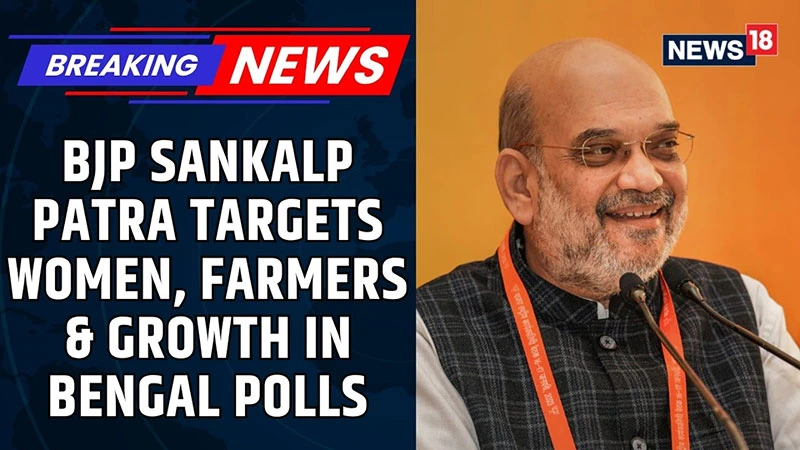
Will the People Unlock Bengal 2026 for a New Era?
Unlock Bengal 2026 is the question on everyone’s lips as the state faces a historic turning point. Is this a quiet ripple in the Falgu River or a massive tsunami of change? Thus, West Bengal stands at a critical crossroads just before Bengal Elections 2026 where every voice matters.
From the fiery protests against misrule to the deep-seated tension over appeasement politics, the atmosphere is electric. While some find comfort in social schemes like Lakshmir Bhandar, others are uniting to protect their heritage and temples.
Moreover, the state is torn between the familiarity of the current regime and the urge for a 2011-style “Change” (পরিবর্তন).
Voters are now also weighing the fear of the unknown against the desperate need for a new direction.
What will define the soul of Bengal in this coming year?
Change of Regime in West Bengal Assembly Elections (Since 1947)
| Year | From (Outgoing Regime) | To (Incoming Regime) | Chief Minister After Change | Notes |
|---|---|---|---|---|
| 1947 | British Colonial Rule | Indian National Congress | Prafulla Chandra Ghosh | First government after Independence |
| 1952 | Congress (Interim) | Indian National Congress | Bidhan Chandra Roy | First elected Assembly government |
| 1967 | Congress | United Front Coalition | Ajoy Mukherjee | First non-Congress government in Bengal |
| 1969 | Congress-backed rule | United Front (Second UF) | Ajoy Mukherjee | UF returned after political instability |
| 1972 | United Front era instability | Indian National Congress | Siddhartha Shankar Ray | Congress regained power decisively |
| 1977 | Congress | Left Front (CPI (M) led) | Jyoti Basu | Historic shift after Emergency |
| 2011 | Left Front (34 years rule) | Trinamool Congress-led alliance | Mamata Banerjee | End of longest elected Communist rule in world |
| *Data Collected from various records and internet sites | ||||
Bengal Elections 2026: Anti-incumbency or Status quo?
The tide of anti-incumbency in West Bengal is growing stronger as the state moves toward a critical turning point. Over the last five years, public anger has intensified due to several controversial incidents and governance failures. Hence, this discontent is now challenging the long-standing political landscape.
Moreover, to understand the current mood of the people, one must look at how various groups are reacting to the administration’s actions.
Can the state truly unlock Bengal 2026 by moving past these grievances?
Why is public anger rising in West Bengal?
Recent years have seen a surge in protests and civil unrest. Moreover, People are expressing their frustration over issues ranging from safety to systemic corruption. Here are the primary reasons for this rising anger:
- Safety Concerns: The tragic RG Kar incident, involving the rape and murder of “Abhaya”, (অভয়া কাণ্ড) has deeply shaken the Bengali community. Many view this not just as a crime, but as an attack on their own family members.
- Police Violence: Brutal attacks by police on peaceful protesters have further fueled public resentment.
- Job Scams: The ongoing recruitment corruption has left many qualified candidates feeling betrayed.
- Broken Promises: Many young people who lost their job opportunities feel that the Chief Minister’s promises were empty as well as misleading.
What are the key flashpoints of unrest?
Transitioning from general discontent to specific events, several locations have become symbols of the government’s struggle to maintain law & order:
- Sandeshkhali & Samsherganj: Allegations of local tyranny and violent incidents, such as the murder of a father and son in Samsherganj, have caused widespread fear.
- Beldanga Violence: The handling of a migrant worker’s death and the subsequent political fallout did not sit well with the local population. Moreover, the State Government didn’t take adequate tangible measures to sort them out.
- Kaliganj Tragedy: The death of a young girl, Tamanna, due to a bomb blast has become a symbol of the state’s deteriorating law and order.
Is the traditional vote bank shifting?
However, for years, certain demographics were considered “safe” for the ruling party. However, recent flip-flops on the Waqf issue and the months-long protests by Madrasah teachers have made the Muslim community skeptical.
- Political Inconsistency: The government’s changing stance on religious land and education issues has created doubt.
- Failed “Appeasement” Politics: Efforts to please all sides have backfired, leaving both Hindu and Muslim communities dissatisfied with the “ruler’s law” replacing the “rule of law“.
- Extortion and Harassment: Additionally, common citizens are tired of local-level “দাদাগিরি” (bullying) and “তোলাবাজি” (extortion) that plague daily life.
Will voters prioritize change to unlock Bengal 2026?
The people of Bengal are now primarily demanding basic legal security, communal harmony, and an end to institutionalized corruptions.
As the election approaches, the central question remains: Will the voters forget the struggles of the past fifteen years, or will they seek a new path?
The spontaneity of the “Reclaim the Night” movement suggests that the public is no longer willing to stay silent. Above all, to unlock Bengal 2026, the state may need to address these deep-rooted frustrations or face a significant political shift.
Is Bengal’s Suffering Real or Just Rhetoric? Swapan Dasgupta’s dekoder Interview Breaks Down the Last 15 Years.
What Is the Current Political Strategy of the Trinamool Congress?
The Trinamool Congress (TMC) relies heavily on two main pillars: minority voters (সংখ্যালঘু ভোটার) and women voters (মহিলা ভোটার). To secure these, Mamata Banerjee has long practiced what critics call “appeasement politics” (তোষণ রাজনীতি).
How did Muslim appeasement begin?
The Chief Minister started this trend by introducing allowances for Imams. However, the Calcutta High Court eventually struck down this move. To bypass this, she announced that the Waqf Board would handle these payments instead.
Why is there a breakdown in law and order?
Critics argue that the state government has empowered certain youths who dominate local areas through intimidation. Furthermore:
- Police Inaction: Law enforcement often ignores violations. For example, some individuals ride bikes without helmets while wearing religious caps without facing penalties.
- Delayed Response: Police often remain passive or arrive only after major incidents, like the violence in Samserganj, have already occurred.
What Are the Allegations Against Mamata Banerjee?
In an interview with Prannoy Roy, Suvendu Adhikari labeled Mamata Banerjee as deeply communal. He also alleged that local TMC leaders actively settle Muslim refugees from Bangladesh across West Bengal.
Where are these settlements located?
These groups are not just settling near canals or wetlands. They are now reportedly living in various parts of Kolkata also. However, since the introduction of the SIR (Special Intensive Revision of Voter Lists), many are returning to Bangladesh out of fear.
Is the Muslim community satisfied?
Recently, leaders like Humayun Kabir and Naushad Siddiqui have challenged the TMC narrative. They argue that Muslims are the ones both killing and dying in local conflicts. Key points include:
- Lack of Development: Figures like Kamal Hossain claim that no real progress has been made for the Muslim community.
- Migrant Labor: A huge portion of the state’s migrant workers are Muslims, highlighting a lack of local jobs.
How Is the TMC Reacting to BJP’s Influence?
To stop the consolidation of Hindu votes behind the BJP, Mamata Banerjee has started building various temples. Despite her initial resistance to the Waqf (Amendment) Act, 2025 and SIR (Special Intensive Revision) policies, she eventually accepted both.
Why are Muslim voters angry?
Because the government took so long to make decisions regarding the Waqf, many Muslims felt unprotected and frustrated. This “appeasement politics” (তোষণ রাজনীতি) is a dangerous game that could lead to social instability.
Will the Muslim vote split in the next election?
The political landscape is shifting rapidly:
- Mousum Benazir Noor has returned to the Congress party.
- Adhir Chowdhury is contesting the Baharampur assembly seat.
- Naushad Siddiqui and ISF is contesting with a coalition with left
- Humayun Kabir and his party is contesting from 180 plus seats
Internal Division: With these shifts, a major split in the Muslim vote bank seems almost certain.
Why Are Women Voters Divided in West Bengal?
Currently, a segment of the female population remains loyal to the Trinamool Congress (TMC). This is largely because they receive direct cash transfers through the Lakshmir Bhandar scheme. However, the political landscape is shifting as new promises and safety concerns emerge.
What is the BJP offering women?
To challenge the TMC’s influence, the Bharatiya Janata Party has introduced the Annapurna Bhandar initiative in their manifesto. Their plan includes:
- Higher Monthly Allowance: A promise of 3,000 per month.
- Free Transportation: Specialized travel benefits for women.
- Additional Subsidies: In addition, various other social welfare perks to ensure financial independence.
- Reservation for Women in Government Jobs: BJP announced to ensure a 33% reservation of women in Government Jobs in their election manifesto.
Is Women’s Safety Influencing the Election?
While cash schemes are popular, the issue of crimes against women remains a major concern. The BJP is actively highlighting cases of harassment and violence to shift public opinion.
How is the BJP highlighting these issues?
The party is bringing victims and activists to the forefront of their political campaign. For example:
- Symbolic Candidacy: By fielding candidates like Rekha Patra and Ratna Debnath, the BJP aims to give a voice to those affected by local violence.
- Focus on Legal Protection: The BJP emphasizes strict law enforcement and improved security measures for women.
- Women Police Station: The Bharatiya Janata Party promises Women Police Station in Block Level
What is the controversy surrounding Mamata Banerjee’s comments?
A major political row broke out following an incident in Durgapur. Mamata Banerjee suggested that women should avoid going out late at night for their own safety. On the other hand, BJP is promising women empowerment by reservation in Government jobs.
Consequently, the BJP heavily criticized this statement, arguing that the government should focus on catching criminals instead of restricting the freedom of women.
Is There a Visible Wave in the 2026 Bengal Elections?
The 2026 West Bengal Assembly election is being described as a “people’s fight”. Unlike previous years, there is no obvious political “wave” sweeping the state. Instead, a complex “undercurrent” of public sentiment is shaping the battlefield.
Why is there a silent “undercurrent” this time?
While a visible landslide isn’t apparent yet, public dissatisfaction is clearly growing. Several factors contribute to this “silent” political climate:
- Increasing Frustration: Voters are expressing growing anger over local issues and governance, even if they aren’t shouting it at rallies.
- The “Wait and See” Approach: Many citizens are staying quiet, observing both the ruling party’s welfare schemes and the opposition’s promises before making a final choice.
- Unpredictable Outcomes: Because the anger is an undercurrent rather than an open wave, pollsters find it difficult to predict the final result.
What Makes 2026 a Unique “People’s Battle”?
This election feels different because it focuses more on the struggles of the common man than on high-decibel political slogans.
The “চোরা স্রোত” (undercurrent) suggests that the real decision-making is happening at the kitchen tables of Bengal.
What are the main causes of public anger?
Despite the popularity of certain cash-transfer schemes, people are concerned about:
- Governance and Safety: A demand for better law enforcement and protection for all citizens.
- Accountability: Growing pressure on local leaders to deliver on long-standing promises.
- Economic Concerns: Issues like unemployment and rising costs are fueling the hidden resentment.
How are the major parties responding?
Both the TMC and the BJP are trying to tap into this silent energy:
- TMC’s Strategy: They are doubling down on grassroots outreach and welfare benefits to maintain their core base.
- BJP’s Strategy: They are highlighting “anti-incumbency” and focusing on urban areas where dissatisfaction is more vocal.
The West Bengal Elections 2026 is scheduled on 23rd & 29th April.
Do you think the “silent voter” will ultimately prioritize immediate financial benefits or long-term systemic change?
Read our 2026 Election Analysis from several angles with updates.
10 Key Takeaways
- Strategic Voting Blocks: The Trinamool Congress (TMC) continues to focus heavily on its core support from minority groups and women, though this dominance is being challenged.
- Cash Schemes as a Battlefield: While TMC’s Lakshmir Bhandar is widely popular, the BJP is countering with the Annapurna Bhandar, promising a significantly higher monthly allowance of Rs. 3,000.
- Split in Muslim Votes: Leaders like Naushad Siddiqui and Humayun Kabir are causing a potential rift in the traditionally unified Muslim vote bank by questioning the state’s actual development record.
- Women’s Safety Concerns: Recent high-profile cases, including the RG Kar incident, have made safety and policing a top-tier election issue, potentially swaying female voters.
- The “Silent Undercurrent”: Unlike previous years with loud political “waves”, 2026 is marked by a চোরা স্রোত (hidden current) of public anger that makes the outcome hard to predict.
- Shift in Religious Politics: To counter the BJP’s narrative, Mamata Banerjee has shifted toward building and renovating temples, moving beyond her previous focus on minority-specific allowances.
- Impact of National Policies: The implementation and debate surrounding the CAA (Citizenship Amendment Act) and UCC (Uniform Civil Code) remain polarizing forces across the state.
- Law and Order Allegations: The opposition is gaining ground by highlighting “police inaction” and the settling of refugees in urban areas like Kolkata, fueling local resentment.
- Economic Frustration: A lack of industrial growth and the high number of migrant laborers (especially from minority communities) are becoming major talking points for the opposition.
- Phase-Wise Showdown: With the Bengal elections 2026 scheduled for April 23 and April 29, 2026, the focus is now on local “booth-level” battles rather than just massive state-wide rallies.
Frequently Asked Questions (People Also Ask)
What is the 2026 West Bengal election schedule?
The Election Commission has officially scheduled the West Bengal polls 2026 in two main phases on April 23 and April 29, 2026.
- Counting Date: The counting of votes will take place on May 4, 2026.
- Total Seats: All 294 assembly seats are up for contest, with 148 needed for a majority.
How does Lakshmir Bhandar compare to the BJP’s Annapurna Bhandar?
While both schemes target women voters through cash transfers, they offer different financial tiers:
- Lakshmir Bhandar (TMC): As of February 2026, the amount increased to Rs. 1,500 for General/OBC women and Rs. 1,700 for SC/ST women.
- Annapurna Bhandar (BJP): The BJP manifesto promises a significantly higher amount of Rs. 3,000 per month if they come to power, along with free transportation for women.
Is the Muslim vote bank in Bengal splitting in 2026?
Yes, recent trends show a shift away from total consolidation under the Trinamool Congress (TMC).
- New Alliances: High-profile shifts, such as Mousum Benazir Noor returning to Congress and the emergence of the Humayun Kabir and his party, are creating alternative options for minority voters.
- Growing Frustration: Leaders like Naushad Siddiqui are actively campaigning on the lack of real economic development for Muslims, further dividing the vote.
What are the main women’s safety issues in this election?
Safety has become a central campaign theme following high-profile incidents like the RG Kar hospital case.
- Opposition Stance: The BJP is promising to reopen all “crime files” related to women and establish a women’s police station in every block.
- Government Response: The TMC continues to defend its record by pointing to increased reporting and digital tracking of cases, though critics argue that police inaction remains a major hurdle.
Why is there talk of a “silent undercurrent” in 2026?
Analysts describe this election as having a “চোরা স্রোত” (undercurrent) because there is no single dominant “wave” or slogan.
- Increasing Resentment: Voters are expressing deep anger over local corruption and unemployment, but many are remaining quiet until they reach the polling booth.
- Complex Dynamics: The mix of massive welfare doles and rising safety concerns has created a divided electorate that is harder for pollsters to predict than in 2021.
Which factor do you believe will have a bigger impact on the final result: the direct cash benefits for women or the growing concerns over local law and order?