Shameless TMC-NCPI Deal Exposed!
Jun 15, 2026 - By Ashutosh Roy Current AffairsElection AnalysisNational NewsNational PoliticsPolitical IdeologiesPoliticsRegional UpdatesWest Bengal Politics
Isn’t this TMC-NCPI Deal Dirty?
The infamous TMC-NCPI Deal has finally brought the dark reality of West Bengal’s political gymnastics out into the open. A rogue always has a convenient pretext ready when survival is on the line.
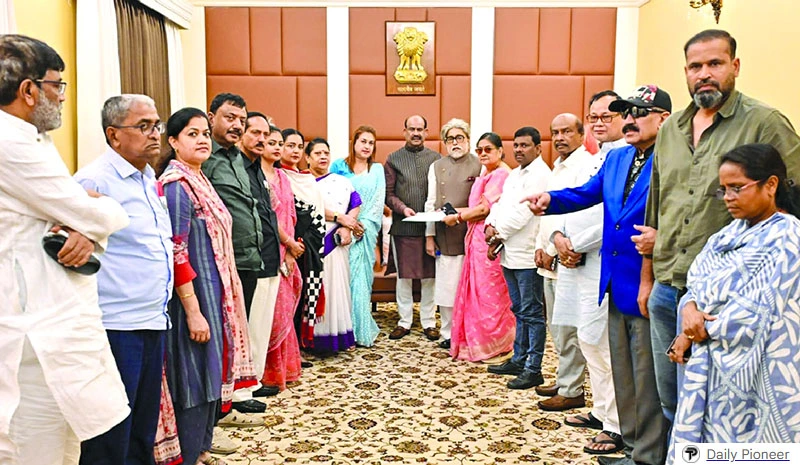
In a stunning display of opportunism, a massive bloc of 20 rebel Trinamool Congress (TMC) Lok Sabha MPs has officially decided to jump ship. Led by heavyweights like former Chief Whip Kakoli Ghosh Dastidar and veteran leader Sudip Bandyopadhyay, they have marched straight into the arms of an obscure setup.
That setup is the Nationalist Citizens Party of India (NCPI). Why did these lifelong loyalists of Mamata Banerjee choose this sudden, bizarre path? They did it purely to avoid the terrifying wrath of an immediate legal hassle.
By executing this highly calculated TMC-NCPI Deal, these breakaway lawmakers have found a temporary shield. They are trying desperately to escape the strict disqualification rules of the Tenth Schedule of the Indian Constitution.
The classic, shameful era of Aya Ram, Gaya Ram (unprincipled party-hopping) continues to thrive in Indian politics. It has merely changed its clothes, evolving into a corporate-style legislative merger.
What is the NCPI Registered Political Party?
To fully appreciate the absurdity of this entire transaction, one must ask a fundamental question: what exactly is this new entity? Until this weekend, it was a completely invisible name on the national stage.
The Nationalist Citizens Party of India was officially registered with the Election Commission of India on February 2, 2023. Its registered main office is located far from the national spotlight, inside a small room at Sankrail in the Howrah district of West Bengal.
At its inception, the primary agenda of the NCPI was to serve as a Bengali-oriented regional political alternative in Northeast India. It focused its minimal resources heavily on the border states of Tripura and Assam.
The historical footprint of this outfit reveals just how little ground support it actually possesses:
| Election / Region | Candidates Fielded | Electoral Outcome | Footprint |
| 2023 Tripura Assembly Elections | 3 Candidates (Kailashahar, Chawmanu, Ambassa) | Poor performance, lost deposits | Negligible |
| Northeast Regional Presence | Nominal participation | Face rejection from major outfits | Non-existent |
| West Bengal (Prior to June 2026) | Zero active legislative presence | No electoral victories | Strictly a paper address |
As explicitly documented by The Times of India, this forgotten shell outfit has suddenly become the most valuable political lifeline in the country.
The most significant practical function of the NCPI today is serving as a legally viable vehicle for a convenient political merger.
It is nothing more than a legal shell company, carefully utilized to bypass India’s strict anti-defection law for the breakaway TMC rebel MPs.
Is the TMC-NCPI Deal a Betrayal of West Bengal Voters?
Let us look past the legal jargon and call this what it truly is: a shameless, ruthless, and absolute betrayal of the common voters. These 20 parliamentarians were elected by local citizens who specifically cast their ballots to oppose the National Democratic Alliance (NDA) camp.
If these rebel lawmakers genuinely possessed the moral courage or the political guts to challenge Mamata Banerjee’s autocratic control, why did they not hand in their resignations?
A legitimate, principled rebellion demands that you return to your constituency. It requires you to look your voters in the eye and ask for a fresh mandate. Instead, these politicians chose to hide safely behind a technical legal loophole.
In addition, these rebels have completely failed the structural test of an organic political split. They like to compare themselves to recent rebellions in other states, but the comparison falls totally flat.
How the TMC Rebellion Fails the Structural Test
- The Eknath Shinde & Ajit Pawar Precedents: Those leaders successfully proved a massive structural majority within their existing party organizations, capturing the original symbols through deep, grassroots worker support.
- The 2026 TMC Rebel Camp: These dissidents have failed to capture any part of the actual TMC organizational engine. Instead of fighting internally, they used a backdoor entry into a completely separate, obscure registry via the TMC-NCPI Deal.
One can only laugh at the irony of these turncoats now claiming they will eventually stake a claim to the original TMC name and the “two flowers” symbol. How many of these politicians honestly believe the betrayed voters of West Bengal will re-elect them in the 2029 general elections?
Why Can’t Suvendu Adhikari Enforce His Own Principles?
This entire backdoor operation raises massive, uncomfortable questions about the ruling party’s sudden lack of principles in West Bengal. Suvendu Adhikari once set a legendary exception in modern Indian politics.
When he decided to switch sides, he cleanly resigned from every single constitutional and organizational post he held within the TMC before officially joining the Bharatiya Janata Party (BJP).
If he could show that level of political integrity, why can’t he dictate those exact same high moral standards to Ritabrata Banerjee or Kakoli Ghosh Dastidar? Why allow these newcomers to keep their seats through a messy loophole?
West Bengal is supposed to be entering a brand-new era of governance.
- Shouldn’t the new administration be entirely consumed with economic development?
- Shouldn’t they be maximizing the immense financial advantage of a historic “double-engine government” that the state has finally received after nearly 50 long years of stagnation?
The electorate showed overwhelming trust and faith to bring about a clean alternative. The new ruling coalition holds an absolute, undisputed majority inside the assembly house.
Yet, instead of focusing on state development, the top leadership appears virtually busy running, managing, and sustaining a parallel, broken version of the TMC via proxy shell parties.
Defectors Who Resigned & Won Again (India)
| Name | State | From Party -> To Party | Position | Year | Outcome |
|---|---|---|---|---|---|
| Rao Uday Pratap Singh | Madhya Pradesh | Congress -> BJP | MP (Hoshangabad) | 2013–14 | Resigned, joined BJP, won again |
| Himanta Biswa Sarma | Assam | Congress -> BJP | MLA | 2015–16 | Resigned, joined BJP, re-elected, later CM |
| Pradan Baruah | Assam | Congress -> BJP | MLA -> MP | 2016 | Quit Congress, won MLA & later Lok Sabha seat |
| Muhammad Abdul Nasir | Manipur | Congress -> JD(U) | MLA | 2020–22 | Resigned, switched, won again |
| Suvendu Adhikari | West Bengal | TMC -> BJP | MLA | 2020–21 | Resigned, joined BJP, won Nandigram seat |
| B.S. Yediyurappa (early case) | Karnataka | BJP -> KJP -> BJP | MLA | 2012–13 | Quit, formed party, later returned & won |
| 12+ Congress/JD(S) MLAs (Karnataka bloc) | Karnataka | Congress/JD(S) -> BJP | MLAs | 2019 | Resigned, many re-elected in bypolls |
| Scindia camp MLAs (multiple) | Madhya Pradesh | Congress -> BJP | MLAs | 2020 | Resigned in mass; majority won bypolls |
| Alpesh Thakor | Gujarat | Congress -> BJP | MLA | 2019 | Resigned, later re-elected on BJP ticket |
| Aditi Singh | Uttar Pradesh | Congress -> BJP | MLA | 2021–22 | Resigned, joined BJP, won again |
| Mukhtar Ansari (earlier phase) | UP | BSP/SP shifts | MLA | Multiple | Switched parties, retained seat multiple times |
| Swami Prasad Maurya | UP | BSP -> BJP | MLA | 2016–17 | Defected, re-elected |
Is a Delhi Compulsion Overriding Political Ideology?
The true blueprint of this deal does not come from Kolkata; it leads straight back to New Delhi. Political analysts cannot ignore the overt involvement of central managers.
High-level strategy meetings were actively held at the official residence of Union Minister Bhupender Yadav, heavily attended by central coordinators and local leaders like Suvendu Adhikari, as detailed by The Hindu.
This tracking points directly to a severe Delhi Compulsion. Because the central ruling coalition lacks an independent, absolute majority in the federal Parliament, it desperately needs to secure reliable numbers.
They need these 20 extra votes to smoothly pass highly controversial, historic constitutional amendment bills in the upcoming monsoon session, including:
- The implementation of the Uniform Civil Code (UCC)
- The upcoming national delimitation exercises
- The crucial passage of the Women’s Reservation Bill
But if numbers are the only goal, why didn’t the central leadership have the guts to induct these turncoats into the BJP directly? Why resort to the indirect, muddy, and deceptive path of the TMC-NCPI Deal?
The BJP has spent decades proudly advertising itself as a strictly ideology-based political party, with the Rashtriya Swayamsevak Sangh (RSS) acting as its unyielding moral background engine.
Watching an organization that currently rules over 21 states host secret meetings to arrange a shotgun wedding with a paper party from Tripura represents a total, undeniable erosion of political principles.
Will the Landmark Subhash Desai Case Destroy the Merger?
The rebel lawmakers might think they have outsmarted the anti-defection law, but the shadow of the Indian judiciary cannot be avoided so easily.
The landmark Supreme Court judgment in Subhash Desai v. Principal Secretary, Governor of Maharashtra (2023) completely rewrote the legal boundaries of the Tenth Schedule during the 2022 Maharashtra political crisis.
The Apex Court laid down an incredibly clear constitutional boundary that threatens this entire operation:
“Lawmakers cannot claim to be the real political party simply by showing a temporary, compiled majority inside the Legislative House. The legislative wing remains fundamentally subordinate to the organizational wing of the parent political party”.
— Supreme Court of India (Subhash Desai Case)
Are the TMC rebels or their central handlers completely blind to this binding judicial precedent? Senior legal experts, including Rajya Sabha veteran Kapil Sibal, have already publicly called the arrangement a “theatre of the absurd”.
A legislative merger can only be recognized under the anti-defection law if the original parent party itself decides to merge.
Because Mamata Banerjee’s core organizational structure remains completely intact, active, and legally hostile to the rebels, this makeshift TMC-NCPI Deal is built on a foundation of quicksand.
A Direct Appeal to Our Elected Representatives
The rebel TMC lawmakers might temporarily freeze their legal obligations using this fragile loophole, but the court of public opinion does not operate on technicalities. History proves that clean, principled exits earn permanent public respect, while backroom deals lead to immediate political ruin.
Our elected representatives face a definitive historic choice between two very different paths:
- The Honorable Route: Look at the example of Rao Uday Pratap Singh, a Congress MP from Hoshangabad in 2013. He chose to resign his seat entirely before joining the BJP. He stood for a fresh election, won his seat back with absolute dignity, and kept his integrity intact. The exact same honorable path was taken by the Jyotiraditya Scindia loyalist MLAs in Madhya Pradesh.
- The Backdoor Route: Hiding behind a lesser-known regional registry in Sankrail, Howrah, just to preserve a parliamentary salary and a comfortable seat, all while running away from a single real voter.
This is an earnest, direct request to all sitting MPs and MLAs: please show some basic respect for the people’s mandate.
Do not insult the collective intelligence of the electorate through desperate maneuvers like the TMC-NCPI Deal. Be completely honest to yourselves, resign your positions, and have the courage to face a fresh election.
The voters of West Bengal are watching very closely, and they never pardon those who treat a sacred democratic mandate as a cheap commodity.
Latest Update:
The ongoing crisis has reached a definitive boiling point as veteran leader Sudip Bandyopadhyay formally parachuted into the dissident camp.
Long regarded as one of Mamata Banerjee’s most trusted aides and the primary face of the party in New Delhi, Bandyopadhyay held high-level, back-to-back strategy meetings with Union Home Minister Amit Shah and BJP’s Bengal in-charge Bhupender Yadav before officially backing the TMC-NCPI Deal.
His inclusion comfortably pushes the breakaway faction past the required two-thirds threshold, setting the stage for an explosive, high-stakes legal battle over who ultimately controls the party’s legislative identity. They are in the process of establishing their claim as being the Original TMC and request the speaker for a floor-test.
10 Key Takeaways: The Shameless TMC-NCPI Deal
- The Core Trigger: A bloc of 20 rebel Trinamool Congress (TMC) Lok Sabha MPs bypassed India’s strict anti-defection law by engineering a controversial political merger with an obscure party.
- The Legal Shield: The entire arrangement was specifically designed to escape the immediate risk of disqualification under the Tenth Schedule of the Indian Constitution without losing their parliamentary seats.
- The Shell Party: The Nationalist Citizens Party of India (NCPI) is a minor, paper-only registry established in 2023 in Sankrail, Howrah, with a history of abysmal election performances in Tripura and Assam.
- A Failure of Substance: Unlike organic splits like those of Eknath Shinde or Ajit Pawar, this rebel camp failed to capture any part of the actual TMC organizational engine, relying entirely on a backdoor registry swap.
- Erosion of Local Principles: The deal contradicts the high political standards set by local leaders like Suvendu Adhikari, who famously resigned from all legislative and party posts before switching allegiances.
- The Double-Engine Distraction: Despite winning an absolute majority to govern West Bengal, the state leadership appears heavily distracted by proxy-managing former TMC turncoats rather than focusing purely on development.
- The Delhi Compulsion: The true driver behind the deal is a numbers game in New Delhi, where the central ruling coalition desperately needs these 20 votes to secure a majority in the federal Parliament.
- Crucial Bills at Stake: These extra parliamentary numbers are critically needed to guarantee the smooth passage of monumental national legislations like the Uniform Civil Code (UCC), national delimitation, and the Women’s Reservation Bill.
- The Judicial Shadow: Under the binding Supreme Court precedent of the Subhash Desai Case (2023), a legislative wing cannot claim to be the real party without the organizational wing, leaving the merger on incredibly shaky legal ground.
- The Democratic Betrayal: The maneuver ultimately disrespects the voters’ mandate, drawing sharp historic contrast to leaders like Rao Uday Pratap Singh who resigned and sought a clean, fresh mandate from the electorate.
[…]Shameless TMC-NCPI Deal Exposed! Is the controversial TMC-NCPI Deal ethical? Explore how rebel MPs bypassed the anti-defection law and what this massive political betrayal means for voters.[…]
[…]Shameless TMC-NCPI Deal Exposed! Is the controversial TMC-NCPI Deal ethical? Explore how rebel MPs bypassed the anti-defection law and what this massive political betrayal means for voters.[…]
[…]Shameless TMC-NCPI Deal Exposed! Is the controversial TMC-NCPI Deal ethical? Explore how rebel MPs bypassed the anti-defection law and what this massive political betrayal means for voters.[…]
[…]Shameless TMC-NCPI Deal Exposed! Is the controversial TMC-NCPI Deal ethical? Explore how rebel MPs bypassed the anti-defection law and what this massive political betrayal means for voters.[…]