Bengal 2026: 3 Keys for Ultimate Victory
Apr 17, 2026 - By Ashutosh Roy Current AffairsElection AnalysisPoliticsRegional UpdatesSocial IssuesWest Bengal Politics
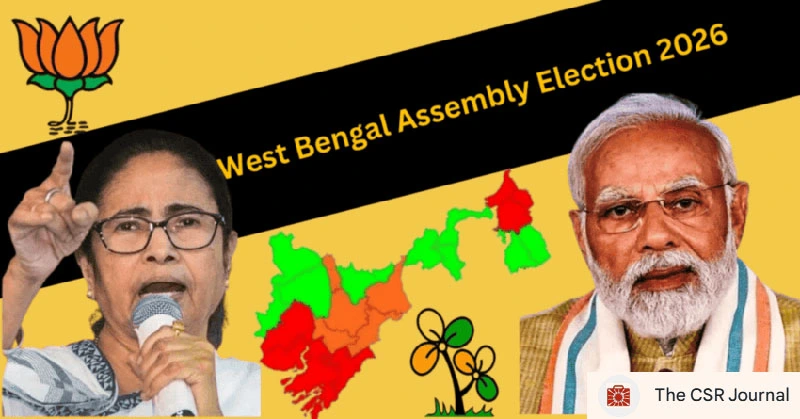
Who wins Bengal? 3 keys to decide fate
As the West Bengal Assembly Election 2026 approaches, three massive factors are taking center stage. Consequently, the final results will depend entirely on these 3 Keys for Ultimate Victory.
- First, the Special Intensive Revision (SIR) has led to a major mass deletion of voters.
- Moreover, the financial loyalty from Lakshmir Bhandar remains a powerful shield.
- Finally, a probable Muslim vote split could reshape traditional strongholds.
Furthermore, we analyze each issue in detail so you can decide which will dominate. You can then draw your own conclusion. The final results will certainly be flashed on May 04, 2026.
Prannoy Roy, the veteran psephologist, explains the factors and the career of Mamata Banerjee also in his Countdown Bengal on 13 April, 2026
Why Is the West Bengal Voter List Deletion So Controversial?
A staggering 90.66 lakh names have been removed from the voter list. Hence, this figure represents nearly 12% of the total electorate. Consequently, West Bengal has become a unique case study in election disputes.
The ruling party has fought the Special Intensive Revision (SIR) through several methods:
- Organizing frequent protests and rallies.
- Additionally, Surrounding (Gheraoing) the office of the Chief Electoral Officer.
- Moreover, Sending high-profile delegations, including the Chief Minister and MPs, to the Election Commission in Delhi.
- Furthermore, Presenting symbolic voters who were wrongly marked as deceased.
Despite these efforts, the Supreme Court took a firm stand. Because the court noticed a lack of trust between constitutional bodies, it appointed judicial officers to settle the list. So, Bengal Elections 2026 stands apart.
What Was the Result of the Judicial Review?
The scale of the cleanup was massive. Out of 60.06 lakh disputed names, authorities deleted 27.16 lakh individuals. While the cleanup was thorough, it caused significant harassment for everyday citizens.
Currently, 19 appellate tribunals are managing over 34 lakh appeals, leaving the future of these voters uncertain.
Voter Exclusion in Numbers in West Bengal SIR
| Phase | SIR Stage | Voters Excluded (Numbers) | Key Details |
|---|---|---|---|
| Phase 1 | Enumeration Stage | 58,80,202 | Identified as dead, shifted, missing, duplicate voters |
| Phase 2 | Draft Roll Publication | 58.2 lakh | Names removed from draft electoral roll |
| Phase 3 | Draft to Final Roll Adjustment | 5.46 lakh | Additional deletions after verification |
| Phase 4 | Adjudication (Claims Review) | 27.16 lakh | Found ineligible after judicial scrutiny |
| Final Total | End of SIR Process | 90.82 lakh | Total voters deleted in West Bengal |
| Total Electorate Before SIR | – | 7.6 crore | Base voter population before revision |
| Total % Deleted | – | 11.6% | Share of total electorate removed |
| Sources: Election Commission and media reports | |||
Who Is Responsible for These Mass Deletions?
The primary cause of this crisis appears to be a total lack of proper documentation. The Chief Election Commissioner even cautioned officials for uploading fake or unreadable files. In some shocking cases, officials uploaded newspaper clippings or fake and illegible documents instead of valid identity proofs.
Responsibility for this failure falls on several levels:
- Booth Level Officers (BLOs): They are the first point of contact and failed to verify data.
- AEROs and EROs: These intermediate officers failed to catch the errors.
- District Election Officers (DEOs): As the final authority, they cannot avoid blame for the systemic failure.
Will the Deletions Benefit the BJP or TMC?
Political Analyst, Biswanath Chakraborty feels that the political impact depends on whether chemistry or arithmetic wins the day. This situation has created two possible outcomes for the upcoming elections.
How Could This Help the TMC?
If the chemistry of the situation wins, the TMC will benefit certainly. In addition, Mamata Banerjee and the Trinamool Congress have used these deletions to create a powerful political narrative. However, if voters feel targeted or harassed by the SIR process, they may turn against the BJP out of emotional frustration.
How Could This Help the BJP?
If the arithmetic wins, the BJP will gain an advantage. The removal of millions of dead or shifted voters prevents false voting undoubtedly. Without these ghost voters in the system, the BJP may surely find a more level playing field.
Ultimately, the common citizen suffers the most from this unholy nexus of administrative failure and political drama.
Keynotes on Supplementary Lists of Deleted Voters
The Election Commission will add successful applicants to the voter registry via supplementary lists. The cut-off dates for eligibility are April 21, 2026 (Phase 1), and April 27, 2026 (Phase 2).
What Is the Lakshmir Bhandar Scheme?
Lakshmir Bhandar is a direct cash transfer program designed to empower women in West Bengal. Currently, it provides a monthly allowance to nearly 2.2 to 2.4 crore women.
The current monthly payouts are:
- SC/ST Women: Rs. 1,700
- General/OBC Women: Rs. 1,500
Interestingly, according to political journalist Suman Chattopadhyay, about 20% of middle and upper-middle-class women also receive this allowance. This widespread reach has made the scheme a cornerstone of the social welfare policy of the state.
This report analyzes the impact of the Lakshmir Bhandar scheme on the West Bengal economy and its role in the upcoming 2026 Bengal Elections.
Does This Freebie Culture Help the Local Economy?
In the economic Jargon it is often called the demand side stimulus. Economists are deeply divided on whether these cash transfers truly boost local growth. While the scheme increases consumer demand, several factors limit its local impact:
- Out-of-State Profits: Many village shops sell products manufactured in other states. Since West Bengal lacks rapid industrial growth, the increased spending often benefits external brands rather than local factories.
- Limited Local Production: Without a strong local industrial base, the demand stimulus fails to create new jobs or businesses within the state.
- Economic Burden: West Bengal is already a loan-ridden state. Critics argue that the high cost of these freebies drains the revenue needed for long-term infrastructure and capital expenditure.
Why Do Some Women Prefer Jobs Over Allowances?
There is a notable divide among beneficiaries. While many rural families rely on the monthly cash, educated women often advocate for permanent employment.
They argue that long-term financial security comes from stable jobs rather than monthly stipends. They also emphasizes on Women Safety.
What Are the Counter-Promises of BJP for 2026?
As the 2026 Bengal Elections approach, the BJP has introduced its own welfare roadmap in the Sankalp Patra. They aim to shift the focus from simple cash transfers to a mix of safety and skill-building.
Key BJP promises include:
- Annapurna Bhandar: A direct competitor to Lakshmir Bhandar, reportedly offering up to Rs. 3,000 per month.
- Free Public Transport: Complimentary travel for women in public conveyance.
- Skill Centers: A focus on vocational training to create self-reliance rather than dependency.
- Safety Measures: Establishing women-only police stations in every booth to address rising concerns over violence.
How Will Women Voters Decide in 2026?
The upcoming election is a test of loyalty versus a desire for change. Voters must choose between the status quo of a proven monthly allowance and the promise of a new economic model.
- The TMC Advantage: Years of consistent payments have created a captive voter base that may fear losing their existing benefits.
- The BJP Strategy: By promising to double the allowance and improve safety, the BJP hopes to win over women who feel the current system is insufficient.
Ultimately, the winner will be the party that best balances immediate financial relief with the long-term safety and dignity of women.
Women Vote Share since 2011
| Election Year | TMC Women Vote % | BJP Women Vote % | Congress Women Vote % | CPM/Left Women Vote % | Key Trend |
|---|---|---|---|---|---|
| 2011 Assembly | 48 -50% | 4 -6% | 8 -10% | 30 -32% | Women shifted strongly from CPM to TMC |
| 2016 Assembly | 51 -52% | 10 -12% | 6 -7% | 25 -27% | TMC consolidated women base |
| 2019 Lok Sabha | 47 -50% | 35 -38% | 4 -5% | 6 -7% | BJP gained large chunk of women votes |
| 2021 Assembly | 50% | 37 -39% | 3 -4% | 5 -6% | Bipolar shift: TMC vs BJP |
| 2024 Lok Sabha (trend) | Slight TMC lead among women | Strong BJP challenge | Marginal | Marginal | Bipolar system continues |
| Figures are Approximate; based on the Lokniti‑CSDS post-poll surveys sample-based gender splits | |||||
Will the Muslim Vote Bank Remain Loyal to Mamata Banerjee?
For over a decade, the Muslim community has been a reliable foundation for the Trinamool Congress (TMC). However, several recent events have created a churning within this demographic.
Key issues causing friction include:
- The Waqf Amendment Issue: Recent central legislative changes and Mamata’s flip-flop have created anxiety among a section of the Muslim community regarding the management of religious properties.
- Madrasha Teacher Protests: Long-standing protests by Madrasha teachers over pay and recruitment have signaled growing dissatisfaction with the state government.
- Narratives of Deprivation: Leaders like Naosad Siddiqui (ISF) and Humayun Kabir (Aam Janata Unnayan Party) are highlighting the poor socio-economic conditions of Muslims, arguing that the community has been used only as a vote bank without real development.
How Does Competitive Polarization Affect the Trust of Voters?
To counter the rise of BJP, the TMC has adopted a strategy often called competitive polarization. By actively participating in Hindu religious events, the party risks alienating its traditional minority base.
What Is the Impact of Hindu-Orientation?
- Temple Projects: The establishment of the Jagannath Dham in Digha and the announcement of other temple projects are seen as attempts to woo Hindu voters.
- Religious Festivals: TMC leaders now take a front-seat role in Ram Navami celebrations, which were traditionally dominated by the BJP.
- The Trust Gap: Critics suggest this shift toward soft Hindutva may cause Muslim voters to question if the TMC still prioritizes their specific interests.
Is the Congress Party Making a Comeback?
After years of decline, the Congress is showing signs of life in its historical strongholds. This resurgence poses a direct threat to the dominance of TMC in minority-heavy districts.
- Regional Footholds: The party is regaining ground in Murshidabad, Malda, and North Dinajpur.
- Key Leaders: Figures like Adhir Ranjan Chowdhury and Mausam Benzir Noor (who recently returned to Congress) are leading a prestige fight to reclaim these seats.
- The Split Factor: If Congress and independent leaders like Humayun Kabir act as vote-cutters, the TMC could lose several crucial seats.
Will the Fear Factor Override Internal Grievances?
Despite the internal friction, the BJP remains a powerful catalyst for Muslim consolidation behind the TMC.
- Voter Deletion Fears: The recent mass exclusion of names from voter lists (Special Intensive Revision) has created a sense of insecurity.
- The Lesser Evil Theory: Mamata Banerjee consistently highlights the BJP as a threat to minority rights. This fear factor often pushes undecided voters back to the TMC to ensure the BJP does not win.
- Stance of BJP: While some BJP leaders like Samik Bhattacharya advocate for inclusive Sabka Saath politics, others have stated they do not need minority votes, further cementing the polarization.
Muslim Vote Share since 2011
| Election Year | TMC Muslim Vote % | BJP Muslim Vote % | Congress Muslim Vote % | CPM/Left Muslim Vote % | Key Trend |
|---|---|---|---|---|---|
| 2011 Assembly | 35 -38% | 2 -3% | 25 -28% | 30 -32% | Muslims divided between Congress & CPM |
| 2016 Assembly | 50 -51% | 5 -7% | 15 -18% | 20 -22% | Major shift toward TMC |
| 2019 Lok Sabha | 70% | 8 -10% | 10 -12% | 6 -8% | Strong consolidation behind TMC |
| 2021 Assembly | 75 -79% | 8 -10% | 5 -7% | 5 -6% | Near-total consolidation for TMC |
Keynotes
- Election Date: The Polling Dates are 23rd April and 26th April. The final results will arrive on May 04, 2026.
- Critical Seats: The minority vote split will likely decide the fate of 90 to 110 seats.
- The Big Question: Will voters choose the chemistry of political narratives or the arithmetic of clean voter lists?
Which of these three keys: voter deletions, cash schemes, or the minority vote, do you believe will have the biggest impact on the final result?
Latest Update from the Supreme Court on April 16 regarding Bengal Voter Lists:
Individual voters, who have appealed to the Appellate Tribunals and are deemed eligible will be included in supplementary lists published by the Election Commission. Their names will then be added to the voter rolls. The deadlines for these updates are April 21, 2026, for the first phase and April 27, 2026, for the second.
10 Key Takeaways
- Massive Voter Deletions Change the Map: Authorities removed 90.66 lakh names from the voter list. Consequently, this 12% reduction in the electorate creates a significant shift in the state political arithmetic.
- Supreme Court Steps In: The court appointed judicial officers to oversee the list cleanup because it noticed a lack of trust between constitutional bodies.
- Administrative Failures Cause Chaos: Officials uploaded invalid documents like newspaper clippings instead of real ID proofs. As a result, responsibility for the data crisis falls on everyone from BLOs to DEOs.
- Cash Transfers Secure Voter Loyalty: The Lakshmir Bhandar scheme currently supports 2.4 crore women with monthly payments. Thus, it has become a massive pro-TMC pillar.
- Economic Impact Remains Controversial: Economists argue that these cash freebies often benefit out-of-state brands because West Bengal lacks a strong local industrial base. Thus, the money does not always stay in the local economy.
- BJP Promises a Competitive Welfare Model: The Sankalp Patra of BJP offers Annapurna Bhandar with payouts up to Rs. 3,000. Additionally, they promise free public transport and skill-based training to win over women voters.
- Muslim Vote Bank Faces a Split: Internal issues like the Waqf Amendment and Madrasha teacher protests are causing a churning within the community.
- Competitive Polarization Risks Trust: The TMC now participates in Ram Navami and builds temples like the Jagannath Dham. However, this soft Hindutva approach might alienate some minority voters who feel overlooked.
- Congress Reclaims Historical Strongholds: The Congress party is gaining momentum in areas like Murshidabad and Malda. Because of this, they may act as vote-cutters.
- Safety Becomes a Major Election Issue: Both parties are focusing on women safety to capture the female vote. For instance, the BJP has promised to open women police stations in every booth to address rising violence.
People Also Ask (FAQ)
Why did the Election Commission delete 90 lakh voters in West Bengal?
Authorities removed 90.66 lakh names to clean the electoral rolls during a Special Intensive Revision (SIR). Specifically, they targeted ghost voters, deceased individuals, and those who shifted residences. However, the process faced backlash because many citizens claimed the deletions were errors or politically motivated.
What is the Lakshmir Bhandar scheme in West Bengal?
Lakshmir Bhandar is a direct benefit transfer (DBT) scheme that provides monthly cash to women. Currently, general category women receive Rs. 1,500, while SC/ST women receive Rs. 1,700. Because the program reaches over 2.2 crore beneficiaries, it remains the most powerful political tool for the ruling TMC.
Will the Muslim vote split in the 2026 Bengal Election?
Recent trends suggest a potential split in the minority vote bank. Traditionally, this group supports the TMC. Nevertheless, the rise of the ISF and a resurgent Congress in districts like Murshidabad and Malda could drain votes away from Mamata Banerjee.
How does the Arithmetic vs. Chemistry theory affect the election?
Analysts use Arithmetic to describe the impact of clean voter lists and the removal of false votes. Conversely, Chemistry refers to the emotional narrative and the popularity of welfare schemes. Consequently, the BJP relies on the arithmetic of voter deletions, while the TMC banks on the chemistry of its social programs.
What is the Annapurna Bhandar promise of BJP?
The BJP has introduced Annapurna Bhandar as a direct alternative to Lakshmir Bhandar. In their Sankalp Patra, they promise to increase the monthly allowance up to Rs. 3,000. Furthermore, they aim to combine this cash support with free public transport for all women in the state.
Who is responsible for the fake documents in the voter list revision?
The Chief Election Commissioner identified a deliberate lacuna at multiple administrative levels. First, Booth Level Officers (BLOs) failed to verify identities. Next, higher-level EROs and DEOs allowed invalid uploads, such as newspaper clippings, to replace official documents.
Is West Bengal facing a financial crisis due to freebies?
Many economists worry that West Bengal is a loan-ridden state. While cash transfers provide immediate relief, they increase the debt of the state. Therefore, critics argue the government should focus more on capital expenditure and industrial growth rather than short-term cash incentives.
Why is the Supreme Court involved in the Bengal voter list?
The Supreme Court intervened because it noticed a significant lack of trust between the state government and the Election Commission. To ensure a fair process, the court appointed judicial officers to settle disputes. As a result, the judiciary now acts as a neutral referee in the election cleanup.
How many seats does the Muslim vote factor influence?
The minority vote plays a decisive role in 90 to 110 Assembly seats. Because these seats often determine the majority in the 294-member house, any split in this vote bank could completely change who wins the state.
What are the main issues for women voters in 2026?
Women voters are currently weighing two major factors: financial security and physical safety. While many appreciate the monthly cash from Lakshmir Bhandar, others are concerned about rising violence. Consequently, the BJP is promising women-only police stations to capitalize on these safety concerns.