Why Mamata Banerjee Lost Power in Bengal
Oct 30, 2026 - By Ashutosh Roy PoliticsElection AnalysisNational PoliticsWest Bengal Politics
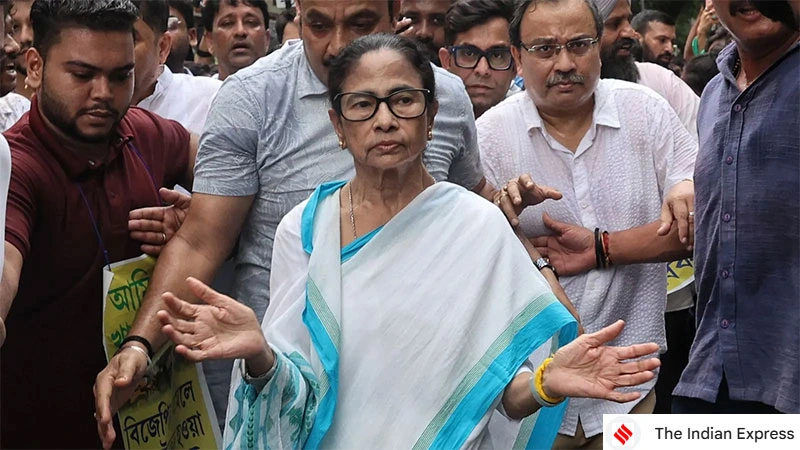
Why Mamata Banerjee Lost Power: The Real Reasons
In 2011, Mamata Banerjee ended 34 years of Left Front rule in West Bengal. She did more than defeat an established government; she became the face of a movement that promised to change Bengal’s political culture. Singur, Nandigram and public anger against the Left helped her build that movement.
Fifteen years later, however, the same question that had once haunted the Left Front confronted Mamata herself: had the time come for a change of government?
The 2026 Assembly election delivered a decisive answer. The BJP won 207 seats in the initial results for 293 constituencies, while the Trinamool Congress (TMC) secured 80. Following the repoll in Falta, the BJP’s tally rose to 208 in the 294-member Assembly. The BJP also won the subsequent by-elections in Nandigram and Rejinagar.
Mamata Banerjee lost her own constituency to Suvendu Adhikari. The Election Commission’s original results and the subsequent Falta repoll result together show the scale of the BJP’s breakthrough.
Why did Mamata Banerjee lose power after fifteen years in office? Corruption allegations, unemployment, questions about industrial development, the RG Kar protests and resentment against sections of the TMC’s local organisation all contributed to the political climate. The BJP, meanwhile, succeeded in turning dissatisfaction into an electoral alternative. No single issue explains the result. Rather, the interaction of these factors helps explain why Mamata’s personal appeal could no longer protect her government.
Watch 6 Reasons Why Mamata Banerjee Lost Bhabanipur To BJP’s Suvendu Adhikari at NDTV.
From the Politics of Change to the Burden of Power
Mamata Banerjee’s rise was built on her ability to challenge an entrenched political system. Her opposition to the Left government’s land acquisition policy in Singur and the violence in Nandigram helped establish her image as a leader who would fight for ordinary people. She understood public anger and knew how to turn local grievances into a statewide political movement.
Governing, however, is different from leading an opposition movement. Once the TMC came to power, it became responsible for employment, education, health, industry, law and order, and the conduct of its own leaders. The Left Front’s past could not remain a permanent excuse for the shortcomings of the new administration.
After fifteen years, the TMC itself had become the establishment. Voters were entitled to judge it by its own record rather than by the failures of the government it replaced. People could appreciate welfare schemes and still be dissatisfied with job opportunities, recruitment controversies or the behaviour of local party leaders.
Anti-incumbency alone does not explain an electoral defeat. Long-serving governments can survive if enough voters believe they are delivering results. The TMC’s difficulty was that its achievements were no longer sufficient to contain dissatisfaction across the state.
For a broader account of the political changes that shaped this period, read Knowledge Mart’s West Bengal Political Landscape.
The Nexus Between Power and the Administration
What helped Mamata Banerjee stay in power for so long was perhaps the alleged nexus between the government, the administration and the police. There were allegations that different people had a stake in the system and benefited from it. Perhaps the Election Commission tried to establish the law of the land for a free and fair poll. One striking example was the 2019 confrontation in which CBI officers were taken to the Shakespeare Sarani police station in Kolkata after the agency attempted to question then Kolkata Police Commissioner Rajeev Kumar.
Mamata Banerjee staged a dharna in protest against the CBI action. After his retirement, Rajeev Kumar was appointed to the Rajya Sabha. The sequence of events raises questions about the relationship between political power and those who serve the system.
There is a lesson here for every ruler: when people receive undue advantages under a political establishment, their loyalty cannot be taken for granted forever.
Mamata may have been able to retain the support of some senior IAS officers through post-retirement appointments and other benefits, but no government can keep everyone under its influence indefinitely. Political developments following the TMC’s electoral defeat, including the subsequent split within the party, illustrate how quickly old equations can change.
Mamata Banerjee’s fall from power may well become a significant case study in Bengal’s political history.
Corruption Allegations and the Question of Fairness
The school recruitment scandal became one of the most damaging controversies faced by the TMC government. For young people preparing for competitive examinations, government employment represents years of study, financial sacrifice and family expectations. Allegations of irregular appointments therefore touched a sensitive nerve: the belief that hard work should offer a fair chance.
The political damage extended beyond individual cases. Recruitment controversies gave the opposition an opportunity to question the government’s commitment to fairness, merit and accountability. Even when legal proceedings remain unresolved, repeated scandals can weaken public confidence in an administration.
There is an important distinction between an allegation and a proven offence. Criminal responsibility must be established through evidence and due process, not political rhetoric. Yet a government cannot expect the public to ignore every controversy until the final legal proceedings have concluded. It must also explain what it is doing to protect the integrity of public institutions.
Welfare schemes can provide meaningful assistance to families, but they cannot substitute for fair recruitment and accountable administration. A government that promises support to ordinary people must also ensure that access to public opportunities does not appear to depend on political connections.
Knowledge Mart examines the wider questions of administration and accountability in West Bengal Governance. The issue is not whether welfare programmes should exist; it is whether they are accompanied by institutions that people can trust.
Unemployment and Bengal’s Unfinished Industrial Story
Employment remains a difficult question in Bengal. Many young people who complete their education and prepare for competitive examinations want stable jobs and opportunities that match their qualifications. When those opportunities are scarce, the problem affects not only individual families but also their confidence in the state’s future. A lot of youth have started leaving Bengal for a better livelihood.
Mamata Banerjee came to power by opposing the Left government’s approach to industrialisation, particularly the land acquisition drive in Singur. That movement raised legitimate questions about farmers’ rights and the consequences of pursuing industrial projects without sufficient public consent.
But Bengal also needed a convincing plan to expand industry, attract investment and create employment.
The challenge was never simply to choose between farmers and industry. Farmers should not be forced to surrender their land without proper safeguards, but young people cannot be expected to accept limited opportunities indefinitely. Bengal needs investment, manufacturing, services and skilled employment alongside protection for agriculture and rural livelihoods.
After fifteen years in office, the TMC had to answer difficult questions about the state’s economic future. Welfare benefits could help households manage immediate expenses, but they could not settle every concern about wages, recruitment, private investment and the availability of good jobs.
It would be simplistic to claim that unemployment alone decided the election or that every young voter rejected the TMC. Voting behaviour is more complicated. Nevertheless, employment and industrial development remained important tests of a government that had enjoyed three consecutive terms in office.
Additionally Mamta Banerjee says Bengal doesn’t need Delhi’s money but the question remains: Can states survive without Centre’s Funds? Such unnecessary center-state conflict has made the situation more cumbersome.
RG Kar and the Crisis of Public Trust
The rape and murder of a doctor at Kolkata’s RG Kar Medical College and Hospital in August 2024 triggered widespread protests. Doctors, students, women and ordinary citizens demanded justice and raised questions about workplace safety, institutional accountability and the government’s response.
The protests became a major political challenge because the anger extended beyond the usual opposition campaign. People who were not necessarily BJP supporters joined demonstrations or expressed concern about the handling of the case. The government could not dismiss all the criticism as party politics.
Mamata Banerjee had built her political identity around direct engagement with ordinary people. The RG Kar crisis therefore raised an uncomfortable question for her government: did the administration understand the depth of public concern about women’s safety and institutional accountability?
The BJP used women’s safety as one of its campaign issues. An Indian Express analysis of the factors behind Mamata Banerjee’s defeat discussed RG Kar alongside other political issues.
The case should not be treated as the sole explanation for the election result. A statewide verdict reflects different concerns across constituencies. Its political significance lies in how it intensified scrutiny of the government when other questions about its record were already being raised.
When Local Political Power Becomes a Liability
The TMC’s grassroots network was once one of its greatest strengths. Local leaders and party workers helped mobilise supporters, maintain a presence across villages and towns, and connect people with government schemes. Such an organisation can be difficult for an opposition party to challenge.
But a powerful local network can also become a liability if people feel that access to public services, business opportunities or local administration depends on political connections. Allegations of intimidation, extortion, syndicate control and political interference repeatedly featured in criticism of the TMC. These allegations should not be applied indiscriminately to every party worker, but their repeated appearance in public debate created a serious problem for the leadership.
Consider a small business owner who believes that local political connections determine whether a business can operate without interference. Or a resident who feels that disagreeing with a local leader may bring unnecessary trouble. Even when individual complaints require investigation, the wider perception can damage the ruling party’s reputation.
A political organisation should connect the government with the people, not make citizens feel dependent on the organisation itself. When voters begin to associate a party with favouritism or fear, its local reach may stop being an advantage.
The BJP benefited from this dissatisfaction. It did not need every voter to accept every allegation; it needed enough voters to believe that a change of government was worth trying.
For a related discussion of the challenges facing the BJP as the new ruling party, see Knowledge Mart’s BJP in Bengal: The Test of Fairness. A change of party does not remove the need to hold local leaders accountable.
The BJP Turned Discontent into an Electoral Alternative
Public dissatisfaction does not automatically remove a government. The opposition must organise, identify the concerns that matter and convince voters that it can govern. In 2026, the BJP succeeded in presenting itself as a viable alternative across Bengal.
The party combined Narendra Modi’s national appeal with state-level leadership, including Suvendu Adhikari, and a campaign that raised corruption allegations, employment, women’s safety, political violence and economic development. It also benefited from the desire for change among voters dissatisfied with the TMC.
The BJP’s breakthrough was not confined to a handful of constituencies. It won 207 seats in the initial results and added Falta after the repoll, taking its final tally to 208. The TMC, which had won 215 seats in 2021, was reduced to 80 in the initial results. Mamata’s own defeat made the political reversal even more striking. It seems more shocking when Mamata’s trusted Aides quits in the shortest possible time after the poll debacle.
However, a BJP victory does not prove that every voter endorsed every element of its ideology or programme. Some voters may have supported its leadership, while others may have prioritised local issues or simply wanted a different government. Election results bring together many motives, and no single explanation fits every constituency.
For a closer look at the new political balance, read Knowledge Mart’s BJP’s Record Win: Is Suvendu Really Happy?. The BJP has won the opportunity to govern; its promises must now be judged by the results it delivers.
Watch Rise of BJP in West Bengal at The Hindu.
Mamata’s Personal Appeal Could Not Save the TMC
Mamata Banerjee has always been central to the TMC’s political identity. Her direct style, personal campaigning and image as a fighter helped her build a distinctive connection with supporters. For years, her leadership was the party’s greatest electoral asset.
That strength also carried a risk. When a party depends heavily on one leader, dissatisfaction with the government can become dissatisfaction with the leader herself. It becomes difficult to separate the administration’s record from the person who heads it.
The 2026 result exposed that weakness. The TMC fell from 215 seats in 2021 to 80 in the initial results, while Mamata lost her constituency to Suvendu Adhikari. The defeat was too extensive to be explained by the performance of a few candidates alone.
There is a striking irony in this reversal. Mamata once convinced voters that Bengal needed to move beyond a government that had ruled for too long. Fifteen years later, the BJP made a similar argument against her government. The political roles had changed, but the question facing voters remained the same: had the ruling party earned another term?
Did the SIR Controversy Affect the Result?
The Special Intensive Revision (SIR) of electoral rolls became one of the most contentious issues surrounding the election. The Election Commission said the exercise was intended to correct the voter lists. Critics, including the TMC, raised concerns about large-scale deletions and the possibility that eligible voters could be excluded.
A Scroll data analysis reported that, in 105 constituencies won by the BJP, the total number of voters deleted during the revision exceeded the winning margin. This finding identifies constituencies where the deletions and the electoral outcome deserve closer scrutiny.
However, the comparison does not establish that all deleted names belonged to eligible voters or that every excluded voter would have supported the TMC. Nor does it prove, by itself, that the BJP would have lost those constituencies without the deletions. The reasons for individual deletions, the appeals process and constituency-level voting patterns must be examined before drawing firm conclusions.
A separate Scroll statistical analysis found an association between greater electoral-roll shrinkage and improved BJP performance relative to the TMC.
The authors also made clear that their findings did not prove fraud or establish that SIR caused the BJP’s victory. That distinction matters: evidence of an association warrants scrutiny, but it is not proof of a specific causal claim.
The TMC’s concerns about the process should therefore be assessed through evidence rather than political loyalty. Equally, the Election Commission’s stated objective of correcting electoral rolls does not remove the need to ensure that eligible citizens are not wrongly excluded.
Readers can explore the wider controversy in Knowledge Mart’s articles on Bengal Electoral Roll Controversies and SIR Deletions: The Shocking Truth in India.
Two questions must remain separate. One is why the TMC lost public support. The other is whether the electoral process was fair in every respect. The result establishes the scale of the TMC’s defeat, but the fairness and impact of individual deletions require their own evidence-based examination.
What Mamata Banerjee’s Defeat Means for Bengal
The BJP’s victory ends fifteen years of TMC rule, but it does not automatically solve Bengal’s problems. The new government must deliver on employment, industrial investment, women’s safety, public services and accountability. It will also be judged by how it treats political opponents and protects citizens who did not vote for it.
The TMC faces a different challenge. It must understand why so many voters turned away, examine the conduct of its local organisation and rebuild public confidence. Blaming the opposition or the electoral process cannot replace an honest assessment of its own record. At the same time, genuine concerns about voter deletions deserve transparent scrutiny.
The new government now faces the same basic test that Mamata Banerjee faced in 2011: can it turn its promises into results? The answer will depend on jobs created, public services delivered, institutions strengthened and the everyday experience of ordinary citizens.
What Explains Mamata Banerjee’s Defeat?
- Anti-incumbency: Fifteen years in power made the TMC answerable for its own record rather than the failures of the Left Front.
- Corruption allegations: Recruitment controversies damaged public confidence in fairness and accountability.
- Employment concerns: Questions about jobs and industrial growth remained important to Bengal’s young people.
- RG Kar: The protests intensified public scrutiny of women’s safety and the government’s response.
- Local political resentment: Allegations of intimidation and favouritism became a liability for the ruling party.
- The BJP’s growth: The opposition turned several sources of dissatisfaction into an effective statewide challenge.
- Limits of personal leadership: Mamata’s appeal could not fully shield the TMC from criticism of its administration.
- SIR controversy: Voter deletions raised serious questions requiring scrutiny, without automatically proving that they determined the result.
Conclusion: The Price of Taking Voters for Granted
Why Mamata Banerjee lost power in Bengal cannot be explained by a single scandal, protest or campaign strategy. Anti-incumbency, corruption allegations, employment concerns, the RG Kar protests, resentment over local political behaviour and the BJP’s ability to present itself as an alternative all formed part of the political picture. The SIR controversy raised a separate question about the electoral process.
In 2011, Mamata Banerjee won by persuading Bengal that the time had come to replace a government that had ruled for too long. In 2026, the BJP successfully made a similar case against her government. Her defeat shows the limits of relying on past victories and personal popularity when voters are questioning the government’s present record.
The BJP now has the responsibility to deliver on its promises. The TMC must confront the reasons behind its defeat, while questions about electoral-roll revision deserve transparent scrutiny. For the people of Bengal, the real test is whether this change brings more accountable government, fairer institutions and better opportunities for the future.
A Lesson Every Ruler Should Remember
Any government that believes appeasement and freebies can keep it in power forever is living in a fool’s paradise. A ruler is a servant of the people, not a king sitting on a throne. Voters are citizens to be respected, not subjects to be treated as subordinates. History has taught this lesson time and again, yet those in power often forget it. Bengal has just witnessed another reminder. How and Why Mamata Banerjee Lost Power – can remain as a historical reference for the future political analysts.
The fall of Mamata Banerjee may become a classic example of what happens when a government begins to take its voters for granted.
The BJP should remember this lesson too. Power may change hands, but the duty to respect the people never changes.