NEET Exam Controversy: Mudslinging Explodes
Aug 03, 2026 - By Ashutosh Roy Current AffairsEducation & TechNational NewsPolitical IdeologiesPoliticsRegional UpdatesWest Bengal Politics
What is happening in the NEET Exam Controversy now?
The NEET Exam Controversy has officially devolved into an ugly political dogfight. What started as a push for systemic reform has morphed into personal vendettas and political mudslinging, leaving the real policy debates buried under daily mudslinging match-ups.
For deeper background, read this detailed NEET leak protest analysis on Knowledge Mart.
We must bring the roles of our media under microscopic lenses also. Is it playing an independent and unbiased role? Unfortunately, the media focus mostly at ruling dispensation. This is also to be noted that our Prime Minister mostly believes in monolog instead of dialogs.
We should remember that the Prime Minister stepped in during the NEET exam controversy when the movement gained nationwide momentum and finally was compelled by the situation to remove Dharmendra Pradhan, the Education Minister.
Readers may please go through the fact-based “How Free Media Keeps Democracy Alive?” at Knowledge Mart.
Has politics crossed into personal attacks?
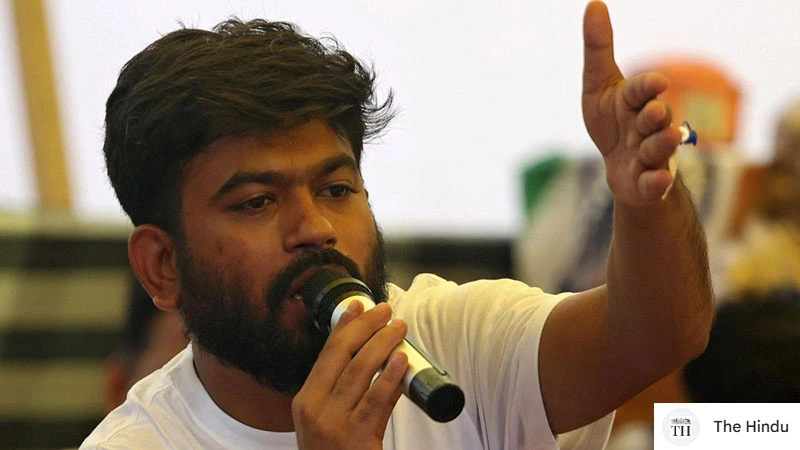
The gloves are completely off. Critics are now targeting Abhijeet Dipke, founder of the Cockroach Janata Party, demanding to know how he funded his overseas education. In response, Amit Tiwari went ahead and filed an official RTI seeking a full breakdown of his family’s finances. Watch the India Today Coverage in YouTube.
Things escalated further after Narendra Modi released a video clip suggesting he forgives everyone like a child. Dipke fired back instantly, circulating footage of alleged police violence against a 12-year-old boy and a 15-year-old girl calling out the Prime Minister for an explicit apology.
You can also follow broader updates through this latest NEET controversy coverage.
Is the legal battle adding more fuel?
The courtroom drama isn’t helping calm things down either. Senior lawyer Kapil Sibal stepped in to offer massive financial backing for CJP’s legal crusade. But that move instantly sparked a fresh debate over whether the party even has valid legal standing to fight this case in court.
For legal developments, check this Supreme Court NEET case update.
Is the NEET Exam Controversy no longer about the exam?
At this point, the entire scandal has drifted far beyond paper leaks and administrative lapses. It’s become a full-fledged arena for partisan clashes and score-settling.
As highlighted in Knowledge Mart’s latest insights, this shift completely reshapes the story. The national conversation has traded genuine student welfare for high-voltage political theater.
NEET Exam Controversy: 5 Key Moments That Changed Everything
| Date | Event | Why It Shocked India |
|---|---|---|
| May 5, 2024 | NEET UG Exam Held | Massive exam conducted, but early whispers of paper leak triggered suspicion. |
| June 4, 2024 | Results & Toppers Surge | Unusual spike in toppers raised serious questions on fairness. |
| June 2024 | Grace Marks Row | 1,500+ students awarded grace marks, sparking nationwide outrage. |
| July 2024 | Supreme Court Steps In | Court refused full re-exam, but acknowledged concerns over irregularities. |
| 2026 | Protests & Political War | NEET Exam Controversy exploded into protests, media battles, and political clashes. |
Is this the real picture of India today?
This whole episode feels like a mirror held up to modern Indian politics. Partisan hostility has crept into every major issue, forcing people into rigid “us versus them” camps. The exam controversy is no longer an isolated administrative failure, it reflects a broader, deeply fractured political landscape, which is really unfortunate.
Is political linkage shaping the NEET Exam Controversy?
It’s worth noting that Abhijeet Dipke, the CJP face pushing the protest forward, used to be tied to the Aam Aadmi Party. With Arvind Kejriwal‘s party currently fighting for its own survival, critics argue Dipke’s rapid public rise isn’t completely detached from partisan strategy.
Delve into the Raghav Chadha’s switch to BJP from AAP in the Rajya Sabha with 6 other MPs.
Is the real issue getting lost?
Lost in all this finger-pointing is the core reason anyone spoke up in the first place: fixing a broken testing infrastructure. Systemic reform has taken a back seat to endless side discussions. When Abhijeet Dipke or pellet guns come in the center stage, the original reform issue is forced to take a backseat.
Turn on any daily news recap and you’ll hear debates over who financed protest travel or whether permits at Jantar Mantar were valid. Tensions spiked further after claims surfaced that police used pellet guns on crowd gatherings, resulting in serious student injuries. Explore the India Today report on pellet injury claim.
Are media debates distracting from core issues?
The media spectacle has only fueled the distraction. Prime-time coverage, including debates hosted by journalists like Rajdeep Sardesai, remains fixated on whether crowd control tactics were justified: Watch: Analysis and impact of Pellet guns on NEET protests (Rajdeep Sardesai in Straight Bat)
While police forces and official agencies trade conflicting statements, the endless television debates keep public attention away from testing integrity.
This is the problem of politicizing dynamics in India and West Bengal.
What should be the real focus of the NEET Exam Controversy?
Any use of violent crowd control on citizens is tragic, and many rightly demand an end to it. But we have to ask ourselves what the central battle really is here.
The conversation needs to circle back to where it started: building a bulletproof, transparent testing process. We ought to be discussing structural reforms and alternative career pathways so millions of students aren’t left holding the bag in a high-stakes lottery.
Is the NEET Exam Controversy getting mixed with larger political narratives?
Side-issues keep bleeding into the main story. Take Taslima Nasrin‘s recent visit to Kolkata: the Chief Minister welcomed her, which should have been routine. But Suvendu Adhikari immediately seized the moment to attack the CPI(M), reminding the public who drove her out of Bengal decades ago.
We don’t know while the Trinamool Congress has been continuously dismantling, Suvendu Adhikari might be slightly worried of the revival of CPI(M).
Back in 2007, Buddhadeb Bhattacharjee‘s administration asked Nasrin to leave following violent fundamentalist protests, a turbulent chapter well-documented in regional history.
Read The Hindu report on Taslima Nasrin leaving Kolkata. I can clearly recall how the events got unfolded like others who are in their forties and above in West Bengal.
Is ideology shaping political support?
Nasrin penned her famous novel Lajja following anti-Hindu violence in Bangladesh after the Babri Masjid demolition. Her recent public backing of the Uniform Civil Code, a key BJP priority, explains why certain political camps are suddenly eager to champion her cause today.
Attention: Dear readers, I want to draw your attention to the valiant attempt of Political Mudslinging – Taslima Nasrin in Kolkata and NEET Protest Controversy in Delhi.
Taslima Nasrin Controversy: Why She Was Ousted & How She Returned
| Phase | What Happened | Reason |
|---|---|---|
| 1994 (Bangladesh) | Forced to leave country | Faced death threats over her book Lajja and criticism of religious extremism |
| 2007 (Kolkata) | Left Front govt removed her | Violent protests over her writings; govt feared law & order issues |
| 2008 – 2025 | Lived in exile | Security risks and political sensitivity kept her away from Bengal |
| 2026 | Allowed to return | Political shift and renewed support for free speech |
| Now | Public comeback | Seen as symbol of free expression and ongoing debate |
Nevertheless, Taslima Nasrin and her companions put on a very delightful recitation and music program on August 01, 2026. Interested viewers can watch the Fera of Nasrin in YouTube.
Are opposition forces aligning around the NEET Exam Controversy?
Seeing public outrage build over testing failures, the Indian National Congress stepped in to back the student movement. Around the same time, Mamata Banerjee, facing her own internal political headwinds, moved quickly to demonstrate solidarity with the youth.
Still political maneuvering reshuffled the deck almost overnight. Just days before opposition leaders were set to stage a joint protest in New Delhi, intense pressure forced the resignation demand of Dharmendra Pradhan, dramatically shifting the tactical focus of the movement. Delve into Indian Express report on opposition protest over NEET row.
The state capital has witnessed the stormy presence of National Congress and Aam Admi Party (AAP). We need to consider that both the parties have been struggling for their existences.
Rahul Gandhi and some others like Akhilesh Yadav have raised hue and cry in the parliament also. A pure apolitical movement was almost hijacked by the leading political parties. That has raised the question about the integrity of the youth forces.
Who really benefits from this movement?
Most parties backing these demonstrations sit firmly in the anti-BJP camp. That creates an interesting paradox: the educated middle-class youth driving these protests have historically formed a key voter bank for the ruling party and some of them have been arrested also.
What started as an organic demand for exam fairness has evolved into a strategic battleground for political alliances, optics, and narrative control, a dynamic tracked extensively across Knowledge Mart.
Where should the NEET Exam Controversy head next?
It’s time to take a step back. Endless mudslinging, character attacks, and political posturing are draining the life out of a critical movement. The fight for testing transparency is drowning in political noise.
Our focus needs to stay locked on what actually matters: India’s youth deserve an honest, foolproof, and competent examination framework. We cannot let partisan games overshadow the urgent need for structural fixes, leak prevention, and real accountability.
Beyond fixing the current setup, we need a serious national debate on whether relying on a single, high-stakes filter like NEET makes sense, or if multi-tier evaluation models offer a safer path forward for aspiring students.
In summary, we have to cut through the political circus and return to meaningful solutions. As Knowledge Mart has pointed out, fixing this system requires straightforward accountability and a student-first approach, not political theater.
Look at the attempt to evaluate Alternative to NEET Exam by Knowledge Mart in consultation with academicians.
Knowledge Mart Exclusive: The Reality Check Nobody Is Talking About
Let’s ignore the noisy TV debates for a moment. When our editorial team looked at how these protests changed over time, one simple truth stood out: the system knows how to tire students out until they give up. You can observe the exhausted faces of students stepping out of institutes like Akash and Allen.
Whenever a big paper leak breaks out in India, the pattern stays the same. First, students and parents express real anger online and in the streets. But just as officials face real pressure to fix things, political leaders jump in, not to help, but to grab attention for themselves.
When the debate turns into petty fights over online records, private money, and personal political arguments, people forget about the NEET Paper leaks and cheating rings. The government gets an easy pass while political rivals argue with each other on the internet.
If we really want to protect future students in the NEET Exam Controversy, firing a leader or winning an online argument isn’t enough. We need real changes: shutting down crooked coaching centers, tracking question papers digitally, and setting up an independent team that keeps politics out of exams completely.
10 Key Takeaways from the NEET Exam Controversy
- So what actually triggered all this? It began with allegations of paper leaks and irregularities, but the reaction it sparked across the country turned it into something much bigger.
- Why are students so angry? Because for many of them, this isn’t just an exam, it’s years of effort. When fairness is questioned, everything feels uncertain.
- Did something go wrong in the system? Investigations suggest there were serious lapses, and that alone has shaken trust in the entire process.
- How did this become political so quickly? The moment public outrage grew, political parties stepped in and from there, the narrative started shifting.
- Is this still about NEET anymore? Not entirely. What started as an exam issue is now tangled with politics, media debates, and competing agendas.
- Where does Taslima Nasrin fit into this? Interestingly, her return to Kolkata became part of the political narrative, even though it had nothing to do with NEET directly.
- Why bring her into this at all? Political leaders used her past and present to target opponents, adding another layer to an already heated situation.
- Is media coverage helping or distracting? It’s doing both. While some debates highlight real issues, others seem to drift away from the core problem.
- What’s the biggest concern right now? Trust. Once students lose faith in such a major exam, rebuilding that confidence becomes extremely difficult.
- So what really matters going forward? Cutting through the noise and focusing on fixing the system, because in the end, this is about students, not politics.
[…]NEET Exam Controversy: Mudslinging Explodes As the NEET exam controversy deepens, student outrage is being drowned out by intense political mudslinging. Here is what’s driving the chaos, and where things stand.[…]
[…]NEET Exam Controversy: Mudslinging Explodes As the NEET exam controversy deepens, student outrage is being drowned out by intense political mudslinging. Here is what’s driving the chaos, and where things stand.[…]
[…]NEET Exam Controversy: Mudslinging Explodes As the NEET exam controversy deepens, student outrage is being drowned out by intense political mudslinging. Here is what’s driving the chaos, and where things stand.[…]