Raiganj Police Encounter: A Dangerous Trend?
Nov 10, 2026 - By Ashutosh Roy PoliticsCurrent AffairsNational PoliticsRegional UpdatesWest Bengal Politics
Raiganj Police Encounter: Justice or New Trend?
The death of a rape and murder accused in a police encounter in Raiganj has once again raised an uncomfortable question about policing in West Bengal. Are police encounters gradually becoming a new trend in the state? And more importantly, are we beginning to accept something that should concern every citizen who believes in the rule of law?
There can be absolutely no sympathy for those who commit rape. It is one of the most heinous crimes imaginable. When a minor girl becomes the victim of sexual assault and murder, the brutality is even more disturbing. The perpetrators deserve the strictest punishment prescribed by law. Society has every reason to demand swift investigation, prosecution and justice for the victim.
But does the seriousness of a crime give the police the authority to become the judge and executioner? Does public anger justify bypassing the judicial process? These questions cannot be brushed aside simply because the accused was suspected of committing an exceptionally brutal crime.
Raiganj Police Encounter: What Happened?
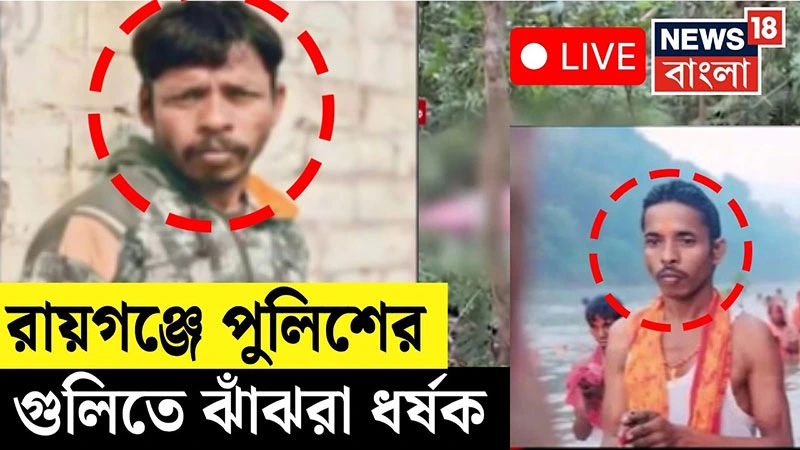
The latest Raiganj Police Encounter took place on November 9, 2026. Dilip Roy, the prime accused in the case involving the alleged rape and murder of a minor girl in Raiganj, North Dinajpur, was shot dead during a police operation.
The girl’s decomposed body had been recovered from the Kulik Forest area in early November after she went missing. Her family suspected sexual assault and murder. The police launched an investigation and began searching for the accused.
According to the police version reported in the media, officers received information about Roy’s whereabouts and launched an operation near the Bihar border. When the police approached him, he allegedly opened fire at the officers and a police vehicle while attempting to escape. The police retaliated, and Roy sustained fatal injuries. He was subsequently taken to Raiganj Government Medical College and Hospital, where he was declared dead.
These are serious allegations, and the police account must be examined. The post-mortem findings, forensic evidence and circumstances of the firing are important in establishing exactly what happened.
However, one fact is already clear: the accused will no longer face a criminal trial in connection with the alleged crime. The investigation into the girl’s death must continue, particularly if other persons were involved.
Read the Hindustan Times Bangla report on the Raiganj encounter.
Baruipur, Gaighata, Shamsherganj: A Pattern Emerging?
Raiganj is not an isolated incident. West Bengal has witnessed three other reported police encounters in recent months. The circumstances surrounding these incidents deserve closer examination.
Baruipur, July 8, 2026: Pravas Mondal, accused in the rape and murder of a minor girl, was killed in police firing. According to the police, he was taken to the crime scene for reconstruction when he allegedly snatched a service revolver from an officer and opened fire. The police retaliated, claiming self-defence. The incident subsequently became the subject of judicial scrutiny.
The Calcutta High Court proceedings concerning the Baruipur encounter are particularly important. The court sought information about the investigation and directed the state to address allegations raised in petitions questioning the circumstances of the shooting.
Gaighata, October 26, 2026: Prahlad Das, accused of raping and murdering a 17-year-old girl, was killed in police firing. The police claimed that he snatched a service revolver during crime-scene reconstruction and fired at the officers. The police retaliated, and an officer was reportedly injured.
The incident attracted further attention when the state CID took up the investigation into the circumstances of the encounter. The question of how the accused allegedly managed to seize a loaded police weapon also deserves serious examination.
Read The Telegraph’s report on the CID investigation.
Shamsherganj, October 27, 2026: Samaun Sheikh, accused in the murder of Sujit Mondal, was killed in police firing. Here too, the police claimed that the accused had snatched an officer’s firearm and opened fire during the operation. The incident took place in the Dhuliyan area of Murshidabad.
Now comes Raiganj, where another accused in a serious crime has died in police firing.
There is a striking similarity in the police explanations surrounding the Baruipur, Gaighata and Shamsherganj incidents. In all three, the police maintained that the accused had managed to snatch a service weapon and fire at officers.
Raiganj has a different reported sequence, with the police claiming that the accused fired during the operation near the Bihar border.
It would be premature to conclude that these were staged encounters without evidence. Equally, it would be wrong to accept every police explanation without scrutiny.
Three encounters in approximately four months, followed by another in Raiganj, are enough to demand a serious public discussion about police procedures, operational planning, weapon security and accountability.
The Telegraph’s comparative report on the three earlier encounters provides further details about the similarities in the police accounts.
Rape Is a Heinous Crime. There Can Be No Excuse.
Let us be absolutely clear. There should be no attempt to minimise the seriousness of rape. Sexual violence is an attack on human dignity, personal freedom and the security of society. Indeed, Women’s Security had come into a big question in West Bengal during previous regime.
When the victim is a minor, the crime becomes even more horrifying. The perpetrators must face the full force of the law. There should be no political protection, administrative interference or deliberate delay in investigation.
The police must act swiftly, collect forensic evidence, identify every person involved and ensure that the prosecution is conducted effectively. The victim’s family should not have to run from one police station to another or spend years seeking justice.
People are understandably furious when they hear about brutal rape and murder cases. They do not want another Kamduni or Park Street. They do not want another situation in which a victim’s family has to fight an exhausting battle against administrative insensitivity, investigative failures and judicial delays.
But public anger, however justified, cannot become the foundation of criminal justice. The responsibility of the state is to ensure that the guilty are convicted through a fair and effective judicial process. It is not to provide instant punishment through police bullets.
Kamduni and Park Street: Lessons We Cannot Ignore
West Bengal has witnessed several cases of sexual violence that exposed serious shortcomings in the criminal justice system.
The Kamduni gang rape and murder case of June 2013 shocked the state. A college student returning home was abducted, gang-raped and murdered. The incident triggered widespread public outrage and protests demanding justice. The former Chief Minister, Mamata Banerjee demanded a speedy trial in public.
In 2016, a trial court convicted six persons, sentencing three to death and three others to life imprisonment. However, the Calcutta High Court modified the verdict in October 2023. It commuted the death sentences of two convicts to imprisonment for the remainder of their natural lives and acquitted another death-row convict. The sentences of three others were also reduced, with their rape charges not sustained.
The verdict deeply disappointed sections of the victim’s family and the Kamduni movement. The case demonstrated how complicated the journey from investigation to final judicial outcome can become. Whatever one’s opinion of the appellate judgment, it reinforces the importance of evidence, judicial scrutiny and the appeals process.
Read the Bar and Bench report on the Kamduni verdict.
The Park Street rape case of 2012 was another disturbing episode. Suzette Jordan was gang-raped inside a moving car. What made the case particularly disgraceful was the initial response to the survivor’s allegations. Her complaint was publicly dismissed by those in positions of authority, and she had to fight attempts to question her credibility.
Three accused were eventually convicted in December 2015 and sentenced to ten years of rigorous imprisonment. Two other accused had remained absconding at that stage. The survivor, who had courageously fought for justice, died earlier that year.
The Park Street case exposed how insensitive institutional responses and delays can compound the suffering of a survivor. It should remain a reminder that the first responsibility of the police and administration is to take allegations of sexual violence seriously.
Read The Indian Express report on the Park Street convictions.
We cannot afford to repeat these failures. But neither can we correct them by abandoning the judicial process altogether.
Police Cannot Take Over the Judiciary
This is the most important issue arising from the recent encounters.
In a constitutional democracy, the police investigate crimes, arrest suspects, collect evidence and present the case before a court. The judiciary examines the evidence, hears the defence and determines guilt and punishment. These responsibilities are deliberately separated.
An accused person is not automatically a convicted criminal. Even when the evidence against someone appears overwhelming, the final determination of guilt belongs to the court. The right to a fair trial is not a privilege reserved for respectable citizens. It is a fundamental safeguard of our legal system.
Article 21 of the Indian Constitution protects the right to life and personal liberty. The state cannot take away someone’s life except according to a procedure established by law. Police officers can certainly use necessary force in genuine situations of immediate danger or self-defence. Nobody expects them to remain helpless when their lives are threatened.
But there is a fundamental difference between legitimate self-defence and an encounter becoming a convenient substitute for a criminal trial. The circumstances surrounding every such death must be independently examined. Police accounts cannot be treated as conclusive merely because the deceased was accused of a heinous crime.
There is another important question. If an accused person can repeatedly snatch a service revolver from an accompanying police officer, does that not expose serious weaknesses in police security and operational planning? Shouldn’t senior officers be answerable for such lapses as well?
The government must not allow the public perception that an encounter is an easier way of dealing with difficult criminal cases.
My earlier article on Teachers and Political Rights in Bengal examined the importance of constitutional rights and institutional boundaries. The same principle applies to policing. No institution should exercise powers that the Constitution and the law have not entrusted to it.
Does Bengal Want Justice or Instant Revenge?
The distinction between justice and revenge is fundamental to a civilised society.
People who have lost their daughters, sisters or other family members to sexual violence deserve sympathy, support and justice. They should never have to beg officials to investigate or spend years waiting for a court to hear their case.
Fast investigation, effective prosecution, protection of witnesses and timely trials should be the priorities of any government that genuinely wants to protect women.
There is no shortage of tough statements whenever a horrific crime takes place. Governments promise zero tolerance. Political leaders announce that the police have been given a free hand. Such declarations may generate public confidence temporarily, but they cannot replace institutional accountability.
The change of government in Bengal has raised expectations about law and order and police administration. The new government must be judged by its actions, not simply by its promises. As I discussed in my West Bengal Election 2026 Analysis, political change must ultimately translate into accountable governance.
Allowing encounters to become a substitute for judicial proceedings would hardly represent a meaningful improvement in governance.
A Dangerous Precedent for Bengal
Today, the public may applaud an encounter because the person killed was accused of raping and murdering a minor girl. Tomorrow, what happens if an innocent person is wrongly identified as an accused? What happens if a police officer misuses the power to use lethal force? What happens if political pressure influences an operation?
These are not imaginary concerns. Every criminal justice system must be designed to protect citizens against mistakes, abuse of authority and misuse of power.
Once the idea of encounter justice becomes socially acceptable, the distinction between lawful police action and extrajudicial punishment can gradually become blurred. A government may find public approval for such actions in the beginning, particularly when emotions are running high. But constitutional governance cannot depend on public applause.
We must also remember that an encounter does not necessarily solve the underlying crime. If other people were involved, if evidence needs to be collected or if a larger criminal network exists, the death of the prime accused may actually make the investigation more difficult.
The objective must be to establish the truth, identify every offender and secure convictions. Killing one accused person is not a substitute for completing an investigation.
The wider problem of criminal influence and political patronage in Bengal also deserves attention. In my earlier article, Criminal Politics in Bengal: A Dangerous Nexus, I examined the relationship between political power and criminal influence. A government committed to restoring public confidence must address the roots of criminality through institutions, not merely through displays of force.
What Bengal Needs Is Accountable Policing
West Bengal needs a police force that is firm, professional and fearless in dealing with criminals. It also needs a police force that respects constitutional limitations and understands the difference between law enforcement and punishment.
Every reported encounter must be subjected to an impartial investigation. The circumstances of the firing, forensic findings, ballistic evidence, post-mortem reports and statements of officers involved must be examined. Where police officers have acted unlawfully, they must face the consequences. Where genuine self-defence is established, the evidence should speak for itself.
The government should strengthen investigations and prosecutions in rape cases, improve police station responsiveness, protect survivors and witnesses, and ensure that cases involving sexual violence are not allowed to disappear into administrative delays.
Women and children need security before a crime takes place, not merely promises of punishment afterwards.
The government must understand that a declining faith in the criminal justice system cannot be repaired by allowing the police to assume judicial powers. If trials are slow, improve investigations and strengthen the courts. If criminals escape punishment, fix the weaknesses in the prosecution system. If police officers are negligent, hold them accountable.
There is no shortcut to justice in a democracy.
Key Takeaways: Justice Must Not Become an Encounter
- Rape is a heinous crime. Perpetrators must face strict punishment after conviction through a fair trial.
- Raiganj is not an isolated incident. The earlier encounters in Baruipur, Gaighata and Shamsherganj raise questions about policing procedures.
- Police accounts require scrutiny. Every death in police firing must be examined independently.
- Judicial authority matters. The police investigate crimes; courts determine guilt and punishment.
- Past failures cannot justify extrajudicial action. Kamduni and Park Street demonstrate why effective investigation and prosecution are essential.
- Political change must bring institutional change. The new government must ensure police accountability and independence.
- The rule of law must prevail. Neither public anger nor political convenience can replace constitutional safeguards.
Conclusion: Bullets Cannot Replace Justice
The Raiganj Police Encounter is not merely another incident in the investigation of a horrific crime. Coming after Baruipur, Gaighata and Shamsherganj, it raises a larger question about the direction of policing in West Bengal.
We cannot accept another Kamduni or Park Street, where the struggle for justice becomes an additional ordeal for victims and their families. We cannot accept a system in which the guilty escape punishment because of poor investigation, administrative negligence or judicial delays.
But we must not go to the other extreme either.
A police encounter cannot be celebrated simply because the deceased was accused of rape or murder. The police are not the judiciary, and the authority to decide punishment does not belong to the police force.
There is no contradiction in demanding the harshest lawful punishment for rapists and murderers while opposing extrajudicial killings. In fact, both demands arise from the same commitment to justice.
West Bengal needs stronger policing, faster trials and greater accountability. It does not need an encounter culture.
Justice must be delivered by the courts, not by bullets. Otherwise, in our attempt to punish criminals, we may end up weakening the very rule of law that is supposed to protect us all.