Is Political Elitism declining now in 2026?
Jan 25, 2026 - By Ashutosh Roy Culture & HeritageElection AnalysisPoliticsWest Bengal Politics

Key Highlights
- Historical dominance of Political Elitism: West Bengal politics traditionally emphasized cultural and intellectual prestige over wealth or caste.
- Distinct sociological phenomenon: Unlike northern states of India, Bengal’s political elitism focused on education, culture, and intellect.
- Aristocracy and barristerocracy: Leaders like Bidhan Chandra Roy, Siddhartha Shankar Ray, Jyoti Basu, and Buddhadeb Bhattacharjee symbolized elite rule rooted in culture and education.
- Shift under the Left: Mid-Left rule introduced cadre-based political elitism, where local party cadres controlled resources, benefits, and disputes.
- Class struggle narrative: Both Congress and Left claimed Bengal was “caste-free,” focusing on class struggle, but critics argue it masked lack of Dalit and Bahujan representation.
- Mamata’s rise: Initially seen as a subaltern revolt against elitism, Mamata Banerjee challenged CPM’s educated elite, emphasizing simplicity and grassroots appeal.
- Clientelism replaces culture: While cultural and intellectual elitism weakened, muscle power, money, and political patronage grew under TMC.
- Emergence of identity politics: Social divisions among Dalits, Matua, Rajbanshi, Hindus, and Muslims are becoming increasingly visible.
- Franchise-style politics: Politics is now muscular and franchise-based, with local leaders controlling resources, development, and vote management.
- War-room politics: Election strategies now focus on centralized planning and vote managers, replacing street-level mass politics.
- 2026 election stakes: The upcoming elections will determine whether power remains with a cultured elite minority or shifts to a more fragmented, identity-based leadership.
What Is Political Elitism in West Bengal Politics?
Ahead of the 2026 elections, a clear people versus establishment battle is unfolding. Therefore, it is important to briefly revisit the historical background. Political elitism in West Bengal is not new. In fact, it has been a tradition and a political culture. This trend has existed since 1947. However, as times changed, the form and practical use of political elitism also changed.
According to political analysts, political elitism in West Bengal is a distinct sociological phenomenon. It is different from the rest of India. The reason is Bengal’s long-standing reputation for cultural and intellectual capital. In many other parts of India, political power mainly depends on wealth or caste.
Even today, Bengalis take pride in figures like Rabindranath Tagore and Amartya Sen. As a result, social ranking based purely on wealth was almost unthinkable in West Bengal for a long time.
How Political Elitism of West Bengal differ from North India?
In contrast, North India witnessed a different pattern. There, upper-caste control has always dominated the politics . Initially, this took the form of Brahminical dominance. Later, communities like Vaidyas and Kayasthas also became part of this elite structure.
In states such as Bihar and Uttar Pradesh, political elitism turned into rigid upper-caste politics. Consequently, people from backward communities often faced oppression and injustice. Eventually, this environment gave rise to leaders like Lalu Prasad Yadav, Mulayam Singh Yadav, and Mayawati, who emerged as voices against that dominance.
How Did Bhadralok Dominance Shape Bengal’s Political Culture?
If we look at West Bengal politics, one pattern becomes clear. There has been a long-standing dominance of the Bhadralok class.
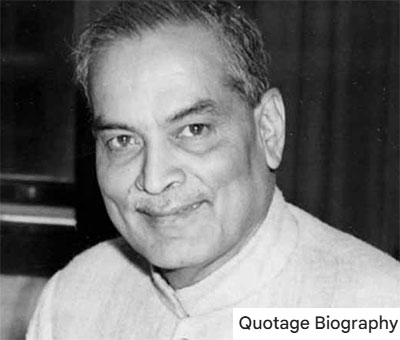
From Bidhan Chandra Roy to Buddhadeb Bhattacharjee, the list of Bengali Chief Ministers clearly shows this trend. These leaders placed strong emphasis on refinement, culture, and intellectual values. This focus shaped Bengal’s political identity for decades.
However, this is where West Bengal stands apart. Unlike many other states, caste-based or varna-based politics never took root here in the past.
As a result, education, cultural authority, and intellectual prestige historically defined political influence in Bengal, rather than birth, caste, or social hierarchy.
At one time, people jokingly said that Bengal’s politics meant aristocracy or barristerocracy. This remark reflected a deeper political reality.
Educated Elitism
For example, Bidhan Chandra Roy was not just a politician. He earned recognition as a legendary physician and people often described him as a modern-day Dhanvantari.
Similarly, leaders like Siddhartha Shankar Ray and Jyoti Basu became symbols of this barrister-led elite culture in politics.
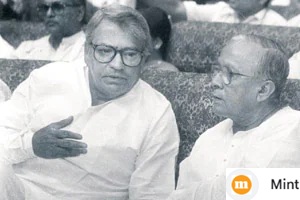
Buddhadeb Bhattacharjee also represented this tradition. He was not only a student of Presidency College. He was also the nephew of the famous poet Sukanta Bhattacharya. At one point, his life extended beyond Writers’ Buildings or Alimuddin Street. He was a regular presence at Nandan, the cultural hub of Kolkata.
Therefore, political elitism in that era had a different character. It closely connected culture, literature, education, and intellectual life to politics, rather than relying on raw power or mass dominance.
However, this picture is gradually changing. The shift began during the middle phase of the Left rule.
If we look at the Left’s decision-making bodies, such as the Politburo and the State Committee, we notice a clear pattern. Most members came from the educated elite class.
Once, Rezzak Molla, the son of a farmer, expressed his frustration. He sadly remarked that only educated people could belong there.
At the same time, the Left maintained strict discipline throughout the party. Within that structure, the Politburo and Central Committee functioned as ideological gatekeepers. They closely controlled decisions and protected the party line.
Was Bengal Really a “Caste-Free” Political Space?
For a long time, both the Congress and the Left claimed that Bengal had no caste divisions. They argued that their focus on class struggle or development removed caste from politics. Notably, for the Left, class struggle always remained central.
However, their rigid commitment to Marxist doctrine may have prevented them from recognizing how much the nature of class struggle had changed over time.
Still, we must acknowledge that class struggle remains relevant even today, and we must change the way we apply it.
According to critics, the idea that Bengal is “caste-less” was actually a strategy to preserve elite dominance. This narrative largely ignored the representation of Dalit (Namasudra) and Bahujan communities.
Why Did the Left Create a Cadre-Based Political Elite?
Anyway, during the Left regime, West Bengal witnessed a new form of political elitism. The Left Front created a “party society,” where local party cadres emerged as the new elite.
In this system, culture or intellectual depth had no role. In fact, even formal education was not essential. To access government benefits or resolve disputes, ordinary citizens had to pass through the party’s internal hierarchy. As a result, a new model of “cadre elitism” took shape.
Because the Left maintained strict party discipline, the hierarchy functioned efficiently. There were clear layers such as local committees, zonal committees, and district committees. Therefore, even though strong-arm influence existed, it followed a fixed structure.
At least people did not have to appease multiple leaders with money or favors at the same level. Jokingly, many said that the party even settled disputes between husband and wife.
Thus, political power during that phase shifted away from intellect or culture and became firmly rooted in organizational control and cadre loyalty.
How Did Mamata Banerjee Challenge Traditional Political Elitism?
In 2011, People initially saw the rise of Mamata Banerjee and the Trinamool Congress (TMC) as a subaltern revolt against the Bhadralok elite. At that time, many believed a historic shift was slowly taking place in West Bengal politics—one where political elitism would finally end.
Although Mamata Banerjee comes from a Brahmin family—a fact she herself openly stated on the Assembly floor—her political image was very different.
Her slogan of “Ma, Mati, Manush,” her earthy language, her simple sarees, and her rubber slippers created the impression that she would challenge the educated elitism of the CPM.
Has Cultural Elitism Been Replaced by Muscle and Money Power?
However, what did we actually witness? While cultural and intellectual elitism weakened, it was replaced by political patronage, or clientelism. Power began to flow not through ideas or organization alone, but through networks of loyalty, favor, and protection.
As a result, West Bengal did not move beyond elitism. Instead, it transitioned from one form of elite control to another, marking a new phase in its political evolution.
A new class of local leaders emerged as the symbols of modern political elitism. They gained power through muscle strength, financial control, and, most importantly, patronage from the top leadership.
Gradually, these leaders began to control local resources. They took charge of businesses, land, education, healthcare, and even government schemes and allocations. As a result, a strange culture of collections and extortion started to grow.
During the CPM era, control existed but remained relatively regulated. Now, that control has turned into a brazen display of power, openly mixed with money politics.
Trinamool elitism
Over time, this system has moved further toward a more muscular and franchise-based form of Trinamool elitism. Power now operates like a local franchise, backed by force and financial networks. This, ultimately, is the political reality of present-day West Bengal.
- Cultural expression is now limited to songs or poems written by the Chief Minister or a few favored individuals.
- Intellectual engagement has been reduced to flattery and unquestioning praise.
- Creativity now focuses on finding new routes for corruption.
- Development has turned into an active effort to keep people dependent on state handouts.
- Education and healthcare exist inside shiny buildings, but neither teachers nor students function properly.
- Permanent posts in police and teaching are now filled by temporary staff.
- Efficiency and income depend on extortion and commission-based cuts.
- Industry is restricted to MSMEs or small street-level shops like “Tele Bhaja”.
- Leaders prioritize their own luxury vehicles instead of public development.
- The government, administration, and ruling party together form a strange ecosystem, where everyone becomes a stakeholder.
Overall, this system reflects a deep structural decay, where governance, development, and accountability have merged into a profit-driven political network.
For the first time in West Bengal, social divisions are becoming clearly visible. Lines are now being drawn among Dalits, Matua, Rajbanshi, Hindus, and Muslims.
At the same time, the gap between Kolkata and the districts is widening. This divide is visible everywhere—from ministerial positions to industry and culture. So-called Muslim development increasingly means the rise of musclemen who deliver votes.
What Do Sandeshkhali and RG Kar Reveal About Elite Arrogance?
Meanwhile, incidents like RG Kar or Sandeshkhali have come to symbolize elite arrogance. This arrogance stands in direct contradiction to democratic values, yet it reflects the true face of political elitism today.
A new term has now entered the political vocabulary: “vote managers” or “Political Strategists”.
As a result, street-level politics is fading, while war-room politics is taking over. Decisions are no longer shaped on the ground, but inside closed strategic rooms.
Will the 2026 Election End Political Elitism in West Bengal?
The 2026 Assembly election will be decisive. It will determine whether power remains in the hands of a “cultured minority elite”, or shifts toward a more fragmented, identity-based leadership structure. In essence, the election will define the future direction of power, representation, and democracy in West Bengal.
[…]Is Political Elitism declining now in 2026? Political elitism in West Bengal politics has shifted from Bhadralok dominance to cadre power and clientelism, shaping today’s political reality before 2026.[…]
[…]Is Political Elitism declining now in 2026? Political elitism in West Bengal politics has shifted from Bhadralok dominance to cadre power and clientelism, shaping today’s political reality before 2026.[…]
[…]Is Political Elitism declining now in 2026? Political elitism in West Bengal politics has shifted from Bhadralok dominance to cadre power and clientelism, shaping today’s political reality before 2026.[…]
[…]Is Political Elitism declining now in 2026? Political elitism in West Bengal politics has shifted from Bhadralok dominance to cadre power and clientelism, shaping today’s political reality before 2026.[…]