No Press Shield: Delhi Police's Warning
Nov 20, 2026 - By Ashutosh Roy PoliticsCurrent AffairsNational Politics
No Press Shield: Delhi Police’s Digital Media’s Dilemma
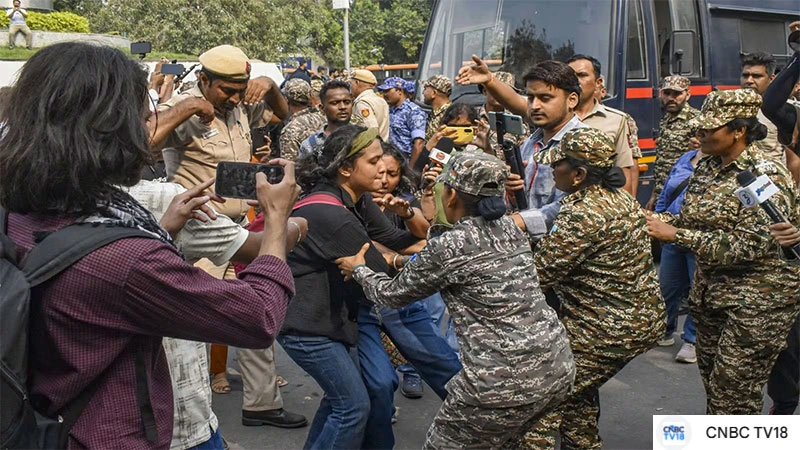
The Delhi Police has drawn a clear distinction before the Supreme Court: social media influencers and reel-makers cannot automatically claim the special protection extended to journalists covering protests. The submission has triggered a much bigger debate.
In an era when digital platforms have transformed journalism, should press protection remain confined to those working for established newspapers and television channels? And what happens to independent journalists who have no institutional backing but perform the same reporting functions?
In an affidavit filed before the Supreme Court, the Delhi Police argued that the court’s direction protecting journalists from interference while covering protests was not intended to exempt so-called reel-makers, social media influencers or unruly elements from the general law. The affidavit was filed in response to complaints of police harassment and obstruction during the protests against Chief Election Commissioner Gyanesh Kumar at Jantar Mantar in Delhi.
The police maintained that carrying a camera and microphone does not automatically make someone a journalist. It also argued that the purpose behind a person’s activity should be considered when distinguishing professional reporting from content creation for commercial purposes.
Read the Indian Express report on the Delhi Police affidavit and the Bar and Bench coverage for the details.
Why Is There No Press Shield for Independent Digital Journalists?
The Delhi Police’s position raises an uncomfortable question. What happens to thousands of independent journalists, YouTubers and freelance reporters who cover protests, political events and public issues without working for an established media organisation?
Journalists employed by leading newspapers and television channels generally carry identity cards issued by their respective organisations or the respective state governmnets. Their professional credentials are relatively easy for the police to verify. But what about those who independently produce news reports, conduct interviews, record incidents and publish them on YouTube, Instagram or other digital platforms?
Do they suddenly lose their journalistic identity because they do not have an identity card issued by a big newspaper or television channel?
To be fair, the Delhi Police has clarified that the absence of PIB accreditation or an employer-issued identity card does not automatically disqualify someone from being recognised as a journalist. Its affidavit acknowledges the constitutional freedoms of independent journalists, freelancers and citizens reporting through digital platforms. However, it maintains that such individuals cannot automatically claim exemption from general laws or lawful police directions at protest sites.
That distinction does not settle the larger issue. How will the police identify genuine independent reporters on the ground? What happens when they face harassment, intimidation or obstruction while covering a protest? Will their professional work receive the same consideration as that of reporters employed by established media houses?
These are not insignificant questions. Millions of people now depend on independent digital platforms for information. But the distinction between conventional journalism and digital journalism continues to create confusion among those responsible for enforcing the law.
In this context, read Knowledge Mart’s analysis, Press Freedom in the Digital Age, which examines the challenges facing journalism in an increasingly digital world.
Has the CJP Movement Changed the Delhi Police’s Approach?
One cannot help wondering whether the experience of the recent CJP movement has influenced this approach. During the protests, several incidents involving the police, protesters and journalists came into public view through videos recorded on mobile phones and independent digital platforms.
Even incidents inside buses and police stations have found their way into the public domain. Such recordings have made it increasingly difficult for authorities to control the narrative simply by restricting access to established media organisations.
Perhaps this is precisely what makes independent digital reporting uncomfortable for those in authority. A journalist no longer needs to wait for a television newsroom to approve a report before an incident reaches thousands of viewers. A video recorded on a mobile phone can become public within minutes.
Whatever the Delhi Police or the Solicitor General may argue, the distinction they are attempting to establish has serious implications for independent reporting. The police may have practical difficulties identifying genuine journalists in a crowded protest, but that cannot become a reason to disregard the contribution of digital media.
After all, if a person is genuinely reporting an incident, why should the platform on which the report is published determine whether that person deserves protection?
Can Barkha Dutt and Dhruv Rathee Be Ignored in the Digital Media Revolution?
Consider the digital media landscape today. Barkha Dutt and Dhruv Rathee have built substantial audiences through digital platforms that extend far beyond conventional television viewership. Independent digital journalism has created an entirely new space for political debate, public interviews and investigative reporting.
How many people watch ABP Ananda through YouTube compared with its conventional television audience? The reach of digital news platforms has grown enormously. Barkha Dutt’s digital platform regularly features prominent legal experts, political commentators and other public figures. Their discussions reach audiences that may never switch on a conventional television news channel.
It is not just about established digital personalities. Independent reporters and small YouTube channels frequently bring local incidents to public attention. Sometimes, their reports expose matters that receive little or no attention from mainstream news organisations.
Consider the allegations of harassment involving women at the Delhi protest sites. Such incidents have attracted public attention through reports and recordings beyond the conventional television newsroom. Whether individual allegations are ultimately established is a separate matter. The important point is that digital platforms have created additional channels through which incidents can be documented and scrutinised.
What About Rozina and Suman Chattopadhyay’s Right to Report?
The same question applies in Bengal. When Rozina reaches Bothtala Police Station with a boom microphone and a camera person, and the women gathered there to protest against Pankaj Dutta respond to questions, the entire episode can reach the public without the involvement of a big television channel.
That is the power of independent digital journalism. A reporter does not necessarily need the backing of a large media house to bring a public issue into the spotlight.
The position of journalists such as Rozina and Suman Chattopadhyay also brings us back to the central question. Should their ability to report and receive protection depend on whether they possess the institutional credentials of a mainstream newspaper or television channel?
Is this not a case of different standards for people performing broadly similar journalistic functions?
Knowledge Mart has also examined the importance of independent voices in journalism in Insider Stand: Neutral Digital Media. The debate over press protection also raises questions about whether digital platforms can maintain their independence while challenging established power structures.
Read Bengal Police Encounter Deaths to understand why transparency and accountability in policing cannot be ignored.
Does Press Freedom Give Journalists the Right to Say Anything?
Let me make one thing absolutely clear. I do not believe that a YouTuber, social media influencer or journalist has the right to attack the Prime Minister of the country with abusive or vulgar language.
Freedom of expression does not mean freedom from responsibility. Nor should anyone be allowed to disguise participation in an unlawful protest as journalistic activity merely by carrying a camera and microphone.
Responsible journalism demands professional conduct, verification of facts and a clear distinction between reporting an event and participating in it. A person who joins a protest, raises slogans and actively confronts the police cannot automatically claim that every action was part of journalistic work.
However, the opposite argument is equally important. A person cannot be denied the opportunity to report an incident simply because the police do not recognise the platform through which that person publishes news.
Freedom of speech and expression under Article 19(1)(a) of the Constitution is not reserved exclusively for journalists employed by established media houses. Citizens, independent reporters and digital publishers also enjoy constitutional protection, subject to the reasonable restrictions permitted by law.
Article 21, which protects life and personal liberty, is equally relevant when questions of personal safety and lawful treatment arise. Neither constitutional provision, however, creates blanket immunity from lawful police action. The real issue is whether restrictions are applied fairly and whether genuine reporting is unnecessarily obstructed.
Readers can refer to the India Code official legal database for the constitutional and legal framework.
Why Have Police Regulations Failed to Keep Pace with Digital Journalism?
The real problem is that the media landscape has undergone a revolutionary transformation, but the mindset and identification practices of the police administration have not evolved at the same pace.
Just a decade ago, independent digital news platforms were relatively few. Today, thousands of YouTube channels, online publications, independent reporters and social media journalists are engaged in gathering and distributing information. Some have larger audiences than established television channels.
The distinction between print, electronic and digital journalism is becoming increasingly artificial. A journalist reporting through a YouTube channel may perform the same functions as a reporter working for a national television network. Both gather information, interview people, record events and publish reports for public consumption.
Does the absence of an institutional press card automatically make the former less deserving of protection?
Interestingly, the Delhi Police has maintained that no individual was proceeded against merely for lacking press accreditation or an identity card. It has also acknowledged that independent journalists, freelancers and citizens reporting through digital platforms enjoy constitutional freedoms. Its argument, however, is that these freedoms do not provide immunity from lawful police directions or automatically bring every content creator within the special protection extended to journalists covering protests.
There is a practical problem here, but there is also a larger administrative failure. If the police cannot distinguish genuine independent journalists from people participating in protests, the answer should be a transparent and workable identification mechanism, not a blanket suspicion of everyone carrying a camera and microphone.
Established media organisations may have their own systems of accreditation, but independent journalism needs fair recognition too. Professional credibility should be assessed through the nature of the work, not merely the reputation or size of the organisation behind it.
The relationship between political power and law enforcement is another issue that deserves public scrutiny. Also read Criminal Politics in Bengal: A Growing Danger.
Will Digital Media Replace Newspapers and Television Channels?
The prestige once associated with newspapers is gradually declining. Television channels, too, are facing an increasingly difficult battle for audience attention. It would not be surprising if, within another decade, many conventional television news organisations find themselves struggling to retain their audiences.
Digital media and online news are steadily becoming the preferred sources of information for a growing section of the population. YouTube, independent news websites and social media platforms have changed how people consume news, question authority and participate in public debate.
This does not mean that traditional journalism will disappear overnight. Newspapers and television channels will continue to have their place. But their institutional dominance can no longer be taken for granted.
If digital journalism is becoming an integral part of the country’s information ecosystem, why should its practitioners remain outside a fair system of journalistic protection?
The police certainly have the responsibility to maintain law and order at protest sites. They must be able to distinguish between genuine reporting and participation in unlawful activities. But that responsibility must not turn into a system where only journalists carrying the identity cards of established media organisations are considered worthy of protection.
The need of the hour is a transparent, practical and platform-neutral framework for identifying genuine journalists, including independent and freelance digital reporters. Professional responsibility should determine journalistic credibility, not merely the size or reputation of the media organisation.
As discussed in Knowledge Mart’s article How Free Media Keeps Democracy Alive, a free press is essential for holding those in power accountable. That principle should apply to the digital media ecosystem as much as it applies to traditional journalism.
The question is simple: if journalism has moved beyond newspapers and television studios, why should press protection remain confined to them?
What Does No Press Shield Mean for Digital Journalists?
- No Press Shield: Delhi Police has argued that the Supreme Court’s protection for journalists covering protests does not automatically exempt reel-makers and social media influencers from general laws and lawful police directions.
- Independent Journalism: Freelance reporters and independent digital journalists also contribute to news gathering and public accountability.
- Press Freedom: Freedom of expression under Article 19(1)(a) is not an exclusive privilege of established media organisations.
- Responsible Reporting: Journalists must distinguish professional reporting from participation in protests or unlawful activities.
- Digital Media Revolution: Police regulations and journalist-identification practices must adapt to the changing media landscape.
- Equal Protection: A journalist’s professional credibility should not depend solely on whether a large newspaper or television channel employs them.