Bengal Police Encounter Deaths: New Normal?
Nov 18, 2026 - By Ashutosh Roy PoliticsSocietyWest Bengal Politics
Police Encounter Deaths: Bengal’s Questions
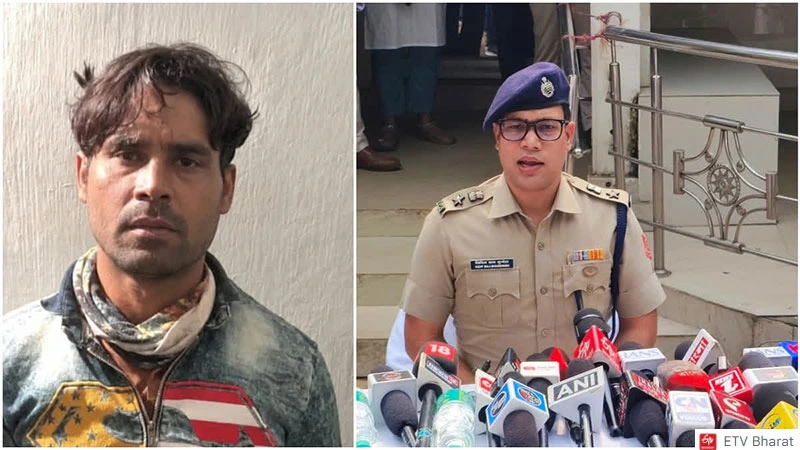
The death of Ratan Sheikh in one of the latest Bengal police encounter deaths has triggered a fresh political debate in West Bengal. On November 13, when police went to Layek Bazar in Birbhum to apprehend him, Ratan Sheikh allegedly opened fire at Constable Biswajit Das and escaped. Das sustained a bullet injury to his left knee and was initially admitted to Burdwan Medical College Hospital before being shifted to SSKM Hospital in Kolkata. I sincerely wish him a speedy recovery.
According to police accounts, Ratan Sheikh was arrested from Nababhat in Purba Bardhaman on November 15. He was subsequently taken to a brick kiln at Charkol village in Nanoor, Birbhum, to recover a concealed firearm. During the operation, he allegedly retrieved a weapon and opened fire at the police team. The police retaliated, claiming they had acted in self-defence. Ratan Sheikh was critically injured and later declared dead at a hospital.
According to police sources quoted in the media, 36 criminal cases were pending against him. The Indian Express report on the Ratan Sheikh encounter provides details of the police version and the subsequent investigation. Police also stated that a magisterial inquiry and forensic examination had been ordered.
Two questions inevitably arise. How could a person facing so many serious criminal cases remain outside police custody? And when the police went to apprehend someone with such an alleged criminal record, why were they not adequately prepared to deal with the situation?
West Bengal has witnessed five police encounter deaths since the BJP government came to power in May 2026. Questions about these incidents are legitimate. Nevertheless, I believe the Ratan Sheikh case deserves to be examined separately rather than automatically clubbed with every other Bengal police encounter deaths.
What Happened in the 5 Recent Police Encounter Cases in Bengal?
- Baruipur (South 24 Parganas): Prabhas Mondal, accused in the rape and murder of a minor girl.
- Gaighata (North 24 Parganas): Prahlad Das, accused in a minor’s rape and murder.
- Samsherganj/Dhulian (Murshidabad): Samaun Sheikh, killed in police firing during crime scene reconstruction.
- Raiganj (Uttar Dinajpur): Dilip Roy, accused in the Kulik Forest minor rape-murder case.
- Nanoor (Birbhum): Ratan Sheikh, wanted in 36 cases and accused of shooting a police constable.
Why Are Police Encounters Rising in West Bengal?
I have previously written in detail about the Raiganj Police Encounter and the growing trend of West Bengal Police encounter deaths. Let me make my position clear at the outset. Unless a situation genuinely demands action in self-defence, I strongly oppose deaths in police encounters.
A staged encounter or an unlawful killing in the name of an encounter is inhuman, unethical and illegal. It also exposes serious weaknesses in policing. The law does not permit the police to take the place of the judiciary and decide who deserves to live or die. Extrajudicial killings in West Bengal must be properly investigated.
One disturbing pattern in several reported incidents is the allegation that accused persons managed to snatch police service revolvers and use them against the officers themselves. This raises an uncomfortable question: does our police force lack even the minimum physical fitness, training or operational competence required to protect its own weapons?
If police personnel cannot adequately safeguard their service revolvers, how can the public be expected to feel secure in their hands? Weapon retention, physical fitness, tactical training and proper operational planning are fundamental requirements of professional policing.
Of course, this is not a problem that has suddenly emerged under the present BJP government. Similar incidents have occurred under previous governments as well.
Is Bengal’s Encounter Culture Really New?
On January 15, 2025, an undertrial prisoner named Sajjak Alam allegedly overpowered police personnel while being transported from court to prison in Uttar Dinajpur. He reportedly shot Assistant Sub-Inspector Deban Baishya and Constable Nilkanta Sarkar before escaping with a firearm.
Three days later, on January 18, 2025, police tracked him down near the Bangladesh border. According to the police, Alam opened fire when the search team intercepted him, and the officers retaliated. He later died at a hospital.
That incident took place during the Trinamool Congress government’s tenure. The Hindustan Times reported the encounter and the suspension of four police personnel in connection with alleged security lapses during his escape.
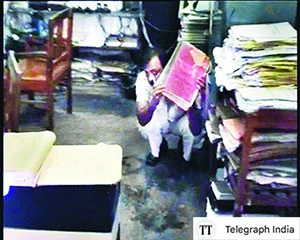
During the Trinamool regime, there were also instances when police personnel were allegedly forced to take shelter under tables inside police stations to protect themselves from politically connected miscreants. The image of the police force being intimidated by local political musclemen was hardly reassuring.
Go further back, and the record is equally uncomfortable. During the tenure of Siddhartha Shankar Ray, allegations of extra-judicial killings of Naxalites and suspected Naxalite supporters emerged. The violence of that period remains a deeply troubling chapter in Bengal’s political history.
During the Left Front era, another controversial case was the custodial death of Idris Mian in March 1984. He had been arrested as a prime suspect in the murder of Deputy Commissioner of Police Vinod Kumar Mehta. A contemporary report by India Today documented allegations that Idris Mian had been beaten to death by policemen during interrogation. The incident generated considerable controversy at the time.
These examples establish one important point: Police Encounter Deaths and Police Custodial Deaths are not new phenomena in West Bengal. Their frequency may vary across governments, but no political establishment can simply distance itself from the history of police excesses and failures of accountability.
I have also examined the wider relationship between political power and criminal influence in my article, Criminal Politics in Bengal: A Dangerous Nexus. Criminal influence, political patronage and police accountability are closely connected issues. A government cannot claim to restore law and order merely by changing the political colour of the administration.
Do Police Encounters Actually Reduce Crime?
There is another aspect of this debate that deserves attention. Uttar Pradesh is often described as a state where police encounters have become an important part of the government’s approach to crime control. Still, the question remains: have encounters alone eliminated criminal activities?
Uttar Pradesh continues to report serious criminal offences despite its much-publicised encounter policy. On the other hand, comparisons with Bihar must be based on comparable NCRB data, crime categories, population figures and reporting practices. It would be misleading to attribute differences in crime rates to encounters alone.
The larger question is whether Extra-Judicial Killings actually deter criminals from committing offences. The assumption that criminals will automatically become frightened of the law simply because the police shoot accused persons in encounters may be misplaced.
Crime prevention requires much more than the use of firearms. It needs effective investigation, intelligence gathering, professional policing, speedy trials, witness protection and certainty of punishment. A criminal who believes that the judicial process can be manipulated or delayed may not necessarily be deterred by the possibility of an encounter.
There is also a difference between the police exercising their legitimate right to self-defence and using encounters as a substitute for the criminal justice system. The two should never be confused.
Why Do People Support Instant Justice Over Courts?
It is equally important to understand why sections of society sometimes support police encounters. The frustration is not difficult to understand.
In 2013, Tapas Chowdhury, a police officer, was shot dead during violence surrounding the student union election at Harimohan Ghosh College in Garden Reach, Kolkata. The incident exposed the dangerous intersection of student politics, local muscle power and political rivalry. More than a decade later, it remains a reminder of how political violence can undermine law and order.
Contemporary reports on the Garden Reach incident documented the violence that led to the police officer’s death.
The Kamduni rape and murder case is another example of public frustration with the criminal justice system. The crime took place in June 2013 and shocked the state. The trial court subsequently sentenced three accused to death and three others to life imprisonment. The hapless family members visited Nabanna to meet the former Chief Minister, Mamata Banerjee.
However, in October 2023, the Calcutta High Court modified the verdict. It commuted the death sentences of two convicts to imprisonment for the remainder of their natural lives and acquitted another death-row convict. The court also modified the convictions and sentences of three other accused.
The High Court’s judgment raised serious questions about the prosecution’s ability to establish certain charges beyond reasonable doubt. The victim’s family expressed dissatisfaction with the verdict. The Indian Express reported the High Court’s decision.
When heinous crimes take place and trials continue for years, when witnesses and evidence fail to secure convictions, and when accused persons are released or receive reduced sentences, public confidence in the justice system inevitably suffers.
Perhaps this is one reason why some victims’ families and sections of society express support for police encounters. They feel that the system has failed them and that an encounter delivers an immediate form of justice.
But emotional satisfaction and justice are not the same thing. An unlawful killing cannot become lawful simply because people are angry with the judicial system. The answer to weak investigations and delayed trials is not to abandon the rule of law. It is to make the criminal justice system work.
Can Bengal Police Stay Independent From Political Control?
The police are one of the most visible faces of the administration and one of its essential pillars. But in our country and in our state, the police often end up functioning as the ruling party’s strong-arm force. This is an unfortunate reality of our political system.
The irony is that the people who direct and control the police administration are often the very people who determine the professional fate of the IPS and IAS officers serving under them. The state government or the central government can have a decisive influence over their postings, transfers, promotions and career prospects. How many officers would willingly risk trouble by going against the wishes of those in power? Who would want to invite professional difficulties by openly challenging the ruler’s instructions?
Political interference in policing is not a new phenomenon. Governments change, political loyalties change, and the people occupying important administrative positions change. Yet the underlying problem often remains the same. When officers begin to believe that their careers depend more on political approval than professional integrity, the independence of the police becomes questionable.
Of course, it would be unfair to suggest that every police officer compromises professional integrity. There are undoubtedly officers who perform their duties honestly and courageously, often under difficult circumstances. But an institutional structure that leaves policing vulnerable to political interference creates a serious problem for democracy.
I had examined this problem in detail in my earlier article, Political Control Over Police: Power Trap. The issue is not confined to one political party. It concerns the institutional independence of the police under successive governments.
My article Why Police Serve the Party: Dark Truth also examines how the relationship between political authority and police administration can change when the ruling party changes.
Police reform, therefore, must go beyond changing the government or replacing senior officers. We need a professional police force that is accountable to the Constitution and the law, not to the political preferences of whoever happens to be in power.
Are Police Encounters Legal in India? Supreme Court Rules
There is a fundamental legal distinction between a genuine encounter in which police officers have no reasonable alternative but to defend themselves and an extra-judicial killing carried out under the cover of self-defence.
The Supreme Court laid down important safeguards in People’s Union for Civil Liberties versus State of Maharashtra (2014). The judgment requires proper and independent investigation into deaths resulting from police firing. An encounter cannot be treated as justified merely because the police claim that they acted in self-defence.
Among other safeguards, the framework requires registration of an FIR, an independent investigation, a magisterial inquiry, preservation of evidence and appropriate reporting to human rights authorities.
These safeguards are essential because the police cannot be the sole judge of the legality of their own actions. Every death resulting from police firing must be examined objectively and independently.
In Ratan Sheikh’s case, the allegations against him were serious, and the reported shooting of Constable Biswajit Das deserves unequivocal condemnation. The police also have a legitimate right to protect their lives when confronted with an armed attack. But the circumstances of the fatal encounter must still be independently examined in accordance with the law.
There should be no political double standards here. The same standards of accountability must apply whether the government is led by the BJP, the Trinamool Congress or the Left.
What Reforms Does West Bengal Policing Need Now?
- Self-defence and extra-judicial killing are different: Police officers have the right to defend themselves against an armed attack, but that right does not provide blanket immunity from investigation.
- Police preparedness matters: Repeated incidents involving the alleged snatching of service revolvers raise questions about training, weapon security and operational planning.
- Criminal cases must reach their logical conclusion: People facing multiple serious charges should not be able to exploit weaknesses in investigation, prosecution and the judicial process.
- Justice delayed weakens public confidence: Long trials, poor evidence collection and failed prosecutions create frustration among victims and ordinary citizens.
- Political interference must end: Police officers should be able to perform their duties without fear of political pressure or career-related retaliation.
- Accountability must be consistent: Police misconduct cannot be condemned under one government and defended under another merely because political loyalties have changed.
Instant Justice vs. Rule of Law: What Must Prevail?
The Ratan Sheikh encounter should not become another political argument in which one side celebrates the police and the other automatically condemns them. The facts of the incident, the circumstances leading to the shooting and the subsequent police action must be examined independently.
At the same time, the larger questions cannot be ignored. Why do notorious criminals repeatedly escape the reach of the law? Why are police personnel sometimes unable to protect themselves during operations? Why do investigations fail to produce convincing evidence? And why does the police force so often appear vulnerable to the political establishment?
These are questions that every government must answer.
We cannot build a safe society by celebrating every encounter, nor can we protect the rights of citizens by ignoring attacks on police personnel. Both the safety of the police and the rights of the accused matter in a constitutional democracy.
My position is simple: I will oppose an unlawful police killing regardless of the political party in power. Equally, I will support the right of police personnel to defend themselves when their lives are genuinely threatened.
The police must rise above political colours, and the rule of law must remain above the wishes of every ruler. That is the foundation of a functioning democracy.
Frequently Asked Questions (FAQ)
How many police encounter deaths have occurred in West Bengal recently?
West Bengal has recorded five police encounter deaths over a six-month period following May 2026. These incidents took place in Baruipur (South 24 Parganas), Gaighata (North 24 Parganas), Samsherganj/Dhulian (Murshidabad), Raiganj (Uttar Dinajpur), and Nanoor (Birbhum).
Are police encounters legal in India?
The term “encounter” has no separate legal recognition in Indian law. While police officers have the statutory right to private defence if their lives are threatened by an armed attack, extrajudicial killings or staged encounters are strictly illegal and unconstitutional.
What are the Supreme Court guidelines on police encounter deaths?
In the landmark PUCL vs. State of Maharashtra (2014) judgment, the Supreme Court mandated strict safeguards for every death resulting from police firing. These include registering an FIR, conducting an independent investigation by the CID or a separate police team, holding a mandatory magisterial inquiry, preserving forensic evidence, and reporting the incident to the National Human Rights Commission (NHRC).
Why do police encounters often happen during crime scene reconstructions?
In several recent cases, official police accounts state that accused persons attempted to snatch service weapons or retrieve concealed firearms during crime scene reconstructions or weapon recovery operations, prompting officers to retaliate in self-defence. Legal experts and former police officers have emphasized that each case requires independent scrutiny to verify these claims and assess operational lapses.