Nirmal Ghosh Arrested: RG Kar Case Big Break
Aug 14, 2026 - By Ashutosh Roy Current AffairsGovernancePoliticsRegional UpdatesWest Bengal Politics
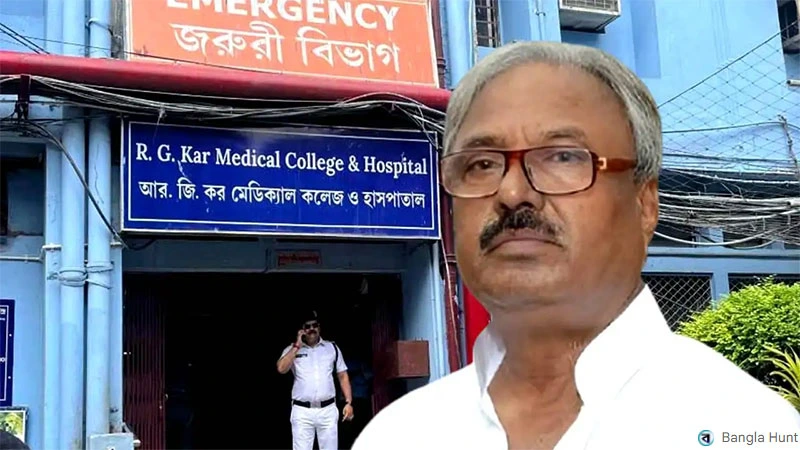
8 Questions Demand Answers:
Before being jubilant on the news Nirmal Ghosh Arrested, we must analyze the broader spectrum.
- Why did the misleading news of their daughter’s deaths reach the family so late?
- Why did the families have to wait so long at the hospital before they could see the deceased daughter?
- When there was clear evidence of rape and murder, why was the FIR registered so late?
- Why was the cremation carried out in such a hurry by TMC leaders when the parents were demanding a second post-mortem?
- Why was the post-mortem conducted after sunset when there are clear constitutional guidelines governing such procedures?
- Why and how did the former Principal receive a prized posting at another elite medical college in Kolkata?
- Will the state investigation go deep, or will it have to stop because the CBI is already investigating the case
- Can the police or investigation team show the audacity to walk into the Harish Chatterjee Street?
Nirmal Ghosh Arrested in RG Kar Case: A Breaking News for Bengal?
Nirmal Ghosh Arrested – and with that single headline flashing across television screens and mobile phones on Thursday, a sudden wave of long-suppressed emotions erupted across West Bengal.
For more than a year, an entire state carried a deep and painful wound in its heart. Thousands of ordinary citizens – doctors, students, parents, and workers – marched through heavy monsoon rain. They held late-night candlelight marches in public places and spent sleepless nights thinking about the horrifying events inside RG Kar Medical College and Hospital.
The demand for justice grew louder with every passing day. What began as a cry of pain slowly turned into a powerful socio-political movement.
Thus, behind every protest rally and every courtroom hearing, one agonizing question hung over every dining table, neighborhood tea stall, and crowded local train: would the powerful political heavyweights who managed, supervised, and executed the immediate cover-up ever actually face real police action and wear handcuffs?
On Thursday, that heavy curtain of political protection finally tore apart. Ex-Panihati MLA Nirmal Ghosh of TMC was finally arrested by tracking units in Sambalpur, Odisha.
This is not merely another political updates article sliding down a social media feed. It represents an emotional crater in Bengal’s contemporary history. Don’t those haunting images from August 2024 still linger like an inescapable nightmare?
The horrific brutalization of young “Abhaya” inside a hospital seminar room left an open, bleeding wound on the soul of the state.
She was not in a vulnerable, isolated alley; she was inside a major government-run tertiary care facility, serving on duty as a postgraduate trainee doctor. She was dedicating her youth to saving the lives of daily patients. How could the state administration fail so completely and catastrophically to guarantee her basic physical safety?
When her life was brutally snatched away on that cursed August night, something fundamental snapped in the public consciousness. Mothers wept in their kitchens as if they had lost their own blood daughters. Fathers stood silently on street corners holding handwritten cardboard placards with trembling hands.
The arrest of a major political figure linked directly to the suspicious events immediately following her death carries the weight of millions of silent prayers. It sends an unmistakable signal to the administrative apparatus: no matter how deep the initial cover-up was buried, the truth eventually catches up.
Still, every conscious citizen knows that we have a very long, difficult road ahead before final sentencing is pronounced. Though Nirmal Ghosh Arrested shows use glimpses of hopes but we should accelerate this momentum.
The Panihati Crematorium Mystery: Why This Arrest Shook Every Household
The formal arrest of the former Panihati MLA in direct connection with the RG Kar rape-murder probe has reignited the darkest, most disturbing memories of what transpired on the evening of August 9. Why does this single police action carry such extraordinary emotional volatility for the average Bengali home?
Because nobody in Bengal has forgotten the shocking and unnatural rush to the Panihati crematorium.
Standard police procedures and established municipal rules seemed to be completely ignored that evening. The body of the young doctor, which was the most important physical evidence in the entire case, was rushed to the electric furnace with shocking and unexplained speed.
Ordinary people, who had been waiting patiently with the bodies of their own loved ones, were pushed aside. Uniformed police personnel and aggressive political workers reportedly took control of the cremation process.
Why was there such an extraordinary, desperate rush to burn the body?
Why were two grieving local families forcefully bypassed in the waiting queue?
Why were the standard municipal cremation fees waived off on the spot without any formal paperwork or clear accounting trail?
These are the exact, uncomfortable questions that independent platforms like Knowledge Mart kept raising relentlessly, even during the early weeks when mainstream media channels were still treading cautiously around influential party bigwigs and high-ranking health officials.
| Timeline Event | Standard Legal Procedure | What Actually Happened at Panihati |
|---|---|---|
| Post-Mortem & Body Release | Preserve physical evidence, conduct full family consultation, ensure formal handoff | Rushed release under heavy police cordon; parents arrived home only after the hearse had already reached the site |
| Crematorium Arrival & Queue | Sequential municipal queue processing based on arrival timestamps | Waiting local families pushed aside forcefully due to the physical presence of ruling party heavyweights |
| Consent Paperwork & Authorization | Direct verification and handwritten signatures of parents or primary immediate kin | Signatures executed by local political associates and municipal neighbors while parents were kept in the dark |
| Administrative & Fee Processing | Standard municipal fee receipt generated and stamped by local counters | Fees waived off informally on verbal orders issued during the hasty, high-pressure cremation process |
The granular facts uncovered during initial investigations revealed a deeply disturbing picture.
The primary consent forms authorizing the immediate cremation were not signed by the grieving parents. Instead, local political fixers and party operatives put their ink on the official documents while the parents were subjected to chaotic delays and mental torture.
The rush was so blatant, so coordinated, and so aggressive that it sparked immediate, widespread public suspicion of a calculated attempt to destroy vital forensic evidence before an independent, court-ordered second autopsy could ever be requested.
The local populace in Panihati saw everything with their own eyes. They knew that the flames rising from that furnace were meant to consume not just a physical body, but the primary forensic clues of an unimaginable institutional crime.
Alas! for months, ordinary citizens felt compelled to remain silent spectators because the ruling party held absolute sway, and Nirmal Ghosh had long operated as an untouchable, dominant heavyweight in the district.
Why shouldn’t the breaking news “Nirmal Ghosh Arrested” come as a pleasant surprise to all of us?
Look at how the wheel of political fortune turns over time. In a remarkable electoral development in the Panihati constituency, Ratna Debnath, the courageous mother who lost her daughter, stood in the assembly elections and won the seat. In doing so, she defeated Tirthankar Ghosh, the son of three-term MLA Nirmal Ghosh. That ballot victory was a clear public verdict long before law enforcement agencies finally made their physical move.
It is that very Nirmal Ghosh, whose arrest news spread like wildfire and make us happy.
May it be, Ratna Debnath, because of her chair of MLA, has started getting justices. But what happens to the common citizens?
Nirmal Ghosh Arrested: How His Escape Attempt Collapsed
Political power is a strange, fragile commodity. When it holds, it seems impenetrable; when it vanishes, it disintegrates all at once. The final days leading up to the capture of the former TMC leader read like a gritty political drama where the main actor suddenly realizes his script has run out of pages and his director has walked off the set.
Days before police tracking teams caught up with him, a deeply revealing scene unfolded during an internal meeting of the Ritabrata-TMC camp at a club venue in Topsia on Saturday, July 11, 2026. Party insiders and field workers were stunned when the former Panihati strongman suddenly walked into the hall completely unannounced.
He had no formal invitation to attend.
He held no designated official assignment in that meeting.
He was a desperate man searching for a political lifeline as the legal net drew tight. Witnesses present inside the room noted how he attempted to corner senior party colleagues in quiet whispers, pleading for an organizational shield and asking whether the Ritabraa-party machinery would stand behind him if fresh FIRs resulted in police action. But the political climate across West Bengal had altered beyond recognition. Nobody in the room wanted to sit anywhere near a high-voltage explosive. Senior leaders turned their backs, offering cold, monosyllabic responses.
Shortly after the incident, Ritabrata Bandyopadhyay clearly challenged his invitation on air during a televised media interaction.
Everyone following Bengal politics understood immediately why a towering, long-time leader like Nirmal Ghosh would turn up at a regional meeting without an invite: he was testing whether any residual political umbrella remained to cover him. Finding himself utterly radioactive and isolated, he walked out of the venue alone into the afternoon heat, realizing his political immunity had completely dissolved.
With his party backing gone and the pressure from new police filings mounting by the hour, the suspect made a run for it.
He crossed the state line into neighboring Odisha, heading straight for the crowded, narrow alleyways and beachside hotel corridors of Sambalpur. His plan was simple and textbook: blend into the massive floating population of daily tourists, keep a low physical profile, and wait out the initial legal storm behind an inter-state border.
He calculated that crossing into another state’s jurisdiction would buy him crucial time. He calculated wrong.
Police tracking units and intelligence branch officers were already monitoring his digital footprint, vehicle handoffs, and communication channels. Tactical teams picked up precise location pings near the coast. In a swift, quiet operation executed in the middle of the night, law enforcement officers surrounded his lodging in Sambalpur, breached the room, and pinned him down without giving him a chance to move.
When the handcuffs clicked shut on his wrists, it marked more than just a successful fugitive capture: it represented a critical turning point for the morale of the police force itself.
For over a year, law enforcement agencies in Bengal had faced severe public cynicism over early mishandling and perceived interference during the initial hours of the RG Kar case. By tracking down a high-profile, influential fugitive across state borders cleanly and quietly, the officers demonstrated that when given clear, unambiguous operational freedom, their professional capability and efficiency remain completely intact.
Won’t Nirmal Ghosh Arrested news supply oxygen to the Kolkata and Bengal Police?
Shadows Over the Old Regime: Systemic Failures and Administrative Risks
An administrative operation of this scale – rushing a murder victim’s body to a furnace, overriding parental consent, threatening junior doctors, and sealing off hospital blocks – does not happen merely because one local MLA loses his composure. It happens when an entire institutional framework permits lawlessness to become operational procedure.
Could the top brass, Mamata Banerjee, avoid her responsibility? Yes, Bengal has toppled her party. But how can her administrative failure escape the microscopic lenses of the new Administration? Can the reopening of files be adequate? Will Suvendu Adhikari take proper investigation procedures that lead to the “Head” of the crime?
The role played by the previous state administration under Mamata Banerjee remains one of the most heavily criticized chapters in modern Indian state governance. Instead of standing side-by-side with a ruined, grieving family and securing the crime scene for forensic scrutiny, the state apparatus appeared to operate like an executive defense team for the suspected culprits.
Examine the disturbing sequence of events that unfolded in the immediate aftermath of the crime:
- Senior medical college administrative officials actively threatened and intimidated junior doctors who were trying to secure the seminar hall area.
- Fabricated, misleading narratives were pushed to select media channels claiming the young postgraduate doctor had taken her own life.
- High-profile police officers, including DC North, arrived at the hospital site rapidly while access for independent witnesses was severely restricted.
- The MSVP of RG Kar Hospital handed over a confidential, internal letter to the Officer-in-Charge of Tala police station at 4:30 PM under mysterious circumstances.
- Local municipal officials fast-tracked cremation paperwork without verifying whether the victim’s primary parents had authorized the procedure.
- Political fixers like Sanjib Mukherjee were given free rein to manage and control the physical transport of the victim’s body to the crematorium.
This was not mere administrative oversight or accidental negligence; it was systematic institutional protection. The state machinery was mobilized to shield influential figures and obscure the deep administrative rot that had taken over state-run medical facilities. For months, citizens watched in total disbelief as official press statements directly contradicted what eye-witness medical students were reporting on the ground.
The public recall the press conference where Deputy Commissioner Indira Mukherjee (who was later suspended) described Dr. Abhik Dey as a “fingerprint expert” attached to the detective department. Such blatant misstatements from senior IPS officers severely damaged public trust in state institutions.
Hence, the headline: Nirmal Ghosh Arrested, literally excites every drawing room today.
Though, even as we witness major high-profile arrests taking place today, a dangerous remnant of that previous era still sits in the upper echelons of power. Chief Minister Suvendu Adhikari and his executive team face an internal administrative risk that cannot be ignored.
NS Nigam still retains his position as the Health Secretary. It remains a point of intense public discussion why, when the new government reshuffled numerous top-tier IAS officers across various departments, Nigam remained untouched in his administrative seat. How can the administration promise a complete, untainted cleanup of the health sector when key bureaucratic figures from the cover-up period remain seated at the top decision-making desk?
Nigam held that very position when RG Kar Medical College fell into a dark culture of threats, financial irregularities, and institutional decay. Keeping such people in key policy positions is like leaving termite-eaten wooden beams inside a newly built house.
If the current government is truly serious about delivering clean and fair justice, it must remove these old bureaucratic holdovers without delay. You cannot build a new era of transparent governance while depending on the same key officials who managed the old system of silence and cover-up.
Experienced Political Journalist, Sumon Chattopadhyay has raised an explicit demand of bringing the former Chief Minister cum Health Minister, Mamata Banerjee and the Health Secretary, NS Nigam under the jurisdiction of investigation. Watch Views of Sumon Chattopadhyay.
The million dollar question remains whether the investigation agencies will be able to show guts to even bringing Mamata Banerjee under the scope of investigation in this case. The history unfolds that no central agencies had never interrogated her.
On the other hand, the other opposition leaders like Arvind Kejriwal and Hemant Soren had been taken in custody also. Looking at such discrimination, the left started the political narrative BJP-TMC setting.
Key administrative leaders like Manoj Agarwal and Subrata Gupta must pay close attention to the agonies expressed by common citizens if institutional credibility is to be fully restored.
A Difficult Thursday for TMC: Legal Pressure on Multiple Fronts
While news channels were broadcasting live footage of Nirmal Ghosh being escorted out of Odisha in police custody, another major legal storm broke over the Trinamool Congress from the courtrooms of Kolkata.
It turned into a double-barrel political crisis for the party leadership.
Abhishek Banerjee continues to face severe legal headwinds as his name surfaced in two separate court-monitored proceedings. In the first matter, Abhijit Das, popularly known in political circles as Bobby, filed a formal complaint at the Diamond Harbour Police Station in South 24 Parganas regarding an alleged physical assault on West Bengal BJP president Samik Bhattacharya dating back to 2020.
In a separate, highly consequential development, the Krishnanagar court directed law enforcement agencies to launch a thorough, detailed investigation into allegations of large-scale illegal soil excavation and topsoil commercialization across government lands in Nadia and Murshidabad. Abhishek Banerjee is among 30 individuals formally named in the case. Judge Tarun Mondal explicitly instructed the police to execute a comprehensive investigation into the land stripping allegations.
Can any political party easily navigate a double-edged sword of this magnitude? On one side lies complete moral vulnerability over the desperate cover-up of a murdered young doctor. On the other side lies systematic financial and environmental plunder exposed through binding judicial orders. Public patience, stretched thin by years of local intimidation, has finally snapped. Party strategists are discovering that when judicial scrutiny aligns with public anger, routine political rhetoric cannot stem the tide.
To make matters worse for the party’s legal cell on August 13, Justice Kaushik Chanda declined to hear a petition involving Birbhum stone operator Tulu Mondal, noting that related petitions involving the same individual were already pending before another bench. The judge observed that parallel proceedings should be avoided and reassigned the matter to Justice Sougata Bhattacharyya’s bench, leaving the petitioner without immediate legal relief.
Suvendu Adhikari’s Pledge: From Street Protests to Executive Action
In the chaotic, painful months that followed the RG Kar tragedy, when public faith in political figures was at an all-time low, one figure maintained an relentless, single-minded focus on the investigation.
While other political actors were drafting safe, carefully neutral statements, Suvendu Adhikari made a solemn public vow that resonated across the state: “Abhaya Bhuli Ni” (We have not forgotten Abhaya). Watch his emotional public address on the matter.
Those words became a rally cry for millions of citizens who feared that as months passed, the case would be quietly buried under procedural delays. It was not merely a convenient slogan for media appearances. He took that commitment into street demonstrations, courtroom battles, and public rallies across every district.
When the previous administration tried to frame the protest movement as a temporary public nuisance that would fade away, he kept constant pressure on administrative bottlenecks, met with the victim’s grieving parents, and demanded full criminal accountability for every individual who set foot on the Panihati crematorium grounds that night.
The sequence of events that directly triggered this latest high-profile arrest illustrates how political determination can translate into rapid administrative execution:
Just days ago, during a deeply emotional memorial service held in Panihati to honor Abhaya’s memory, Suvendu Adhikari stood before a massive gathering of citizens and systematically dismantled the official narrative surrounding the cremation. He highlighted the glaring legal discrepancies in plain language: the unverified consent forms, the waived municipal fees, the presence of unauthorized political fixers, and the deliberate exclusion of the victim’s immediate family.
Right from that public stage, he issued a direct, unequivocal command to the Barrackpore Police Commissioner: register a fresh, independent First Information Report (FIR) focusing strictly on the criminal destruction of physical evidence and illegal cremation procedures, completely independent of other ongoing central inquiries.
The police machinery moved with remarkable speed. Within 72 hours of that direct instruction, Khardah Police Station registered the new FIR, tracking units pinpointed the primary suspect’s location in Odisha, and tactical teams executed the arrest. That operational efficiency stands in stark contrast to the months of stalling, excuses, and official misdirection that citizens had grown accustomed to under the previous regime.
Such a development shows again how the apolitical movements fail and gain speed when it comes under any political banner.
The Road Ahead: Procedural Challenges in the Legal Process
While the news that Nirmal Ghosh Arrested represents a major victory for public accountability, no one should mistake the opening phase of a trial for its final conclusion.
An arrest is merely a starting point. The legal battle ahead in the courts will be long, complex, and filled with defense challenges. Experienced defense attorneys will utilize every procedural loophole available to delay court schedules and question the admissibility of evidence. We must never forget that during those critical first 48 hours following the crime, substantial physical evidence was intentionally tampered with, cleaned, or destroyed under the eyes of the old administration.
The current government under Suvendu Adhikari must now navigate a complex series of operational requirements:
- Reconstructing the physical chain of custody through advanced forensic analysis, phone tower dumps, and digital trail mapping.
- Providing absolute, unshakeable state protection for local witnesses and municipal staff who faced intimidation for over a year.
- Ensuring day-to-day fast-track court hearings to prevent defense lawyers from buying months through endless procedural adjournments.
- Completely uprooting the entrenched syndicate networks and threat-cultures that still linger inside state medical colleges and municipal departments.
The people of Bengal did not deliver a historic mandate to the new leadership simply to see a few mid-level political fixers placed in jail cells. They voted for a complete, uncompromising overhaul of a broken system. They voted to restore the rule of law in a state where political affiliation had long been treated as a license to commit crimes with total impunity.
Suvendu Adhikari carries an immense historical responsibility on his shoulders. He cannot afford to pause, compromise, or celebrate prematurely. He must stay attached to the RG Kar investigation with single-minded focus until every single monster who committed the core crime, and every high-ranking official who orchestrated the cover-up, receives the ultimate punishment prescribed by law.
Nirmal Ghosh Arrested news may be the beginning, but we have a long way to go.
Knowledge Mart Perspective: Sustaining Institutional Reform in West Bengal
The arrest of Nirmal Ghosh in a beachside hotel in Odisha will be remembered as a defining moment in West Bengal’s modern political trajectory.
For more than a decade, citizens were forced to endure a system where the boundaries between party organizations, local police stations, and criminal syndicates were completely blurred.
Local police stations often functioned like administrative branch offices for party bosses, while state-run medical facilities were turned into extortion hubs managed by intimidating cliques.
Even within the academic and administrative sectors of RG Kar Medical College, serious allegations of nepotism, irregular tenders, and threat-cultures had systematically crippled normal institutional functioning.
Do you remember Shantanu Sen’s series of expressions followed by the RG Kar notorious event for which he had to be suspended from the TMC Party? Perhaps the Nirmal Ghosh Arrested episode will solace him also.
The tragedy at RG Kar exposed that moral collapse in all its horror. The sight of political figures standing at a crematorium past midnight, rushing to burn the body of a young doctor while her own parents were kept waiting outside, showed the nation a state administration that had lost its moral compass. That night proved that under the previous political setup, human dignity and the rule of law meant nothing when weighed against political protection.
It must also be remembered that the former Chief Minister had been personally inquiring about the progress directly with the Police Commissioner until late at night during those critical early hours, raising ongoing questions about who was directing the overall administrative narrative.
In sharp contrast, the decisive action initiated by Suvendu Adhikari brings a long-overdue sense of executive accountability. By refusing to let the issue fade, by confronting the cover-up directly, and by issuing clear orders to law enforcement to pursue fugitives regardless of their past political clout, his leadership is establishing a new benchmark for governance in the state.
The speed with which the Barrackpore police executed fresh directives demonstrates that when political will aligns with justice, the police force can deliver results with precision.
However, we at Knowledge Mart issue a firm editorial reminder to the administration: Nirmal Ghosh Arrested is merely the opening chapter of a much larger judicial reckoning. The public did not rise up in their millions merely to see a single former MLA take the fall for a multi-tiered cover-up. The people demand the complete exposure, prosecution, and conviction of every high-ranking politician, every corrupt bureaucrat, and every medical college official who participated in that dark conspiracy.
Suvendu Adhikari will face persistent resistance from deep-rooted bureaucratic networks, legal stalling tactics, and political opposition. But he must remain steadfast. He must honor the solemn vow made to every family in this state – “Abhaya Bhuli Ni” – and he must not rest until full, uncompromising, and historic justice is delivered to Abhaya and to the entire state of West Bengal.
For continuing coverage on the legal proceedings and historical background of this investigation, readers can consult The Hindu’s coverage of Nirmal Ghosh’s arrest alongside detailed local reporting from Anandabazar Online.
10 Key Takeaways
- Emotional Shockwave in Bengal: Nirmal Ghosh Arrested Odisha has reopened deep emotional wounds for millions of Bengalis who have been relentlessly demanding justice for “Abhaya” in the RG Kar Hospital case.
- Center of the Cover-Up Probe: Investigation focuses directly on procedural lapses at the Panihati crematorium, where the victim’s body was cremated with unusual speed, bypassing waiting families and proper parental consent paperwork.
- Uninvited Appearance at TMC Meeting: Days before his capture, Ghosh gatecrashed a Ritabrata-TMC camp meeting in Topsia without an invitation seeking political backing, but was publicly rejected and turned away.
- Midnight Capture in Sambalpur: Abandoned by political allies, Ghosh fled across state lines to Sambalpur, Odisha to hide among tourists, but was tracked down and arrested in a swift midnight police operation.
- Police Reclaiming Trust: The clean inter-state operation represents a significant step forward for the local police force in regaining public confidence after early missteps in handling the initial probe.
- Systemic Failures Exposed: The article sharply details administrative failures during the previous regime, including the intimidation of junior doctors, misleading suicide narratives, and official misstatements by senior officers.
- Urgent Need for Bureaucratic Cleanup: The piece warns current leadership that key administrative figures from the cover-up era, including Health Secretary NS Nigam, still remain in office and pose ongoing risks.
- Double Blow for Trinamool Congress: TMC faces a simultaneous political crisis: severe public outrage over the RG Kar murder probe alongside fresh court-directed investigations into a land-excavation scam naming top leaders.
- Suvendu Adhikari’s Direct Intervention: The fresh Khardah PS FIR and subsequent 72-hour arrest stem directly from Chief Minister Suvendu Adhikari’s public pledge (“Abhaya Bhuli Ni”) and his direct mandate to the Barrackpore Police Commissioner.
- Only the Beginning of Justice: Knowledge Mart stresses that while this high-profile arrest is a major milestone, full justice requires fast-track trials, witness protection, and the ultimate conviction of all masterminds involved.
[…]Nirmal Ghosh Arrested: RG Kar Case Big Break Major update in RG Kar case: Ex-Panihati MLA Nirmal Ghosh arrested by police. Read full report on his alleged role in evidence destruction and cremation.[…]
[…]Nirmal Ghosh Arrested: RG Kar Case Big Break Major update in RG Kar case: Ex-Panihati MLA Nirmal Ghosh arrested by police. Read full report on his alleged role in evidence destruction and cremation.[…]
[…]Nirmal Ghosh Arrested: RG Kar Case Big Break Major update in RG Kar case: Ex-Panihati MLA Nirmal Ghosh arrested by police. Read full report on his alleged role in evidence destruction and cremation.[…]
[…]Nirmal Ghosh Arrested: RG Kar Case Big Break Major update in RG Kar case: Ex-Panihati MLA Nirmal Ghosh arrested by police. Read full report on his alleged role in evidence destruction and cremation.[…]
[…]Nirmal Ghosh Arrested: RG Kar Case Big Break Major update in RG Kar case: Ex-Panihati MLA Nirmal Ghosh arrested by police. Read full report on his alleged role in evidence destruction and cremation.[…]
[…]Nirmal Ghosh Arrested: RG Kar Case Big Break Major update in RG Kar case: Ex-Panihati MLA Nirmal Ghosh arrested by police. Read full report on his alleged role in evidence destruction and cremation.[…]
[…]Nirmal Ghosh Arrested: RG Kar Case Big Break Major update in RG Kar case: Ex-Panihati MLA Nirmal Ghosh arrested by police. Read full report on his alleged role in evidence destruction and cremation.[…]