Murder of Democracy in Bengal 2026 Now
Apr 08, 2026 - By Ashutosh Roy Current AffairsElection AnalysisGovernance & AdminPoliticsRegional UpdatesWest Bengal Politics
How Can Removal of 90 lakh Names and Violence Reflect the Murder of Democracy?
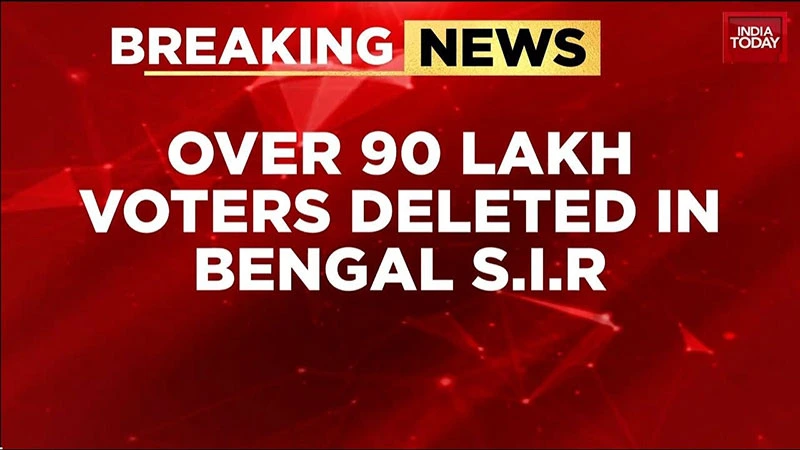
About 90 lakh names were removed from the voter list. At the same time, attacks took place on judicial officers. In addition, clashes broke out between BJP and Trinamool workers outside the CEO office. Hence, the conglomeration of all these has led to Murder of Democracy in West Bengal in 2026.
Therefore, many people are asking a serious question: How can democracy function in such conditions? These incidents together create fear and confusion among citizens. As a result, many now describe this situation as the democracy crisis in Bengal.
Moreover, it is difficult to imagine a worse situation than this for a democratic system. Violence inside official spaces and attacks on officers weaken public trust.
Key Highlights:
- Removal of 90 Lakh names from the voter list
- Attacks on judicial officers
- Clashes between BJP and Trinamool inside the CEO office
- Growing concern about the voter rights controversy
Why Did the Chief Justice Say Politics Has Entered the Secretary Level?
The Chief Justice of the Supreme Court stated that politics has entered the secretary level. This statement highlights a serious concern. Administrative work should remain neutral. However, political influence can damage fairness and trust.
Meanwhile, all these incidents happened during the Special Intensive Revision (SIR) of the voter list. During this period, one dramatic event followed another. Therefore, the situation created tension and raised doubts among citizens.
As a result, many people feel that the pride of West Bengal has fallen into dust. Repeated controversies have damaged the image of the state.
Key Concerns:
- Politics entering administrative levels
- Continuous dramatic incidents during voter list revision
- Declining public trust
- West Bengal’s pride facing damage
Is It Time to Ask Ourselves What Kind of Bengal We Want Before 2026?
Now, the time has come to look at ourselves and ask an important question: Did we want to see this kind of Bengal? This moment demands reflection from every citizen.
Furthermore, many the situation has caused worries to many people about the future. They are asking whether the Bengal Election 2026 will push the situation even lower.
If current trends continue, concerns about the Murder of Democracy may grow stronger.
Therefore, the upcoming election will play a crucial role. It will decide whether democracy strengthens or weakens further.
Key Questions:
- Did the Bengal people truly wanted this?
- Will the 2026 election lower democratic standards further?
- Or can the state stop the democracy crisis in Bengal and restore trust?
Why Did 90 Lakh Names Get Removed From the Voter List?
The entire process has removed about 90 lakh names from the voter list. However, if the number were even higher, some people might still not question it. This is because other states have removed even more names in similar revisions.
Most removals happened under common categories (ASDD). For example:
- Absent voters
- Shifted voters
- Deceased voters
- Duplicate names
Under these categories alone, The ECI had removed about 58 lakh names. Therefore, this part may appear logical at first.
However, the real concern started after this stage. There were logical discrepancies in the data. During the first hearing stage, the officials removed only 5 lakh names from the first 90 lakh group. At that point, many people did not raise strong objections.
But the bigger question came later. When the Judicial Officers took them over, they had removed about 27 lakh from the next 60 lakh names. Therefore, most doubts and questions started from this stage.
As a result, people began to see these events as signs of the Crisis of Democracy in Bengal, because voter rights directly depend on accurate voter lists.
Who Is Responsible for the Errors in the Voter List Process?
The biggest question now is simple: Who is responsible for these mistakes?
Certainly, the voters are not responsible. Instead, responsibility likely lies with election officials at different levels.
There are several possible reasons behind the errors:
- BLOs may have added names unfairly
- They might have uploaded wrong or illegible documents
- AERO or ERO may not have checked documents properly
- DEOs may have failed in supervision
Moreover, some critics believe that DEOs acted either as supporters of the ruling party or showed negligence. Therefore, repeated mistakes created distrust among citizens.
As a result, these failures have strengthened fears about the voter rights controversy.
How Did Court Cases and Political Actions Affect the 2026 Bengal Election?
One court case followed another. Meanwhile, the Chief Minister made a dramatic appearance in the Supreme Court. During this appearance, she made a request to conduct voting using the 2024 voter list.
However, the Supreme Court did not accept this request. Therefore, the situation remained unchanged.
Some observers believe that the court appearance turned into a political spectacle. It created public attention, but it did not solve the main problem.
As a result, the ordinary voters suffered the most. Many of them may not be able to take part in the 2026 Bengal Elections.
This situation creates a serious concern. It means that citizens may lose their most important democratic right, the right to vote. Therefore, many now see this as another step toward the Murder of Democracy.
What Will Happen to Voters Who Lost Their Voting Rights in 2026?
Affected voters still have some legal options. For example, they can file appeals in the Appellate Tribunal. In addition, they may be able to re-enter the voter list later if their claims are proper.
However, there is an immediate problem. Even if they win their cases later, many of them will remain excluded from the 2026 Bengal Election for now.
Therefore, these voters will temporarily remain outside the democratic process. This situation raises deep concerns about fairness and equality.
Key outcomes for affected voters include:
- They can appeal in the Appellate Tribunal
- They may return to the voter list later
- However, they are currently under exclusion Category in the 2026 election
- Their voting rights remain restricted for now
As a result, many citizens fear that this exclusion could weaken democratic participation and further highlight concerns about the Bengal election conflict.
How Did Article 142 and Attacks on Judges Create an Unprecedented Murder of Democracy?
In an extraordinary situation, the Supreme Court used its special powers under Article 142. As a result, responsibility shifted directly to judicial officers.
For the first time in parliamentary history, judges took on roles similar to Election Commission officers. They started the process of screening and verification of voter details.
Therefore, many people began asking: Has this ever happened before?
Moreover, these judges did not work from a single central office. Instead, they traveled district to district to complete their duties. After seeing Special Observers and Micro Observers in elections before, many people were surprised to witness this new role for judges.
However, the situation turned shocking in Malda. Judicial officers faced uncivil and violent attacks. Therefore, many people now describe this as one of the most shameful examples of the Murder of Democracy.
Key incidents included:
- Judicial officers were surrounded for nearly 12 hours
- Stones were thrown at their vehicles when they tried to leave
- The situation created fear and panic among officials
The incident became even more disturbing when one judge’s condition led to what many described as a mother’s painful cry. This recording was later played in the Supreme Court, highlighting the seriousness of the attack.
Surprisingly, the judges had already written to the district administration days earlier. They had requested proper security arrangements. However, despite official communication, the attack still took place.
Even more concerning, no immediate rescue operation was carried out for a long time. As a result, the delay raised serious questions about administrative responsibility.
The Supreme Court Intervention
Eventually, the Chief Secretary faced strong criticism from the Supreme Court. The court used strict language to express its dissatisfaction with the handling of the situation.
Therefore, many observers believe that such incidents severely damage democratic values. They also strengthen fears about the continuing democracy crisis in Bengal in the system.
How Did Protests, Violence, and Disruptions at the CEO Office Signal the Murder of Democracy?
For days, members of the BLO Adhikar Manch continued to gherao (surround) the CEO office. However, reports suggested that many among them were not even BLOs. Meanwhile, the police mostly stayed silent. As a result, the protests and blockades continued without strong intervention.
Even after repeated disturbances, the CEO of the Election Commission, Manoj Agarwal, held a meeting with the Police Commissioner. However, the administrative ecosystem in West Bengal remained unchanged. Therefore, the meeting did not bring any major improvement.
Clashes Between BJP and TMC
Later, the gheraos continued from time to time. In addition, one day saw violent clashes between Trinamool and BJP workers right in front of the Commissioner’s office. At that point, police finally stepped in. They used lathi charge and deployed central forces to control the situation.
At the same time, other disturbing incidents also took place during the SIR (Special Intensive Revision) process. For example:
- A Special Observer was attacked, raising serious security concerns
- Some voters were wrongly marked as dead in the voter list
- Those affected were publicly paraded on ramps, which many saw as humiliating
- A group of people was put on the Rajdhani Express and taken to Delhi
- There were repeated acts of vandalism in BDO offices
- Continuous protests, blockades, and demonstrations created disruption for months
As a result, the entire process turned into what many described as a tiring and prolonged drama. Citizens watched months of unrest, confusion, and repeated interruptions.
However, the most important issue remains clear. The foundation of democracy is a correct voter list. Therefore, repeated attempts to disrupt or damage this process raise serious concerns. Many observers now ask whether such actions amount to nothing less than the Murder of Democracy.
How Did Inaction, Overaction, and Political Pressure Lead to the Anarchy?
During the entire Special Intensive Revision process, the Election Commissioner first showed complete inactivity. However, later there was sudden overactivity. As a result, this shift made the situation more complicated instead of solving problems.
At the same time, the ruling party repeatedly tried to create obstacles. Therefore, many people viewed these actions as extremely shameful. Continuous interference made the process more difficult and increased tension among officials and voters.
Meanwhile, the opposition also made controversial threats. Some leaders warned that voters suspected to be Rohingyas would be sent to Bangladesh.
Such statements created fear among people. Therefore, these threats also raised serious concerns about fairness and human rights.
In addition, the police and administration showed signs of inefficiency or pliant behavior. As a result, they failed to control disturbances properly. This weakness further damaged the system and reduced public trust.
When all these issues combined, the overall impact became severe. Many observers now believe that the situation before the 2026 Bengal Election reflects a clear example of the democracy crisis in Bengal.
Key factors that contributed to the situation include:
- Early inaction by the Election Commissioner
- Sudden overactivity later, which created confusion
- Repeated obstruction attempts by the ruling party
- Threats from opposition groups that created fear
- Inefficiency and subservient behavior from police and administration
Final Thoughts of Knowledge Mart
Therefore, taken together, these developments created an environment of distrust and conflict. Many people now see the period before the 2026 Bengal Election as a time when democratic values faced serious damage, often described as the Murder of Democracy. We at Knowledge Mart call it a real Murder of Democracy.
10 Key Takeaways
- 90 lakh names were removed from the voter list, raising serious doubts about accuracy and fairness.
- Large discrepancies appeared when 27 lakh names were removed from a later group, which created the biggest questions.
- Responsibility likely lies with election officials such as BLOs, AEROs, EROs, and DEOs, not ordinary voters.
- The Supreme Court used Article 142, giving judicial officers direct responsibility in an unprecedented move.
- Judicial officers faced violent attacks, including a 12-hour gherao and stone pelting, which shocked many observers.
- The CEO office faced repeated gheraos, protests, and clashes, including violent fights between political parties.
- Special Observers were attacked, and some voters were wrongly marked as dead, creating fear and confusion.
- Election authorities showed early inaction and later overaction, which made the situation more complicated.
- Political pressure, threats, and administrative failures weakened public trust in the election process.
- Taken together, these events created strong concerns that the Bengal Election 2026 is witnessing a serious Murder of Democracy before voting even begins.
People Also Ask (FAQs)
Q1. Why were 90 lakh names removed from the voter list?
About 90 lakh names were removed during the Special Intensive Revision process. Most removals were under categories like absent, shifted, deceased, or duplicate voters. However, large discrepancies later raised serious questions.
Q2. Who is responsible for errors in the voter list?
Responsibility likely lies with BLOs, AEROs, EROs, and DEOs. They handle document uploads, verification, and supervision. Therefore, mistakes at these levels may have caused the errors.
Q3. Why did the Supreme Court use Article 142 during this process?
The Supreme Court used Article 142 to handle an unprecedented situation. As a result, judicial officers received direct responsibility to supervise parts of the verification process.
Q4. What happened to judicial officers during the verification work?
In one incident, judicial officers faced violent attacks, including a 12-hour gherao and stone pelting. This incident raised serious concerns about safety and respect for institutions.
Q5. What problems occurred at the CEO office during the revision process?
The CEO office faced continuous protests, gheraos, and clashes. In addition, political workers fought near the office, forcing police to use lathi charge and deploy central forces.
Q6. Were voters wrongly marked as dead in the voter list?
Yes, some voters were reportedly wrongly marked as deceased. As a result, these people faced humiliation and had to fight to restore their names.
Q7. How did political parties influence the situation?
Both ruling and opposition parties created tension. The ruling side allegedly created obstacles, while opposition groups made threats that increased fear among voters.
Q8. Why are people calling this situation the “Murder of Democracy”?
Many observers use the term Murder of Democracy because voter rights, safety of officials, and fairness of the election process were repeatedly challenged.
Q9. Can affected voters still regain their voting rights?
Yes, affected voters can appeal to appellate tribunals. However, many may still miss the chance to vote in the Bengal Election 2026.
Q10. How could these events affect the Bengal Election 2026?
These incidents may reduce public trust and participation. Therefore, many people fear that the Bengal Election 2026 could face credibility challenges if the issues remain unresolved.