Falta Bottom Line: Muslim Vote Shift
May 25, 2026 - By Ashutosh Roy Current AffairsElection AnalysisPoliticsRegional UpdatesWest Bengal Politics
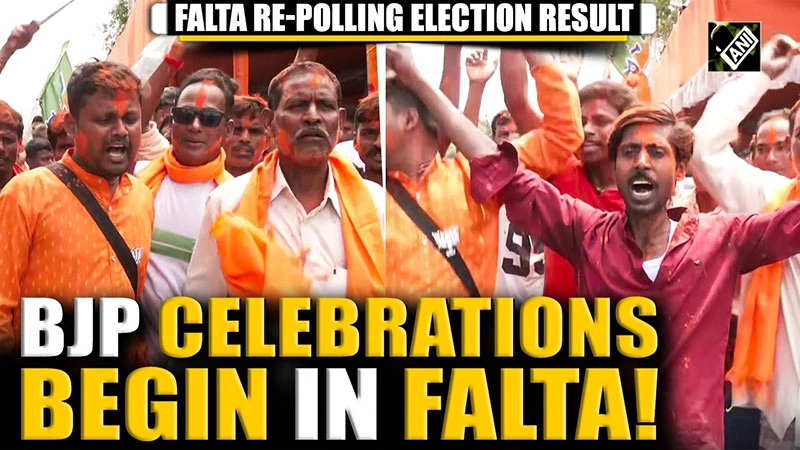
Is Muslim Vote Shift Evident in Falta?
West Bengal politics often follows predictable patterns. However, sometimes a single election changes the narrative completely. The Falta re-election appears ordinary on the surface. At first glance, it looks like a routine victory for the ruling party. Yet, when we examine the data carefully, a deeper political trend becomes visible. The most important takeaway is the emerging Muslim Vote Shift.
The BJP candidate, Debangshu Panda has won by more than 1 Lakh Votes in the re-election, held on May 21.
Moreover, this dismal defeat of TMC in recent Bengal Elections 2026 didn’t make an iota of difference in the attitude of the top notch leaders.
This article explains the political signals, vote patterns, and future implications. It also uses structured insights to help readers understand what is really happening on the ground.
Why Do By-Elections Usually Favor Ruling Parties?
We must understand a basic rule of Indian elections. By-elections/ Re-elections rarely remain neutral contests. in general, the ruling party enjoys multiple advantages that influence outcomes.
- The Ruling Party controls administrative machinery
- Hence, it mobilizes resources quickly
- In Addition, it has stronger booth-level networks
- Above All, it benefits from recent political momentum
Therefore, results often appear predictable. One can explore official election trends and historical patterns here:
Statistical Reports of Elections
However, Falta breaks this simple narrative. The result may look expected, but the internal vote movement tells a very different story. This is where the concept of Minority Voting Dynamics becomes important.
What Makes the Falta Result Politically Significant?
At first glance, the outcome seems straightforward. BJP recently came to power in West Bengal. Naturally, momentum favors the ruling party in such situations. However, several unusual factors make this election politically significant.
- TMC appeared organizationally inactive
- Furthermore, Top leadership including Mamata Banerjee and Abhishek Banerjee avoided campaigning
- In additions, Opposition votes redistributed unexpectedly
- Ground-level enthusiasm shifted noticeably
These signals indicate that the election was not just about power. Instead, it reflects changing voter behavior. Most importantly, it highlights a visible Fragmentation of the Muslim Vote.
One can watch the analysis of the famous political Analyst, Biswanath Chakraborty in this video
How Does Vote Data Reveal the Fragmentation of the Muslim Vote?
Falta By-Election Vote Distribution
| Party | Vote Share (%) | Interpretation |
|---|---|---|
| BJP | 71% | Expanded beyond traditional support |
| CPM | 19% | Emerging as alternative force |
| TMC | Significantly Low | Loss of core base |
Community Composition in Falta
| Category | Approx Percentage |
|---|---|
| Hindu Voters | 62% |
| Muslim Voters | 38% |
Now, compare both tables carefully. BJP secured 71% votes, while the Hindu population is around 62%. Therefore, BJP gained approximately 9% additional votes from outside its traditional base.
This clearly suggests that a section of Muslim voters supported BJP. As a result, the Minority Voting Dynamics becomes evident.
Is This Minority Voting Dynamics Sudden or Gradual?
Political shifts rarely happen overnight. However, Falta suggests that long-term changes can suddenly become visible under the right conditions.
Several factors may explain this trend:
- Expectations from new governance
- Dissatisfaction with previous leadership
- Local development issues
- Desire for political balance
Political analysts have discussed similar patterns in regional media. One can explore expert discussions here: AnandaBazar Online
Therefore, the shift may be gradual in origin but sudden in its electoral expression.
Did Jahangir’s Withdrawal Expose Internal Crisis?
Another major development was the sudden withdrawal of Jahangir from the contest. He announced his decision through a press conference. Meanwhile, TMC leadership described it as a personal choice.
However, this raises important questions.
- Was the leadership unaware?
- Wasn’t this a strategic withdrawal?
- Above all, was it an attempt to avoid electoral embarrassment?
Follow similar political developments here: National News of The Hindu
In most political systems, such decisions are rarely isolated. Therefore, this incident suggests internal coordination issues and possible cracks within the party structure.
Why Did Mamata and Abhishek Avoid Campaigning?
This is one of the most critical questions. Neither Mamata Banerjee nor Abhishek Banerjee campaigned in Falta.
This becomes more interesting when we consider past data. In the 2024 general election, Abhishek Banerjee had secured a lead of more than 1.68 lakh votes in the same region.
So, why avoid campaigning now?
- To avoid direct accountability
- Moreover, to minimize reputational risk
- Also, to manage potential defeat quietly
At the same time, election conditions have changed significantly.
New Election Environment
- Strong central force deployment
- Strict Election Commission monitoring
- Increased Election observer presence
More details are available here: Assembly Constituencies: Trends & Results May-2026 of West Bengal (Total AC : 294)
Therefore, traditional influence mechanisms may not work effectively anymore. As a result, voter independence has increased.
Is BJP Expanding Beyond Identity Politics?
The Falta result suggests a major strategic shift. BJP appears to be expanding beyond identity-based politics.
Key indicators include:
- Vote share exceeding demographic base
- Support from multiple communities
- Issue-based voter alignment
This indicates that BJP may be building a broader electoral coalition. This shift could redefine political competition in the state.
Is CPM Making a Silent Comeback?
CPM secured 19% vote share and became the runner-up. This result may look modest, but it carries deeper implications. Gaining support of around 35000 people in a constituency is not insignificant.
Why is this important?
- This Vote signals revival after decline
- Moreover, it attracts Muslim voters leaving TMC
- It reconnects with historical support base
During its 34-year rule, CPM enjoyed strong support among Muslim voters. Historical election data can be accessed here: Statistical Report of ECI
Therefore, the current trend suggests that some of this support base may be returning.
Did Withdrawn Candidates Still Get Votes?
Yes, and this is a critical detail. Even after withdrawal, Jahangir’s name remained on the EVM. Some voters still cast their votes in his favor.
This indicates:
- Lack of coordinated voter transfer
- Weak grassroots communication
- Limited organizational strength
Therefore, the perception of a strong support base appears questionable.
Has Election Transparency Changed Voter Behavior?
Election management has improved significantly in recent years. This has directly influenced voter behavior.
- Central forces ensure security
- Observers monitor polling stations
- Digital systems improve transparency
As a result:
- Voters feel more secure
- Silent voting patterns emerge
- True preferences become visible
This environment plays a major role in enabling the Fragmentation of the Muslim Vote.
Is TMC Losing Its Core Support Base?
The Falta result raises serious concerns for TMC. Several warning signs are visible.
- Declining vote share
- Leadership absence
- Internal inconsistencies
Additionally, reports suggest possible political realignment. Some sources indicate that certain leaders are exploring connections with Congress.
Track such developments here: Political Pulse of Indian Express
Therefore, TMC may face structural challenges in the near future.
Could Opposition Unity Reshape the Political Landscape?
| Scenario | Impact |
|---|---|
| TMC retains support | Status quo continues |
| Votes split across parties | Fragmented opposition |
| CPM-Congress alliance strengthens | Strong alternative emerges |
Current trends suggest movement toward opposition consolidation. This could reshape the political landscape of West Bengal.
What Does This Mean for Future Elections?
The implications of the Falta result are significant. It challenges the idea of fixed vote banks and introduces fluidity into electoral politics.
Long-term effects may include:
- Increased political competition
- Greater accountability
- Issue-based campaigning
Therefore, the Minority Voting Dynamics is not just electoral. It is structural and may influence future outcomes.
Should Abishek Banerjee face a Fresh Mandate?
This situation raises an important moral question. Should Abhishek Banerjee continue as the MP from Diamond Harbour, or should he go back to the people and seek a fresh mandate? Voters may now expect clearer accountability and renewed trust.
At the same time, the much-discussed Diamond Harbour Model also comes under scrutiny. People have heard about it repeatedly, but many now question what it truly represents in practice.
- Does the model depend on fear-based politics?
- Does it rely on booth jamming or voter intimidation?
- Are allegations of extortion and pressure linked to it?
These questions reflect growing doubts among voters.
Moreover, several welfare promises were widely promoted. The Sevasree Plan, for example, aimed to support common citizens through medical camps. There were also discussions about special pension schemes for aged people.
However, concerns remain about their real impact.
- What happened to these promised schemes?
- Did they reach the intended beneficiaries?
- Why did people not respond positively to them?
Therefore, voters now seem to evaluate both governance and delivery more closely. They are not just listening to promises. Instead, they are asking whether those promises translate into real benefits on the ground.
Final Thoughts of Knowledge Mart: Why Falta Matters More Than It Appears
Falta is not just another by-election. It is a signal of changing political dynamics in West Bengal.
The most important takeaway is the Fragmentation of the Muslim Vote. This shift reflects evolving voter priorities and growing political awareness.
If this trend continues, West Bengal may witness a major political realignment. Therefore, Falta represents not just a result, but the beginning of a larger transformation.
Stay Updated with the Knowledge Mart News and Analysis
10 Key Takeaways
- By-elections/ Re-election usually favor ruling parties
- Though Sagardighi showed an exception in 2023, where Bayron Biswas won for Congress
- Falta shows deeper voter movement for all political parties in West Bengal
- BJP gained beyond core base of Hindu Voters
- Muslim Vote Shift is widely visible in 2026 West Bengal Assembly Elections.
- CPM shows slow signs of revival after dismal performance in 2021 Assembly Election
- TMC faces structural challenges, despite of winning in 80 seats.
- Election transparency increased by Election Commission as well as by Central Forces
- Opposition unity may grow, which is also the need of the hour in West Bengal Politics for democracy
- Political landscape may change in West Bengal very soon
People Also Ask (PAA)
What is the Muslim Vote Shift in Falta re-election?
The Muslim Vote Shift refers to a change in voting patterns among Muslim voters in Falta. Data suggests that a section of these voters supported parties beyond their traditional choice. This shift became visible when vote share exceeded expected demographic limits.
Why did BJP get more votes than its core voter base?
BJP secured around 71% votes, while Hindu voters are about 62% in Falta. Therefore, BJP gained additional support from non-core groups. This indicates cross-community voting and possible Fragmentation of the Muslim Vote.
Why did TMC leaders not campaign in Falta?
Top leaders like Mamata Banerjee and Abhishek Banerjee did not campaign. This may indicate a strategic decision. It could also suggest awareness of unfavorable ground conditions or an attempt to avoid political risk.
Did Jahangir’s withdrawal impact the election result?
Yes, Jahangir’s withdrawal created confusion among voters. His name remained on the EVM. Some voters still voted for him. This shows weak coordination and poor vote transfer within the party.
Is CPM gaining support again in West Bengal?
CPM secured around 19% votes and became the runner-up in Falta. This suggests a gradual revival. Some voters, including sections of Muslim voters, may be shifting back toward CPM.
How has election transparency affected voter behavior?
Election transparency has improved with central forces and strict monitoring. As a result, voters feel more secure. Therefore, they express their real preferences more freely, which may contribute to vote shifts.
Is TMC losing its core vote bank?
The Falta result suggests possible weakening of TMC’s traditional support. Declining vote share and lack of campaign activity indicate structural challenges within the party.
Can Congress and CPM benefit from Muslim Vote Shift?
Yes, if Muslim voters shift away from TMC, Congress and CPM may benefit. Thus, a united opposition could consolidate these votes and emerge as a stronger alternative.
Will the Fragmentation of the Muslim Vote impact future elections?
If this trend continues, it can reshape West Bengal politics. It may lead to more competitive elections and reduce the dominance of a single party.
Why is the Falta re-election important?
Falta is important because it reveals changing voter behavior. It highlights the Fragmentation of the Muslim Vote and signals a possible political realignment in West Bengal.
[…]Falta Bottom Line: Muslim Vote Shift What is driving the Muslim vote shift in Falta? Explore the data, local community sentiment, and the ultimate bottom line of this pivotal election trend.[…]