The Proven Truth About Apolitical Forum
Jan 27, 2026 - By Ashutosh Roy Current AffairsGovernancePoliticsWest Bengal Politics
Key Highlights
- History unfolds that Apolitical Forum could hardly cast any impact on West Bengal Politics
- The fate of Rajanya Haldar and Shubhankar Haldar’s Student and Youth Rights March also doubtful.
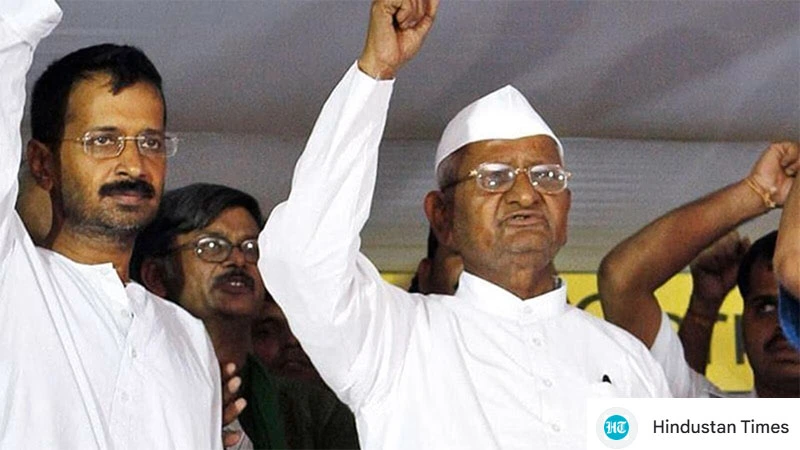
- Arvind Kejriwal had been able to reap the political benefits of Anna Hazare’s Apolitical Movements
- When West Bengal politics witnesses vendetta politics of the rulers, chances of success of any apolitical forum is under serious suspicion
- The overwhelming protest of commoners, intellectuals and doctors in R G Kar issue has pinpointed the premature death of any apolitical movement in West Bengal Politics
Can an Apolitical Forum Succeed in Bengal?
Can an apolitical forum really influence West Bengal politics?
This question has returned once again. This time, it comes in the context of Rajanya Haldar and Shubhankar Haldar’s Student and Youth Rights March (ছাত্র যুব অধিকার আদায় যাত্রা ), which is about to begin. Perhaps they are initiating from Silliguri on January 27, 2026.
However, we do not have the power to predict the future of something that has not even taken shape yet. Therefore, we can only discuss its future and potential from a historical perspective.
In politics, nothing is truly impossible. In other words, even things that seem unthinkable can happen. Here, even a tiger and a cow can drink water from the same pond.
For example, who would have imagined 15 years ago that the CPI(M) and the Congress would contest elections together as allies?
On the contrary, when Saifuddin Choudhury once spoke in favor of such an idea, going against the party line, the party expelled him.
Therefore, political history shows that today’s impossibility can become tomorrow’s reality.
Why Do Apolitical Movements Fail in Bengal?
This Student and Youth Rights March is undoubtedly very relevant. Moreover, based on what we learned from their press conference and their interview with journalist Suman Chattopadhyay, Rajanya and Shubhankar appear highly confident.
Their issues are likely to resonate with people across West Bengal. For example, educated unemployment and women’s safety are two extremely pressing concerns. Almost every Bengali family suffers from these problems in one way or another.
Government recruitment has come to a halt. At the same time, industrialization has nearly stopped. As a result, the entire state is slowly turning into a society dependent on allowances.
Meanwhile, Bengali migrant workers face attacks and harassment when they go to other states for work.
On the other hand, highly educated youths are leaving the state. Many are working abroad or in other parts of India. Back home, their parents and families struggle through helpless and uncertain lives. If this trend continues, the entire state may gradually turn into a massive old-age home.
Therefore, the Student and Youth Rights March highlights powerful and urgent issues. These are real people’s issues.
However, we must also face reality. In this situation, the government does not tolerate any voice of dissent. Even a small group of YouTubers or journalists often faces its wrath. Therefore, there is no guarantee that this march will reach its conclusion.
What History Says About Apolitical Movements?
Let us return to the core issue once again, the idea of an apolitical platform.
Earlier, we witnessed the farmers’ movement near Delhi. The movement grew immensely strong. It forced even the powerful Prime Minister Narendra Modi to withdraw the controversial Farmers’ Bills 2020.
Before that, the people of India saw the Anna Hazare movement. The massive gatherings chanting slogans are still fresh in public memory. That anti-corruption movement and the demand for the Jan Lokpal Bill put the Manmohan Singh government under severe pressure.
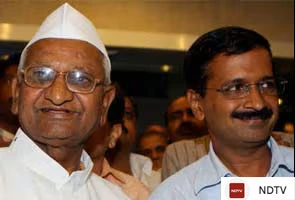
However, Arvind Kejriwal, a trusted lieutenant of Anna Hazare, took the political benefits of that movement for himself.
He went on to form the Aam Aadmi Party. Subsequently, he ruled Delhi for a long period. Later, he formed the government in Punjab and even won seats in Gujarat.
In effect, he became a serious political challenge, unsettling the political dominance of Narendra Modi and Amit Shah.
Therefore, what becomes relevant here is this: an apolitical forum, over time, often transforms into a political party. That appears to be the most likely future of such platforms.
Do Apolitical Forum Threatens Power Politics?
But what is possible in Delhi, is it equally possible in West Bengal?
An even more relevant question arises here. An engineer and former bureaucrat like Arvind Kejriwal managed to achieve. Can Rajanya, a former Presidency College student, do the same?
Moreover, this very Rajanya once delivered a speech from the Trinamool Congress stage on July 21. In addition, he remained associated with the Trinamool Congress for nearly five to six years. Later, after the party suspended him over a short film controversy, Rajanya left the party.

In between, there were reports that he might even join the BJP. Therefore, a question about his credibility continues to exist in the public mind.
At present, they are actively campaigning on Facebook. They also claim that people have already submitted 22,000 forms. However, submitting a form and active participation are not the same thing. The real question is how many among these 22,000 people will actually join the march.
A bigger concern is whether they have the strength to withstand retaliation. The ruling establishment may target them at any time. When, how, and to what extent they may become targets of such actions remains uncertain. More importantly, do they have the capacity to withstand that pressure?
After all, we frequently witness harassment and repression against declared political parties and their leaders. No one can ignore this reality.
Why Power Resists Apolitical Platforms?
Now, let us take a closer look at the history of West Bengal.
Historically, West Bengal politics has been bipolar. The scope for a multi-party system has always been extremely limited.
At one point, the state witnessed a direct contest between the Congress and the CPI(M). Later, under the leadership of Mamata Banerjee, the Trinamool Congress emerged. As a result, the main political battle shifted to Trinamool Congress versus CPI(M).
In between, there were several experiments.
- After his suspension from the Congress, Pranab Mukherjee floated the Rashtriya Samajwadi Congress (RSC).
- In 2005, Subrata Mukherjee joined the Nationalist Congress Party (NCP). However, none of these efforts lasted long.
Within a short period, they all returned to the political mainstream.
Similarly, Samir Putatunda and Saifuddin, along with others, left the CPI(M) to form the PDS. Today, hardly anyone knows whether that party even exists.
In other words, West Bengal has seen the rise of many small political parties. Yet, none of them managed to leave a lasting mark. The only real exception to this trend has been Mamata Banerjee’s Trinamool Congress.
Are Apolitical Forums a Political Trap?
Now, let us examine an apolitical forum in West Bengal.
The Singur Krishi Jomi Raksha Committee was formed to oppose the acquisition of farmland for the Tata factory. Soon after its formation, Mamata Banerjee entered the movement. In effect, this meant the entry of the Trinamool Congress.
Gradually, Mamata took control of the movement. She then shifted the struggle from Singur to Kolkata.
Critics argue that her political career was at a low point at that time. According to them, the Singur movement almost revived her political fortunes.
Mamata has always been the center of media attention. As a result, one political party after another, along with their leaders, began appearing on the Singur platform. The rest, as they say, is history—the story of Mamata Banerjee becoming Chief Minister.
It is important to remember that the Singur Krishi Jomi Raksha Committee was originally an apolitical forum. However, once its leadership moved into the hands of professional politicians, the movement became truly mass-based and aggressive.
Ironically, the people of Singur were left with neither cultivable land nor industry. Yet, the movement marked the historic political rise of Mamata Banerjee.
Can Student-Led Forums Change Bengal Politics?
Now, let us look at the R.G. Kar movement.
The joint agitation led by the Junior Doctors’ Front and other doctors’ organizations received massive public support.
When Subarna Goswami and Kunal Sarkar were summoned by the police, thousands of people began marching alongside them.
Very few incidents in recent times have stirred public emotion across the entire state the way this movement did.
The “Reclaim the Night” campaign followed. Soon, the movement crossed state boundaries. It spread across the country and even reached international platforms.
Importantly, these doctors operated through an apolitical forum. They did not allow any political leader, from any party, to come close to the movement. The agitation was intense and sustained.
However, the key question remains: what was the outcome?
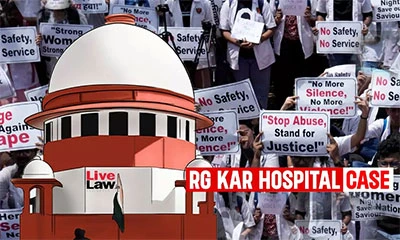
Did Abhaya’s parents receive justice? Only Sanjay was convicted and punished. Beyond that, nothing substantial happened.
Meanwhile, the ruling establishment responded in a familiar way.
The doctors faced punitive transfers. In some cases, the police even harassed them at their homes. As expected, the classic policy of divide and rule came into play.
Gradually, the movement lost momentum. Today, the doctors are largely occupied with their own professional struggles.
Is an Apolitical Forum a Real Alternative?
While wishing Rajanya and Shubhankar all the best, it must be said that the chances of an apolitical forum succeeding in West Bengal politics are very slim. History clearly supports this conclusion.
However, if they manage to change this historical pattern, they deserve an early salute.
Question for West Bengal People
- Why did the massive commoners’ outrage during the R. G. Kar protest fail to translate into real impact?
- Was it doomed because the platform deliberately stayed apolitical or were there deeper reasons behind the collapse?
👇 What do you think? Answer in the comments.
[…]The Proven Truth About Apolitical Forum Can apolitical forum challenge West Bengal politics? Past movements reveal risks, resistance, and an uncomfortable political truth. Expose the harsh truth today[…]
[…]The Proven Truth About Apolitical Forum Can apolitical forum challenge West Bengal politics? Past movements reveal risks, resistance, and an uncomfortable political truth. Expose the harsh truth today[…]
[…]The Proven Truth About Apolitical Forum Can apolitical forum challenge West Bengal politics? Past movements reveal risks, resistance, and an uncomfortable political truth. Expose the harsh truth today[…]