Rahul Gandhi's Opposition Leadership Battle
Nov 15, 2026 - By Ashutosh Roy PoliticsElection AnalysisNational NewsNational Politics
Challenges of Rahul Gandhi’s Opposition Leadership
Rahul Gandhi’s Opposition Leadership is entering a new phase. For years, his political opponents dismissed him as an inexperienced leader, while several regional parties in the opposition camp were reluctant to accept his leadership. Even within the Congress, questions were repeatedly raised about his consistency and political judgement.
But the political situation is changing. Rahul Gandhi is no longer limiting himself to parliamentary speeches and press conferences. He is increasingly taking political battles to the streets, trying to mobilise students, civil society groups and opposition parties around common issues.
The recent protests against Chief Election Commissioner Gyanesh Kumar and the controversy surrounding the revision of electoral rolls have given this effort a new direction.
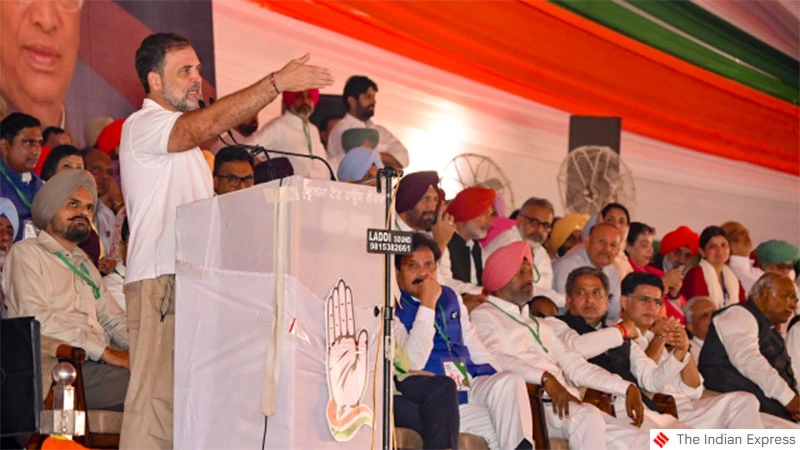
The November 1 INDIA bloc rally at Delhi’s Ramlila Maidan, attended by leaders including Mamata Banerjee, M.A. Baby, Akhilesh Yadav and Tejashwi Yadav, was an important moment in this process. It showed that opposition parties could still come together under a common political programme. It also placed Rahul at the centre of a campaign that had earlier struggled to achieve a united voice.
Does this mean Rahul Gandhi has finally emerged as the undisputed leader of the opposition? Not yet. But it would be politically unwise to ignore the change taking place.
From Parliamentary Opposition to Street Politics
Being the Leader of the Opposition in the Lok Sabha is an important constitutional and political position. But holding that position and leading a mass political movement are two different responsibilities.
For a long time, Rahul Gandhi appeared more comfortable raising questions inside Parliament than building sustained public movements outside it. His Bharat Jodo Yatra created considerable public interest. Intellectuals, professionals, doctors and people from different sections of society joined the march or expressed support. But the Congress failed to convert that momentum into a durable nationwide political movement.
That was a missed opportunity. A political leader cannot build a national alternative merely by delivering speeches, holding meetings or criticising the government. Public trust grows when people see a leader standing with them during difficult moments and taking political risks.
Rahul’s recent approach appears to recognise this difference. His campaign against alleged electoral irregularities, his demand for accountability from the Election Commission and his participation in street protests have given his leadership a more visible public character.
The Indian Express reported in October that Rahul was closely coordinating the opposition protests, ensuring the participation of Congress MPs and working to bring INDIA bloc partners and civil society groups together. That is a significant change from the earlier image of a leader who was often criticised for political absence.
The Election Commission Issue Changed the Opposition’s Strategy
Rahul Gandhi had repeatedly raised questions about electoral processes and alleged vote chori. Initially, however, the opposition parties did not always respond with one voice. Some regional leaders appeared cautious about joining a campaign led by the Congress.
Then came an important development. An investigation by The Indian Express, published on September 23, 2026, reported that Election Commissioners Sukhbir Singh Sandhu and Vivek Joshi had formally objected at least 14 times over ten months to decisions taken within the Election Commission without their knowledge or approval.
The report brought the internal functioning of the constitutional body into the centre of public debate. The Election Commission subsequently described the differences as part of its decision-making process, but the questions raised by the investigation were not simply political allegations that could be dismissed with a party statement.
Rahul Gandhi and other opposition leaders used the development to intensify their demand for accountability from Chief Election Commissioner Gyanesh Kumar. Opposition leaders marched towards the Supreme Court in October and later held a major rally at Ramlila Maidan on November 1.
We must agree that claims of electoral manipulation must be examined through evidence, constitutional processes and judicial scrutiny. At the same time, questions about the independence and transparency of the Election Commission deserve serious public attention.
The opposition’s challenge is to keep the debate focused on institutional accountability rather than allowing it to become merely a slogan against one individual.
Regional Parties Are Finding Common Ground
One of Rahul Gandhi’s biggest political challenges has always been the regional parties. Many of them grew by weakening the Congress in their respective states. They have their own leadership, political ambitions and voter bases. Naturally, they have been reluctant to accept the Congress as the automatic leader of the opposition.
The Trinamool Congress is a clear example. Mamata Banerjee formed the party after breaking away from the Congress in 1998. Her political identity was built partly through opposition to the Congress and later through her fight against the Left Front in West Bengal.
There was a time when Mamata Banerjee openly questioned Rahul Gandhi’s ability to challenge Narendra Modi. In 2023, she famously suggested that the BJP wanted Rahul to remain the opposition’s face because it helped the ruling party politically. Such remarks reflected the distrust between the Congress and regional opposition leaders.
But politics is not static. The defeat of the TMC in West Bengal, the weakening of some regional political formations and the growing need for a coordinated national opposition have changed the calculations. Mamata’s participation in the November 1 INDIA bloc rally is politically significant, even if it does not mean that all differences have disappeared.
For more on the changing political equations in Bengal, read Why Mamata Banerjee Lost Power and West Bengal Election 2026 Analysis.
Uddhav Thackeray’s weakened position in Maharashtra and the political uncertainties surrounding other regional parties have also made opposition coordination more necessary. No single regional party can realistically challenge the BJP nationally on its own.
However, necessity should not be mistaken for permanent unity. These parties may share a platform today and disagree over leadership, seat-sharing and political strategy tomorrow.
Street Movements Are Creating a New Political Space
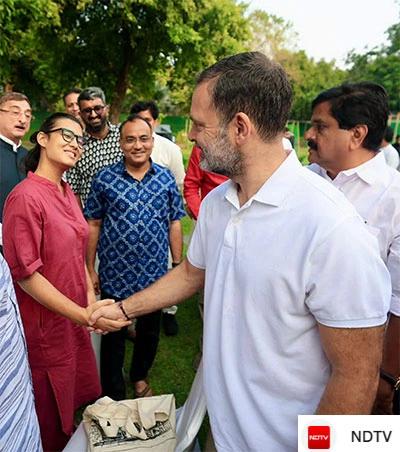
Another important feature of the current political situation is the growing visibility of student activists and youth movements. Neha Bora, national president of the All India Students’ Association (AISA), has emerged as one of the prominent faces of youth protests. Her participation in demonstrations over examination issues, unemployment and electoral accountability reflects a wider frustration among young people.
Reuters reported in October that Bora had become a visible figure in the protests, while also documenting the wider youth mobilisation around the Cockroach movement. This is a development that political parties should not underestimate. Young people are not necessarily waiting for established parties to tell them what their concerns should be.
The July 20 Parliament march led by the Cockroach Janata Party (CJP) was a separate protest from the later INDIA bloc campaign. The use of pellet-firing shotguns by Rapid Action Force personnel during that protest, and the injuries reported among demonstrators, raised serious questions about the handling of public protests. Amnesty International later published an investigation alleging unlawful use of force against protesters.
Rahul Gandhi’s political challenge is to connect these wider public concerns with a credible democratic movement without trying to claim ownership of every protest. Student movements, civil society groups and political parties may work together on specific issues, but they do not necessarily share the same ideology or political destination.
His Chhatron Ki Goonj programme is another example of an attempt to reach people beyond conventional party meetings. At a Pune event in September, Rahul invited women to speak about discrimination and their everyday experiences. The programme gave participants a platform rather than limiting the event to a speech by the political leader. Whether such initiatives can develop into sustained public engagement remains to be seen.
Fiery Speech at Ramlila Maidan against Gyanesh Kumar shows the ability of Rahul Gandhi’s Opposition Leadership.
Congress Must Accept Its Own Responsibility
There is an irony in the Congress’s present position. Many of the regional parties that now stand beside Rahul Gandhi were strengthened by the Congress’s own political decline. The party lost organisational strength in several states, failed to nurture regional leadership and often treated state-level political realities as secondary to its national ambitions.
The rise of the TMC in West Bengal, for example, cannot be understood without the Congress’s organisational weakness and internal divisions. Similar stories can be found in other states where regional parties filled the political space left behind by a declining Congress.
Rahul Gandhi’s refusal to take the Congress presidency in the past also created questions about responsibility and leadership. A leader cannot demand that allies accept his national leadership while remaining ambiguous about his own accountability within the party.
Congress needs more than a recognisable national face. It needs strong state units, credible local leadership, disciplined organisation and a clear political programme. Without these, even a successful national campaign may fail to translate into votes.
The party must also avoid the temptation to treat every opposition meeting as proof of its own leadership. Alliance politics requires negotiation, patience and respect for partners. The Congress cannot rebuild the opposition by repeating the same mistakes that contributed to its decline.
For a broader look at the difficulties facing the opposition, read Opposition Unity: The Battle to Defeat Modi.
Can Rahul Gandhi Hold the Opposition Together Until 2029?
This is perhaps the most important question. Bringing opposition leaders together for a protest is one thing. Keeping them united through seat-sharing negotiations, state elections and competing political ambitions is an entirely different challenge.
The opposition has repeatedly shown that it can unite against Narendra Modi. But it has struggled to agree on what should come after that unity. Who will lead? Which party will contest how many seats? How will regional interests be protected? What economic and social programme will the alliance offer to voters?
These are not minor questions that can be postponed until the election approaches. They are the foundation of a credible national alternative.
There is also a danger in relying too heavily on the demand for Gyanesh Kumar’s resignation or on allegations of electoral wrongdoing. Institutional accountability is important, but voters are also concerned about unemployment, inflation, economic security, industrial growth, education and public services.
Opposition parties must explain how they would address these problems. Criticising the government is necessary in a democracy, but criticism alone does not create an alternative government. The INDIA bloc needs a common minimum programme that goes beyond the removal of one official or opposition to one political leader.
The BJP has a strong national organisation, considerable resources and a clear political message. The opposition cannot defeat it merely by assuming that anti-incumbency will automatically work in its favour. It must earn public confidence.
Is the Modi Era Facing Its Strongest Opposition Challenge?
It would be premature to declare that the Modi era is coming to an end. The BJP remains a formidable political force, and the next Lok Sabha election is not due until 2029. The government is not facing an immediate parliamentary crisis simply because opposition parties have organised large demonstrations. Watch the analysis of Zoya Hasan, political scientist Professor emerita, JNU.
Nevertheless, the present mobilisation is politically important. The opposition has managed to take its campaign beyond Parliament, bring several regional leaders onto a common platform and attract attention from student activists and civil society groups. The November 1 rally demonstrated that Rahul Gandhi can play a central coordinating role when the political circumstances are favourable.
There are historical parallels worth considering. Jayaprakash Narayan’s movement in the 1970s brought together political forces with very different ideologies against the Emergency. Narendra Modi himself built a national political profile through years of political campaigning before the BJP’s victory in 2014. But history does not repeat itself automatically. A movement that brings people together against a government must eventually demonstrate what it can offer in its place.
Rahul Gandhi has an opportunity that he did not fully use after the Bharat Jodo Yatra. He can become more than the face of parliamentary opposition. But that requires consistency, organisational discipline and a willingness to share political space with leaders who do not belong to the Congress.
The Real Test Is Bigger Than Rahul Gandhi
Rahul Gandhi’s Opposition Leadership has gained momentum, but it is still a work in progress. The regional parties may be more willing to coordinate with him today, but their support cannot be taken for granted. The Congress may have found a more assertive political direction, but it still has to repair its organisation and credibility across the country.
Rahul must also understand that leadership is not established simply because other parties attend a rally. It is established when allies trust him, voters believe him and the movement survives beyond a single political controversy.
The opposition has finally started to look beyond closed-door meetings and parliamentary statements. That is a welcome change. But the road to 2029 will demand much more than slogans, protests and temporary political friendships.
Can Rahul Gandhi turn this momentum into a durable national alternative? That is the question he must answer. And the answer will depend not only on Rahul, but also on whether India’s fragmented opposition is finally prepared to put collective political responsibility above individual ambition.
8 Key Takeaways: The Road to 2029
- Rahul Gandhi is increasingly taking opposition politics beyond Parliament through protests, public campaigns and alliance coordination.
- The Election Commission controversy and the demand for accountability have helped bring opposition parties together.
- Mamata Banerjee’s participation in the INDIA bloc rally signals a willingness to coordinate, not necessarily the end of political differences.
- Student activists and civil society movements are creating a wider political space beyond established party structures.
- The Congress must rebuild its state organisations and accept responsibility for its past political decline.
- Opposition unity will remain fragile unless parties agree on leadership, seat-sharing and a common programme.
- Unemployment, inflation, economic security and public services must become central issues in the opposition’s agenda.
- The real test is whether Rahul Gandhi can sustain this momentum and build a credible national alternative before 2029.