Krishna Gupta Named WB EC in Bold Move
Jun 25, 2026 - By Ashutosh Roy Current AffairsGovernance & AdminPoliticsRegional UpdatesWest Bengal Politics
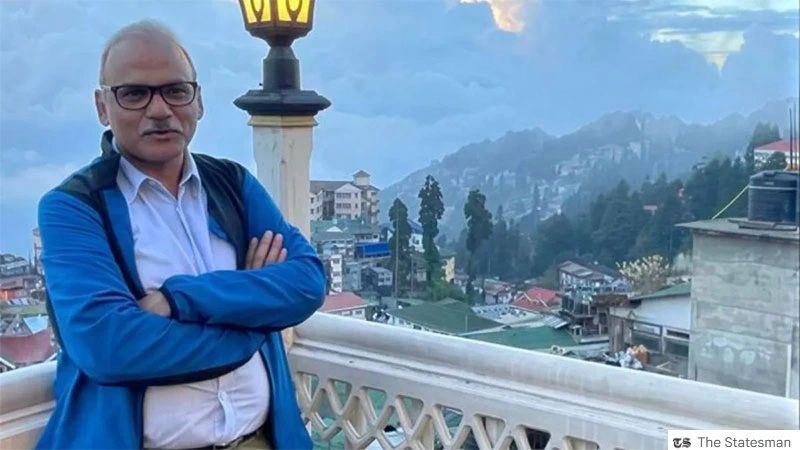
Is the Appointment of Krishna Gupta as WB EC a Shock?
Krishna Gupta has officially stepped into the eye of the political storm in West Bengal.
Nabanna, the state secretariat, made a massive announcement that shocked regional political circles.
They chose the veteran IAS officer to lead the State Election Commission.
The official notification quickly made its way to Raj Bhavan for final approval from the Governor.
This is not just another standard government appointment.
The political air in Bengal is tense, heavy, and full of historical mistrust.
Every movement inside the state administration faces immense public scrutiny.
For a long time, citizens have demanded a fair and unbiased election commissioner who can restore democratic faith.
Will this new appointment change the old narrative?
At Knowledge Mart, we deeply examine these complex shifts in regional governance.
Can Krishna Gupta Overcome West Bengal’s Turbulent Election History?
The administration chose an officer with deep bureaucratic roots.
The new top official comes with decades of administrative experience.
- The Civil Service Background: The state chose an IAS officer from the senior 1991 batch.
- The High-Pressure Portfolios: He successfully handled multiple complex departments, including the Co-operation Department.
- The Industry Experience: He previously managed the state’s Commerce and Industries Department.
- The Public Image: Peers view him as a calculated administrator who prefers keeping a low profile.
The job ahead is entirely different from running standard corporate or state departments.
Managing local polls in West Bengal requires immense mental grit.
The commissioner must face aggressive political parties, legal challenges, and a watchful public.
Why Does the Dual Shadow of Past Regimes Loom So Large?
The citizens of West Bengal are not just looking back at one compromised institution.
They are looking at two.
The memory of former WB SEC Rajiva Sinha remains a bitter subject across the state.
His tenure was defined by the rampant violence during the 2023 local panchayat polls.
Critics openly claimed the election commission acted as a political puppet for the ruling party.
The situation turned worse when the matter reached the judiciary.
The Calcutta High Court heavily criticized the previous chief for failing to control ground-level violence.
The distrust runs even deeper when you look at the law enforcement side of the state machinery.
For years, the judiciary and opposition parties heavily criticized former West Bengal DGP Rajeev Kumar.
His controversial tenure as a top cop drew severe flak from the Supreme Court and the High Court.
The courts raised serious questions over the handling of sensitive investigations and administrative neutrality.
The situation escalated to the point where the Election Commission of India (ECI) stepped in directly.
The ECI removed him from his post during critical voting periods to ensure a level playing field.
Comparison of Past Institutional Shadows
| Official Name | Previous Administrative Role | Primary Reason for Judicial and Public Criticism |
|---|---|---|
| Rajiva Sinha | State Election Commissioner (SEC) | Criticized by the High Court for failing to control rampant violence and delaying security deployments during local polls. |
| Rajeev Kumar | Director General of Police (DGP) | Scrutinized by the Supreme Court and High Court over neutrality; repeatedly removed from election duties by the ECI. |
When both the head of the election commission and the head of the police face severe judicial warnings, public faith in the system completely erodes.
This combined history of institutional failure is exactly why the technical and social analysts at Knowledge Mart believe the public is demanding an entirely fresh approach this time.
Controversies During Rajiva Sinha as WB SEC
| Timeline | Issue / Controversy | Key Allegations / Events | Institutional Reaction | Impact |
|---|---|---|---|---|
| June 2023 | Hasty Poll Announcement | Panchayat election dates announced just 1 day after appointment; opposition alleged lack of preparation | PIL filed in Calcutta High Court | Questions over neutrality & preparedness |
| June 2023 | Appointment Challenged in Court | Public Interest Litigation filed against appointment | Matter taken up in Calcutta High Court | Legitimacy of appointment questioned |
| June-July 2023 | Governor vs SEC Clash | Governor C.V. Ananda Bose refused to accept joining; accused SEC of failing duties | Constitutional standoff between Raj Bhavan & Nabanna | Institutional conflict exposed |
| July 2023 | Violence During Nomination Phase | Widespread clashes, deaths & unrest during panchayat nominations | High Court criticism; Governor blamed SEC | Credibility of election process hit |
| July 2023 | Central Forces Deployment Row | Alleged delay in deploying central forces despite court order | High Court warning; suggested resignation if unable to comply | Doubts on impartiality |
| July 2023 | Non-Compliance with Governor Meeting | SEC allegedly skipped key meeting called by Governor | Governor refused cooperation | Governance breakdown |
| Oct 2023 | Contempt of Court Case | Accused of violating High Court orders during polls | Calcutta High Court issued contempt rule | Serious judicial rebuke |
| 2023 Overall | Allegations of Bias & Failure | Opposition and Governor alleged failure to ensure free & fair polls | Political confrontation escalated | Public trust erosion |
Will the New Chief Protect Democratic Integrity?
The biggest question in everyone’s mind is simple.
Can the new chief act independently?
West Bengal needs an institution that puts the individual voter first.
Democratic systems collapse when the state election commission behaves like an extension of the ruling government.
True administrative success depends on active neutral enforcement, transparent decision-making, and immediate action against electoral malpractices.
To understand the intense history of these local poll conflicts, check out this comprehensive overview on the NDTV News Report on Bengal Election Crisis.
This historical context shows exactly why the public remains so anxious about new appointments.
What Are the Immediate Challenges for the Commission?
The new leader faces a mountain of operational issues right from day one.
He must fix an office that has lost significant public trust.
- Overhauling the Security Protocol: The commission must draft practical security plans. Relying blindly on state police often invites intense criticism. The new chief needs to coordinate smoothly with central law enforcement agencies.
- Digital Transparency: Deploying functional CCTV cameras and ensuring live webcasting from sensitive booths will minimize rigging. Modern data tracking can significantly reduce physical booth capturing.
- Handling Rigid Legal Battles: Opposition parties in Bengal regularly move to the High Court and Supreme Court over minor election disputes. The new leader needs an excellent legal team to defend the commission’s decisions transparently.
How Did the Opposition React to this Move?
The political atmosphere turned hostile immediately after Nabanna leaked the decision.
Opposition leaders are watching every move with deep suspicion.
They are already demanding clear assurances of institutional neutrality.
Some political analysts say that Nabanna chose a senior bureaucrat to avoid immediate legal friction.
Others believe the state government wants to maintain a smooth working relationship with the poll body.
A balanced and unbiased election commissioner must treat the ruling party and the opposition with the exact same yardstick.
To see how ground-level political workers react to these administrative shifts, you can watch live ground reports via the BBC News Ground Coverage on Bengal Voting Realities.
These raw public reactions reveal the deep anxiety felt by ordinary voters.
What Does the Future Hold for West Bengal Polls?
The selection of Krishna Gupta marks the beginning of a brand-new administrative chapter.
However, a great resume does not automatically guarantee clean elections.
Real success shows up on the ground when voters go to the booths without fear.
Bengal has suffered from political violence for decades.
The state desperately needs to break this vicious cycle.
The newly appointed chief has a golden opportunity to create a powerful legacy.
He can either act as a strong constitutional shield or submissively follow orders from the top.
The entire nation is watching closely.
Knowledge Mart Conclusion: Breaking the Cycle of Institutional Control
At Knowledge Mart, we believe that democratic systems are only as strong as the individuals who run them.
For too long, top offices in West Bengal have faced intense judicial reprimands for displaying administrative bias.
The upcoming local and state elections will test the integrity of the new chief right from day one.
An administrative overhaul cannot happen through simple executive paperwork alone.
It requires absolute, uncompromising transparency at the grassroots level.
Whether this appointment marks a true evolution or remains another political strategy is something only time will tell.
We hope the commission breaks away from past shadows and establishes an era of peaceful, transparent, and fair voting.
Key Takeaways: 10 Critical Facts on Bengal’s New SEC Appointment
- The Shock Appointment: Veteran 1991-batch IAS officer Krishna Gupta has been named the new West Bengal State Election Commissioner in a surprise move by Nabanna.
- The Dark Legacy: The new chief steps into office under the heavy shadow of former SEC Rajiva Sinha, whose tenure was plagued by rampant 2023 poll violence.
- The Police Link: Public distrust runs deep following years of intense judicial criticism aimed at former state DGP Rajeev Kumar over administrative neutrality.
- Judicial Crackdowns: Both the previous election commission and police leadership faced severe reprimands from the High Court and Supreme Court.
- The Ultimate Test: Voters and opposition parties are demanding an unbiased election commissioner who refuses to act as a political puppet.
- Operational Overhaul: Immediate priorities include breaking dependence on local police and establishing direct coordination with central forces.
- Tech Against Rigging: Implementing advanced data tracking, mandatory CCTV setup, and live webcasting to prevent booth capturing.
- Hostile Reception: Opposition leaders have already raised alarms, watching Nabanna’s latest administrative maneuver with deep suspicion.
- Breaking the Cycle: The appointment represents a critical opportunity to end decades of institutional bias and local poll violence in Bengal.
- Knowledge Mart’s Verdict: True democratic integrity will only be achieved if the commission prioritizes grassroots transparency over political compliance.
[…]Krishna Gupta Named WB EC in Bold Move Nabanna’s bold pick sparks questions – Krishna Gupta as WB Election Commissioner raises fresh concerns over neutrality, transparency, and political control.[…]
[…]Krishna Gupta Named WB EC in Bold Move Nabanna’s bold pick sparks questions – Krishna Gupta as WB Election Commissioner raises fresh concerns over neutrality, transparency, and political control.[…]