Ashish Banerjee Suicide: Dirty Politics Trap
Aug 17, 2026 - By Ashutosh Roy Current AffairsPoliticsRegional UpdatesSocial IssuesWest Bengal Politics
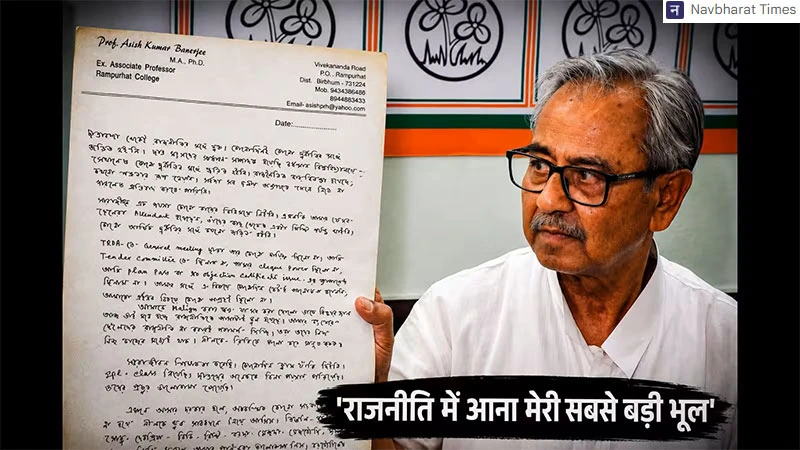
Ashish Banerjee Suicide: A Tragic Breakdown of West Bengal Politics
Ashish Banerjee Suicide (আশিস বন্দ্যোপাধ্যায়ের সুইসাইড) isn’t just another headline in the daily news cycle. It is a seismic breakdown that exposes the toxic, suffocating underbelly of West Bengal politics.
The quiet morning air of Hattalapara in Rampurhat shattered into absolute disbelief when local supporters discovered his body inside a small party office adjacent to his home. Inside that room right next to his house, a five-time MLA, former State Cabinet Minister, and Deputy Speaker of the West Bengal Legislative Assembly was found hanging.
He didn’t leave behind a simple goodbye. He left a devastating indictment of a political system that actively consumes its own leaders, driving clean public servants to ultimate despair.
For decades, West Bengal claimed to be a citadel of political debate, intellectual leadership, and ideological passion. But the death of a scholar-turned-politician inside his own party sanctuary shows how deeply that legacy has rotted. When an MLA who served his people for a quarter of a century decides that his final act must be an exit from a corrupt sphere, society faces a crisis that goes far beyond routine party fighting.
The tragedy of Ashish Banerjee raises raw, uncomfortable questions about governance, ethics, and whether honest people can even survive in state politics today.
Can Ashish Banerjee Suicide in Rampurhat be an eye-opener in West Bengal and national Politics?
Ashish Banerjee Suicide: The Final Note of Horror
The suicide letter recovered from the scene cuts straight to the bone. Written by an academic-turned-politician, every line carries terrifying weight. He wrote clearly that he never got involved in financial corruption, stating that entering politics was the biggest mistake of his life. And he didn’t stop there.
In a chilling warning to his children and relatives, he explicitly warned his family never to step anywhere near politics again.
Look closely at that note. This wasn’t a sudden impulse or a moment of blind panic. His brother and neighbors confirmed he was completely calm and even quietly upbeat late into the previous night, chatting with locals as if everything was completely normal. He was determined. He hid his plans so carefully that no one around him suspected a thing just hours before his tragic end.
“I never got involved in corruption; entering politics was the mistake of my life… No one is responsible for my death”.
– Excerpt from the suicide note left by Ashish Banerjee.
In his letter, Banerjee explicitly denied any financial wrongdoing regarding the Tarapith Rampurhat Development Authority (TRDA). He pointed out that he had zero role in tender committees, issuing cheques, approving building plans, or granting NOCs. Still, he confessed he was forced to suffer silent humiliation, unable to openly protest internal party corruption.
Let us focus on two vital points in his suicide note. First, he says that he had virtually no role in tenders, cheques, building plans, NOCs, or other key processes within TRDA. Still, by virtue of his position, he was the chairman. So why could he not exercise control over these committees and processes? Even if we assume that the TMC system deliberately kept him away from decision-making, effectively reducing him to a rubber stamp, why did he continue to occupy that chair?
This leads to the second and perhaps more troubling question. He appears to state that he had to tolerate corruption but was unable to protest against it. If a leader of his stature was compelled to silently tolerate alleged corruption, it raises serious questions about the functioning of the party under Mamata Banerjee. Was such an arrangement tolerated to maintain an internal political balance? Or were such nexuses allowed for electoral considerations and the larger goal of winning elections?
Whatever the answers may be, the Ashish Banerjee suicide note seems to have raised far more hidden questions than it has answered.
Knowledge Mart sources highlight how systemic humiliation isolates veteran leaders who refuse to participate in illicit network gains. The sheer mental torture of being framed or sidelined by corrupt internal cabals creates a pressure cooker where ending it all felt like his only remaining option.
From Classroom to Assembly: A Fallen Intellectual
To understand why the Ashish Banerjee Suicide triggers such widespread shock, you have to look at his roots. Long before stepping into the volatile corridors of power, Ashish Banerjee was a respected academic, an Associate Professor of Bengali Language at Rampurhat College who earned his PhD from Burdwan University. He belonged to an older generation of Bengal leaders whose authority came from scholarship, community trust, and moral standing rather than muscle power.
| Phase of Life | Key Designation / Role | Political Era | Public Impact |
|---|---|---|---|
| Academic Background | Professor of Bengali Language | Rampurhat College | Built a strong reputation for scholarly integrity and a clean public image. |
| Student Politics | General Secretary, Students’ Council | Burdwan University | Developed an early political foundation rooted in university debate. |
| Electoral Dominance | 5-Time Legislative Assembly Member | 2001 to 2026 | Won initially under Left regime and held his seat across political shifts. |
| State Leadership | Cabinet Minister & Deputy Speaker | TMC Government | Handled Agriculture, School Education, AYUSH, and Assembly duties. |
He won under the Left Front regime, and he kept winning after the TMC took power. That shows his genuine popularity across political lines. He was rather a mass leader. People respected him for his clean image and background. When a former student union leader and 25-year lawmaker tells his own children to stay away from public life, it isn’t just a personal tragedy – it’s a loud alarm bell for Indian democracy itself.
When an educator who spent his youth teaching literature to college students concludes that public service in his own state has turned toxic, it reveals deep societal decay. He survived major political waves because of personal relationships in his constituency, not because he ran armed syndicates.
His tragic end shows how traditional, moderate politicians are systematically squeezed out by aggressive, money-driven party machinery and cannon fodders.
Ashish Banerjee suicide note clearly pinpoints that when his political role began to damage his public image, he sought refuge in his identity as a professor. It appears that he understood that his success, integrity, and dedication as a teacher had given him far greater self-respect and dignity than his political career ever could.
This raises another important question: How does society at large perceive politicians today? A teacher is still widely respected for knowledge, integrity, and contribution to society, while politicians are increasingly viewed with suspicion and, in many cases, contempt by ordinary people.
If a political leader feels that his years of teaching earned him more dignity than his political career, that is more than a personal tragedy – it could be an alarming message about how politics is perceived in a democracy.
Criminalization of Politics: The Death of Idealism
The Ashish Banerjee Suicide remains a massive call to action across Bengal. Criminalization of politics has reached a point where lumpenization isn’t just an side-effect – it has become the main engine of governance.
Let’s be honest here. Local enforcers and hooligans weren’t completely absent from Bengal politics in past decades. But back then, criminals operated under the tight control of political bosses and party committees.
Today, that entire structure has turned upside down:
| Structural Metric | Historical Bengal Politics | Current Political System |
|---|---|---|
| Power Hierarchy | Political leaders commanded local enforcers to maintain discipline. | Lumpen elements became MPs and MLAs, taking over the core machinery. |
| Role of Intellectuals | Educated scholars guided policy decisions and floor debates. | Principled leaders are treated as side characters and pushed out. |
| Local Governance | Party leadership mediated local disputes and kept oversight. | Extortion rings and syndicate bosses dictate administrative terms. |
When extortion rings, syndicate bosses, and real estate cartels dictate terms, an honest scholar simply cannot breathe. They get silenced, framed, or pushed to the edge. Take a look at the immediate local coverage on the incident by reading the report on Anandabazar Patrika or watching ground updates on YouTube Video Coverage.
How does a party isolate its own senior leaders? It happens quietly, but it destroys them completely. Local development authorities and tender allocations get handed directly to syndicate leaders, completely bypassing elected MLAs. Names like Tulu Mondal pops up with a humongous properties of 220 Crores (recovered as of now).
Then come internal misinformation campaigns to frame clean leaders for financial misdeeds run by local cartels. In between, local police take direct orders from party enforcers, leaving traditional leaders completely stripped of authority. In the end, senior leaders are expected to serve as clean public faces while turning a blind eye to local extortion right outside their front doors.
What an irony in Bengal Political landscape.
Where Have All the Scholars Gone?
Another disturbing aspect of the Ashish Banerjee Suicide is the absolute vacuum of intellectuals in Bengal’s political sphere today. There was a time when Bengal’s assembly and party halls echoed with brilliance and statecraft. The Political Elitism used to dominate West Bengal.
Do you want examples?
Look at Dr. Bidhan Chandra Roy, who is undoubtedly called the Architect of modern West Bengal and former Chief Minister. He was an Eminent Medical Scholar and had shown his excellence abroad. There are many myths about his physician roles, but even his enemies must agree that he was an exemplary physician.
If we come down to the next generation of leaders – Siddhartha Shankar Ray & Jyoti Basu, who Dominated state governance with deep legal authority for decades. They have completed their legal degrees from international law schools.
Scroll Down to Buddhadeb Bhattacharya, perhaps the last candle of political elitism, who tried his best to bring literary depth and industrial vision to public service. He had a background of Presidency College scholar, poet and playwright.
Besides them, Utpal Dutt & Saumitra Chatterjee, the cultural icons had been closely politically aligned. Ashok Mitra, another renowned economist, became the finance minister of West Bengal.
Now, there is mostly a barren void. Knowledge Mart research shows that educated, principled individuals are actively driven away by muscle power and syndicate politics. When a veteran professor feels compelled to write his own exit note inside a party office, what message does that send to young people watching?
The systematic exclusion of thinkers from policy work has badly degraded legislative debates in the assembly. Bills get passed with minimal discussion, regional issues are handled through short-term hand-outs, and public institutions are stripped of academic rigor. In a system like this, an intellectual isn’t seen as an asset, they’re seen as an inconvenience that needs to be sidelined. That’s why Kabir Sumon or Sugata Bose doesn’t get the ticket for successive term.
Ashish Banerjee suicide note sounds deeply alarming, particularly where he contrasts the golden legacy of his teaching career with his later role as a political executive – an association he appears to feel has tarnished his image. When a leader of such stature places his dignified identity as a teacher above his political role and seemingly portrays politics as a dirty game, his words carry profound significance. They send a disturbing and deeply troubling signal to society about how political life can affect personal dignity, reputation, and self-worth.
Will the top notch politicians and parties treat it as an warning message?
Gen Z, Campus Bans, and the Vacuum of Leadership
We celebrate Independence Day every year with grand speeches and patriotic music. I was awakened with the lyrics “muktiro mondiro sopano tole” (মুক্তির মন্দির সোপান তলে) this year also. Certainly these songs thrill us.
But if we fail to remove political corruption and syndicate control from our governance, young people will walk away for good.
Rajdeep Sardeshai dreams of a revolutionary change in the governance style of the Prime Minister from the 15th August 2026, but can he turn his eyes away from the harsh realities? Watch his Video in Straight Bat. Dipanjan Chakraborty, his arch rival in politics almost share a similar political view.
The reality is that when democratic number game comes in fore compounded by political opportunists, the morale of the anti-defection law takes a back seat. That’s why we can see split in so many parties including the TMC Split 2026. It’s natural that the long hands of law refrain from reaching the culprits for mutual interests.
By banning student union elections in colleges and universities across Bengal for years, the state cut off the natural growth of new leaders. Campus political life used to be the nursery where young minds learned ideology, debate, and civic responsibility. With those nurseries shut down, student politics was replaced by local patron networks driven by non-academic elements. It is hard to forget that political leaders such as Buddhadeb Bhattacharya, Subhash Chakraborty, Priya Ranjan Dash Munshi, Subrata Mukherjee, and even Mamata Banerjee, along with many other prominent leaders, rose through the ranks of college politics.
Now, when Gen Z sees a 5-time MLA die by suicide while calling politics his life’s biggest mistake, their disconnect is complete. Young scholars and professionals actively avoid political ties, treating public life as a career hazard rather than a civic duty. Bright graduates prefer moving to other states or going abroad rather than dealing with localized syndicate harassment and administrative decay. And that loss of faith leaves a dangerous vacuum in public life.
Whether new CJP political platforms emerge or not, the younger generation is keeping a wide distance from mainstream political parties. If our youth completely abandons politics to syndicate bosses, who will safeguard democracy in Bengal tomorrow?
Knowledge Mart Special: The Poison of Systemic Corruption
The Ashish Banerjee Suicide isn’t an isolated incident of personal despair. It is a fatal symptom of a system poisoned by political criminalisation. When political parties turn from spaces of debate into revenue-generating syndicates, scholars and clean faces are reduced to mere shields for corrupt operations. Ashish Banerjee’s tragic end proves that when you use principled leaders as cannon fodder for criminal networks, the institutions themselves eventually break down.
Even Leader like Anubrata Mandal is saying that he doesn’t have any foe and has hardly been involved in any corruption. Watch his Views in a TV channel Interview. We really astonish whether anyone after death reaches that high!
Corruption in state governance isn’t just about taking a bribe under the table anymore – it has evolved into a full economic syndicate. From sand mining and illegal land deals to recruitment cartels, these networks generate massive cash flows outside official oversight. When an honest leader stands in the way of that money, they face relentless psychological pressure, administrative isolation, and deliberate character assassination. Banerjee’s specific mention of the Tarapith Rampurhat Development Authority shows how local development bodies become battlegrounds where clean leaders get crushed by financial interest groups.
Knowledge Mart emphasizes that if West Bengal fails to dismantle the mafia-politician nexus right now, it won’t just lose individual politicians: it will lose the soul of its democratic future. The silence of good people is what keeps systemic corruption running. When veteran leaders feel completely powerless to speak up against internal wrongdoings, the boundary between public service and organized syndicate operations disappears entirely.
Will the new BJP Government of Suvendu Adhikari take a lesson from Ashish Banerjee Suicide?
Can Bengal Cleanse Its Political Sphere?
Rebuilding faith in governance after a shock like this requires real, structural changes, not just routine press statements or superficial inquiry committees. If Bengal wants to restore integrity to its democratic fabric, specific actions need to happen immediately:
- Independent Audits of Regional Authorities: Bodies like local development authorities must undergo strict, independent financial and administrative audits to root out syndicate control. The CAG reports have to be made public without suppressing any fact.
- Restoring Campus Democracy: Student union elections need to return to universities and colleges under strict non-partisan guidelines to nurture genuine, educated leadership.
- Protection for Whistleblowers within Parties: Internal party setups must allow senior members to raise corruption concerns without facing character assassination or isolation.
- Electoral Accountability: Voters must actively reject candidates tied to criminal backgrounds or extortion rings, choosing transparency and public service track records instead. The Election Commission has to ensure a free & fair poll even at local levels.
The tragic sacrifice of Ashish Banerjee stands as a grim warning of what happens when political systems drop moral values in pursuit of unchecked power. History will judge West Bengal not by the speeches made on the assembly floor, but by how it responds to the final letter written inside a small party office in Rampurhat.
10 Key Takeaways
- Ashish Banerjee Suicide: The tragic death of the five-time MLA and former Deputy Speaker exposes severe political pressure and systemic rot in West Bengal governance.
- Distinction in Suicide Note: In his handwritten note, he explicitly denied any involvement in financial corruption regarding local development authorities.
- Advice to Family: He termed entering politics as his life’s biggest mistake and strictly advised his family members to stay far away from public political life.
- Academic Legacy: As a former Bengali professor and Burdwan University student council leader, he represented a rare breed of scholarly, clean-image politicians.
- Electoral Acceptability: Having won elections continuously from 2001 through 2026 under both the Left Front and TMC regimes, his popularity spanned across party lines.
- Inversion of Power: Historically, local enforcers operated under political leaders; today, criminal elements have taken over key legislative roles and party machinery.
- Decline of Intellectuals: Bengal’s political landscape has shifted from historic scholars and cultural figures to a growing dominance of local syndicates and muscle power.
- Impact of Campus Union Bans: Longstanding bans on university elections have choked the organic pipeline for honest, youth-led political leadership in the state.
- Alienation of Gen Z: The systematic marginalization of clean leaders drives the younger generation completely away from participating in mainstream political parties.
- Knowledge Mart Verdict: The incident serves as a fatal warning that failing to isolate political criminalization will eventually collapse Bengal’s democratic foundations.
[…]Ashish Banerjee Suicide: Dirty Politics Trap Ashish Banerjee suicide triggers shock: Ex-TMC leader found dead in party office. Note denies corruption, calls politics his biggest mistake. Read More.[…]
[…]Ashish Banerjee Suicide: Dirty Politics Trap Ashish Banerjee suicide triggers shock: Ex-TMC leader found dead in party office. Note denies corruption, calls politics his biggest mistake. Read More.[…]
[…]Ashish Banerjee Suicide: Dirty Politics Trap Ashish Banerjee suicide triggers shock: Ex-TMC leader found dead in party office. Note denies corruption, calls politics his biggest mistake. Read More.[…]
[…]Ashish Banerjee Suicide: Dirty Politics Trap Ashish Banerjee suicide triggers shock: Ex-TMC leader found dead in party office. Note denies corruption, calls politics his biggest mistake. Read More.[…]
[…]Ashish Banerjee Suicide: Dirty Politics Trap Ashish Banerjee suicide triggers shock: Ex-TMC leader found dead in party office. Note denies corruption, calls politics his biggest mistake. Read More.[…]