Are 2026 Bengal Poll Dates Fixed Now?
Mar 17, 2026 - By Ashutosh Roy Current AffairsElection AnalysisGovernance & AdminNational NewsPoliticsRegional UpdatesWest Bengal Politics
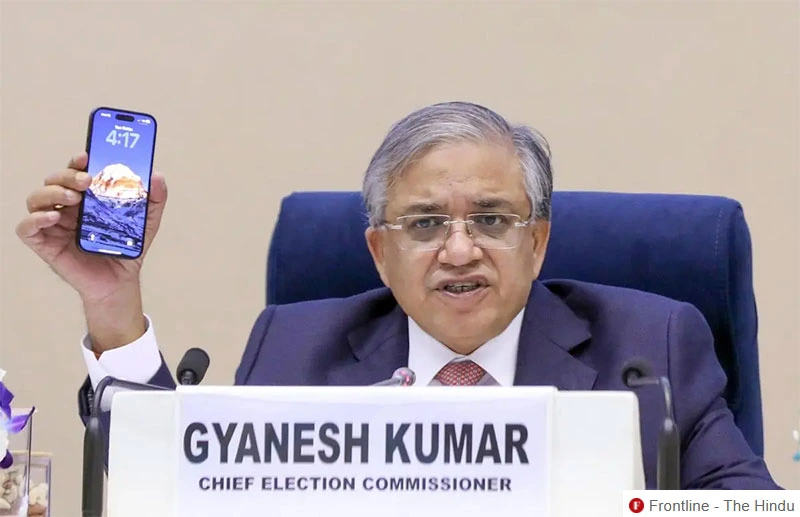
2026 Bengal Poll Dates Announced — Key Updates and Political Questions
We will start with a question: Have the 2026 Bengal Poll Dates been fully confirmed?
We know that the Election Commission announced the voting schedule on the afternoon of 15 March, following its planned timeline.
As per the announcement, the West Bengal Assembly Election 2026 will take place on 23 April and 29 April.
Most people already know this news. Therefore, there is no need to repeat the basic update. We will discuss the doubt over the 2026 Bengal Poll Dates a little later.
First, let us understand the key points of what the Election Commission actually said.
5 Key Highlights of the Announcement:
- The Election Commission has declared the official voting schedule.
- Voting in North Bengal and the western regions will take place on 23 April. Meanwhile, polling in the southern and eastern regions will happen on 29 April.
- The Commission has promised a violence-free election. Moreover, authorities will take strict action against anyone who tries to create unrest.
- There will be complete webcasting of the entire election process to ensure transparency.
- Interestingly, the ECI released the election schedule for the first time without mentioning the exact number of voters in West Bengal
Therefore, while the update on the 2026 Bengal Poll Dates looks clear, some doubts and discussions are still continuing.
5 Key Unanswered Questions
- It is still not clear who will control the central forces during the election. Moreover, people want to know whether these forces will be available at the right place and at the right time.
- Authorities have not clearly explained what action will be taken against those who are already spreading violence. As a result, concerns about law and order continue to grow.
- Another major issue is how authorities will recover illegal weapons and stored bombs before polling. Therefore, voters are waiting for a detailed security plan.
- There is also confusion about voters, who remains under the “under adjudication” category. Officials have not yet clarified what will happen to their voting rights.
- Finally, the Election Commission did not specify when it will form the appellate authority. In addition, they did not clearly defi process for filing appeals as yet.
Because of these unanswered questions, discussions around the 2026 Bengal Poll Dates and election preparedness are likely to continue in the coming days.
Now, let us move to another important issue.
Last-Minute Welfare Announcements Before Poll Schedule
Just 30 minutes before the election schedule announcement on 15 March, Chief Minister Mamata Banerjee made two major announcements. These developments have again triggered fresh debate around the 2026 Bengal Poll Dates and election-time policy decisions.
Key Announcements Made just Before the Poll Schedule:
- The government will increase the monthly allowance for muezzins and priests by ₹500.
- The pending DA dues of 25%, as directed by the Supreme Court of India, will start being paid from March itself.
Debate Over Ethics and Timing of Pre-Poll Financial Decisions
However, a larger concern still remains. Critics argue that this trend could become dangerous for democratic governance. If such practices continue, governments may avoid increasing social sector spending for five years.
Instead, they might announce financial benefits on the morning of the election notification or just minutes before it.
Moreover, making such decisions without detailed discussion in the Legislative Assembly or the Cabinet raises ethical and procedural questions. Some observers believe this reflects an autocratic approach, which can weaken institutional transparency.
Role of Model Code of Conduct and Institutional Limitations
At the same time, the Election Commission has clarified that policy decisions taken before the Model Code of Conduct comes into force fall under the government’s jurisdiction. Therefore, legally, the Commission has limited scope to intervene in such situations.
Are the Lawmakers serious in taking steps against such announcements?
Nevertheless, many citizens now expect elected legislators (whom voters themselves send to the Assembly) to consider framing stricter legal safeguards.
Such steps could help prevent last-minute financial announcements that may influence public perception before the West Bengal Assembly Election 2026.
This situation also creates a political perception challenge. If development achievements are strong enough, governments can confidently seek votes based on long-term performance and governance outcomes.
Therefore, critics now question why the government makes last-minute welfare announcements despite repeated claims of development progress in West Bengal.
Is DA Dispute and Sudden Policy Shift a Political Calculation?
Now, let us focus on the DA (Dearness Allowance) issue, which has created fresh political discussion around the 2026 Bengal Poll Dates.
State Government’s Earlier Appeal in the Supreme Court
Only a few days ago, the state government had approached the Supreme Court of India and filed an appeal. In that petition, the government reportedly sought time until December 2026 to clear the dues.
Officials also stated that they digitised data from 2016 to 2019, but they have not fully digitised earlier records. Therefore, they argued that they would need at least six weeks to complete the necessary calculations.
However, the situation appeared to change very suddenly. The new announcement about starting DA payments from March has raised questions about how such a rapid shift in position became possible overnight.
As a result, political observers are now debating the possible reasons behind this move.
Is Mamata Banerjee under Panic?
Some commonly discussed explanations include:
- The Chief Minister Mamata Banerjee may have felt pressure after witnessing the government employees’ strike on 13 March. Consequently, the administration might have decided to act quickly.
- It may be also due to the Contempt Petition Filed Against West Bengal Government Over 25% DA Arrears.
- Another view suggests that the government became politically cautious after the large public response to Prime Minister Narendra Modi’s rally on 14 March. Therefore, the Government has taken strategic decisions to manage public sentiment before the 2026 Bengal Poll Dates.
- Some analysts also believe that internal opinion polls, possibly conducted by political consulting agencies such as Indian Political Action Committee or similar organisations, may have influenced the timing of the announcement.
At the same time, it is important to remember that everybody regards Mamata Banerjee as a grassroots-oriented political leader. Many supporters argue that she rarely misreads public mood or ground-level signals.
Therefore, underestimating her political instincts and strategic judgement could lead to incorrect conclusions.
Overall, the sudden policy shift has added another layer of debate and political calculation in the run-up to the Bengal Elections 2026.
However, we are yet to see any order from the Finance Department, Government of West Bengal. The news is good, but employees shouldn’t count their chickens before they hatch
What About the Adjudicated Voters Ahead of 2026 Bengal Elections?
Now, let us focus directly on the 2026 Bengal Poll Dates and the status of voter-related processes. Several administrative issues still need resolution. Therefore, many observers now seek clarity before polling begins.
5 Key Concerns Related to Voter Adjudication:
- Around 60 lakh voters are currently under the adjudication category. As a result, their final voting eligibility is still under review.
- Reports suggest that the judicial officers have been able to settle only about 15 lakh cases until 13 March. Therefore, a large number of cases still remain pending.
- The High Court Chief Justice or the Election Commission is yet to formally constitute the appellate authority. Consequently, affected voters do not have a fully operational higher forum for grievance redressal.
- In addition, the authorities have not clearly announced the official appeal procedure. This lack of clarity may create confusion among voters before the 2026 Bengal Poll Dates.
- Meanwhile, ECI is yet to publish the first supplementary voter list. Hence, political parties and citizens are still waiting for updated electoral data.
Because of these pending administrative steps, discussions continue about preparedness and transparency ahead of the 2026 Bengal Poll Dates
Factors Affecting Election Schedule
However, there is another major administrative challenge with the 2026 Bengal Poll Dates. As per election rules, the final voter list must be frozen within April 06, 2026. Therefore, the timeline has now become extremely tight.
Administrative Burden on Judicial Officers
Even if we assume that judicial officers work tirelessly and complete the adjudication process within this short period, the task still appears very difficult compared to the current progress. Nevertheless, for the sake of argument, let us assume they succeed.
Is there any Risk of Massive Appeal Backlog Before Polling?
In that case, a new question arises. Where is the time for filing appeals and settling those appeals? This is crucial because reports have already suggested that around 3.5 to 4 lakh names may have been deleted from the rolls.
Naturally, every affected individual has the legal right to challenge such decisions.
Can Representation of the People Act and Protection of Voting Rights be Maintained?
Moreover, if the number of disputed or removed names increases to 15 or even 20 lakh, the pressure on the election administration could rise sharply before the 2026 Bengal Poll Dates.
Importantly, the Representation of the People Act clearly states that no eligible voter should be deprived of the right to vote.
Therefore, ensuring due process becomes a constitutional as well as administrative responsibility.
Nomination Challenges for Candidates in Adjudication List
There is also a practical political complication. For example, reports reveal that the state minister Shashi Panja is under the adjudication category. This raises a procedural question about how a candidate in such a situation will file nomination papers.
Similarly, any prospective candidate must first ensure that their own voter status is fully cleared before entering the electoral contest.
Legal and Constitutional Uncertainty Around 2026 Bengal Poll Dates
Because of these overlapping legal and logistical concerns, debates about transparency, timelines, and voter rights are likely to intensify as the state moves closer to the 2026 Bengal Poll Dates.
The biggest concern now is whether polling can be conducted after excluding such a huge number of voters.
This question is becoming more serious as political reactions grow stronger ahead of the 2026 Bengal Poll Dates.
Opposition Parties Raise Concerns Over Voter Exclusion
Opposition parties like the Communist Party of India (Marxist) and the Indian National Congress have already raised strong objections. Therefore, the issue is gradually turning into a larger legal and constitutional debate.
What is the possibility of Fresh Petitions in the Supreme Court?
At the same time, it is also possible that any individual citizen or civil society organisation may approach the Supreme Court of India.
If such petitions are filed, the announced 2026 Bengal Poll Dates could come under serious judicial scrutiny. Consequently, the election schedule itself may face uncertainty depending on legal developments.
Why did SC invoke Article 142 in Bengal SIR?
It is worth noting that the Supreme Court has earlier invoked Article 142 (special constitutional powers) in matters related to the SIR process in West Bengal. This shows that the current situation is already being seen as exceptional and sensitive.
Hence, many observers believe that an extraordinary situation may eventually require an extraordinary institutional solution.
Electoral Legitimacy Debate Ahead of Assembly Polls
Overall, the debate is no longer limited to administrative preparedness. Instead, it now revolves around voter rights, constitutional safeguards, and electoral legitimacy in the run-up to the 2026 Bengal Poll Dates.
Final Thoughts: West Bengal Assembly Election 2026
As West Bengal moves closer to the 2026 Bengal Poll Dates, the debate is no longer limited to political strategy or administrative preparedness.
Instead, it has evolved into a larger question of democratic credibility, voter rights, and institutional accountability.
The uncertainty surrounding voter adjudication, delayed appeal mechanisms, and last-minute policy decisions has created a climate of legal as well as political tension.
Moreover, We at Knowledge Mart are worried about the possibility of large-scale voter exclusion and potential judicial intervention could significantly influence the final electoral roadmap.
If unresolved issues continue to grow, the announced 2026 Bengal Poll Dates may face intense scrutiny from political stakeholders, civil society, and constitutional bodies alike.
At the same time, elections in a vibrant democracy are ultimately judged by transparency, fairness, and public trust. Therefore, timely administrative action, clear legal safeguards, and responsible political conduct will play a decisive role in shaping voter confidence.
In the coming weeks, how institutions respond to these challenges will determine whether the 2026 Bengal Poll Dates become a symbol of smooth democratic transition or a turning point that triggers deeper electoral reforms in West Bengal.
Key Takeaways:
- 2026 Bengal Poll Dates announced for 23 and 29 April in two phases.
- Major confusion continues over the final voter list and adjudication cases.
- Nearly 60 lakh voters remain under verification, raising legal concerns.
- Opposition parties have questioned voter exclusion and poll preparedness.
- Last-minute welfare and DA announcements triggered fresh political debate.
- Uncertainty remains over central force control and security deployment.
- Election authorities promised full webcasting and violence-free polling.
- Delay in appellate authority formation and appeal procedures adds pressure.
- Electoral rolls must be frozen by early April, tightening timelines.
- Possible court intervention could impact 2026 Bengal Poll Dates if disputes escalate.
People Also Ask (PAA)
When are the 2026 Bengal Poll Dates scheduled?
The 2026 Bengal Poll Dates are scheduled in two phases: 23 April and 29 April 2026, as per the announced election timetable.
Why is there controversy over the voter list before the 2026 Bengal polls?
Controversy has emerged because lakhs of voters are still under adjudication, and the final electoral roll process is yet to be fully completed.
How many voters are under adjudication ahead of the 2026 Bengal election?
Reports suggest that around 60 lakh voters are currently under verification, creating uncertainty about their final voting eligibility.
Can the 2026 Bengal Poll Dates change due to court intervention?
Yes. If major legal challenges arise regarding voter rights or electoral procedures, courts could review administrative decisions, which may impact the schedule.
What is the deadline for freezing the final voter list in West Bengal elections?
As per election norms, the final voter list is expected to be frozen in the first week of April, leaving limited time for dispute resolution.
Why did the DA announcement create political debate before the 2026 polls?
The sudden decision to start pending DA payments shortly before the poll schedule announcement triggered debate over timing, intent, and electoral influence.
What role will central forces play during the West Bengal Assembly Election 2026?
Central security forces are expected to support state authorities in ensuring peaceful polling, although clarity is still awaited on operational control.
How can deleted voters appeal before the 2026 Bengal Poll Dates?
Affected voters can file appeals through the designated legal or administrative mechanism, once the formal appellate process is fully notified.
Which political parties have raised objections to the voter verification process?
Opposition parties, including major regional and national players, have expressed concerns over voter exclusion and transparency issues.
Will last-minute welfare schemes influence the 2026 West Bengal election outcome?
Political analysts believe such announcements can shape voter perception, but the final impact will depend on broader governance performance and public sentiment.