Burst of molestation in Bengal: Act Now
Oct 14, 2025 - By Ashutosh Roy Social IssuesSocietyWest Bengal Politics

The Roots of Molestation
The array of events of molestation in West Bengal under the current Government has forced us to delve into the root. In some animal species like hyenas, elephants, and lions, females hold dominance. But in human society, men have held authority for ages. Maybe it began with the myth of the curse on Eve. But over time, physical and mental strength gave men an upper hand. Women also accepted this almost without protest. As a result, men use their authority in almost every matter. This power sometimes even drives them toward Gender-based violence.
The Indus Valley Civilization, early Vedic Civilization, and ancient Egyptian Civilization gave women a high position. But we should treat these as exceptions.
Today, the world talks a lot about gender equity. Yet male dominance still continues. Sometimes it appears openly and at times, it remains hidden.
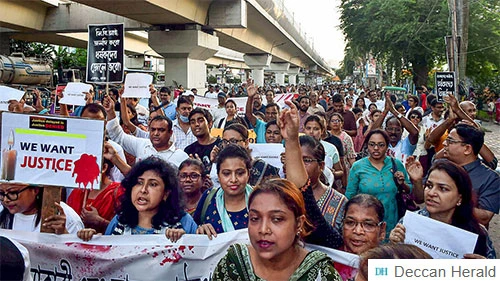
The Complexity of molestation
Many men take pleasure in using force to penetrate or show aggressive masculinity. They enjoy the feeling of power, control, and dominance over women.
Gender-based violence becomes an inseparable expression of this power and authority.
Social and psychological mindsets also play a major role. Even today, society often blames women for molestation. In many villages, people still brand the survivor as “dishonored.”
Because of this stigma, many women hesitate to speak out. They remain silent even after enduring extreme brutality. Predatory men use this silence as a weapon. They lose their shame and restraints and continue their violence.
On top of that, media and advertisements influence society. Most of them treat sex as a product to boost their success. Unfortunately, this is still true today.
Sex continues to be sold as a commodity in the market. And women’s bodies are used as the main capital for it.
There is no point denying that humanity still falls prey to this primitive instinct. Mamata Banerjee is highly reluctant in banning any such channels or advertisements in West Bengal, which are seemingly provoking.
Sexual Coercion in Intimate Relationships
Molestation is not limited to strangers. The reports reveal that even the intimate partners in schools or colleges also face such illegal penetration without consent. We should not forget about the lot of molestation which occur even within family.
Research, such as the systematic review “Marital Rape and its Impact on Mental Health of Women in India,” published on the NIH site, has reported a wide range of intimate partner sexual coercion in married life, spanning from 2% to 56%.
Such a hilarious figure shows a gross violence to the proverbial statement, “Marriage is not a license to rape. It doesn’t imply perpetual consent to sex.”
Even the figures of physical violence and Gender-based violence is not negligible, though most of them remains unreported.
Molestation: Psychological and Substance Factors
Even if we set aside mental disorders or abnormal sexual urges, antisocial behavior and narcissism also trigger the desire to commit sexual assault. Sometimes, even in casual conversations among friends, men place bets on harassing girls just for fun.
To this, some men have got deep seeded misogyny and hatred feeling toward women. Along with this, they hold different sexual fantasies that fuel their actions.
Many of them consume alcohol. Research shows that there is no direct evidence linking alcohol to Gender-based violence. But many offenders use alcohol as a tool, either to intimidate the victim or to force the girl to drink and make her unconscious.
These behaviors reveal how molestation and intend to dominate women is rooted not only in desire but in power, ego, and a distorted mindset.
Systemic Failures and Societal Decay
Indian Penal Code Bharatiya Nyaya Sanhita (BNS) has stringent laws. Yet the accused are punished in very few cases.
Many offenders believe they will escape even after committing such crimes. Their confidence comes from long and complicated legal procedures, weak law enforcement, social stigma of girls, and extremely low conviction rates.
The situation becomes even more complex when political or social power gets involved. The criminals then know that the “long arm of the law” will not reach them. Mamata Banerjee is certainly aware about the hobnobbing relationship of TMC leaders with the police in West Bengal.
In this strange patriarchal society, survivors face shame instead of support and sympathy. When they need compassion and solidarity, society attempts to isolate them instead. When the offenders remain unpunished and proudly boast about it, we should not see it only as a dripping law and order situation. Rather, we must see it as a reflection of social decay.
Molestation in West Bengal
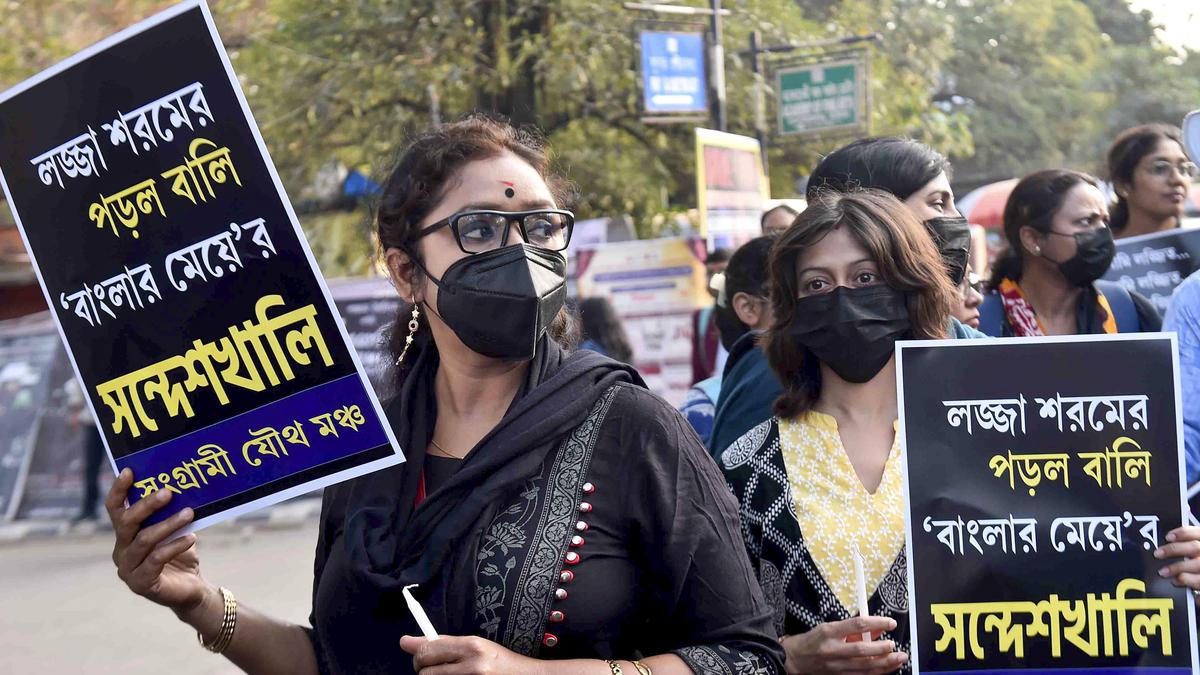
Image Courtesy: The Hindu
Case Studies and Institutional Response
West Bengal has recently witnessed a string of such Molestation. Cases at institutions like R. G. Kar, South Calcutta Law College, and Durgapur Medical College represent only the visible tip of the iceberg.
Reports suggest that many accused are repeat offenders. Some of them hold positions in or maintain close links with the ruling parties. Mamata Banerjee may order her administration to work independently without being influenced by the party color.
Rising unemployment pushes many young men to seek refuge under political patronage. They often display aggressive masculinity and reckless bravado just to prove their loyalty.
Public responses have been equally disheartening. The remark of the Chief Minister, Mamata Banerjee like “Girls shouldn’t go out alone at night” is deeply upsetting. Similarly, she imposed the night-duty restrictions on women after the R. G. Kar case, which was equally demoralizing.
But such remarks sound alarmingly like the ideas of a patriarchal society that shields predators instead of survivors. It does not remain as casual misogyny anymore, but such heart-breaking statements should be duly hatred.
The time for passive acceptance is over. Sensible citizens must simultaneously and urgently echo the call: “Let’s awaken. Let’s drive the endless struggle: Fighting Gender-based violence together.”
Key Takeaways
- The Indus Valley, early Vedic, and ancient Egyptian Civilization gave women an esteem position in the society.
- Gender-based violence becomes an inseparable expression of the power and authority of men over women.
- Even Marital Rape or domestic sexual violence has been increasing in West Bengal.
- The perpetrators escape the rule of the law with the indulgence of some ruling party leaders
- Gender-based Violence can’t be stopped by imposing prohibition on women. It is better to improve the law and order situation
[…] a separate incident, there had been a gang-rape on a homemaker in Maynaguri, North Bengal, inside her home on October 17. The perpetrators […]
[…]Burst of molestation in Bengal: Act Now Sensible citizens must urgently echo the call to fight against molestation together along with State Government leaving the passive acceptance in West Bengal[…]
[…]Burst of molestation in Bengal: Act Now Sensible citizens must urgently echo the call to fight against molestation together along with State Government leaving the passive acceptance in West Bengal[…]