Sonia Gandhi Memoir Craze: Explosive Hype!
Nov 17, 2026 - By Ashutosh Roy PoliticsNational Politics
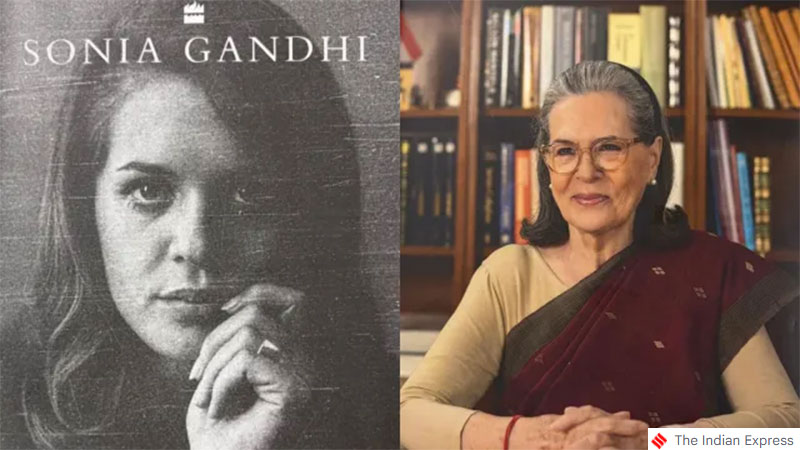
Sonia Gandhi Memoir Craze: What’s Behind It?
When I look at the popularity and Sonia Gandhi book controversy surrounding the memoir of a so-called “foreigner”, Sonia Gandhi, one line comes to mind: “Indeed, Seleucus, what a strange country this is!” There has hardly been this level of public excitement and political debate around the memoirs of leaders such as L.K. Advani or Pranab Mukherjee.
Still, Belonging: A Journey of Love has become a much-discussed book, attracting readers, political leaders, commentators and experts.
The enthusiasm is so intense that, at times, I wonder how many of those debating the book have actually finished reading it. The debate began even before its publication, and it has hardly slowed down since its release on November 10, 2026. The political arguments are one thing; the extraordinary public demand is quite another.
There is already a debate over the book’s accuracy. An India Today examination has identified 55 factual and contextual issues in the memoir. Sonia Gandhi memoir factual errors involve basic errors concerning historical dates, political events and constitutional facts. In the age of AI, such mistakes may be easier to identify, but does Sonia Gandhi memoir factual errors automatically diminish the importance of the book?
Meanwhile, the BJP’s repeated criticism of Sonia Gandhi and her political legacy has kept the memoir in the headlines. The party’s objections have extended beyond factual accuracy to questions about how the book presents the Emergency, the 1984 anti-Sikh riots and the Gandhi family’s political legacy. Is the criticism itself helping to fuel the Sonia Gandhi Memoir Craze?
Let us examine why this memoir has generated such extraordinary curiosity and why a personal account by a senior Congress leader has become a political talking point across ideological lines.
1. Why Penguin dropped Sonia Gandhi’s book?
Before the book reached readers, its publishing journey had already become a story in itself. Reports suggested that Penguin Random House India and Sonia Gandhi’s team had differences over proposed editorial changes, including passages concerning Narendra Modi, the RSS and contemporary political developments. The Indian Express reported that the disagreement involved proposed changes and deletions.
Penguin, however, disputed the suggestion that it had decided not to publish the book simply because Sonia Gandhi rejected editorial changes. The publisher said that such an explanation did not accurately reflect the circumstances. HarperCollins eventually took over the Indian publication, and Belonging: A Journey of Love was released on November 10.
Whatever the precise reasons behind the change of publisher, the Sonia Gandhi memoir controversy had an obvious effect: it made people more curious about what the memoir contained. Whenever a book becomes the subject of a public dispute over what should or should not be published, readers naturally begin asking what is inside it. Attempts to restrict, edit or silence a work can sometimes generate more publicity than an ordinary promotional campaign.
We have seen this pattern before.
Whenever attempts have been made by the state to ban films or books such as Dwikhandito, Bibor and The Kerala Story, their popularity has reached its peak. Sonia Gandhi’s memoir is certainly nowhere near as controversial as Salman Rushdie’s The Satanic Verses. Still, the principle remains the same: attempts to suppress a work can sometimes create greater curiosity about it and encourage more people to read or watch it.
In this case, the controversy surrounding the memoir became part of its publicity even before the first copy reached the market. Was it surprising that readers wanted to see for themselves what had caused so much discussion?
2. Is the Foreign-Origin Argument Still Relevant?
For years, Sonia Gandhi’s Italian birth has been one of the BJP’s most frequently used political arguments against her. The foreign-origin issue became particularly heated in 2004, when she was widely expected to become Prime Minister after the Congress-led alliance won the general election.
Senior BJP leader Sushma Swaraj threatened to resign from the Rajya Sabha if Sonia became Prime Minister. She also reportedly planned to shave her head and wear white as a mark of protest. The episode was widely reported at the time, including by The Times of India. Perhaps the post mortem will keep on continuing in the future also on Why Sonia Gandhi refused to become Prime Minister in 2004.
But how relevant is this argument today? Sonia married Rajiv Gandhi, became part of the Nehru-Gandhi family and spent most of her adult life in India. She was also Indira Gandhi’s daughter-in-law and the mother of Rahul and Priyanka Gandhi. These facts do not automatically settle every question about political leadership, but they help explain why the repeated foreign-origin attack may no longer carry the same political force it once did.
There is also a larger question. Should a person’s country of birth remain the central issue after decades of public life, political participation and personal commitment to the country? The BJP may continue to raise the issue, but does repeating an old argument necessarily make it more convincing?
3. Sonia Gandhi Remains Politically Relevant
Sonia Gandhi may not be at the forefront of day-to-day political activity in the way she once was, but it would be a mistake to assume that her influence has disappeared. She remains an important figure in the Congress organisation and a senior voice in the Opposition. Her participation in INDIA bloc deliberations and her political relationships continue to attract attention.
For years, the BJP has accused her of exercising influence from behind the scenes. The expression “remote control” became a familiar part of its criticism of the Congress-led UPA governments. Rahul Gandhi, meanwhile, has repeatedly been targeted with the BJP’s familiar “Pappu” jibe. Yet Sonia’s political stature has not simply vanished with the passage of time.
Her memoir is therefore not merely the recollection of a former Congress president. It is also the account of a person who occupied a central position during two UPA governments and witnessed major political decisions from close quarters.
One may disagree with her political positions, but it is difficult to deny that she remains relevant to any discussion of the Congress, the Opposition and the political history of the past three decades.
4. Was Sonia More Flexible in Coalition Politics?
Coalition politics requires patience, negotiation and the ability to accommodate leaders who may not always agree with one another. Sonia Gandhi’s years as Congress president coincided with an era when the party had to depend on regional allies to form and sustain governments at the Centre.
Pranab Mukherjee was among the most experienced and politically astute leaders in the Congress. His knowledge of parliamentary affairs and his ability to negotiate with different political groups were widely recognised. Still, coalition management was never the responsibility of one individual alone. Sonia had to maintain relationships with allies such as Mamata Banerjee and Sharad Pawar, even when political differences created serious challenges.
Could Pranab have managed every such relationship in the same way? That is a legitimate question, but it is also worth recognising that Sonia’s position as party president gave her a different political role. She could sometimes provide the broader political accommodation that an individual minister or negotiator could not.
Her ability to accommodate leaders with sharply different political ambitions was an important part of the Congress’s coalition-management strategy during the UPA years. The survival of the two governments, however, also depended on the contributions of several other leaders, regional allies and the political circumstances of the time.
This is an aspect of her political career that deserves attention beyond the usual debate over the Nehru-Gandhi family.
5. A Private Life Behind a Public Political Image
The political lives of leaders such as Advani, Pranab Mukherjee and Manmohan Singh have been discussed extensively in books, interviews and public records. Sonia Gandhi, by contrast, has maintained a relatively private personal life. For years, the public knew her primarily through her role in the Congress and the political controversies surrounding the Gandhi family.
Her memoir offers readers a more personal account of her life: her childhood in Italy, her relationship with Rajiv Gandhi, her entry into the Nehru-Gandhi family, the assassination of Indira Gandhi, the murder of Rajiv Gandhi and the personal grief that followed.
There is a natural curiosity about the private experiences of someone who has spent decades at the centre of public life but has rarely spoken at length about her personal feelings. Readers who disagree with Sonia politically may still want to understand the woman behind the public image.
That may be one of the strongest reasons for the book’s appeal. Political arguments can attract attention, but personal stories of love, loss, family and responsibility often reach readers beyond party boundaries.
6. Rahul, Priyanka and the Decision Not to Become Prime Minister
One of the most discussed revelations from the memoir concerns Sonia Gandhi’s decision not to become Prime Minister in 2004. She writes that she had discussed the possibility with Rahul and Priyanka before the election and that neither of them wanted her to take the post. Their concerns were shaped by the trauma of Indira Gandhi’s assassination and Rajiv Gandhi’s murder.
In an excerpt published by The Indian Express, Sonia describes the emotional conflict behind her decision. She also recalls how the foreign-origin controversy could have intensified political tensions if she had accepted the office.
Her account presents the decision as a personal choice shaped by family concerns, political circumstances and a sense of responsibility. Readers are free to examine that explanation critically. But it does add a personal dimension to an episode that has been debated for more than two decades.
There is another question worth asking. Sonia’s opposition to the RSS and the BJP’s version of Hindutva is not new. Her political differences with the Sangh Parivar have been visible for years. Why, then, has the memoir’s emphasis on secularism and the ideological divide become such a prominent subject of political debate now?
7. Is the Dynasty Argument Losing Its Force?
Sonia Gandhi is an obvious example of dynastic politics in India. Her entry into the Congress leadership followed the political legacy of the Nehru-Gandhi family, and Rahul and Priyanka remain part of that political inheritance. It would be difficult to discuss the Congress without discussing the influence of this family.
However, the foreign-origin argument is not identical for every member of the family. Sonia was born in Italy, while Rahul and Priyanka were born in India. The BJP can continue to criticise the political dominance of one family, but the argument about Sonia’s birthplace cannot be applied to her children in the same way.
More importantly, dynastic politics is not confined to the Congress. Several political parties across India have promoted family members into positions of power. That does not make the Congress’s record immune from criticism. It does, however, raise a question about the consistency of the political attack.
Is the BJP’s most effective criticism of Sonia Gandhi still her foreign origin, or has that argument gradually lost some of its force? And when political parties across the spectrum have their own family-based leadership structures, how persuasive is it to treat dynastic politics as a problem belonging to just one party?
8. Does Old-School Politics Still Have an Appeal?
Perhaps the most interesting aspect of Sonia Gandhi’s memoir is the contrast it creates with today’s political culture. Indian politics has become increasingly associated with aggressive campaigning, frequent party switching, allegations of horse-trading and the struggle to secure power by almost any available means.
Against this background, Sonia’s political style may appear to belong to an older generation. Her supporters may see it as a politics of restraint, loyalty and institutional continuity. Her critics may question the same style as an extension of family-based political control. Both perspectives deserve consideration.
But there is a reason why the idea of old-school politics continues to attract attention. In an era when political loyalties often appear temporary and public morality is routinely invoked but inconsistently practised, some readers may find the older language of political responsibility and personal commitment appealing.
Does Sonia Gandhi represent that tradition? Or is the nostalgia itself part of the political image that the memoir seeks to create? Readers will have to decide after examining the book rather than relying only on political endorsements or criticism.
Watch the Rajdeep Sardesai analysis on Why Sonia Gandhi Still Matters.
Why is Sonia Gandhi memoir popular?
- Controversy creates curiosity: The dispute surrounding the publishing arrangement helped make the memoir a political talking point even before its release.
- Foreign-origin debate: The repeated attack on Sonia Gandhi’s Italian birth raises questions about its continuing political relevance.
- Political influence: Despite a less visible public role, Sonia remains an important figure in Congress and Opposition politics.
- Coalition management: Her ability to work with regional allies was an important feature of the UPA years.
- Personal revelations: The memoir offers readers a rare account of her private life, family tragedies and political choices.
- Dynastic politics: The Congress’s family-based leadership remains open to criticism, but the issue is not unique to one political party.
- Historical accuracy: The reported factual and contextual errors deserve scrutiny, even if the memoir’s personal recollections remain valuable.
Is the Sonia Gandhi Memoir Craze Just Political Hype?
The extraordinary demand for Belonging: A Journey of Love is difficult to explain through conventional book marketing alone.
Bookstores have reported a rush of buyers, and some booksellers have compared the excitement with the launch of Harry Potter and the Deathly Hallows. A report in The Indian Express described the unusual level of interest and the queues at bookstores.
The comparison is about the excitement among readers, not a claim that the two books are equivalent in readership or sales.
There is clearly more than one reason behind this interest. Sonia Gandhi’s long political career, her private personal history, the Sonia Gandhi book controversy over the publishing process, the BJP’s repeated attacks and the public’s curiosity about the Nehru-Gandhi family have all contributed to the attention.
But the book’s popularity should not prevent readers from questioning its claims. The reported 55 factual errors in Sonia Gandhi’s memoir deserve examination, just as Sonia’s personal account deserves to be read on its own terms. A memoir is not a history textbook, but when it discusses major political events, accuracy matters.
The BJP’s criticism also raises another question. Is it genuinely interested in correcting historical inaccuracies, or does the memoir offer another opportunity to attack the Gandhi family? Equally, should Congress supporters dismiss every criticism as politically motivated? Neither blind defence nor automatic rejection helps readers understand the book.
For a wider perspective on the political relationship between Sonia Gandhi and Pranab Mukherjee, readers may also visit my earlier article, Pranab Mukherjee Wanted to Be Prime Minister.
Ultimately, the real question is not whether Sonia Gandhi is right or wrong on every issue. It is why a memoir by a leader who has been in public life for decades has generated such extraordinary curiosity. Is it the woman, the political legacy, the controversies, or the questions that the book raises about India’s political culture?
Perhaps the most revealing part of the Sonia Gandhi Memoir Craze is that even those who strongly oppose her politics seem eager to know what she has to say. In today’s polarised political environment, that alone is worth examining.