Centralization of Power: Political Insider
Jan 12, 2026 - By Ashutosh Roy Election AnalysisNational PoliticsPoliticsWest Bengal Politics
Key Highlights
- Centralization of Power: A Hidden Cost of Peak Popularity?
- Is Centralized Power Turning Democracies into Elected Autocracies?
- India’s Diversity vs Centralized Power: Can One Model Fit All?
- Is Fragmentation the Inevitable Consequence of Centralized Power?
- From National Congress to BJP: Is History Repeating Itself?
The Cost of Absolute Control of Centralization of Power in Indian Politics
There is a very subtle difference between internal democracy and discipline within political parties. When a party reaches the peak of power, power naturally becomes concentrated within the party.
So, the Centralization of power becomes obvious. The Indian Politics has witnessed it historically.
For example, if we look at today’s India, this difference becomes clear when we compare the BJP and the Congress. However, India is not run by mob rule. Instead, democracy is still functioning in full strength.
Therefore, we must examine internal democracy, whether it is in the ruling party or the opposition.
Meanwhile, the CPI(M) seems to be the only exception. Even though it has gradually declined and become a marginal force, it has still maintained strict and ironclad discipline within the party.
Let us go back to the history of the Congress. First, in the pre-independence period, Subhas Chandra Bose defeated Pattabhi Sitaramayya in 1939. Even then, he had to resign from the post of Congress President to make way for Gandhi.
Next, the resolution moved by Govind Ballabh Pant remains a powerful historical document. It clearly showed a shameless attempt to curb the authority of an elected president.

Centralization of Power at Its Peak: Why Leadership Gets Centralized
When Indira Gandhi was the party president, a major event took place in 1959. The Centre removed the elected Kerala government led by E. M. S. Namboodiripad. Jawaharlal Nehru and President Rajendra Prasad then imposed President’s Rule. Many believe Indira Gandhi played a key role in this decision.
Later, when Indira Gandhi was at the peak of her power, the Congress High Command culture began. Thus the Centralization of power got formalized. In other words, leadership became centralized indirectly.
As a result, the party appointed chief ministers in state after state based on her wishes. The elected MLAs had no say.
Even in faraway Karnataka, Indira Gandhi and a small group of trusted advisers in Delhi decided who would become chief minister. Either someone would come from Delhi, or leaders would announce the name directly from Delhi.
Decline of Congress and the lack of Party Discipline
Today, the Congress is in decline. However, this tradition continues. The Nehru-Gandhi family may no longer hold formal leadership posts, but they still have the final say.
Atal Bihari Vajpayee once famously but mockingly said that the Congress runs by the remote control of 10 Janpath.
However, party discipline in the Congress has weakened significantly today. Leaders like Shashi Tharoor, and many others, repeatedly make public statements against the party line. Yet, the Congress takes no action against them, though the party highly emphasizes on Centralization of Power.
In reality, the Congress has split into many regional parties over time. Because of this erosion, the party no longer has the strength to even consider action against leaders like Shashi Tharoor.
The Rise of BJP: From Margins to a National Powerhouse
Now, let us look at the BJP. First, history shows that in 1984, the party had only two members in the Lok Sabha. As the BJP grew revolutionary, we also saw increasing centralization of power.
Even during the Vajpayee-Advani era, the party had considerable internal democracy. The National Working Committee and the Parliamentary Board played an important role, instead of ruthless Centralization of Power.
Moreover, the party’s real strength was the Rashtriya Swayamsevak Sangh (RSS), which clearly had influence and priority within the system.
Modi–Shah Era: The New High Command Model and centralization of power
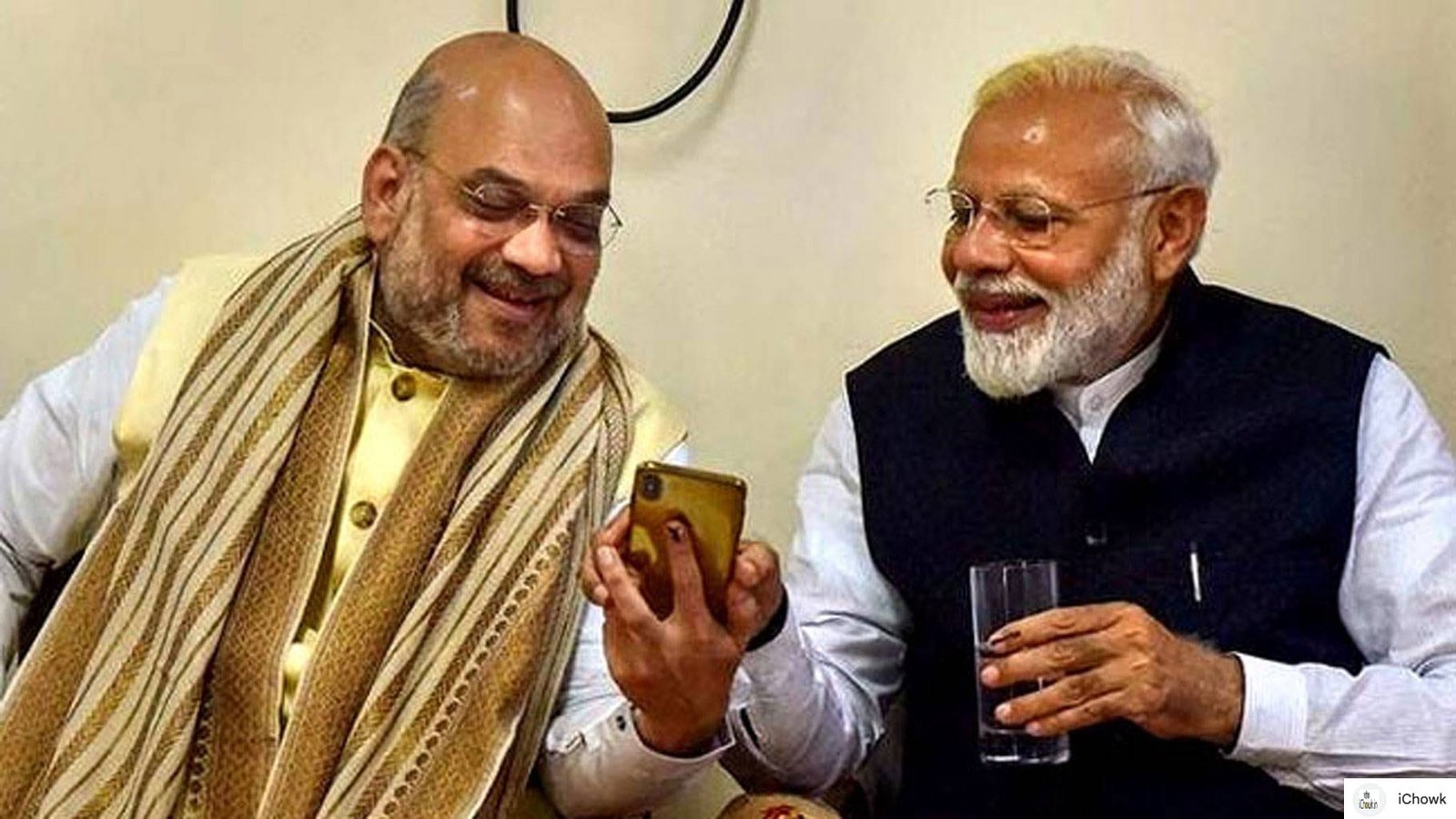
However, after Narendra Modi’s landslide victory in 2014, we have gradually seen a shift. The center of decision-making moved to the now-famous Modi–Shah duo. They have effectively become the party’s high command.
As a result, elected MLAs in the states have no right to choose their leader. Otherwise, would leaders like Shivraj Singh Chouhan or Vasundhara Raje have missed out on becoming chief minister at certain points?
Instead, the Modi–Shah duo decides the chief minister, writes the name on a slip of paper, and sends it to the state proving the authority of Centralization of Power.
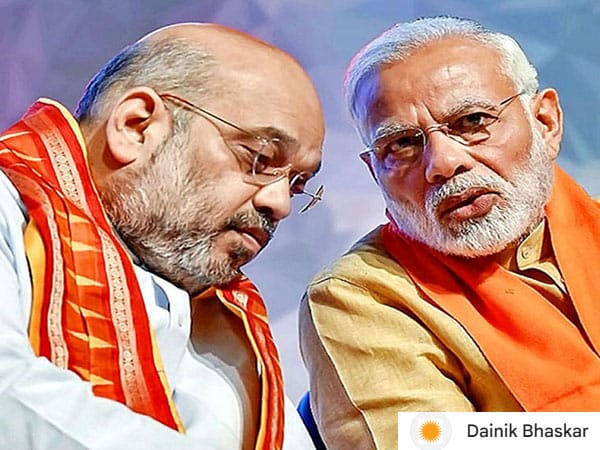
Then, a central leader travels to the state and opens the note to announce the name. Decisions happen so secretly that even the RSS sometimes remains unaware. Still, during this period of the party’s remarkable rise, no one has the power to oppose these decisions. Everyone is forced to accept them.
When a party stands at the peak of power and shows quantum growth, dissenting voices fall silent. However, in any declining party, opposition quickly bares its teeth and Centralization of Power comes under microscopic lenses even from insiders.
Weak Opposition and the BJP’s Unchallenged Growth
The real truth is this: India is too large and too diverse for power to remain centralized only in Delhi for long. Today, the main reason behind the BJP’s remarkable rise is the incompetence and weakness of the opposition. The Congress, once a pan-India party, has now become dependent on regional parties like a crutch.
At the same time, many regional parties suffer from intense internal factionalism. Family feuds within the Thackeray and Pawar camps have split their parties.
Earlier, the Trinamool Congress wiped out opposition parties through its all-consuming politics. Now, it too is torn apart by internal conflicts. Above all, corruption and nepotism have reached such levels that people feel fed up. The people hardly dared to raise a question for Centralization of Power.
For the public, the BJP appears to be the only alternative. On top of that, the party freely uses political tactics namely. pressure, persuasion, division, and strategy, to its advantage.
The Risks of Centralization of power
However, history clearly shows that absolute power creates factionalism and breeds corruption. There is a myth that absolute power corrupts absolutely.
Today, the BJP’s attempt to bring in new and fresh faces is commendable. This is because when the same person remains chief minister for a long time, nepotism and corruption inevitably grow.
Disciplined Internal Democracy Is Essential for Political Parties
At the same time, every party needs disciplined internal democracy. Not in public, but there should be safe spaces where grassroots workers and junior leaders can express dissatisfaction and share complaints. Only then does the party’s foundation become strong.
Only then can it remain in power for a long time. Otherwise, the party loses touch with the ground. That is when decline begins.
Conclusion: What Indian Political Parties Must Learn
After all, the people removed the CPI(M) from power in Bengal. They also ousted Indira Gandhi at the national level.
If the BJP learns from these lessons, it will benefit the party as well as the country. The calculated and intelligent application of Centralization of Power may become triumphant.
[…]Centralization of Power: Political Insider Get reliable insights on Centralization of power in Indian politics through Congress and BJP, highlighting its effects on leadership, democracy, and governance.[…]