
Nandigram Election: BJP’s Fierce Fight
Some elections are about winning one Assembly seat. Nandigram has never been that simple. The 2007 anti-land acquisition movement turned this constituency into a symbol of the fight against the Left Front, and what happened here eventually became part of the political story that ended 34 years of Left rule in Bengal. Nearly two decades later, Nandigram is again at the centre of attention.
Suvendu Adhikari won both Nandigram and Bhabanipur in the 2026 Assembly election and chose to retain Bhabanipur, leaving Nandigram vacant. The bypoll is scheduled for October 6, with counting on October 9. The BJP has fielded Hasirani Rath, mother of Chandranath Rath, Suvendu’s aide who was murdered in May.
The Opposition’s story is no less complicated. Sanchita Pradhan Dey, the candidate of Mamata Banerjee’s faction, withdrew after meeting Suvendu. Mamata then announced support for Congress candidate Milan Pradhan. Soon afterwards, Pradhan was arrested in connection with old cases linked to the 2007 Nandigram movement. The timing immediately became part of the political debate, although the circumstances surrounding Sanchita’s withdrawal and the motives behind the legal action should not be presented as established facts without evidence.
What we have is an election where the candidates, parties and even the legal proceedings have changed the shape of the contest within a matter of days.
Why Has BJP Chosen Hasirani Rath?
Hasirani Rath is not an ordinary candidate choice. She is the mother of Chandranath Rath, a close aide of Suvendu Adhikari who was killed after the Assembly election. The CBI is investigating the murder, according to reports. Her candidature therefore brings an emotional element into the campaign almost automatically. The BJP can connect her story with the memory of her son and with the wider debate over political violence in Bengal. That is a powerful campaign narrative, particularly in a constituency where political memory has always mattered.
But Nandigram also has plenty of ordinary political issues. Roads, healthcare, jobs, investment, local administration and the performance of the new government are matters that voters can judge from their own experience. The interesting part of this campaign will therefore be whether the BJP can combine the emotional appeal of Hasirani’s story with an argument about governance. A candidate’s personal story can attract attention, but an Assembly election eventually has to come back to what people expect from their representative and government.
Unfortunately, India has witnessed such emotional waves in the past also. Rajiv Gandhi won the highest seats in 1984 because of Indira wave after the unfortunate murder of Indira Gandhi.
Nandigram Is Still Suvendu Adhikari’s Political Turf
Suvendu Adhikari’s connection with Nandigram goes back to the 2007 movement. He later won the constituency for the Trinamool Congress in 2016 and, after joining the BJP, defeated Mamata Banerjee there in 2021. In 2026, he won Nandigram again before giving up the seat to retain Bhabanipur. That is a remarkable political association with one constituency, and it explains why his presence will be felt throughout this bypoll even though his own name is not on the ballot. Nandigram Election doesn’t only mean ballot papers, Suvendu owes a lot to Nandigram for his political career.
This is where the BJP faces a slightly different political situation. The party is no longer asking voters to elect Suvendu Adhikari. It is asking them to elect Hasirani Rath. Whether the political influence associated with Suvendu can be transferred to another candidate is something that will be closely watched. Nandigram is no longer a direct Mamata-versus-Suvendu contest, so rival parties have to find a way of convincing voters that the constituency’s politics is about more than two personalities.
Why So Much Talk About the Victory Margin?
The expected margin has also become part of the campaign. Suvendu Adhikari has spoken about a large BJP victory in Nandigram, while the BJP has publicly projected confidence about its performance. Such statements are hardly unusual during an election. Political parties want their workers to believe that victory is within reach, and a large margin is useful for creating momentum before polling. But the fascination with the number itself is worth examining because, at the end of the count, whether the margin is 10,000 votes or 1.5 lakh votes, the winner still gets only one Assembly seat.
Bengal has seen enormous electoral margins before, including Abhishek Banerjee’s repeated victories in Diamond Harbour. Abdul Ghani won Sujapur Constituency by over 1.3 lakhs votes. Nanda Rani Dal, of CPI(M) famously won the Keshpur Assembly constituency in the 1991, 1996, and 2001. The margin was more than one lakh in 2001.
Large numbers make political headlines and are often used by parties as evidence of organisational strength or the weakness of their opponents. That is why a victory-margin battle can become almost as noisy as the actual fight for the seat. But there is one thing no political speech can control: the final number belongs to the voters, not to the campaign managers.
Why Did Sanchita Pradhan Withdraw?
The Sanchita Pradhan episode has created perhaps the most intriguing political mystery of the Nandigram campaign. She was announced as the candidate of Mamata Banerjee’s faction, then met Suvendu Adhikari and withdrew from the contest. Mamata subsequently announced support for Congress candidate Milan Pradhan. Reports have described the sequence and the meeting, but they do not establish what was discussed or why Sanchita finally decided to step aside. That distinction matters. In an election atmosphere full of rumours, it is easy for speculation to become “news” simply because it is repeated often enough.
The political consequence, however, is not in doubt. Mamata’s faction went from having its own candidate to supporting Congress in a constituency as politically sensitive as Nandigram. Whatever the private circumstances behind Sanchita’s decision, the Opposition’s electoral equation changed sharply. Mamata applied a very intelligent tricks by supporting Congress and shown the support for Anti-BJP Coalition at national level, but the real story is that Mamata didn’t have any alternative. Voters who had expected to see one candidate on the ballot were suddenly faced with another arrangement only weeks before polling.
What Does This Say About Political Defections?
The episode also brings back an older question in Indian politics: what happens to a voter’s mandate when a candidate changes political direction? Bengal has seen several examples of politicians changing parties after winning elections.
Byron Biswas, for instance, won the Sagardighi Assembly bypoll for Congress in March 2023 and joined the Trinamool Congress about two months later. Geeta Hansda, a CPI(M) candidate who contested in the 2023 West Bengal Panchayat elections, joined the Trinamool Congress (TMC) right after she was officially declared the winner.
The legal position can depend on the circumstances, and a politician may have perfectly specific reasons for changing sides. But the political discomfort remains. A voter may have supported not merely an individual but the party, symbol and political programme represented by that candidate. Nevertheless, these candidates never left their chairs of MLA/ Panchayat Member.
Nandigram presents a different version of the same problem because the candidate withdrew before polling. There is no question of a voter being betrayed after casting a ballot; instead, the electoral choice itself changed before the ballot was cast. That is an important difference. Still, people who had already made up their minds to support Sanchita were suddenly left with a different political equation. Whether they follow the new arrangement is something only the voters can decide.
Milan Pradhan Turns the Contest Into a Legal Battle
After Sanchita’s withdrawal, Mamata Banerjee announced support for Congress candidate Milan Pradhan. Soon afterwards, Pradhan was arrested in connection with old cases linked to the 2007 Nandigram movement.
Congress and Mamata’s faction questioned the timing, while the state administration pointed to pending cases and warrants. Those competing positions have become part of the election campaign, but they should not be confused with a judicial finding about political motive. The legal question and the political interpretation are two different things.
Pradhan was subsequently sent to judicial custody and approached the Calcutta High Court seeking protection from further coercive action. On September 24, the High Court gave him relief in one of the 2007 cases, directing that he should not be treated as arrested in that particular matter and asking the police not to take further steps against him in that case until October 12. The West Bengal government has challenged the order before a division bench.
The distinction is important because the High Court order does not wipe away every proceeding against Pradhan. His legal position therefore remains complicated while the campaign continues. What should have been a conventional bypoll campaign has instead acquired a courtroom dimension, and every new legal development is now being read through the politics of Nandigram.
Why Does Milan Pradhan’s Arrest Matter in an Election?
There is also a very practical problem. A candidate in judicial custody cannot campaign in the normal way. He cannot travel through villages, hold public meetings or spend days meeting voters. Congress has said it will continue campaigning in his absence, while the government has maintained that the police action relates to old criminal cases and outstanding warrants.
Whatever view voters take of those competing claims, the political consequence is straightforward: Pradhan’s campaign has been severely disrupted.
But India has witnessed many such instances of the candidates winning the elections from the jail. Adhir Ranjan Chowdhury won the West Bengal Legislative Assembly election from the Nabagram constituency while imprisoned in 1996.
That has altered the balance of the contest without, by itself, determining its outcome. An election is not decided by who gets the most television coverage or whose campaign faces the greatest difficulty. But organisation matters. Candidates need workers, meetings, local contact and time in the constituency. In Pradhan’s case, a substantial part of that time has instead been consumed by legal proceedings.
Is the Opposition Ready for Nandigram?
The campaign has also exposed a noticeable difference in organisational visibility. The BJP has a sitting government, a powerful local leader in Suvendu Adhikari and an established campaign around Hasirani Rath.
The Opposition has had a far more complicated run: Mamata’s candidate withdrew, Congress’s candidate is dealing with legal proceedings, and the Left is trying to maintain its presence in the constituency. A Times of India ground report described the BJP as the most visible force on the campaign trail, while noting the difficulties faced by the other parties. Moreover, the voters are still enjoying the honeymoon period with the new government.
That does not make the result automatic. Campaign visibility and electoral victory are not the same thing. But a party cannot fight an election effectively without people on the ground. Workers have to reach voters, candidates have to hold meetings and political messages have to travel beyond television studios and social media. On that count, the condition of the Opposition is already an important part of understanding this bypoll.
Can Nandigram Become a BJP Test in South Bengal?
The BJP’s expansion in Bengal has not been uniform. North Bengal and Jangalmahal have often been regarded as stronger areas for the party, while South Bengal has presented a more complicated political terrain. Nandigram therefore has significance beyond its own boundaries. It offers the BJP an opportunity to see how far its organisation can operate in rural South Bengal when its strongest local personality is not himself contesting the seat.
The distinction between a personal vote and a party vote matters here. If the BJP performs strongly, it will have another argument about its organisational reach in South Bengal.
If the Opposition manages to make the contest more competitive, its leaders will naturally point to that as evidence that Nandigram cannot be reduced to the Suvendu Adhikari factor. Both interpretations will come after the votes, not before them.
What About Development?
Amid all the talk about candidates, arrests and political manoeuvring, development has received comparatively less attention. The BJP government has been speaking about investment, healthcare and infrastructure, while Suvendu Adhikari has highlighted development and industrial investment as part of the government’s agenda. These issues may not generate the same excitement as a candidate withdrawal, but they are much closer to everyday life. Roads, hospitals, jobs and public services are things voters can actually see and experience.
If the BJP wants the Nandigram campaign to be judged on its record in government, this is where the argument has to be made. The Opposition has an equal opportunity to challenge that record, point to shortcomings and offer its own alternative. That kind of debate would move the election away from personalities and back towards the work expected from an elected government.
But Is Nandigram Becoming Too One-Sided?
This is where the criticism surrounding the bypoll becomes sharper. The BJP enters the contest with a strong political position, a Chief Minister who is also the constituency’s most prominent local leader, and a candidate whose personal story has attracted considerable attention. On the other side, the principal Opposition arrangement has gone through a candidate withdrawal and a legal controversy involving the replacement candidate.
That does not establish that the election is unfair. But it explains why Opposition voices are questioning whether the contest is becoming too one-sided. Bengal has seen this pattern before.
The Left Front dominated for decades, the TMC later became the dominant political force, and the BJP has now taken control of the state government. The flags changed, the leaders changed, but the underlying question remained: how much space is left for an effective Opposition when one party becomes overwhelmingly powerful?
Will BJP Repeat the Political Culture of TMC?
This comparison is uncomfortable because the BJP spent years criticising the TMC over political dominance, defections and the shrinking space available to opponents. Now the BJP is in government, and it will inevitably face scrutiny over the same broad issues. That does not mean the two situations are identical, nor does one bypoll prove that the BJP is following the same path. Political circumstances are different and should be judged on their own facts.
Still the principle is worth watching. A ruling party naturally wants a strong organisation and a strong mandate. Opponents naturally want enough political space to challenge it.
Democracy becomes healthier when both sides can function effectively and voters can choose among meaningful alternatives. A level-playing ground is necessary for a healthy democracy.
Nandigram is only one constituency, but the way its campaign develops will offer an early glimpse of the political culture that is taking shape in Bengal after the 2026 election.
Nandigram Is Also a Test for Suvendu Adhikari
For Suvendu Adhikari, Nandigram is personal territory in political terms. He was associated with the 2007 movement, won the seat for TMC in 2016, defeated Mamata Banerjee there in 2021 and won it again in 2026. Now he is asking voters to choose somebody else. That makes the bypoll particularly significant for him even though he is not contesting it.
The political question is fairly straightforward: can the influence associated with Suvendu’s name translate into support for Hasirani Rath when his own name is absent from the ballot? The BJP will look at the result through the lens of organisation and local support. Suvendu’s supporters will naturally read it in terms of his continuing influence in his political backyard. The Opposition, meanwhile, will look for evidence that Nandigram can still produce a contest beyond the old Mamata-versus-Suvendu equation.
Watch: The Nandigram Campaign
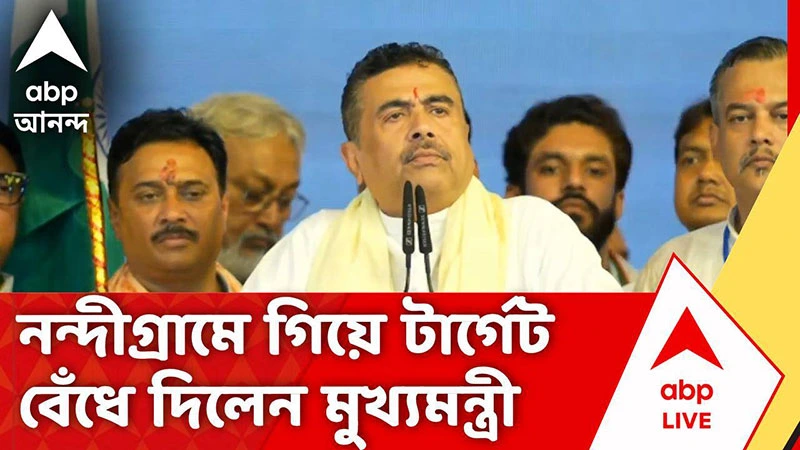
The unusual developments in Nandigram have generated extensive Bengali and national media coverage. Reports have focused on the BJP’s campaign presence, Sanchita Pradhan’s withdrawal and the difficulties facing the Opposition. The Milan Pradhan controversy has received particular attention after Mamata announced support for the Congress candidate and Pradhan was subsequently arrested.
For readers following the campaign closely, the written reports and video coverage together provide a useful picture of how quickly the electoral equation has changed. Nandigram is not short of drama, but the important thing is to separate what has actually happened from what political camps believe those events mean.
The Real Stakes of the Nandigram Election
Strip away the campaign slogans and several different stories are running through this bypoll. For the BJP, it is about maintaining its political hold over a constituency closely associated with Suvendu Adhikari. Hasirani Rath’s candidature adds an emotional layer, while the party also has an opportunity to talk about the government’s first months in office.
For Mamata’s faction, the situation is considerably more complicated: its original candidate withdrew, it then backed Congress, and the Election Commission’s recent decisions concerning the TMC name and symbol have added another layer to its internal political problems.
For Congress, Milan Pradhan’s legal troubles have become central to the campaign. For the Left, Nandigram remains a chance to retain visibility in a constituency that once became one of the strongest symbols of the Left’s decline. Smaller political forces also have an opportunity to put their issues before voters. And for the electorate, beneath all the political manoeuvring, the choice remains fairly basic: which candidate, party and political argument do they want to support?
Knowledge Mart Final Thoughts
Nandigram has a habit of becoming bigger than the election itself. In 2007, it became a symbol of the fight against the Left Front. In 2021, it became the stage for the Mamata-Suvendu battle. In 2026, the constituency has once again found itself at the centre of Bengal politics, but the backdrop is changing.
The BJP has chosen Hasirani Rath, the mother of Chandranath Rath. Sanchita Pradhan withdrew after meeting Suvendu. Mamata then backed Congress candidate Milan Pradhan, who was subsequently arrested in old Nandigram cases. The High Court has now intervened in one of those matters, adding another layer to an already unusual bypoll.
There is, however, another political argument Suvendu can take to Nandigram: industrialisation. Amul has invested about Rs. 700 crore in its Bengal dairy project, while the Adani Group has announced plans for more than Rs. 1 lakh crore of investment in West Bengal by 2035. A 2,000-bed hospital project in New Town has also been announced. These developments give the government something more concrete to talk about than political slogans.
So a fair political question arises: if investment, industry and jobs are becoming central to Suvendu’s Bengal narrative, why focus so much on the size of the victory margin? He can ask voters to judge the new government on factories, hospitals, investment and employment. That is a much more substantive campaign than simply talking about breaking electoral records.
The margin will, of course, matter to the BJP as a political signal. But it remains one number attached to one Assembly seat. It cannot alone establish whether Suvendu’s personal influence has transferred to another candidate or whether the BJP has permanently changed the political equation in South Bengal.
The bigger issue is what happens after the excitement of the bypoll fades. Bengal has already experienced long periods of political dominance under the Left Front and the TMC. If the BJP wants to build a different political chapter, its strongest defence will not be the size of its victory margin. It will be whether voters can see a difference in investment, industry, healthcare, employment and public services.
That is why Nandigram election matters. It is not simply about Hasirani Rath, Suvendu Adhikari, Mamata Banerjee, Milan Pradhan or the final margin. It is also about whether the new government can turn its industrialisation pitch into something voters can see and feel.
If Suvendu has a development story to tell, perhaps Nandigram should hear that story too – not just another promise of a record margin.
10 Key Takeaways
- The Nandigram Election carries significance far beyond one Assembly constituency because of its place in Bengal’s political history.
- The BJP’s decision to field Hasirani Rath has brought the memory of Chandranath Rath directly into the campaign.
- Suvendu Adhikari’s long association with Nandigram makes the bypoll politically important even though he is not contesting it.
- The focus on a large victory margin shows how electoral numbers can become political messaging during a campaign.
- Sanchita Pradhan Dey’s withdrawal after meeting Suvendu Adhikari changed the Opposition’s electoral equation in Nandigram.
- Mamata Banerjee subsequently announced support for Congress candidate Milan Pradhan.
- Milan Pradhan’s arrest in old Nandigram cases has added a legal battle to an already unusual election campaign.
- The Calcutta High Court’s latest order has created another chapter in the Milan Pradhan legal controversy.
- For the BJP, Nandigram provides an opportunity to show whether its organisation can hold the constituency without Suvendu Adhikari himself being the candidate.
- Ultimately, the voters of Nandigram will decide the winner and the size of the victory margin.