
Why Is the Amul Bengal Dairy Project a Beacon of Hope?
Over the last 15 years, critics viewed the state as an industrial wasteland. However, the new Amul Bengal Dairy Project offers a fresh ray of hope.
It acts like a strong lifeline for the state’s economy. Amul is not just a dairy brand; it is a massive national powerhouse operating successful factories across many Indian states.
You can watch the full ANI News Coverage of Amul Bengal Dairy Plant on YouTube to see how this mega facility is taking shape.
How Is the New Government Driving Industrialization in Bengal?
The new state government took charge just three months ago. Still, it has already delivered fast results:
- Lux Cozi: Expanded its manufacturing presence with a new unit at Dankuni.
- Shyam Steel: Launched a massive expansion project at Mejia. Read details about this growth drive in Telangana Today’s Report on Shyam Steel & Bengal Investment.
- Amul Dairy: Entering the state with a Rs. 700-crore mega plant. Check the full story on Indian Express News on Amul Dairy Plant Foundation.
Can Amul Change the Narrative of Bengal Industry?
| Past Industrial Image | Future Potential with Amul |
|---|---|
| Negative signals sent to national investors | Positive confidence boost for big enterprise |
| Memories of historic business exits | Strong signal of Industrialization in Bengal |
Analysts at Knowledge Mart note that investor trust damaged in the past, such as when Ratan Tata famously stated Mamata put a gun to his head and pulled the trigger, badly hurt the state’s reputation.
You can read the historic NDTV Article on Ratan Tata’s Statements or watch the archived report on Times Now YouTube Video on Tata vs Mamata to understand how those political conflicts damaged investor sentiment.
Now, the arrival of Amul Bengal Dairy sends a clear positive message to the national corporate sector.
The Gimmick of Yuva Sathi Project in the fag end of Mamata Banerjee regime showed that industrial deadlock in West Bengal.
How Will Long-Term Planning Help Bengal Industry?
Bengal Industry cannot rebuild overnight. Real economic growth requires long-term planning and patience.
- Industrial progress happens step by step.
- Small achievements build large economic momentum.
- Knowledge Mart tracks these steady steps toward a prosperous future.
Recent Industrialization in Bengal Under BJP Government (Timeline)
| Timeline | Sector | Project / Initiative | Location | Key Highlights | Status |
|---|---|---|---|---|---|
| May 2026 | Investment Push | New Govt Industrial Policy Kickstart | Statewide | Rs. 28,000+ crore investment commitments secured within first 2 months | Initiated |
| June 2026 | Dairy / Food Processing | Amul Bengal Dairy Project Announced | Sankrail, Howrah | Rs. 700 crore investment; first major project after govt formation | Announced |
| June 14, 2026 | Dairy | Foundation Stone of Amul Plant | Howrah Food Park | Capacity: Approx 10 lakh kg dairy products daily | Launched |
| July 2026 | Dairy Expansion | World’s Largest Curd Plant Bhoomi Pujan | Kolkata / Howrah | 30 lakh litres milk processing/day; benefits 1.25 lakh farmers | Under Development |
| July 2026 | Employment & Rural Economy | Amul Cooperative Expansion | Across Bengal | 30,000+ women farmers engaged; rural income boost | Ongoing |
| June-July 2026 | Steel & Heavy Industry | Proposed Steel Investments | Durgapur, Mejia | Rs. 15,000 crore + Rs. 4,000 crore planned industrial units | Planned |
| July 2026 | Infrastructure | Logistics & Industrial Corridors | Dankuni, Siliguri | Focus on improving supply chain & attracting factories | Planning Stage |
| July 2026 | Land & Industry Setup | Industrial Land Bank Activation | Multiple districts | Fast-track land allocation for investors | Implementation |
| 2026 (Ongoing) | MSME & Startup | Ease of Doing Business Reforms | Statewide | Faster approvals, digital clearances, MSME push | Ongoing |
| 2026 (Upcoming) | Investment Promotion | Global Investor Summit | Kolkata | Target: Attract global manufacturing & tech investment | Upcoming |
Let the Mountain of the Moon loom as far into the heavens as it may, with firm, unyielding steps, small as they seem, we shall conquer its peak!
How Does an Industry-Friendly Climate Create New Opportunities?
First comes an industry-friendly climate. Did everything in Bengal change overnight simply with a change in political power? Not at all. However, a positive signal is finally reaching investors.
An initial investment of Rs. 700 crore might seem modest in financial terms. Still, these small industrial initiatives pave the way for a revolutionary transformation in Industrialization in Bengal tomorrow. The early signs of progress are clearly visible.
Why Is the Double-Engine Government Model Essential for Growth?
This is where the power of a double-engine government comes into play. In the past, ruling party spokespersons repeatedly claimed that central-state alignment brings friction and hardship.
Today, the reality is clear: when the state and central governments work together through mutual understanding, the people benefit enormously.
We last saw a genuine attempt at this cooperative approach during Chief Minister Buddhadeb Bhattacharjee’s tenure. He showed a sincere desire to drive growth. Despite deep ideological differences, he never hesitated to meet with top central leaders like L.K. Advani.
- Political Parties: Function based on their specific political ideologies.
- State Governments: Must run on pragmatic governance and economic policy.
- Federal Framework: India’s cooperative federal system leaves no space for narrow political hesitation.
Analysts at Knowledge Mart point out that political expert Dr. Biswanath Chakraborty clearly explained this dynamic, highlighting how federal cooperation directly fuels economic progress.
You can watch Dr. Biswanath Chakraborty’s Analysis on Central-State Relations to better understand how center-state synergy drives state development.
Can Small Steps Lead to Big Industrial Wins?
| Past Governance Approach | New Cooperative Strategy |
|---|---|
| Confrontation with Central Government | Mutual understanding for state welfare |
| Political Hesitation and Friction | Focus on pragmatic Bengal Industry growth |
Every long journey begins with small, deliberate steps. As Knowledge Mart continues to track these shifts, the strategic alignment between state initiatives and central support promises a resilient future for Industrialization in Bengal.
How Does Amul’s Own Plant Change the Game for Dairy Farmers?
For the sake of accuracy, Amul products are not new to West Bengal. Most Bengalis have enjoyed Amul milk, butter, buttermilk, and curd for years. However, these products were not made in Amul’s own factories. Instead, local state facilities processed and produced them under contract.
Previously, Amul collected nearly 13 lakh liters of milk daily from local dairy farmers across Bengal. Now, the new Amul Bengal Dairy Project will step up collection to 30 lakh liters per day. This expansion gives local farmers a massive financial boost.
- Cooperative Structure: Amul operates as a cooperative society, not a private corporation.
- Profit Sharing: Profits flow directly back to local dairy farmers and producers.
- Higher Quality: Everyday consumers can expect fresher and higher-quality dairy products.
Will Bengal Become the Eastern Hub for Dairy & Logistics?
This state-of-the-art Amul Bengal Dairy plant has the potential to become the primary supply hub for both Eastern and North-Eastern India. Beyond direct jobs, it will trigger a massive wave of indirect employment across multiple secondary industries:
| Direct Economic Impact | Indirect Industry Growth |
|---|---|
| Direct factory jobs at the mega plant | Growth of local packaging manufacturing |
| Higher income for 30 lakh liters/day milk collection | Expanded logistics, transport, and supply chains |
| Direct investment in state infrastructure | Equipment maintenance and ancillary servicing jobs |
Analysts at Knowledge Mart observe that this ancillary ecosystem mirrors what Singur lost years ago. The destruction of the Tata project cost Bengal 15 years of ancillary growth, but this new project turns the wheel back toward progress.
You can read more about Indian Express Coverage of the Amul Plant Foundation to see how this project builds new industrial momentum.
Is Center-State Synergy Key to Bengal’s Industrialization?
The state government and the central government are now working hand-in-hand to rebuild Bengal Industry.
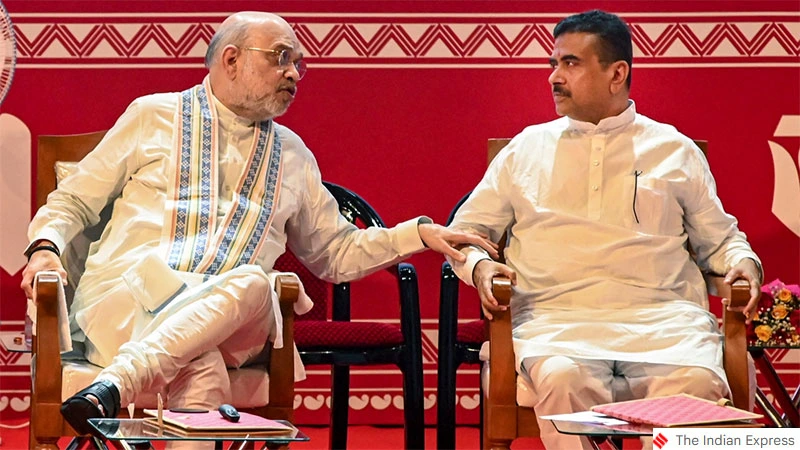
Union Home Minister Amit Shah’s inauguration of the facility represents more than a symbolic gesture, it marks a joint commitment to fast-track Industrialization in Bengal.
Renowned political analyst and senior journalist Suman Chattopadhyay detailed this structural shift in his deep-dive commentary. You can watch Suman Chattopadhyay’s Analysis on Bengal Politics & Industry to understand how center-state alignment is reshaping investor confidence.
As Knowledge Mart continues to cover these economic developments, the focus remains clear: building sustainable industries that benefit local workers, farmers, and consumers alike.
Exclusive Conclusion for Knowledge Mart Viewers: A New Era Begins
For the past 15 years, the shadow of industrial stagnation hung heavy over West Bengal. The previous regime led by Mamata Banerjee created a hostile investment climate, marked by land acquisition deadlocks, anti-industry rhetoric, and missed economic opportunities.
Historic exits like Singur signaled an era where corporate enterprise was discouraged, leaving Bengal’s youth and local businesses to bear the cost of economic paralysis.
Today, the narrative is dramatically turning a new leaf. The launch of the Amul Bengal Dairy Project stands as a shining testament to the visionary leadership and pro-industry drive of Suvendu Adhikari’s government.
By actively collaborating with the Union Government and fostering a genuine double-engine governance model, this administration has restored investor confidence, welcomed mega-scale cooperative enterprise, and reignited the engine of Industrialization in Bengal.
Key Notes for Knowledge Mart Readers:
- End of Industry Deadlock: Shifting away from past anti-development policies to build a transparent, business-friendly ecosystem.
- Decisive Leadership: Appreciation goes to Suvendu Adhikari for prioritizing job creation, rural milk producer growth, and ancillary sector development.
- Center-State Synergy: Proving that active cooperation between state leaders and the central government yields real economic development for Bengal Industry.
At Knowledge Mart, we firmly believe that progress requires courageous leadership and clear vision. While the previous regime’s policy paralysis cost Bengal decades of growth, the current government’s proactive approach promises a resilient, prosperous future for our state.
10 Key Takeaways: The Amul Bengal Dairy Industrial Impact
- Rs. 700-Crore Mega Investment: Amul’s massive dairy plant signals the end of a 15-year industrial deadlock in West Bengal.
- Dairy Farmer Income Boost: Daily milk collection jumps from 13 lakh to 30 lakh liters, directly empowering local Bengal dairy farmers.
- The Power of Double-Engine Synergy: Amul Bengal Dairy Project shows an Active cooperation between Suvendu Adhikari’s state administration and the Union Government fast-tracks regional growth.
- Rebuilding Investor Trust: Amul’s project restores big-ticket corporate confidence damaged during the post-Singur era.
- Massive Ancillary Job Growth: Beyond factory floors, thousands of new jobs will emerge in packaging, logistics, and equipment maintenance.
- Cooperative Profit-Sharing: Unlike private giants, Amul’s cooperative model returns real profits directly to rural producers. So, Amul Bengal Dairy Project will ultimate the Poor people of West Bengal.
- Eastern India Supply Hub: West Bengal is poised to become the central dairy distribution powerhouse for Eastern and North-Eastern India.
- Higher Quality for Consumers: Local state-of-the-art production promises fresher, superior-grade dairy products across the state.
- A Shift from Anti-Industry Policies: Moving away from past land deadlocks toward a proactive, business-friendly economic environment.
- Knowledge Mart Strategic Outlook: Pragmatic governance over political ideology is key to sustaining Bengal’s long-term industrialization.